

RADHA GOVINDA BARUAH: The Architect of Change in Assam

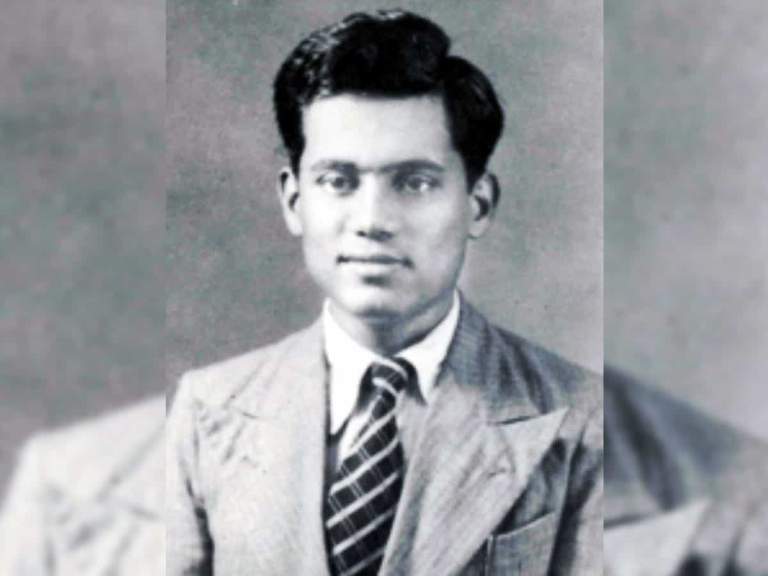
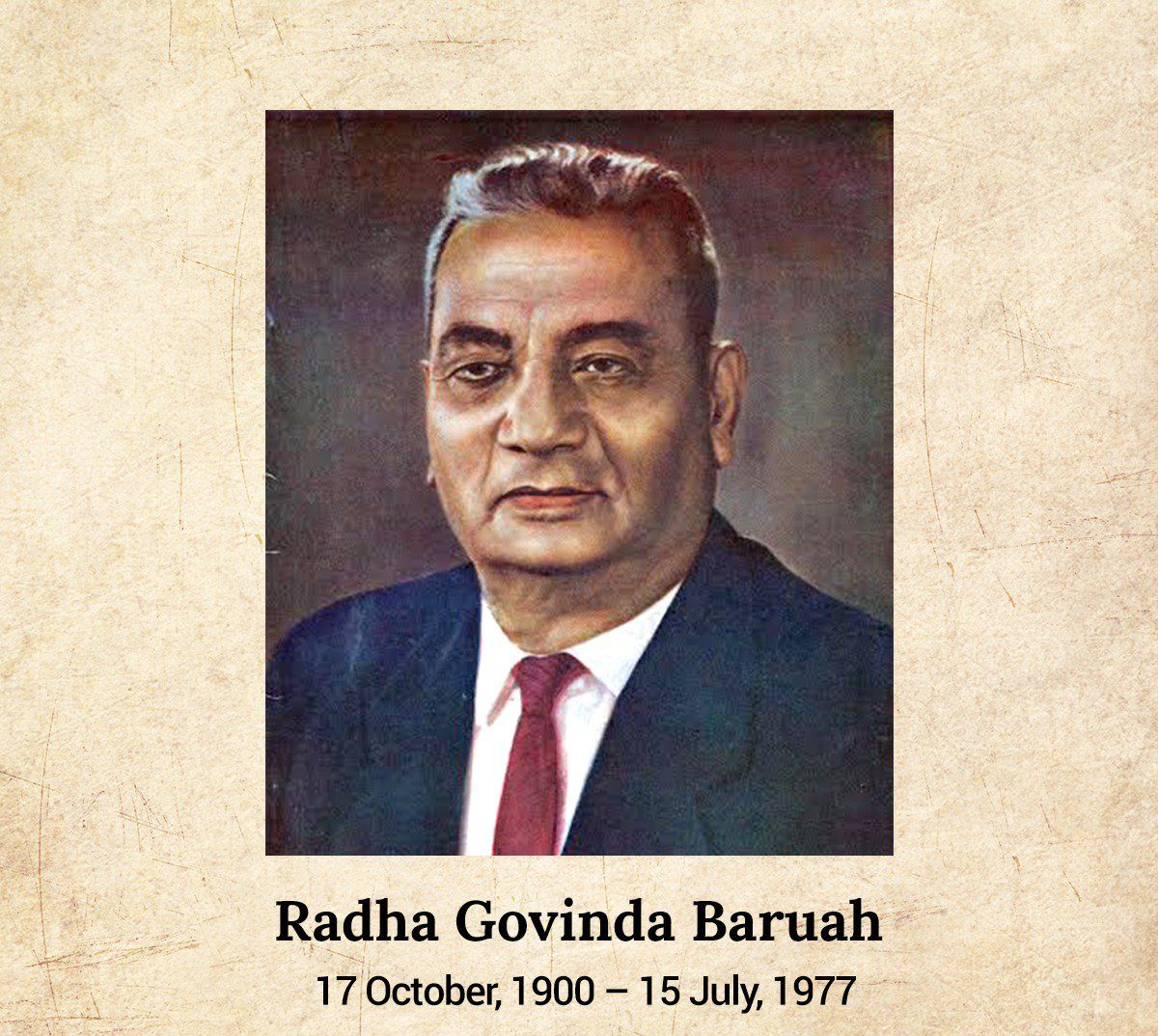
RADHA GOVINDA BARUAH was one of the greatest builders of modern Assam. He was not only a successful businessman but also a visionary leader, journalist, sports organizer, cultural reformer, and city planner. People remember him as the “Architect of Modern Assam” because he helped shape the social, economic, cultural, and sports life of the state during the twentieth century. His life teaches us that strong willpower, courage, and dedication can change society for the better.
He was a man who always believed that nothing is impossible. Whenever he faced difficulties, he treated them as challenges. Because of his confidence and leadership, he was able to succeed in many different fields. He worked for the growth of Assam in banking, insurance, journalism, tea trade, sports, culture, and city development. His contributions were so wide and meaningful that his name still inspires people today.

Introduction
RADHA GOVINDA BARUAH was born at a time when Assam was slowly moving towards social and cultural awakening. The nineteenth century had already seen the rise of educated middle-class people who wanted progress and development. In the twentieth century, RADHA GOVINDA BARUAH became one of the strongest leaders of this new movement.
He played an important role in almost every major public activity in mid-twentieth century Assam. He was the founder of the famous newspaper group The Assam Tribune Group. He brought the traditional Bihu celebration from open fields to organized stages. He supported sports activities and helped build important sports infrastructure. Because of his creative and bold personality, people called him “Sinhapurush,” meaning Lion Man. They also called him “Rupkhanikar,” which means Architect of Beauty.
His life shows how one person can bring change in many areas at the same time. He believed that development must happen in education, economy, culture, and sports together. That is why his influence can still be seen in Assam’s modern identity.
Early Life and Education
RADHA GOVINDA BARUAH was born on 17 October 1900 in Sivasagar, a historic town of Assam. Sivasagar was once the capital of the Ahom kingdom and had a rich cultural background. Growing up in such a place may have influenced his strong sense of pride in Assamese heritage.
He completed his early schooling in Sivasagar. Later, he studied in Nagaon and Dibrugarh. From a young age, he showed signs of leadership and confidence. He was curious and hardworking. After finishing school, he joined Cotton College in Guwahati for higher studies. Cotton College was one of the most respected educational institutions in Assam at that time. It produced many famous scholars and leaders.
However, his journey was not easy. After completing his studies, he tried to start small businesses. At first, he did not succeed. Many young people would have given up after facing such failures. But RADHA GOVINDA BARUAH was different. He believed that failure is only a step toward success. He decided to improve his skills and learn something new.
He went to Calcutta (now Kolkata) to learn accountancy and bookkeeping. At that time, Calcutta was a major center of education and business in India. There he gained knowledge about finance and banking. This decision later helped him greatly in his career.
Beginning of His Career in Banking
After learning accountancy in Calcutta, RADHA GOVINDA BARUAH returned to Assam with new confidence and knowledge. In 1921, he brought a banking expert named Mr. Cameron from Calcutta. Together, they opened a branch of the Imperial Bank of India in Dibrugarh.
This was the first branch of the Imperial Bank in the entire North-East region. It was a historic step because banking facilities were very limited in Assam at that time. The opening of this branch made financial services easier for local people and traders.
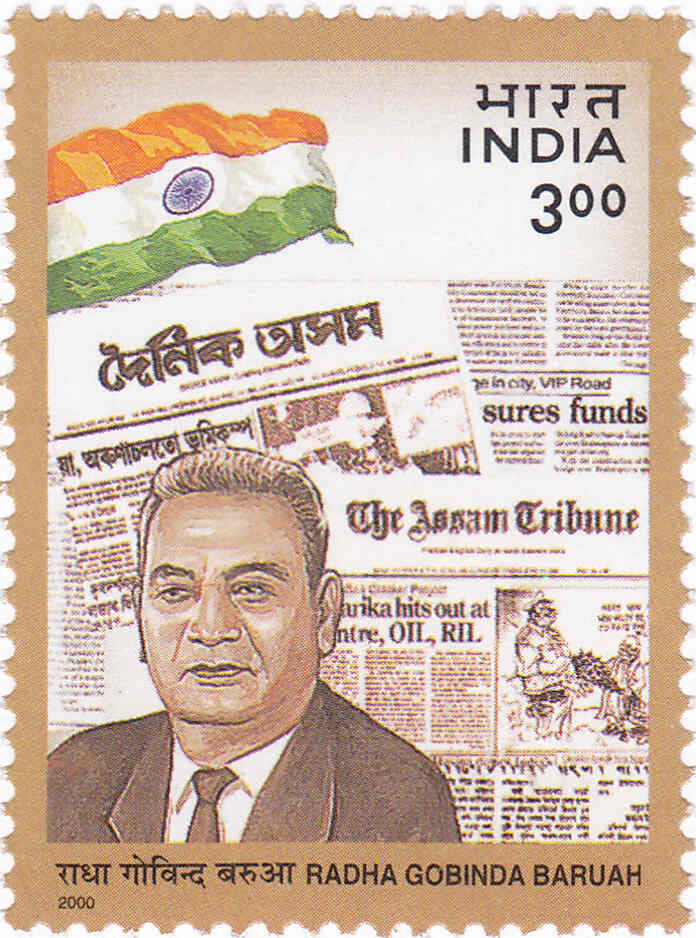
RADHA GOVINDA BARUAH became the first Assamese employee of the Imperial Bank in the region. This was a proud moment for the people of Assam. It showed that local youth could take leadership roles in modern institutions.
Later, in 1955, the Imperial Bank of India became the State Bank of India. Thus, RADHA GOVINDA BARUAH was connected with the early history of what later became India’s largest public sector bank.
After working in the bank for a few years, he moved to the insurance sector. He joined the Bombay Mutual Company as an insurance agent. He became one of the pioneers of insurance business in Assam. In fact, he was recognized twice as the best insurance agent in the regions of Assam, Bengal, Bihar, and Orissa. This shows his talent, honesty, and hardworking nature.
Founder of The Assam Tribune
One of the greatest achievements of RADHA GOVINDA BARUAH was in journalism. On his father’s advice, he started a printing press named “Barua Press” in Dibrugarh. Later, he bought two more printing presses from the British. This decision laid the foundation for a powerful media house in Assam.
On 4 August 1939, from this press, the first issue of The Assam Tribune was published as a weekly newspaper. The first editor was Lakshminath Phookan. At that time, there were very few English newspapers in Assam. Before The Assam Tribune, the only English newspaper in Assam was “Times of Assam,” published in 1895.
Later, the office of The Assam Tribune was shifted from Dibrugarh to Guwahati. On 30 September 1946, it became a daily newspaper. It became the first English daily newspaper of Assam. Over time, it gained respect for its honest reporting and strong editorials.
Under the The Assam Tribune Group, other newspapers were also published. These included “Axombani,” an Assamese weekly started in 1955, and “Dainik Axom,” an Assamese daily launched in 1965. These newspapers played a major role in spreading awareness, education, and political understanding among the people of Assam.
Through journalism, RADHA GOVINDA BARUAH gave Assam a strong voice. He believed that newspapers should not only report news but also guide society toward progress.
Contribution to Sports
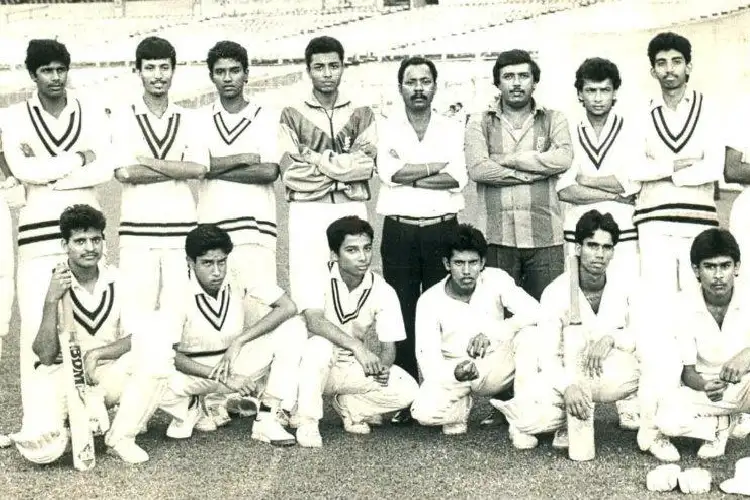
RADHA GOVINDA BARUAH was also deeply involved in sports development. He believed that sports build character, discipline, and unity among youth. He served as President of several sports organizations such as Guwahati Town Club, Guwahati Sports Association, Assam Cricket Association, Assam Football Association, Lawn Tennis Association, and Badminton Association.
One of his biggest achievements in sports was the construction of Nehru Stadium in Guwahati. The construction work started in 1957 and the stadium was inaugurated in 1963. At that time, building such a large sports stadium was not an easy task. Funds were limited.
To collect money, RADHA GOVINDA BARUAH invited the famous wrestler Dara Singh to Guwahati and organized wrestling matches. These events attracted huge crowds and helped raise funds for the stadium. This shows his creativity and determination.
Because of his efforts, Assam got better sports facilities. Many young players later got opportunities to grow and shine at national levels.
Development of Tea Trade and Aviation
The tea industry is very important for Assam’s economy. RADHA GOVINDA BARUAH played a major role in improving tea trade. As President of the Assam Tea Brokers Association, he worked hard to establish the Guwahati Tea Auction Centre in 1970. This center helped local tea producers sell their products more easily and at better prices.
Earlier, tea auctions mainly took place in Calcutta. By bringing auction facilities to Guwahati, he strengthened Assam’s economic independence.
He also helped in establishing the Assam Flying Club in 1958. At that time, aviation training was rare in the region. The flying club opened new opportunities for youth interested in aviation. This again shows how forward-thinking he was.
Cultural Contributions
RADHA GOVINDA BARUAH loved Assamese culture deeply. One of his most important cultural contributions was bringing Bihu celebrations to the stage. Earlier, Bihu was mostly celebrated in open fields and villages. In 1952, through Guwahati Bihu Sanmilani at Latasil, Bihu was organized as a stage performance.
This change helped Bihu gain wider popularity. It also allowed urban people to enjoy and preserve this traditional festival. Today, stage Bihu performances are common, and this tradition began because of his vision.
In 1954, along with Tarinimohan Barua, he helped establish Assam Sangeet Sanmilani. Its aim was to promote Assamese music and improve its quality. This movement later helped in the establishment of Assam College of Music.
He also acted in several plays in Dibrugarh. His interest in drama and music shows his creative side. He understood that culture is the soul of society.
Role in City Development and Leadership
In 1975, RADHA GOVINDA BARUAH became the first Mayor of Guwahati. At that time, Guwahati was growing fast. He strongly believed that the city needed a proper master plan for development.
He insisted on planned roads, organized markets, sports grounds, and better civic facilities. His vision for Guwahati was modern and systematic. Many people believe that if he had served longer as mayor, the city would have developed even faster.
His leadership style was bold and clear. He was not afraid to take difficult decisions. Because of his bravery and enthusiasm, people called him “Sinhapurush.”
Honours and Recognition
RADHA GOVINDA BARUAH received great respect during and after his lifetime. He is widely known as the Architect of Modern Assam. In 2000, he was honored with a postage stamp under the series “Great Leaders: Social and Political.”
To remember his contribution to sports, Assam celebrates “Assam Sports Day” on 17 October, his birth anniversary. This shows how deeply people value his role in building sports culture in the state.
His Personality and Ideals
RADHA GOVINDA BARUAH believed in action more than words. He did not just talk about development; he worked hard to achieve it. He believed that society grows when education, culture, economy, and sports grow together.
He was brave, creative, and full of energy. Problems did not scare him. Instead, he treated them as challenges. His life teaches us the importance of courage, planning, and dedication.
He also believed in teamwork. Whether it was journalism, sports, or culture, he always worked with others and encouraged young people to participate.
Death and Lasting Legacy
RADHA GOVINDA BARUAH passed away on 15 July 1977. His death was a great loss to Assam. However, his work and ideas continue to guide the state.
Today, The Assam Tribune remains one of the most respected newspapers in the region. Nehru Stadium still hosts sports events. Stage Bihu celebrations are an important part of Assamese culture. The Guwahati Tea Auction Centre continues to support the tea industry.
All these stand as living examples of his vision.
Conclusion
RADHA GOVINDA BARUAH was truly born to uplift the people of Assam. His contributions to journalism, sports, tea trade, culture, and city development are unforgettable. He was a visionary who worked not only for his own success but for the progress of society.
He showed that one determined person can bring change in many areas. His life inspires students and young people to dream big and work hard. Assam needs more leaders like RADHA GOVINDA BARUAH who think ahead, act bravely, and serve society selflessly.
Because of his extraordinary contributions, he will always be remembered as the Architect of Modern Assam.
Frequently Asked Questions (FAQs)
1. Who was RADHA GOVINDA BARUAH?
RADHA GOVINDA BARUAH was a great social reformer, journalist, sports organizer, and businessman of Assam. He is known as the Architect of Modern Assam for his major contributions to society.
2. Why is RADHA GOVINDA BARUAH called the Architect of Modern Assam?
He is called the Architect of Modern Assam because he helped develop journalism, sports, tea trade, culture, and city planning in Assam during the twentieth century.
3. When and where was RADHA GOVINDA BARUAH born?
RADHA GOVINDA BARUAH was born on 17 October 1900 in Sivasagar, Assam.
4. What is the contribution of RADHA GOVINDA BARUAH to journalism?
He founded The Assam Tribune, the first English daily newspaper of Assam. He also established other newspapers like Dainik Axom and Axombani.
5. What was RADHA GOVINDA BARUAH’s role in sports development?
He worked as the president of many sports associations and played a key role in building Nehru Stadium in Guwahati.
6. How did RADHA GOVINDA BARUAH promote Assamese culture?
He helped bring Bihu celebrations to the stage through Guwahati Bihu Sanmilani and supported the growth of Assamese music and drama.
7. What is Assam Sports Day and why is it celebrated?
Assam Sports Day is celebrated on 17 October every year to honor the birth anniversary of RADHA GOVINDA BARUAH and his contribution to sports.
8. When did RADHA GOVINDA BARUAH pass away?
He passed away on 15 July 1977 after serving Assam throughout his life.