

NIF Book Prize 2026 Shortlist Announced

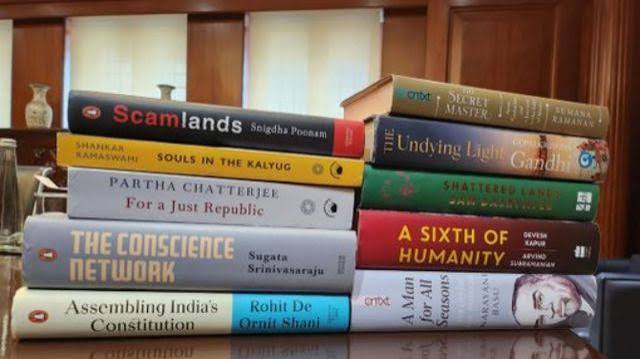
NIF Book Prize 2026 has shortlisted five non-fiction books that explore modern and contemporary India. The New India Foundation (NIF) announced the shortlist on October 28–29, 2026. The selected books cover important subjects, including Indian history, the making of the Constitution, national development, Asian partitions and Hindustani classical music.
The annual award recognises writers who help readers understand India’s past and present through research-based non-fiction. The winner will receive a cash prize of ₹15 lakh. The award presentation is scheduled for December 12, 2026, at the Bangalore Literature Festival in Bengaluru.

What Is the Kamaladevi Chattopadhyay NIF Book Prize?
The Kamaladevi Chattopadhyay NIF Book Prize was established in 2018 by the New India Foundation. It recognises outstanding non-fiction books about modern and contemporary India.
Non-fiction books discuss real people, historical events, social changes, political developments and other subjects based on facts and research. The NIF Book Prize highlights works that provide readers with a deeper understanding of India’s history, society and development.
The award is named after Kamaladevi Chattopadhyay, who lived from 1903 to 1988. She was an Indian freedom fighter, social reformer and supporter of handicrafts, theatre and cultural activities.
Kamaladevi was associated with the All India Women’s Conference and the Indian Cooperative Union. She played an important role in promoting women’s participation in public life and supporting traditional Indian crafts and cooperative movements. Naming the prize after her recognises her contribution to India’s social and cultural development.
Five Books Shortlisted for the 2026 Prize
The 2026 shortlist includes five non-fiction books published in 2025. Each book examines a different aspect of India or its wider historical and cultural connections.

1. A Man for All Seasons: The Life of KM Panikkar
Written by Narayani Basu, this book explores the life of K. M. Panikkar, a historian, diplomat and public figure.
Panikkar was known for his contributions to historical writing and diplomatic service. His life provides an opportunity to understand India’s intellectual and diplomatic history during a period of major political change.
A biography such as this helps readers learn about the experiences, ideas and decisions of an individual who contributed to public life. The book places Panikkar’s personal journey within the wider story of modern India.
2. Shattered Lands: Five Partitions and the Making of Modern Asia
Sam Dalrymple’s Shattered Lands: Five Partitions and the Making of Modern Asia examines five partitions in Asia and their role in shaping the modern region.
Partition can divide territories and communities, creating long-term changes in political boundaries, migration and social relationships. The book explores these historical changes and their effects on the development of modern Asia.
Its subject is relevant to understanding how historical decisions continue to influence national identities, relations between countries and the lives of people affected by displacement.
3. Assembling India’s Constitution: A New Democratic History
Written by Rohit De and Ornit Shani, this book examines the making of the Indian Constitution.
The Constitution provides the foundation for India’s political system, defines the powers of government and protects citizens’ rights. Its development involved debates about democracy, representation, equality and the future structure of independent India.
The book offers a historical perspective on the process through which the Constitution was created. It focuses on the democratic history surrounding this important stage in India’s development.
4. A Sixth of Humanity: Independent India’s Development Odyssey
Written by Devesh Kapur and Arvind Subramanian, this book discusses India’s development after independence.
Since 1947, India has experienced major changes in its economy, education, healthcare, infrastructure and public institutions. The country’s development journey has also involved challenges related to poverty, inequality, employment and access to essential services.
The book examines this wider development story and helps readers understand the choices and experiences that have shaped independent India.
5. The Secret Master: Arun Kashalkar and a Journey to the Edge of Music
Written by Sumana Ramanan, this book focuses on Hindustani classical vocalist Arun Kashalkar.
Hindustani classical music is one of India’s major musical traditions. It includes a rich system of ragas, rhythmic patterns and performance styles developed over generations.
Through Kashalkar’s life and musical journey, the book explores an important part of India’s classical music culture. It also brings attention to the people who preserve and develop traditional art forms.

Who Is on the 2026 Book Prize Jury?
The seven-member jury for the 2026 award was chaired by political scientist Niraja Gopal Jayal.
The other members are Tata Sons chairman N. Chandrasekaran, former Foreign Secretary Nirupama Rao, historian Srinath Raghavan, Rahul Matthan, Jahnavi Phalkey and entrepreneur Manish Sabharwal.
The jury brings together people with experience in politics, diplomacy, history, business and other fields. Its role is to assess the shortlisted books and select the work that will receive the prize.
The selection process places attention on non-fiction writing that contributes to the understanding of modern and contemporary India. The five shortlisted titles cover different subjects, allowing readers to explore the country’s history and development from several perspectives.
When Will the NIF Book Prize 2026 Winner Be Announced?
The winner of the NIF Book Prize 2026 is expected to be announced in December 2026. The award presentation is scheduled for December 12 at the Bangalore Literature Festival in Bengaluru.
The festival provides a platform for writers, readers and literary professionals to discuss books and ideas. The award presentation will bring attention to the selected author’s work and the subjects explored in the shortlisted books.
With a prize of ₹15 lakh, the Kamaladevi Chattopadhyay NIF Book Prize remains an important recognition for non-fiction writing about India. The 2026 shortlist brings together research and storytelling on Indian history, constitutional development, economic progress, Asian political change and classical music.