Buddhism in India – Origin, Teachings, Culture and Modern Importance

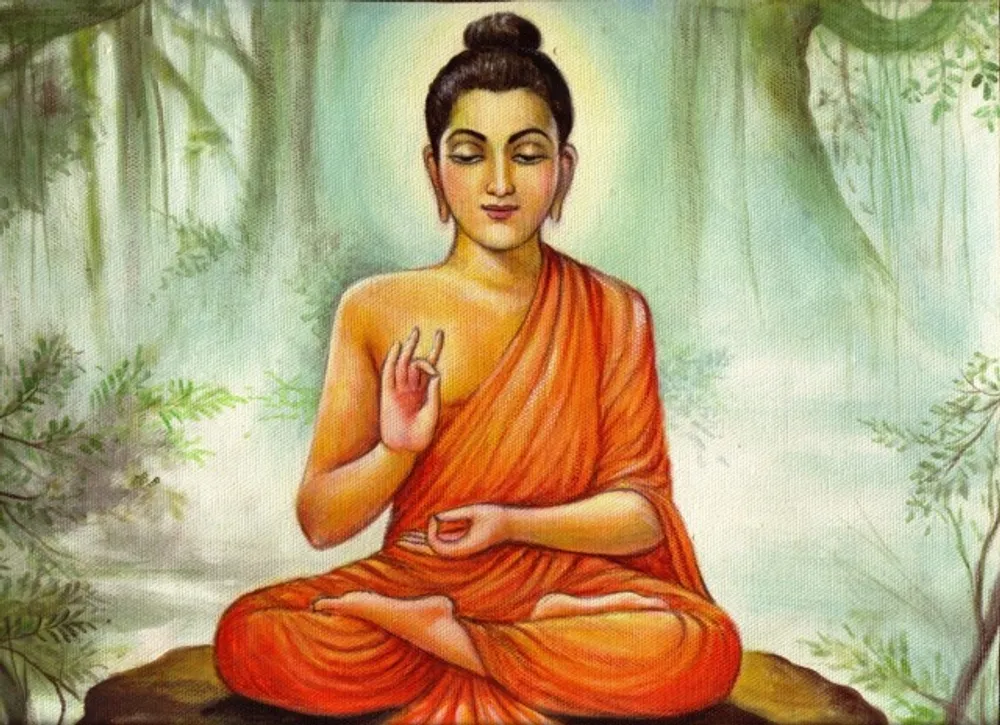
Buddhism in India is one of the most important parts of Indian heritage and culture. It started more than 2,600 years ago and changed the way people think about life, suffering, and peace. This religion is based on the teachings of Gautama Buddha, who showed a simple path to live a meaningful life. Buddhism not only influenced India but also spread to many countries in Asia and became a global religion.
Thank you for reading this post, don't forget to subscribe!Origin of Buddhism in India
Buddhism began in ancient India during the 6th century BCE. It was a time when society was facing many problems like inequality, rituals, and confusion about life.
Siddhartha Gautama was born around 563 BCE in Lumbini, near the India-Nepal border. He was born into a royal family of the Shakya clan and lived a luxurious life in Kapilvastu.
At the age of 29, he saw suffering in the world old age, sickness, and death. This changed his life completely. He left his palace and family to search for the truth about life. After years of meditation and struggle, he finally attained enlightenment under a Bodhi tree at Bodh Gaya.
After gaining knowledge, he became known as the Buddha, meaning “the enlightened one.”
Important Events in Buddha’s Life
1. Enlightenment
Buddha meditated for 49 days under the Bodhi tree and discovered the truth of life. This event is called enlightenment.
2. First Sermon
He gave his first teaching at Sarnath. This is known as Dharma Chakra Pravartana, meaning the turning of the wheel of law.
3. Death (Mahaparinirvana)
He died at the age of 80 in Kushinagar. This event is called Mahaparinirvana.
Main Teachings of Buddhism
Buddhism teaches a simple and practical way of life. It focuses on ending suffering and achieving peace.
Middle Path (Madhyam Marg)
Buddha advised people to avoid two extremes:
- Too much enjoyment of life
- Too much strict self-denial
Instead, he suggested following the middle path, which is balanced and practical.
Four Noble Truths
The basic teachings of Buddhism are known as the Four Noble Truths:
| Truth | Meaning |
|---|---|
| Suffering (Dukkha) | Life involves suffering |
| Cause (Samudaya) | Desire is the cause of suffering |
| End (Nirodha) | Suffering can end |
| Path (Magga) | Follow the Eightfold Path |
Each truth explains life in a simple way. It helps people understand problems and find solutions.
Eightfold Path
The Eightfold Path is the way to end suffering. It includes:
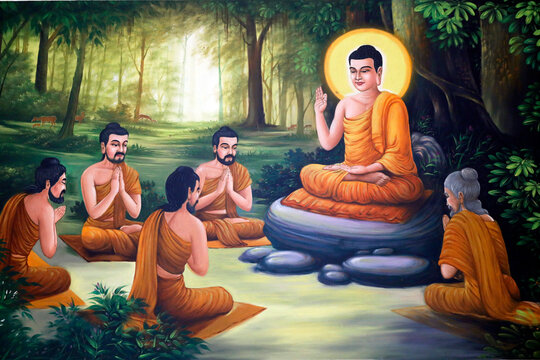
- Right view
- Right intention
- Right speech
- Right action
- Right livelihood
- Right effort
- Right mindfulness
- Right concentration
These steps guide a person to live a good and peaceful life.
Five Precepts (Panchsheel)
Buddha also gave simple rules for daily life:
- Do not harm others
- Do not steal
- Avoid wrong behavior
- Do not lie
- Avoid intoxicants
These rules help maintain discipline and morality.
Major Buddhist Texts
Buddha’s teachings were first passed orally and later written down.
Tripitaka (Three Baskets)
- Vinaya Pitaka – Rules for monks and nuns
- Sutta Pitaka – Teachings of Buddha
- Abhidhamma Pitaka – Philosophy and analysis
Other important texts include:
- Divyavadana
- Dipavamsa
- Mahavamsa
- Milind Panha
These texts preserve Buddhist knowledge and teachings.
Buddhist Councils
Buddhist councils played a very important role in preserving and spreading the teachings of Gautama Buddha. These councils were major turning points in early Buddhism and helped organize the religion properly. Over time, differences in ideas led to divisions, which finally resulted in two main schools Theravada and Mahayana.
First Council
- Held around 483 BC after the Mahaparinirvana of Buddha in Rajgir at Sattapani cave.
- Organized under King Ajatashatru and led by Mahakasyapa.
- Its main aim was to preserve Buddha’s teachings and rules for monks.
- Teachings were divided into three Pitakas during this council.
Second Council
- Held in 383 BC at Vaishali under King Kalasoka.
- Presided over by Sabakami to resolve disagreements among monks.
- Focused on discipline and differences in practices within the Sangha.
- This council marked the beginning of divisions in Buddhist community.
Third Council
- Held in 250 BC at Pataliputra under Emperor Ashoka.
- Led by Moggaliputta Tissa to purify Buddhism and remove wrong beliefs.
- Helped in spreading Buddhism to many foreign countries.
- Played a key role in making Buddhism a global religion.
Fourth Council
- This council shaped the future development of Buddhism.
- Held in 72 AD at Kundalvana in Kashmir under King Kanishka.
- Presided over by Vasumitra with Asvaghosa as deputy.
- Important discussions led to division into Mahayana and Hinayana schools.
Schools of Buddhism
Mahayana
- Believes in idol worship
- Focuses on compassion
- Spread to China, Japan, Tibet
Hinayana (Theravada)
- Follows original teachings
- Focuses on self-discipline
- Spread in Sri Lanka, Myanmar, Thailand
Vajrayana
- Includes rituals and tantra
- Developed in India
Zen Buddhism
- Focus on meditation
- Originated in China
Spread of Buddhism in India
Buddhism spread through monks and followers.
The Sangha (community of monks) played a key role. They traveled across regions to teach people.
After Buddha’s death, Buddhism grew slowly until the rule of Ashoka. After the Kalinga War, Ashoka adopted Buddhism and promoted peace.
He sent missions to:
- Sri Lanka
- Myanmar
- Greece
- Central Asia
This helped Buddhism become a world religion.
Contribution of Buddhism to Indian Culture
1. Ahimsa (Non-violence)
Buddhism promoted non-violence, which later influenced Indian leaders.
2. Art and Architecture
Famous monuments include:
- Sanchi Stupa
- Ajanta Caves
These show beautiful carvings and paintings.
3. Education
Universities like:
- Nalanda University
- Taxila University
These became global centers of learning.
4. Language Development
Buddhism used simple languages like Pali, making knowledge accessible.
Buddhism as Soft Diplomacy
India uses Buddhism as a powerful soft diplomacy tool to build strong relations with other countries, especially in Asia.
1. Cultural and Moral Values
- Buddhism promotes peace, co-existence, compassion, and inclusiveness, which are shared across many Asian societies.
- India focuses on sharing culture and values, not forcing or exporting them, making its approach unique.
- The teachings of Gautama Buddha continue to guide moral thinking and social harmony in many countries.
2. Strengthening Ties with Asian Countries
- Around 22% of the world’s population follows Buddhist ideas, especially in Asian nations.
- These shared beliefs help in building emotional connections and stronger political and economic relations.
- India benefits from important resources like pilgrimage sites and the presence of Dalai Lama, which increase global goodwill.
3. International Buddhist Conclave
- The Government of India organizes this conclave every two years since 2004 to promote India as a global Buddhist destination.
- Delegates from countries like Bangladesh, Indonesia, Myanmar, and Sri Lanka actively participate.
- This event helps increase tourism, cultural exchange, and global awareness about Buddhism.
4. Cultural Exchange with Mongolia
- India provides ICCR scholarships to Mongolian students for studying Tibetan Buddhism.
- Important Buddhist texts like the Mongolian Kanjur are being reprinted and shared.
- Buddhist monks from Mongolia are supported with easier travel and visa processes.
5. Sharing Sacred Relics and Traditions
- In 2022, holy relics of Buddha from Kapilavastu were taken to Mongolia for public display.
- This strengthened religious and cultural bonds between the two nations.
- Such exchanges build trust and respect among Buddhist communities worldwide.
6. Infrastructure Development – Kushinagar Airport
- Kushinagar International Airport improves connectivity for Buddhist pilgrims from Southeast and East Asia.
- It plays a key role in boosting religious tourism and international visits.
- The airport also strengthens India’s relationship with countries like Sri Lanka.
7. Global Influence of Buddhism
- This cultural connection helps India grow its influence without conflict or force.
- Buddhism connects India with nearly 500 million followers worldwide.
- It promotes peace, harmony, and sustainable development across nations.
Government Initiatives to Promote Buddhism
Swadesh Darshan Scheme
The Government of India has included the Buddhist Circuit under the Swadesh Darshan Scheme. This circuit connects important places like Bodh Gaya, Sarnath and Rajgir. Around ₹325 crore has been approved for development projects. It also includes special tourist train tours under the “Dekho Apna Desh” campaign.
PRASHAD Scheme
The PRASHAD Scheme focuses on developing pilgrimage sites, including Buddhist locations. It improves basic facilities like roads, hotels, and visitor centers. This helps both Indian and foreign tourists. The aim is to make spiritual tourism more comfortable and well-organized.
Dekho Apna Desh Initiative
This initiative was launched in 2020 to promote domestic tourism in India. It encourages people to visit historical and cultural places, including Buddhist sites. Special awareness campaigns and tours are organized. It helps people understand India’s rich Buddhist heritage.
International Buddhist Conclave
The Ministry of Tourism organizes this event every two years since 2004. It promotes India as a major Buddhist destination in the world. Many countries like Sri Lanka, Myanmar, and Japan participate. This helps in building global cultural connections.
Cultural Exchange Programme (Mongolia)
India provides special scholarships for Mongolian students to study Buddhism. Around 100 sets of sacred Buddhist texts are being reprinted and shared. Buddhist monks from Mongolia are also supported with travel facilities. This strengthens cultural and religious ties between both countries.
Kushinagar International Airport
Kushinagar now has an international airport to improve connectivity. It helps tourists from Southeast and East Asia visit easily. This development is important for Buddhist pilgrimage tourism. It also improves India’s relations with countries like Sri Lanka.
Iconic Tourist Sites Development
Important sites like Ajanta Caves and Ellora Caves are being developed as world-class tourist destinations. These sites reflect Buddhist art and history. Better facilities and infrastructure are being added. This boosts tourism and global recognition.
Language and Tourist Support
The government has installed signboards in Chinese and Sinhala languages at Buddhist sites. This helps foreign tourists understand the places better. It makes travel easier and more comfortable. It also shows India’s effort to welcome international visitors.
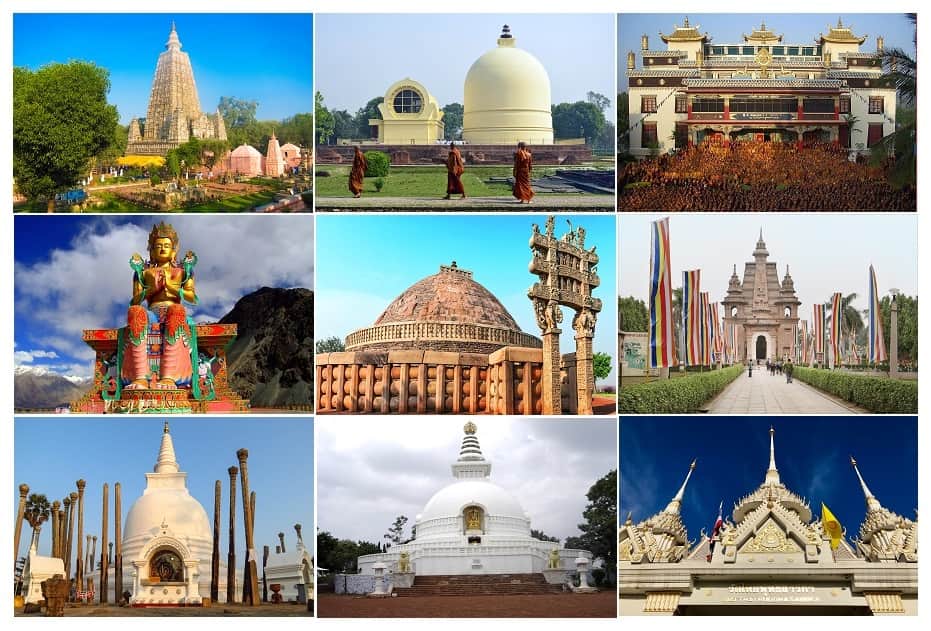
Important Buddhist Sites (UNESCO)
- Mahabodhi Temple
- Sanchi Stupa
- Nalanda Mahavihara
- Ajanta Caves
These sites attract tourists from all over the world.
Modern Importance of Buddhism
Today, Buddhism is important for:
- Promoting peace
- Reducing stress
- Teaching simple living
- Building global relations
India is working to promote Buddhist tourism and cultural exchange.
Challenges and Future Scope
- Many Buddhist sites need better facilities
- Awareness among global tourists is low
- More promotion is needed internationally
India can strengthen its global position by promoting Buddhism.
FAQs
1. Who founded Buddhism?
Buddhism was founded by Gautama Buddha.
2. Where did Buddhism start?
It started in India, especially around Bodh Gaya.
3. What is the main goal of Buddhism?
The main goal is to achieve Nirvana, a state of peace and freedom from suffering.
4. What are the Four Noble Truths?
They explain suffering, its cause, its end, and the path to end it.
5. Who helped spread Buddhism the most?
Ashoka played a major role in spreading Buddhism.