



Data Localisation: Meaning, Benefits, Challenges, Global Practices and India’s Approach

Data Localisation has become one of the most important topics in today’s digital world. Every day, millions of people use the internet for banking, shopping, social media, healthcare, education, and communication. While using these services, a huge amount of personal information is generated and stored online. This information is known as data.
As technology continues to grow, governments around the world are becoming more concerned about how citizens’ data is stored and protected. This is where the concept of Data Localisation comes into the picture. Data localisation is seen as a way to improve privacy, security, and control over digital information.

In India, the discussion around data localisation has become stronger due to increasing concerns about cyber security, data theft, and the influence of global technology companies. The government has been working on laws and policies to ensure better protection of citizens’ data while supporting innovation and economic growth.
What is Data Localisation?
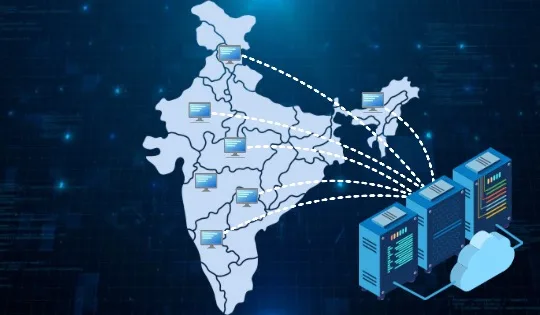
Data localisation refers to the practice of storing and processing data within the borders of the country where it is generated.
In simple words, if Indian citizens create data while using online services, that data should be stored on servers located in India instead of foreign countries.
Currently, many international companies store user data in data centres located outside India. Data localisation requires companies to keep at least some or all of that data within India.
The main purpose of data localisation is to ensure that a country has control over its citizens’ data and can protect it from misuse, unauthorized access, and foreign surveillance.
Why is Data Localisation Important?
Data has become one of the most valuable resources in the digital age. Personal information such as names, addresses, phone numbers, financial records, browsing history, and health records are stored online.
If this data is not properly protected, it can be misused for various purposes such as identity theft, financial fraud, and cybercrime.
Data localisation aims to:
- Improve data security
- Protect citizens’ privacy
- Strengthen national security
- Help law enforcement agencies investigate crimes
- Increase accountability of technology companies
- Support growth of local data centre industries
Data Localisation in India
India has been actively discussing data localisation through various committees, policies, and proposed laws.
Srikrishna Committee Report
The Justice B.N. Srikrishna Committee was formed to suggest a framework for data protection in India.
The committee recommended:
- At least one copy of personal data should be stored in India.
- Transfer of data outside India should follow strict safeguards.
- Critical personal data should be stored and processed only within India.
These recommendations became the foundation for future data protection discussions.
Personal Data Protection Bill
The Personal Data Protection Bill recognized privacy as a fundamental right.
The bill proposed:
- Protection of personal information.
- Creation of a Data Protection Authority.
- Rules for cross-border transfer of personal data.
- Storage of critical personal data only in India.
Although the bill was later withdrawn, the government announced that a broader legal framework would be introduced to regulate digital data and online activities.
National E-Commerce Policy
The Draft National E-Commerce Policy also supported data localisation.
Its recommendations included:
- Encouraging companies to store data within India.
- Giving businesses a transition period to adapt.
- Providing incentives for setting up data centres.
- Granting infrastructure status to data centres.
India’s Stand at the G20 Summit
At the G20 Summit in Osaka in 2019, India chose not to support the Osaka Track.
The Osaka Track promoted free flow of data across international borders and opposed strict data localisation requirements.
India believed that developing countries should have the freedom to create their own data policies based on national interests and security concerns.
Advantages of Data Localisation
1. Better Privacy Protection
One of the biggest benefits of data localisation is improved privacy.
When data remains within the country, governments can create stronger regulations to protect citizens’ personal information.
The importance of privacy became clear during the Cambridge Analytica controversy, where user data from Facebook was reportedly used to influence political campaigns.
Data localisation can reduce such risks by increasing oversight and accountability.
2. Greater National Sovereignty
Data localisation helps countries maintain control over data generated by their citizens.
When sensitive information is stored abroad, foreign governments may gain access to it under their own laws.
Keeping data within national borders strengthens digital sovereignty and reduces dependence on foreign jurisdictions.
3. Easier Law Enforcement
Indian law enforcement agencies often face difficulties in accessing data stored outside the country.
Obtaining information from foreign servers usually requires legal cooperation agreements known as Mutual Legal Assistance Treaties (MLATs).
This process can take months or even years.
With data stored locally, investigations can become faster and more efficient.
4. Improved Cyber Security
Local storage allows authorities to monitor cyber threats more effectively.
In cases of hacking, fraud, or data breaches, investigators can respond more quickly when data is available within the country.
This can help reduce damage and improve security measures.
5. Increased Accountability of Technology Companies
Data localisation can make global technology companies more accountable.
Companies operating in India may be required to follow Indian laws and regulations more strictly when data is stored within the country.
This improves transparency regarding how user information is collected, processed, and used.
6. Job Creation and Economic Growth
Data localisation can encourage investment in data centres and related infrastructure.
As more companies establish data storage facilities in India, new employment opportunities may be created in areas such as:
- Information Technology
- Cyber Security
- Cloud Computing
- Data Management
- Network Engineering
This can contribute to economic development and technological growth.
Challenges of Data Localisation
Despite its advantages, data localisation also faces several challenges.
1. High Infrastructure Costs
Building and maintaining local data centres requires significant investment.
Global companies may need to spend large amounts of money to create new facilities and comply with localisation rules.
These costs may eventually be passed on to consumers.
2. Lack of Adequate Infrastructure
India is still developing its digital infrastructure.
Reliable power supply, cooling systems, internet connectivity, and advanced data storage facilities are essential for large-scale data centres.
Further investment is needed to support widespread data localisation.
3. Risk of a Fragmented Internet
Experts often use the term “Splinternet” to describe a situation where countries create separate internet systems due to data restrictions.
If many countries adopt strict localisation policies, the global internet may become fragmented, reducing the free flow of information and innovation.
4. Encryption Challenges
Even when data is stored within a country, encryption keys may remain under the control of foreign companies.
This means authorities may still face difficulties accessing data during investigations.
Therefore, localisation alone does not automatically solve all security concerns.
5. Increased Costs for Businesses
Businesses that rely on international data transfers may face operational difficulties.
Additional compliance requirements can increase costs and reduce efficiency.
Smaller companies and startups may struggle to meet these requirements.
6. Impact on Innovation
Some experts argue that restrictions on cross-border data flows can limit international collaboration and innovation.
Many modern technologies, including artificial intelligence and cloud computing, rely on access to global data networks.
Global Practices on Data Localisation
Different countries have adopted different approaches to data localisation.
China
China follows one of the strictest data localisation systems in the world.
Many categories of important and sensitive data must be stored within Chinese borders.
Vietnam
Vietnam requires companies collecting user data to store a copy within the country and maintain a local office.
The policy is mainly based on national security concerns.
Canada and Australia
Both countries place strong restrictions on health-related information.
Sensitive healthcare data is protected through strict regulations.
European Union
The European Union introduced the General Data Protection Regulation (GDPR), one of the strongest privacy laws globally.
GDPR emphasizes:
- User consent
- Privacy rights
- Transparency
- Data protection
While GDPR allows international data transfers, it requires strict safeguards.
United States
The United States does not have a single national data protection law.
Instead, it follows sector-specific laws such as:
- HIPAA for healthcare data
- Financial regulations for payment information
- Various state-level privacy laws
This creates a more decentralized approach to data protection.
The Way Forward for India
India needs a balanced and practical approach to data localisation.

The country should focus on:
Developing Strong Infrastructure
More investment is needed in:
- Data centres
- Cloud infrastructure
- Internet connectivity
- Cyber security systems
This will support effective implementation of localisation policies.
Creating Clear Regulations
A stable and transparent legal framework is necessary to provide certainty for businesses and citizens.
Clear rules can encourage compliance and reduce confusion.
Supporting Innovation
Policies should protect data without creating unnecessary barriers for innovation and digital growth.
A balance between privacy and economic development is essential.
Strengthening Cyber Security
India must improve its ability to detect and prevent cyber threats.
Strong cyber security frameworks can help protect both businesses and citizens.
Encouraging Cooperation
Banks, telecom companies, social media platforms, e-commerce companies, technology firms, and government agencies should work together to create a secure digital ecosystem.
Promoting Cyber Awareness
Citizens should also follow basic cyber hygiene practices, including:
- Using strong passwords
- Enabling two-factor authentication
- Avoiding suspicious links
- Updating software regularly
- Protecting sensitive information
Conclusion
Data Localisation is an important policy that aims to give countries greater control over the data generated by their citizens. It offers several benefits, including stronger privacy protection, better cyber security, easier law enforcement access, and increased accountability of technology companies.
However, it also presents challenges such as higher costs, infrastructure requirements, and concerns about internet fragmentation. Therefore, India must adopt a balanced approach that protects citizens’ data while supporting innovation and economic growth.
As digital technologies continue to expand, data localisation will remain a key part of discussions about privacy, national security, and the future of the digital economy.
FAQs
What is Data Localisation?
Data localisation is the practice of storing and processing data within the country where it is generated.
Why is Data Localisation important?
It helps improve privacy, cyber security, national sovereignty, and law enforcement access to data.
Does India support Data Localisation?
Yes, India has proposed several policies and legal frameworks supporting data localisation to protect citizens’ data.
What are the benefits of Data Localisation?
Benefits include better privacy protection, improved security, easier investigations, increased accountability, and job creation.
What are the challenges of Data Localisation?
Challenges include high infrastructure costs, lack of facilities, increased business expenses, and concerns about internet fragmentation.
Which countries have Data Localisation laws?
Countries such as China, Vietnam, Canada, Australia, and several others have various forms of data localisation requirements.