

Emergency Provisions in Indian Constitution

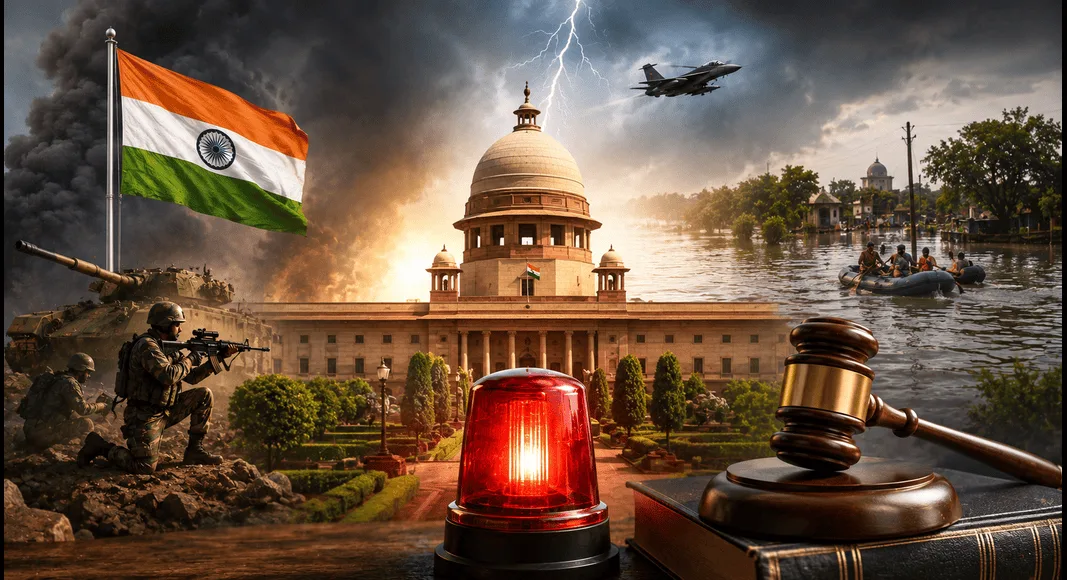
The Emergency Provisions in the Indian Constitution are special powers given to the Central Government to deal with extraordinary situations such as war, armed rebellion, failure of constitutional machinery in a state, or financial instability. During such situations, the normal functioning of the government may not be enough to protect the country. Therefore, the Constitution allows the President of India to declare an emergency under specific conditions.
These provisions are mentioned in Part XVIII (Articles 352 to 360) of the Constitution. They help protect the sovereignty, unity, integrity, security, and democratic system of India. However, since these powers are very strong, they can only be used according to constitutional rules and with parliamentary approval.

Over the years, several constitutional amendments and Supreme Court judgments have placed safeguards to prevent misuse of emergency powers.
What are Emergency Provisions?
Emergency Provisions are constitutional measures that allow the Central Government to take extraordinary actions during serious national crises. During an emergency, certain powers of the Union Government increase, while the powers of states may be reduced temporarily.
The main objectives of Emergency Provisions are:
- Protect the country’s sovereignty and integrity.
- Maintain national security.
- Restore constitutional governance.
- Protect financial stability.
- Ensure smooth administration during crises.
Types of Emergency in India
The Indian Constitution provides three types of emergencies:
- National Emergency (Article 352)
- President’s Rule or Constitutional Emergency (Article 356)
- Financial Emergency (Article 360)
Let us understand each of them in detail.
National Emergency (Article 352)
A National Emergency is declared when the security of India or any part of the country is threatened.
Grounds for National Emergency
The President can declare a National Emergency on three grounds:
- War
- External Aggression
- Armed Rebellion
The President can even declare it before the actual occurrence if there is a serious possibility of such a threat.
External Emergency
When the emergency is declared because of:
- War
- External Aggression
it is known as an External Emergency.
Internal Emergency
When the emergency is declared because of:
- Armed Rebellion
it is called an Internal Emergency.
Earlier, the Constitution used the term Internal Disturbance, but the 44th Constitutional Amendment Act, 1978 replaced it with Armed Rebellion to reduce misuse.
Difference Between War and External Aggression
War
War means two countries openly declare or use armed forces against each other.
Example:
A formally declared military conflict between India and another country.
External Aggression
External aggression means attacks from another country without a formal declaration of war.
Example:
Cross-border military attacks without officially declaring war.
Parliamentary Approval of National Emergency
The President’s proclamation does not become permanent immediately.
It must satisfy the following conditions:
- Both Lok Sabha and Rajya Sabha must approve it within one month.
- Approval requires a Special Majority.
- If Lok Sabha is dissolved, Rajya Sabha can approve first.
- After the new Lok Sabha is formed, it must approve the emergency within 30 days of its first sitting.
Duration of National Emergency
Once approved:
- It remains valid for six months.
- It can be extended every six months with parliamentary approval.
- There is no maximum time limit if Parliament continues approving it.
Revocation of National Emergency
The President may revoke the emergency at any time.
It also ends if:
- Lok Sabha passes a resolution by a simple majority disapproving its continuation.
Effects of National Emergency
A National Emergency brings major constitutional changes.
1. Effect on Centre-State Relations
Executive Powers
The Union Government can give directions to any State on any matter.
Legislative Powers
Parliament can make laws on subjects listed in the State List.
The President may also issue Ordinances on State subjects if Parliament is not in session.
These laws stop operating six months after the emergency ends unless Parliament decides otherwise.
Financial Powers
The President may change the distribution of financial resources between the Centre and the States.
2. Effect on Lok Sabha and State Assemblies
The term of Lok Sabha can be extended by one year at a time during National Emergency.
However:
- Extension cannot continue beyond six months after the emergency ends.
Similarly:
- State Legislative Assemblies can also have their tenure extended under the same conditions.
3. Effect on Fundamental Rights
National Emergency affects Fundamental Rights mainly through Articles 358 and 359.
Article 358
Article 19 automatically remains suspended only when the emergency is declared because of:
- War
- External Aggression
It does not apply during Armed Rebellion after the 44th Amendment.
Once the emergency ends, Article 19 automatically becomes active again.
Article 359
The President may suspend the right of citizens to approach courts for enforcement of specified Fundamental Rights.
However:
- The rights themselves do not disappear.
- Only the legal remedy is temporarily suspended.
The 44th Amendment provides important protection.
The rights guaranteed under:
- Article 20
- Article 21
cannot be suspended even during an emergency.
National Emergencies Declared in India
India has declared National Emergency three times.
1962
Declared due to the India-China War.
Continued until 1968.
1971
Declared because of the India-Pakistan War.
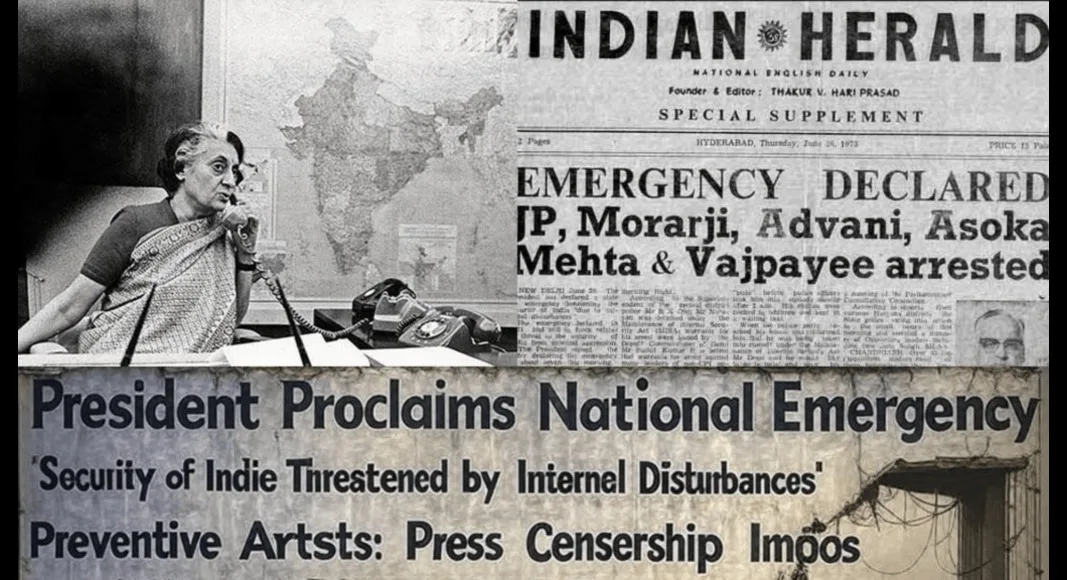
1975
Declared on the ground of Internal Disturbance.
This Emergency became one of the most controversial periods in Indian democracy.
Both the 1971 and 1975 emergencies ended in March 1977.
President’s Rule (Article 356)
President’s Rule is also called Constitutional Emergency.
It is imposed when the constitutional machinery of a state fails.
Article 355 places a duty on the Union Government to ensure that every state government functions according to the Constitution.
If this becomes impossible, Article 356 can be used.
Grounds for President’s Rule
President’s Rule can be declared when:
- The President is satisfied that the state government cannot function according to the Constitution.
- A state fails to follow lawful directions given by the Centre under Article 365.
Parliamentary Approval
President’s Rule must be approved by both Houses of Parliament within two months.
If Lok Sabha is dissolved:
- Rajya Sabha may approve it first.
- Newly elected Lok Sabha must approve it within 30 days after its first meeting.
Duration of President’s Rule
Initially valid for six months.
It can be extended with parliamentary approval.
Under certain constitutional conditions, it can continue up to three years.
Effects of President’s Rule
During President’s Rule:
- The President takes over the functions of the State Government.
- Parliament exercises the powers of the State Legislature.
- The Governor functions on behalf of the President.
- Necessary constitutional arrangements may be made for administration.
Judicial Review of President’s Rule
Initially, the 38th Constitutional Amendment (1975) made the President’s satisfaction beyond judicial review.
The 44th Constitutional Amendment (1978) removed this protection.
Today, courts can review whether President’s Rule was imposed legally.
The landmark S.R. Bommai Case (1994) strengthened judicial control over misuse of Article 356.
Financial Emergency (Article 360)
Financial Emergency can be declared when India’s financial stability or credit is threatened.
Unlike National Emergency, Financial Emergency has never been declared in India.
Parliamentary Approval
The proclamation must be approved by both Houses of Parliament within two months.
If Lok Sabha is dissolved:
- Rajya Sabha can approve first.
- Lok Sabha must approve within 30 days after reconstitution.
Duration
Once approved:
- It continues until revoked by the President.
- There is no maximum time limit.
Effects of Financial Emergency
During Financial Emergency:
- The Centre gains greater control over state financial matters.
- The President can direct states regarding financial management.
- Salaries and allowances of government employees may be reduced.
- Salaries of Supreme Court and High Court judges may also be reduced.
- Money Bills passed by State Legislatures may require Presidential approval.
Important Constitutional Amendments Related to Emergency
38th Constitutional Amendment (1975)
- Made emergency declarations beyond judicial review.
44th Constitutional Amendment (1978)
This amendment introduced several safeguards:
- Replaced “Internal Disturbance” with “Armed Rebellion.”
- Reduced chances of misuse.
- Allowed judicial review.
- Protected Articles 20 and 21.
- Limited suspension of Article 19 only to War and External Aggression.
These changes greatly strengthened Indian democracy.
Important Supreme Court Judgments
Minerva Mills Case (1980)
The Supreme Court held that National Emergency can be challenged if declared with mala fide intentions or irrelevant reasons.
S.R. Bommai Case (1994)
The Court ruled that President’s Rule under Article 356 is subject to judicial review.
This judgment significantly reduced arbitrary dismissal of elected state governments.
Criticism of Emergency Provisions
Many members of the Constituent Assembly expressed concerns about these provisions.
Their major objections were:
- The federal system could become too centralized.
- States might lose their autonomy.
- The President could become too powerful.
- Fundamental Rights could become ineffective.
- Democracy might suffer if emergency powers were misused.
These concerns became especially important after the Emergency of 1975–77.
Dr. B.R. Ambedkar’s View
Dr. B.R. Ambedkar defended Emergency Provisions because every Constitution needs safeguards during exceptional situations.
However, he also admitted that these powers could be misused for political purposes.
His warning later proved valuable, leading to constitutional reforms after the Emergency period.
Importance of Emergency Provisions Today
Even today, Emergency Provisions remain important because they help India deal with serious national crises.
They are useful for:
- Protecting national security.
- Maintaining constitutional governance.
- Managing wartime situations.
- Protecting financial stability.
- Preserving the unity and integrity of the nation.
At the same time, constitutional safeguards and judicial review ensure these powers are not misused.
Conclusion
The Emergency Provisions of the Indian Constitution are among its most powerful features. They enable the government to act quickly during extraordinary situations while ensuring that constitutional processes continue.
Experience from India’s constitutional history shows that such powers must be exercised with great responsibility. Amendments like the 44th Constitutional Amendment and important Supreme Court judgments have made these provisions more balanced and democratic.
Today, Emergency Provisions continue to serve as an important constitutional safeguard, helping India respond effectively to national crises while protecting democracy, federalism, and the fundamental rights of citizens.
FAQs
1. What are Emergency Provisions in the Indian Constitution?
Emergency Provisions are special constitutional powers that allow the Central Government to handle national, state, or financial crises effectively.
2. Which Articles deal with Emergency Provisions?
Emergency Provisions are covered under Part XVIII of the Constitution (Articles 352 to 360).
3. How many types of emergencies are there in India?
There are three types:
- National Emergency (Article 352)
- President’s Rule or Constitutional Emergency (Article 356)
- Financial Emergency (Article 360)
4. When can a National Emergency be declared?
A National Emergency can be declared during war, external aggression, or armed rebellion.
5. What is President’s Rule?
President’s Rule is imposed when the constitutional machinery of a state fails, allowing the Central Government to take over the state’s administration.
6. Has Financial Emergency ever been declared in India?
No. India has never declared a Financial Emergency since the Constitution came into force.
7. Which Fundamental Rights cannot be suspended during an Emergency?
The rights under Article 20 (Protection in respect of conviction for offences) and Article 21 (Right to Life and Personal Liberty) cannot be suspended.
8. Which Constitutional Amendment strengthened safeguards against misuse of Emergency?
The 44th Constitutional Amendment Act, 1978 introduced important safeguards and limited the misuse of emergency powers.
9. How many times has National Emergency been imposed in India?
National Emergency has been declared three times:
- 1962 (China War)
- 1971 (India-Pakistan War)
- 1975 (Internal Emergency)
10. Why are Emergency Provisions important?
They help protect India’s sovereignty, unity, constitutional governance, financial stability, and national security during extraordinary situations.