



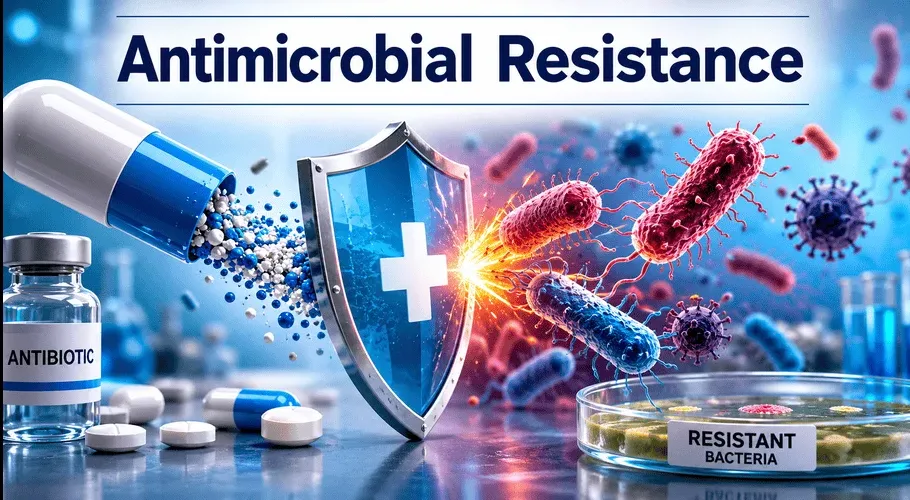
Antimicrobial Resistance (AMR): A Serious Challenge for Modern Medicine

Antimicrobial Resistance (AMR) has become one of the biggest health challenges in the world today. It happens when microorganisms such as bacteria, viruses, fungi, and parasites stop responding to medicines that were once effective against them. As a result, infections become difficult to treat, diseases spread more easily, and the risk of death increases.
The World Health Organization (WHO) has identified Antimicrobial Resistance (AMR) as one of the top global public health threats. AMR affects people of all ages and countries, but developing countries like India are facing a much bigger risk because of high infection rates, poor healthcare systems, and the misuse of antibiotics.

In recent years, hospitals in India have reported very high resistance rates in many harmful bacteria. The Covid-19 pandemic also increased the misuse of antibiotics, which made the problem even worse. If proper steps are not taken soon, common infections that are easily treatable today may become deadly in the future.
What is Antimicrobial Resistance (AMR)?
Antimicrobial Resistance (AMR) occurs when microorganisms change over time and no longer respond to antimicrobial medicines. These medicines include antibiotics, antivirals, antifungals, and antiparasitic drugs.
For example, antibiotics are used to kill bacteria. But when bacteria become resistant, the antibiotics stop working properly. These resistant microorganisms are often called “superbugs.”
AMR makes infections harder to treat and increases the chances of severe illness and death. It also increases healthcare costs because patients require longer hospital stays, additional tests, and stronger medicines.
In India, thousands of newborn babies die every year because infections do not respond to first-line antibiotics. According to studies by the Indian Council of Medical Research (ICMR), Covid-19 patients who developed drug-resistant infections in hospitals had very high death rates.
One of the most dangerous drug-resistant bacteria known as New Delhi Metallo-beta-lactamase-1 (NDM-1) first emerged from South Asia and later spread across the world.
Why is AMR a Major Concern?
1. Threat to Human Life
AMR has made many infections difficult to cure. Diseases like pneumonia, tuberculosis, sepsis, and urinary infections are becoming harder to treat because antibiotics are losing their effectiveness.
Sepsis is a dangerous condition caused by infection spreading in the body. Earlier, antibiotics could save many lives, but resistant bacteria now make treatment difficult.
2. Risk to Modern Medical Procedures
Modern medical treatments depend heavily on antibiotics. Procedures such as:
- Organ transplantation
- Cancer chemotherapy
- Caesarean delivery
- Joint replacement surgery
- Diabetes treatment
all require effective antibiotics to prevent infections. Without antibiotics, these procedures become highly risky.
3. Rise of Superbugs
Improper use of antibiotics has created dangerous superbugs that are resistant to multiple medicines. These superbugs can spread quickly in hospitals and communities.
4. Economic Burden
AMR increases healthcare expenses due to:
- Longer hospital stays
- Costly medicines
- More laboratory tests
- Loss of productivity
Poor families are affected the most because treatment becomes expensive.
5. Threat to Global Development
AMR threatens global health goals and sustainable development. If infections continue to become resistant, many achievements in modern medicine may be lost.
Main Reasons Behind the Spread of AMR
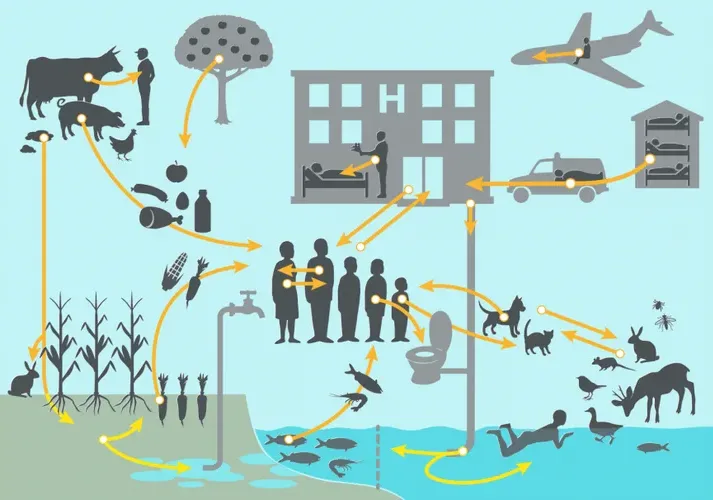
Overuse of Antibiotics
One of the biggest reasons for AMR is the unnecessary use of antibiotics. Many people take antibiotics even for viral infections like cold and flu, where antibiotics do not work.
Self-Medication
In many countries, including India, people buy antibiotics without a doctor’s prescription. Self-medication often leads to wrong dosage and incomplete treatment.
Not Completing Full Medicine Course
Many patients stop taking antibiotics once they feel better. This allows some bacteria to survive and become resistant.
Misuse in Animals and Poultry
Antibiotics are widely used in poultry, fish farming, and livestock to promote faster growth. These antibiotics enter the food chain and contribute to resistance in humans.
Poor Sanitation
Untreated sewage and medical waste contaminate rivers and lakes with antibiotic-resistant bacteria. Poor hygiene and sanitation increase the spread of infections.
Pollution from Pharmaceutical Industries
Wastewater from antibiotic manufacturing units often contains antibiotic residues. These chemicals pollute water bodies and help resistant bacteria grow.
Weak Infection Control in Hospitals
Poor hygiene practices in hospitals also contribute to AMR. Studies have shown that many healthcare workers do not wash hands properly after treating patients.
AMR Situation in India
India faces a serious AMR problem because of:
- High population
- Heavy disease burden
- Easy access to antibiotics
- Low public awareness
- Poor sanitation
India has one of the highest rates of bacterial infections in the world. The misuse of antibiotics during the Covid-19 pandemic further increased drug resistance.
According to global reports, AMR caused millions of deaths worldwide. Diseases such as pneumonia and bloodstream infections were among the leading causes of death linked to resistant bacteria.
Bacteria like MRSA (Methicillin-Resistant Staphylococcus Aureus) and drug-resistant E. coli are becoming increasingly dangerous.
India has also become an important source of resistance genes because antibiotics are easily available over the counter.
Effects of Antimicrobial Resistance
Increased Death Rates
When antibiotics fail, infections become deadly. Patients suffering from resistant infections often have lower chances of survival.
Longer Recovery Time
Patients with resistant infections take more time to recover and may remain hospitalized for weeks.
Increased Medical Costs
Treatment of resistant infections requires expensive medicines and advanced care, increasing the financial burden on families and governments.
Reduced Effectiveness of Existing Medicines
As resistance grows, many antibiotics become useless. Doctors then have very limited treatment options.
Threat of an “Antibiotic Apocalypse”
Experts warn that if AMR continues to rise, the world may enter an “antibiotic apocalypse,” where even minor infections and small injuries could become fatal.
Challenges in Controlling AMR
Lack of Awareness
Many people do not understand the dangers of antibiotic misuse. Public awareness about AMR remains low.
Weak Healthcare Systems
Many hospitals lack proper infection control systems, laboratories, and surveillance mechanisms.
Lack of New Antibiotics
Very few new antibiotics have been developed in recent decades because pharmaceutical companies find antibiotic research less profitable.
Poor Monitoring
In many countries, antibiotic use and resistance levels are not properly monitored.
Inadequate Funding
Governments often do not allocate enough funds for AMR research, surveillance, and awareness programs.
Environmental Pollution
Current pollution control systems in many countries do not properly monitor antibiotic residues released into the environment.
Steps to Prevent Antimicrobial Resistance
Use Antibiotics Responsibly
Antibiotics should only be taken when prescribed by a doctor. People should never use antibiotics without medical advice.
Complete Full Course of Medicine
Patients must complete the entire course of antibiotics even if they feel better earlier.
Avoid Self-Medication
Buying antibiotics without prescription should be avoided.
Improve Hygiene
Good hygiene practices such as hand washing can reduce infections and decrease the need for antibiotics.
Vaccination
Vaccines prevent diseases and reduce the need for antibiotic use.
Better Hospital Infection Control
Hospitals must improve cleanliness, hand hygiene, and patient safety measures.
Research and Innovation
Scientists need to develop new antibiotics and better diagnostic tools to fight resistant bacteria.
Safe Disposal of Waste
Proper treatment of sewage, hospital waste, and industrial wastewater is necessary to prevent environmental contamination.
Government Initiatives in India
National Programme on AMR Containment
Launched in 2012, this program strengthened laboratories and surveillance systems in medical colleges.
National Action Plan on AMR
India launched the National Action Plan in 2017 based on the One Health Approach. It focuses on cooperation between human health, animal health, and environmental sectors.
AMR Surveillance and Research Network (AMRSN)
This network monitors patterns of drug-resistant infections across the country.
Antibiotic Stewardship Program (AMSP)
ICMR introduced AMSP to reduce misuse and overuse of antibiotics in hospitals.
Regulation of Antibiotic Sales
The government introduced Schedule H1 rules to control the sale of certain antibiotics without prescription.
Ban on Harmful Antibiotics in Fisheries
The Food Safety and Standards Authority of India (FSSAI) banned several antibiotics in fisheries and regulated antibiotic use in meat production.
Global Efforts Against AMR
World Antimicrobial Awareness Week (WAAW)
This global campaign spreads awareness about antimicrobial resistance and encourages responsible use of medicines.
Global Antimicrobial Resistance and Use Surveillance System (GLASS)
WHO launched GLASS in 2015 to collect data on antimicrobial resistance worldwide and support global strategies.
One Health Approach
The One Health Approach recognizes that human health, animal health, and environmental health are connected.
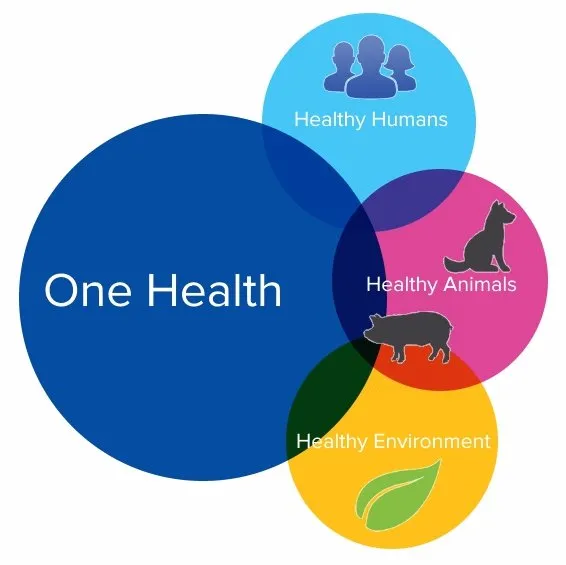
For example:
- Antibiotic use in animals affects humans.
- Polluted water spreads resistant bacteria.
- Environmental contamination increases resistance.
Therefore, governments, doctors, veterinarians, environmental experts, and industries must work together to fight AMR.
Way Forward
To control Antimicrobial Resistance (AMR), strong action is needed at every level.
Public Awareness
People should be educated about the proper use of antibiotics and the dangers of self-medication.
Strong Policies
Governments must create strict rules to regulate antibiotic sales and monitor resistance.
Better Research
Investment in new antibiotics, vaccines, and diagnostic technologies is essential.
Improved Surveillance
Countries must improve data collection and tracking systems for resistant infections.
Cleaner Environment
Industrial waste and sewage must be treated properly before being released into rivers and lakes.
International Cooperation
AMR is a global problem that requires cooperation among countries, health organizations, and researchers.
Conclusion
Antimicrobial Resistance (AMR) is one of the greatest threats to global health today. The misuse and overuse of antibiotics in humans, animals, and industries have made many infections difficult to treat. If urgent action is not taken, the world may face a future where common diseases become deadly again.
India is among the countries most affected by AMR because of high infection rates, easy access to antibiotics, and poor sanitation. However, government initiatives, awareness programs, and international cooperation can help control this growing crisis.
Every individual has a role to play in fighting AMR. Responsible use of antibiotics, better hygiene, vaccination, and awareness can help protect future generations from dangerous drug-resistant infections.
FAQs on Antimicrobial Resistance (AMR)
1. What is Antimicrobial Resistance (AMR)?
Antimicrobial Resistance (AMR) is a condition where bacteria, viruses, fungi, and parasites stop responding to medicines used to treat infections.
2. Why is AMR dangerous?
AMR makes infections difficult to treat, increases healthcare costs, and can lead to severe illness or death.
3. What causes Antimicrobial Resistance?
Overuse of antibiotics, self-medication, incomplete treatment, poor sanitation, and misuse of antibiotics in animals are major causes of AMR.
4. What are superbugs?
Superbugs are microorganisms that have become resistant to multiple antimicrobial medicines.
5. How can AMR be prevented?
AMR can be prevented by using antibiotics responsibly, completing prescribed medicine courses, improving hygiene, and avoiding self-medication.
6. Why should antibiotics not be taken without a doctor’s advice?
Improper use of antibiotics can increase drug resistance and make infections harder to cure in the future.
7. What is the One Health Approach in AMR?
The One Health Approach connects human, animal, and environmental health to control antimicrobial resistance effectively.
8. Which organizations are working against AMR?
Organizations like the World Health Organization and Indian Council of Medical Research are actively working to control AMR.