



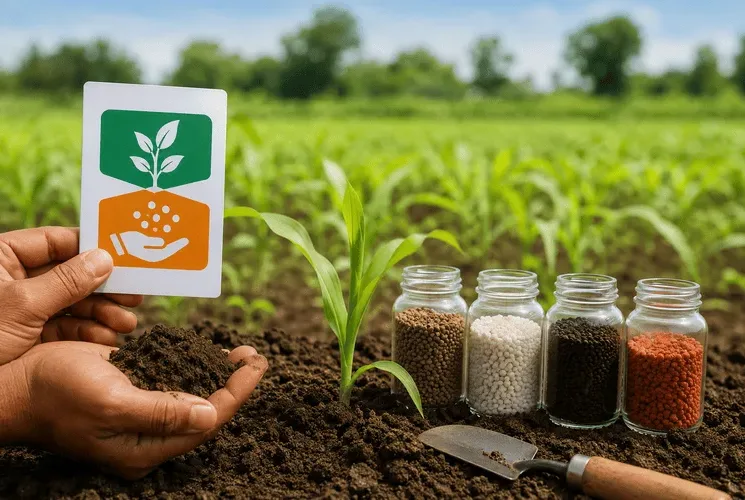
Soil Health Card Scheme: Importance, Benefits, Challenges, and Future of Soil Health in India

Soil Health Card Scheme is one of the most important agricultural schemes launched by the Government of India to improve the quality of soil and increase farmers’ income. Agriculture is the backbone of India’s economy, and healthy soil is necessary for better crop production. Over the years, excessive use of chemical fertilizers and poor farming practices have damaged soil fertility in many parts of the country. This has reduced crop productivity and increased farming costs.
To solve this problem, the Government of India launched the Soil Health Card (SHC) Scheme on 19 February 2015 under the Ministry of Agriculture and Farmers’ Welfare. The main purpose of this scheme is to provide farmers with scientific information about the condition of their soil and recommend the right type and amount of fertilizers needed for better crop production.

The Soil Health Card Scheme helps farmers understand the nutrient condition of their land. It also encourages balanced use of fertilizers and promotes sustainable farming practices. The scheme is considered an important step toward improving soil fertility, protecting the environment, and increasing agricultural productivity in India.
What is the Soil Health Card Scheme?
The Soil Health Card Scheme is a government initiative that provides farmers with a printed report about the health of their soil. This report contains detailed information about the nutrient status of the soil and suggestions for improving soil fertility.
The Soil Health Card tells farmers about the quantity of nutrients available in the soil and the nutrients that are lacking. Based on the test results, experts recommend the correct dosage of fertilizers and manure for different crops.
The Soil Health Card is provided to farmers every three years so that they can regularly monitor the condition of their soil and make necessary improvements.
The scheme also supports sustainable agriculture by reducing the overuse of chemical fertilizers and promoting balanced nutrient management.
Launch of the Soil Health Card Scheme
The Soil Health Card Scheme was officially launched by the Government of India on 19 February 2015. The scheme was introduced by the Ministry of Agriculture and Farmers’ Welfare.
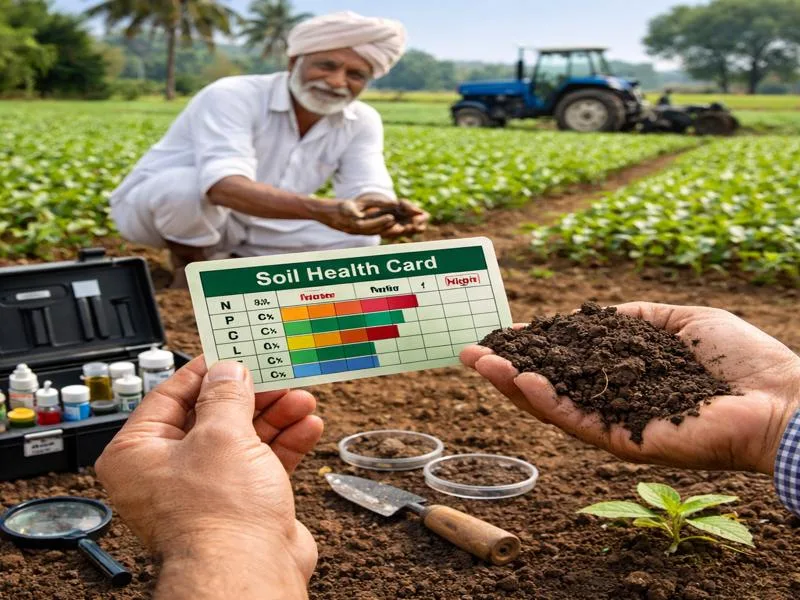
Every year, 19 February is observed as Soil Health Card Day to spread awareness among farmers about the importance of soil testing and soil management.
The government also made the Soil Health Card available online through the SHC portal. Farmers can download and print their cards in different regional languages.
Information Included in the Soil Health Card
The Soil Health Card contains information about different nutrients and properties of the soil. It tests the soil on the basis of 12 important parameters.
These parameters include:
- pH value
- Electrical Conductivity (EC)
- Organic Carbon (OC)
- Nitrogen (N)
- Phosphorus (P)
- Potassium (K)
- Sulphur (S)
- Zinc (Zn)
- Boron (B)
- Iron (Fe)
- Manganese (Mn)
- Copper (Cu)
The card also provides crop-wise fertilizer recommendations and guidance for improving soil quality.
Objectives of the Soil Health Card Scheme
The Soil Health Card Scheme was launched with several important objectives. These objectives aim to improve agriculture and support farmers.
Improve Soil Quality
One of the main goals of the scheme is to improve the health and fertility of soil by promoting balanced use of nutrients.
Increase Farmers’ Income
Healthy soil leads to better crop production and lower farming costs. This helps farmers earn higher profits.
Reduce Excessive Use of Fertilizers
Many farmers use excessive amounts of urea and chemical fertilizers. The scheme encourages proper fertilizer usage based on soil testing.
Promote Sustainable Farming
The scheme supports environmentally friendly farming practices and helps protect natural resources.
Provide Scientific Guidance
The Soil Health Card gives scientific recommendations to farmers regarding fertilizer use and crop selection.
Generate Employment
The scheme creates employment opportunities for rural youth in soil testing laboratories and agricultural services.
Improve Soil Testing Facilities
The government aims to make soil testing facilities easily available to farmers across the country.
Soil Testing Process Under the Scheme
Soil testing is an important part of the Soil Health Card Scheme. The process follows scientific methods to ensure accurate results.
Collection of Soil Samples
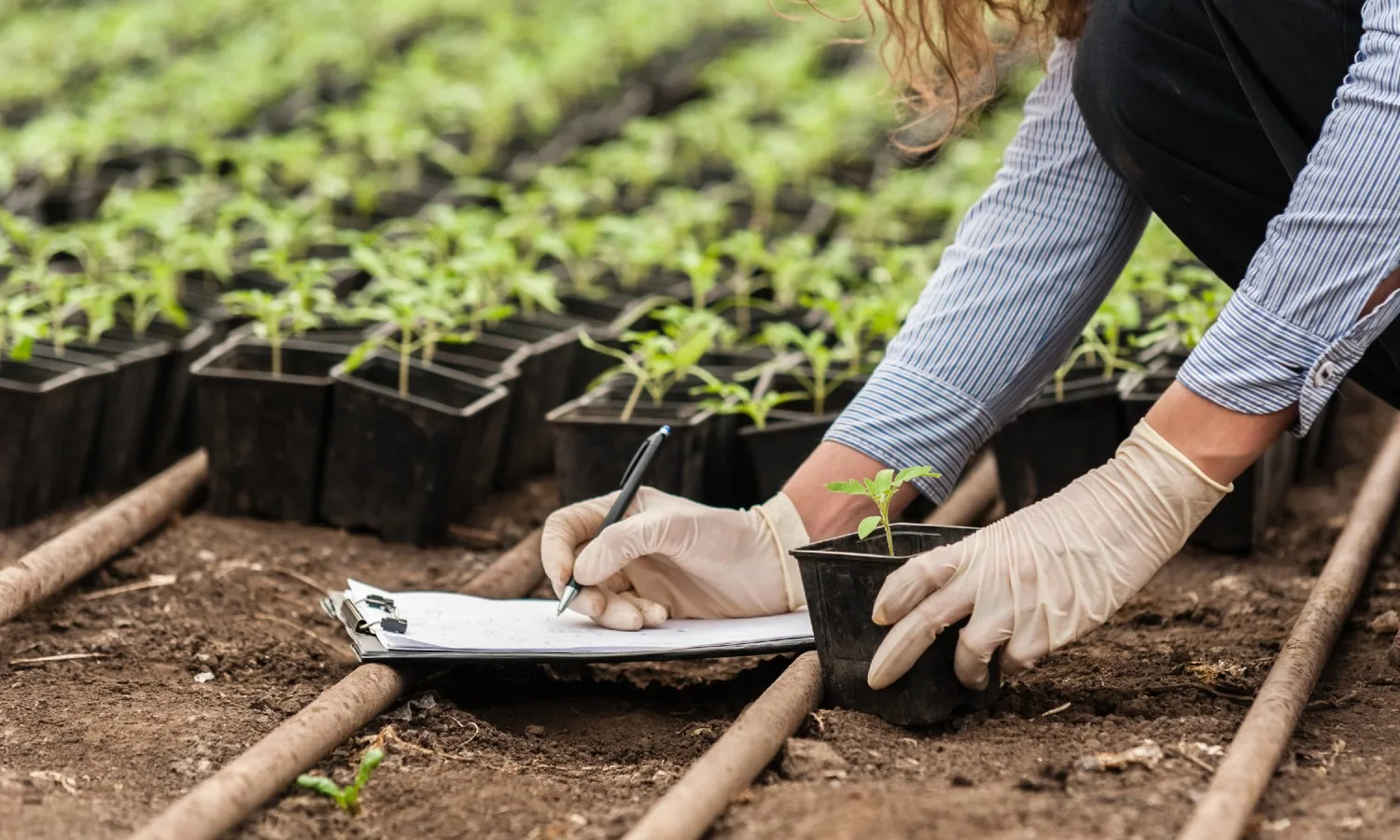
Soil samples are collected from farmers’ fields after harvesting seasons or when there is no standing crop.
In irrigated areas, one sample is collected for every 2.5 hectares of land. In rain-fed areas, one sample is collected for every 10 hectares.
Use of GPS and Revenue Maps
Modern technologies such as GPS tools and revenue maps are used to identify and collect soil samples accurately.
Laboratory Testing
The collected samples are sent to laboratories for testing. Experts analyze the samples for different nutrients and soil properties.
Preparation of Soil Health Card
After testing, a Soil Health Card is prepared containing detailed information and recommendations.
Distribution to Farmers
The card is distributed to farmers through agricultural departments and online portals.
Importance of the Soil Health Card Scheme
The Soil Health Card Scheme has great importance for Indian agriculture and farmers.
Balanced Use of Fertilizers
Many farmers use excessive nitrogen fertilizers, especially urea. This damages soil health and reduces productivity over time.
The Soil Health Card helps farmers use fertilizers in balanced quantities according to the needs of the soil.
Improvement in Soil Fertility
The scheme helps improve soil fertility by encouraging proper nutrient management and use of micronutrients.
Higher Crop Productivity
Healthy soil increases crop yield and improves the quality of agricultural products.
Reduction in Farming Costs
Farmers can reduce unnecessary spending on fertilizers by using only the recommended quantity.
Protection of Environment
Balanced fertilizer use reduces soil pollution and water contamination caused by excessive chemicals.
Scientific Farming Practices
The scheme promotes scientific farming methods and increases awareness among farmers.
Better Crop Selection
Farmers receive crop-wise recommendations that help them choose suitable crops for their soil type.
Benefits of the Soil Health Card Scheme
The Soil Health Card Scheme provides many benefits to farmers and the agricultural sector.
Better Understanding of Soil
Farmers learn about the condition of their soil and understand which nutrients are lacking.
Increased Fertility
The use of recommended nutrients improves soil fertility and crop growth.
Improved Production
Healthy soil helps farmers produce more crops with better quality.
Lower Use of Chemicals
The scheme reduces unnecessary use of chemical fertilizers and promotes organic farming practices.
Increase in Farmers’ Profit
Lower input costs and higher crop yield increase the overall income of farmers.
Awareness About Soil Management
The scheme spreads awareness regarding soil conservation and nutrient management.
Support for Sustainable Agriculture
It encourages long-term agricultural sustainability and environmental protection.
Challenges and Drawbacks of the Soil Health Card Scheme
Although the Soil Health Card Scheme is beneficial, it also faces several challenges.
Lack of Awareness Among Farmers
Many farmers are unable to understand the information written on the Soil Health Card. Due to this, they do not follow the recommendations properly.
Poor Coordination
There is often a lack of coordination between agricultural officers, laboratories, and farmers.
Inadequate Infrastructure
India still lacks sufficient soil testing laboratories and modern equipment in many rural areas.
Delay in Distribution
Sometimes there are delays in testing soil samples and distributing Soil Health Cards to farmers.
Limited Parameters
The Soil Health Card mainly focuses on chemical nutrients and ignores some important soil characteristics.
Exclusion of Important Factors
Certain important factors are not properly included in the scheme, such as:
- Soil moisture
- Cropping history
- Soil texture
- Soil depth
- Microbial activity
- Water availability
- Soil slope
Same Sampling Method
The number of samples collected is not always based on soil variability, which may affect accuracy.
Government Initiatives to Improve Soil Health
The Government of India has launched several other initiatives along with the Soil Health Card Scheme to improve soil quality.
Organic Farming
The government promotes organic farming to reduce the use of harmful chemicals.
Paramparagat Krishi Vikas Yojana (PKVY)
This scheme encourages traditional and organic farming methods.
Digital Agriculture
Modern digital technologies are being used to improve farming practices and soil management.
Carbon Farming
Carbon farming helps improve soil fertility and reduce climate change impacts.
Nutrient Based Subsidy (NBS) Scheme
The government provides subsidies on fertilizers based on nutrient content.
Fertilizer Self-Sufficiency
India is also focusing on increasing domestic fertilizer production.
Role of Farmers in Maintaining Soil Health
Farmers play a major role in protecting and improving soil health. Some important steps farmers can take include:
- Using fertilizers in balanced amounts
- Practicing crop rotation
- Using organic manure and compost
- Avoiding over-irrigation
- Planting cover crops
- Reducing excessive chemical use
- Following recommendations given in the Soil Health Card
These practices can improve soil quality and increase agricultural sustainability.
Way Forward for the Soil Health Card Scheme
The Soil Health Card Scheme can become more effective through proper planning and implementation.
Increase Awareness
The government should organize awareness campaigns and training programs before sowing seasons so that farmers understand the benefits of the scheme.
Improve Soil Testing Facilities
More soil testing laboratories and mobile testing units should be established in rural areas.
Use of Modern Technology
Digital tools, mobile applications, and online platforms should be used to provide quick access to soil information.
Better Monitoring System
A specialized body should monitor soil testing quality and implementation of the scheme at both central and state levels.
Demonstration Projects
The government should conduct demonstration projects in villages to show farmers the benefits of balanced nutrient management.
Inclusion of More Parameters
Important soil characteristics like microbial activity, soil moisture, and water availability should also be included in the Soil Health Card.
Strong Coordination
Better coordination among farmers, scientists, agricultural officers, and laboratories is necessary for successful implementation.
Conclusion
The Soil Health Card Scheme is an important initiative for improving agriculture and supporting farmers in India. Healthy soil is necessary for food security, environmental protection, and sustainable farming. Through scientific soil testing and balanced fertilizer recommendations, the scheme helps farmers improve crop productivity and reduce farming costs.
Although the scheme has several challenges such as lack of awareness, inadequate infrastructure, and delays in implementation, it has still played a significant role in promoting soil health management in India.
With better awareness, modern technology, improved infrastructure, and proper monitoring, the Soil Health Card Scheme can become even more successful in the future. Protecting soil health is not only important for farmers but also for the overall development of the country.
Healthy soil leads to healthy crops, healthy people, and a healthy environment. Therefore, improving soil health should remain a major priority for India’s agricultural development.
FAQs on Soil Health Card Scheme
1. What is the Soil Health Card Scheme?
The Soil Health Card Scheme is a government initiative that provides farmers with information about the nutrient status of their soil and recommendations for proper fertilizer use.
2. When was the Soil Health Card Scheme launched?
The scheme was launched on 19 February 2015 by the Ministry of Agriculture and Farmers’ Welfare.
3. What is the main objective of the Soil Health Card Scheme?
The main objective is to improve soil fertility, increase crop productivity, and help farmers use fertilizers in a balanced way.
4. How often is a Soil Health Card provided to farmers?
A Soil Health Card is generally provided once every three years.
5. Which nutrients are tested in the Soil Health Card?
The card tests 12 parameters including Nitrogen, Phosphorus, Potassium, Sulphur, Zinc, Boron, Iron, and soil pH.
6. How does the Soil Health Card help farmers?
It helps farmers understand soil conditions, reduce fertilizer costs, improve crop yield, and maintain soil fertility.
7. Who collects soil samples under the scheme?
Soil samples are collected by agricultural department staff, experts, or trained agencies.
8. Why is soil testing important in agriculture?
Soil testing helps identify nutrient deficiencies and ensures proper use of fertilizers for healthy crop growth.