




Environment and Climate Change Initiatives

Environment and Climate Change Initiatives have become one of the most important priorities for India and the world. Rapid industrialization, urbanization, deforestation, pollution, and climate change have created serious environmental challenges. Rising temperatures, extreme weather events, air pollution, water scarcity, loss of biodiversity, and increasing greenhouse gas emissions affect both nature and human life.
Thank you for reading this post, don't forget to subscribe!To address these challenges, the Ministry of Environment, Forest and Climate Change (MoEFCC) has introduced several schemes, policies, conservation programmes, and international commitments. These initiatives aim to improve air quality, protect forests and wildlife, promote clean energy, reduce pollution, and fulfill India’s commitments under global climate agreements.
The Year End Review 2019 highlighted many important environmental initiatives, including the National Clean Air Programme (NCAP), India Cooling Action Plan (ICAP), Compensatory Afforestation Fund (CAMPA), wildlife conservation projects, and India’s active participation in international climate conferences. Since 2019, several new policies and updated climate commitments have also been introduced.
Importance of Environmental Protection
A healthy environment is necessary for sustainable development.
Environmental protection helps to:
- Improve public health.
- Reduce pollution.
- Protect forests and wildlife.
- Preserve biodiversity.
- Ensure food and water security.
- Reduce the impact of climate change.
- Support sustainable economic growth.
- Protect future generations.
India follows the principle of balancing economic development with environmental conservation.
Climate Change Performance Index (CCPI)
The Climate Change Performance Index (CCPI) measures how well countries are performing in climate protection.
About the Index
- Published annually by Germanwatch, Climate Action Network (CAN) International, and the NewClimate Institute.
- Evaluates major greenhouse gas emitting countries and the European Union.
- Measures performance based on:
- Greenhouse gas emissions
- Renewable energy
- Energy use
- Climate policy
India’s Performance
In the 2019 CCPI, India scored 62.93 and ranked 11th.
Since then, India’s ranking has generally remained among the better-performing major economies due to its renewable energy expansion and relatively low per capita emissions, although challenges remain in reducing coal dependence and improving air quality.
National Clean Air Programme (NCAP)
The National Clean Air Programme (NCAP) was launched in January 2019.
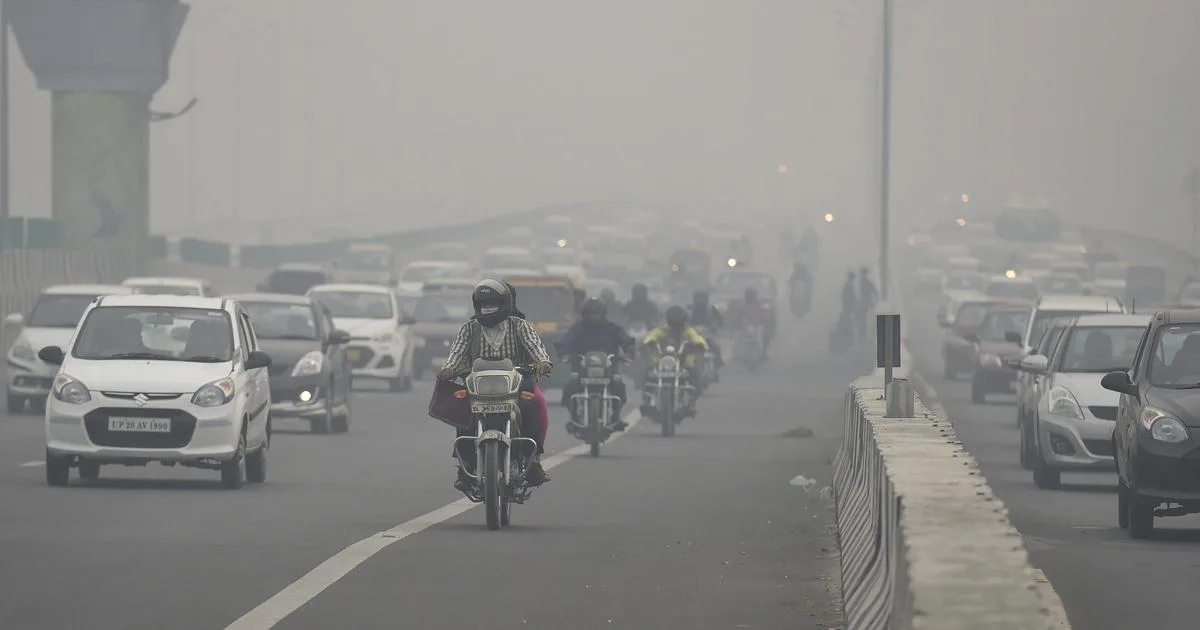
It is India’s first nationwide air pollution control programme.
Objectives
- Improve air quality across the country.
- Reduce PM10 and PM2.5 pollution.
- Strengthen air quality monitoring.
- Improve public awareness.
- Promote cleaner transportation.
- Encourage better waste management.
Initially, the programme targeted 102 cities, which has since expanded to cover more than 130 non-attainment cities.
Recent Updates
The targets have been strengthened, with many cities working towards reducing particulate pollution by up to 40% or more, depending on updated national goals and city-specific action plans.
Importance
NCAP encourages coordinated action by Central, State, and local governments to reduce air pollution.
India Cooling Action Plan (ICAP)
India launched the India Cooling Action Plan (ICAP) in 2019.
It is the world’s first comprehensive national cooling action plan.
Objectives
- Reduce cooling demand.
- Improve energy efficiency.
- Promote eco-friendly refrigerants.
- Strengthen cold-chain infrastructure.
- Improve cooling in agriculture, healthcare, transport, and buildings.
Long-Term Goals
The plan aims to:
- Reduce cooling demand.
- Improve refrigeration efficiency.
- Reduce greenhouse gas emissions.
- Promote sustainable cooling technologies.
Importance
ICAP supports both climate protection and economic development.
Bharat Stage VI (BS-VI) Emission Standards
India moved directly from BS-IV to BS-VI vehicle emission standards on 1 April 2020.
Objectives
- Reduce vehicle pollution.
- Lower emissions of harmful gases.
- Improve fuel quality.
- Promote cleaner transportation.
Benefits
BS-VI vehicles emit significantly lower levels of:
- Nitrogen oxides
- Particulate matter
- Hydrocarbons
This has improved urban air quality.
Conservation Programmes
India has launched several wildlife conservation projects.
Asiatic Lion Conservation Project
Launched in 2019, the project focuses on protecting the endangered Asiatic Lion found mainly in the Gir landscape of Gujarat.
Objectives
- Habitat improvement.
- Disease management.
- Human-wildlife conflict reduction.
- Scientific monitoring.
Snow Leopard Conservation
India launched the National Protocol on Snow Leopard Population Assessment.
The programme focuses on:
- Scientific population surveys.
- Habitat conservation.
- Community participation.
- Research and monitoring.
Snow Leopards are found in the Himalayan region.
Project Snow Leopard
The Government continues to strengthen Project Snow Leopard, promoting conservation through local community participation and sustainable development in mountain ecosystems.
All India Tiger Estimation
India conducts the world’s largest tiger survey.
According to the 2018 Tiger Census, India had 2,967 tigers.
Later assessments have shown a further increase, and India now has more than 3,600 wild tigers, making it home to nearly 75% of the world’s wild tiger population.
Importance
The success reflects effective conservation, habitat management, and anti-poaching measures.
Project Tiger
Project Tiger continues to strengthen:
- Tiger reserves.
- Wildlife corridors.
- Habitat conservation.
- Anti-poaching operations.
- Community participation.
It remains India’s flagship wildlife conservation programme.
India State of Forest Report (ISFR)
The India State of Forest Report (ISFR) is published every two years by the Forest Survey of India (FSI).
Purpose
The report measures:
- Forest cover.
- Tree cover.
- Forest density.
- Carbon stock.
- Mangrove cover.
- Bamboo resources.
The 2019 report showed an increase in forest and tree cover.
Subsequent reports have indicated gradual improvements in several regions, though challenges remain due to urbanization and infrastructure development.
CAMPA Funds
CAMPA stands for Compensatory Afforestation Fund Management and Planning Authority.
Purpose
When forest land is diverted for development projects, the user agency must pay compensation for afforestation.
The funds are used for:
- Afforestation.
- Forest fire prevention.
- Wildlife conservation.
- Soil conservation.
- Biodiversity protection.
- Research.
- Forest regeneration.
Importance
CAMPA supports restoration of degraded forests.
Green India Mission
The National Mission for a Green India aims to:
- Increase forest cover.
- Improve ecosystem services.
- Restore degraded forests.
- Improve biodiversity.
- Enhance carbon sinks.
The mission supports India’s climate commitments.
National Action Plan on Climate Change (NAPCC)
India’s climate strategy is guided by the National Action Plan on Climate Change.
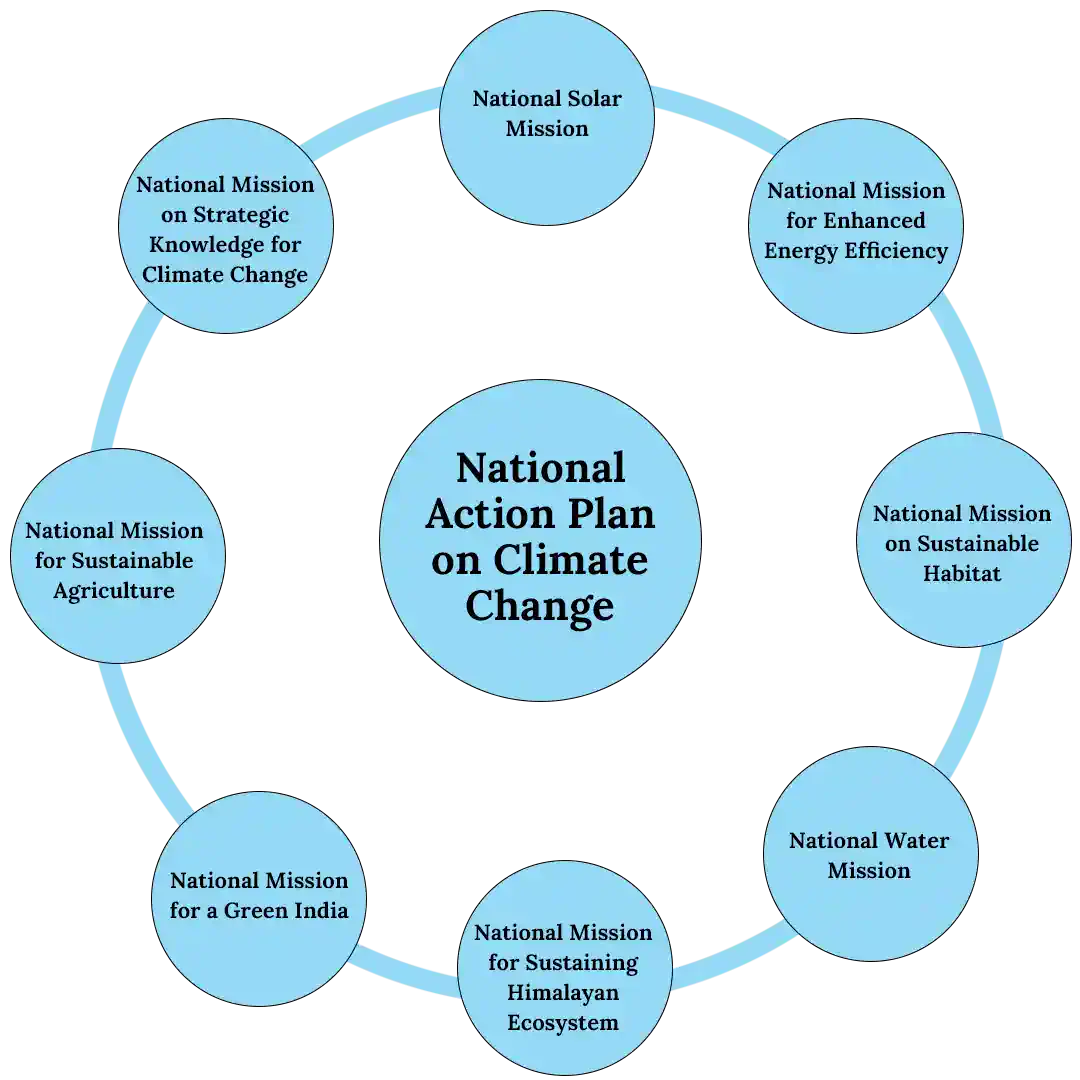
It consists of missions such as:
- National Solar Mission.
- Green India Mission.
- National Water Mission.
- Sustainable Habitat Mission.
- Sustainable Agriculture Mission.
- Himalayan Ecosystem Mission.
- Strategic Knowledge Mission.
- Energy Efficiency Mission.
These missions help reduce climate risks while promoting development.
LiFE Mission (Lifestyle for Environment)
India launched the Mission LiFE (Lifestyle for Environment) to encourage environmentally friendly lifestyles.
Objectives
- Reduce waste.
- Save water.
- Conserve energy.
- Promote sustainable consumption.
- Encourage public participation.
The mission highlights that climate action begins with individual behavior.
International Solar Alliance (ISA)
India and France jointly launched the International Solar Alliance.
Objectives
- Promote solar energy.
- Reduce fossil fuel dependence.
- Increase renewable energy investment.
- Support developing countries.
Today, ISA has become an important international organization promoting clean energy worldwide.
UN Convention to Combat Desertification (UNCCD)
India hosted COP14 of the United Nations Convention to Combat Desertification (UNCCD) in Greater Noida in 2019.
Theme
“Restore Land, Sustain Future.”
Major Commitments
India committed to:
- Restore 26 million hectares of degraded land by 2030.
- Promote Land Degradation Neutrality.
- Support capacity building for member countries.
Climate Action Summit
The UN Climate Action Summit encouraged countries to strengthen climate commitments.
India announced:
- Expansion of renewable energy capacity.
- Promotion of climate-resilient infrastructure.
- Launch of the Coalition for Disaster Resilient Infrastructure (CDRI).
Today, CDRI supports many countries in building disaster-resilient infrastructure.
COP25 to COP29: India’s Climate Progress
Since COP25 (Madrid, 2019), India has actively participated in later climate conferences.
Key Developments
- Updated Nationally Determined Contributions (NDCs).
- Target of achieving net-zero emissions by 2070 (announced at COP26).
- Commitment to achieve about 50% of installed electricity capacity from non-fossil fuel sources by 2030.
- Rapid expansion of solar and renewable energy.
- Green Hydrogen Mission launched.
- Promotion of electric mobility.
India continues to emphasize climate justice, sustainable development, and financial support for developing countries.
Hazardous Waste Management Rules
India amended the Hazardous and Other Wastes (Management and Transboundary Movement) Rules.
Objectives
- Simplify business procedures.
- Promote Make in India.
- Ensure environmentally safe waste management.
- Encourage recycling.
The rules continue to be updated to improve waste management and support the circular economy.
Plastic Waste Management
India has strengthened efforts to reduce plastic pollution.
Major initiatives include:
- Ban on several identified single-use plastic items from 2022.
- Extended Producer Responsibility (EPR).
- Better plastic waste collection.
- Recycling initiatives.
These measures aim to reduce plastic pollution across the country.
National Green Hydrogen Mission
Launched in 2023, this mission promotes green hydrogen production using renewable energy.

Objectives
- Reduce fossil fuel imports.
- Lower carbon emissions.
- Make India a global hub for green hydrogen.
- Support clean industries.
It is expected to play a major role in India’s transition to a low-carbon economy.
Importance of Environment and Climate Change Initiatives
India’s environmental programmes provide several long-term benefits.
They help to:
- Reduce pollution.
- Protect forests.
- Conserve wildlife.
- Improve air quality.
- Promote renewable energy.
- Strengthen climate resilience.
- Improve waste management.
- Support sustainable agriculture.
- Reduce greenhouse gas emissions.
- Improve public health.
These initiatives contribute to both national development and global climate action.
Conclusion
Environment and Climate Change Initiatives are essential for ensuring sustainable development and protecting natural resources for future generations. India has taken several important steps through programmes such as the National Clean Air Programme (NCAP), India Cooling Action Plan (ICAP), CAMPA, Project Tiger, Green India Mission, and Mission LiFE to address pollution, conserve biodiversity, and reduce the impact of climate change.
The country has also strengthened its global role by participating in international agreements, expanding renewable energy, launching the National Green Hydrogen Mission, and committing to achieve net-zero emissions by 2070. These efforts demonstrate India’s commitment to balancing economic growth with environmental protection.
As of 2026, environmental conservation remains one of India’s highest national priorities. Continued public participation, scientific innovation, strong policies, and international cooperation will be essential to achieving a cleaner, greener, and more sustainable future.
FAQs About Environment Schemes in India
1. What are Environment Schemes in India?
Environment Schemes in India are government programmes that protect forests, wildlife, air, water, biodiversity, and help reduce the impact of climate change.
2. What is the National Clean Air Programme (NCAP)?
The National Clean Air Programme (NCAP) is a nationwide initiative launched in 2019 to reduce air pollution by improving air quality and lowering PM10 and PM2.5 levels in cities across India.
3. What is the India Cooling Action Plan (ICAP)?
The India Cooling Action Plan (ICAP) is a national strategy launched in 2019 to reduce cooling demand, improve energy efficiency, and promote environmentally friendly cooling technologies.
4. What is CAMPA?
CAMPA (Compensatory Afforestation Fund Management and Planning Authority) manages funds collected for planting new forests when forest land is diverted for development projects.
5. What is Mission LiFE?
Mission LiFE (Lifestyle for Environment) is an initiative that encourages people to adopt sustainable lifestyles by conserving energy, reducing waste, and protecting natural resources.
6. What is Project Tiger?
Project Tiger is India’s flagship wildlife conservation programme that protects tigers, their habitats, and biodiversity through tiger reserves and anti-poaching measures.
7. What is the India State of Forest Report (ISFR)?
The India State of Forest Report (ISFR) is published every two years by the Forest Survey of India to assess the country’s forest and tree cover, carbon stock, and forest resources.
8. What is the National Green Hydrogen Mission?
The National Green Hydrogen Mission promotes the production and use of green hydrogen using renewable energy to reduce carbon emissions and make India a clean energy leader.
9. What is the International Solar Alliance (ISA)?
The International Solar Alliance (ISA) is a global organization launched by India and France to promote solar energy and increase renewable energy adoption worldwide.
10. Why are environmental conservation programmes important?
Environmental conservation programmes help reduce pollution, protect forests and wildlife, combat climate change, improve public health, conserve biodiversity, and support sustainable development.