


Carbon Farming: A Natural Solution for Climate Change

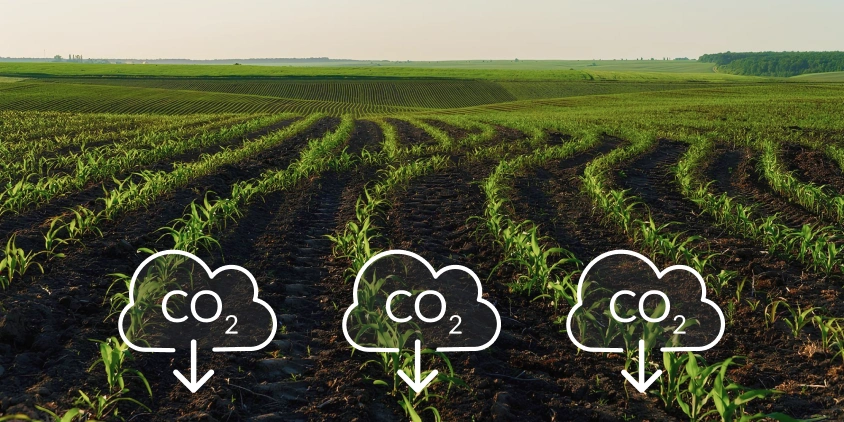
Carbon Farming is becoming an important solution to fight climate change and reduce global warming. It is a farming method that helps store more carbon in soil, plants, forests, and grasslands. This process reduces harmful greenhouse gases in the atmosphere and improves soil health at the same time.
Thank you for reading this post, don't forget to subscribe!Today, climate change is one of the biggest challenges for the world. Rising temperatures, irregular rainfall, droughts, and floods are affecting agriculture and human life. Carbon farming offers a natural and sustainable way to reduce these problems.
What is Carbon?
Carbon is one of the most important elements for life on Earth. It is a major part of all living organisms, including plants, animals, and humans.
In agriculture, carbon plays a key role because plants use carbon dioxide (CO2) from the atmosphere during photosynthesis. Through this process, plants convert sunlight, water, and CO2 into food and energy.
This carbon is then stored in:
- Plants
- Crops
- Roots
- Soil
- Trees
These stored carbon resources help maintain the balance of nature.
Agriculture and Carbon Emissions
Agriculture is essential for producing food, but it also contributes to greenhouse gas emissions.
Agriculture covers more than half of Earth’s land surface and contributes nearly one-third of global greenhouse gas emissions.
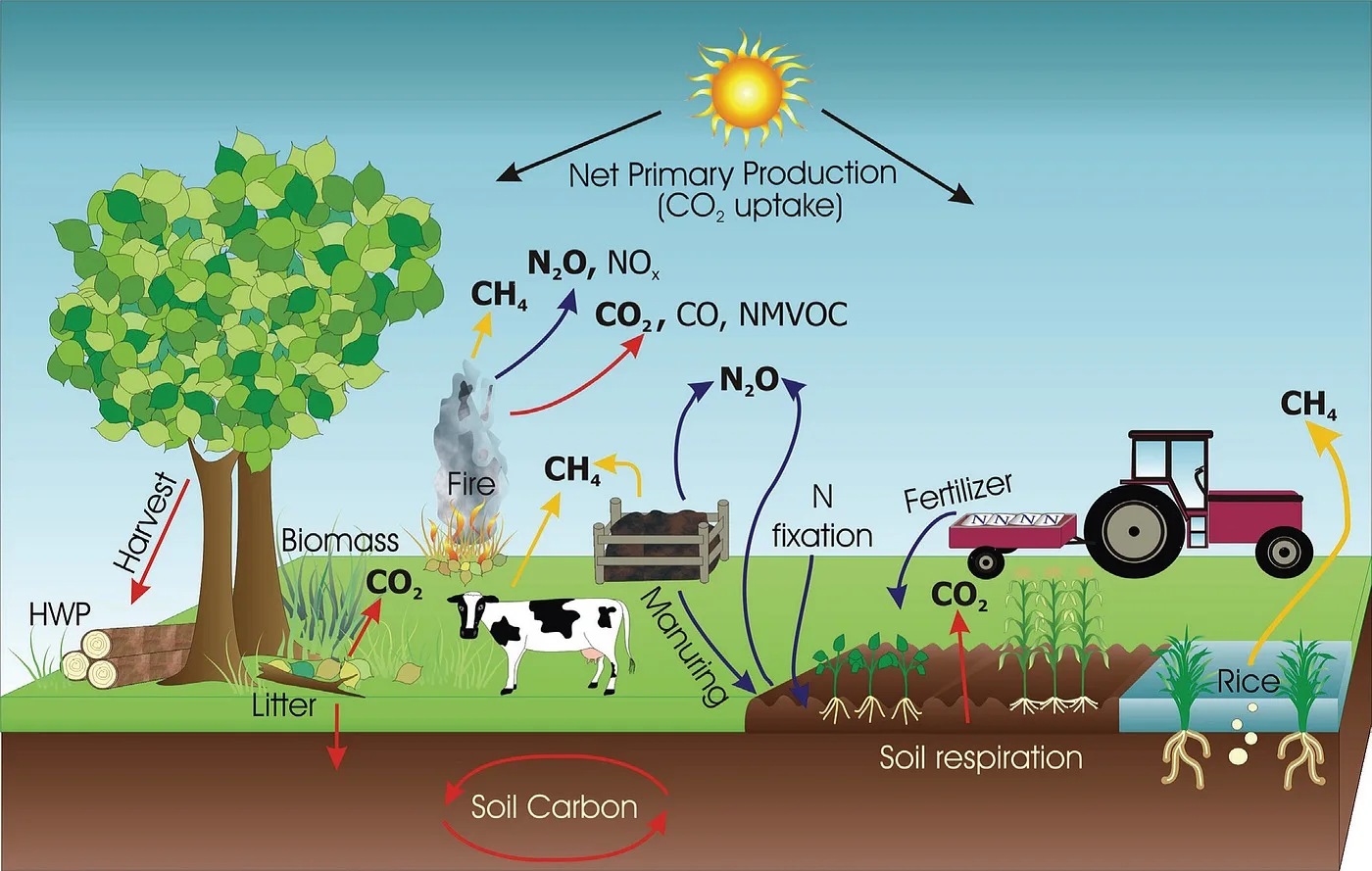
In India, agricultural emissions mainly come from:
| Source | Contribution |
|---|---|
| Livestock sector | 54.6% |
| Nitrogen fertilizers | 19% |
Livestock such as cows and buffaloes release methane, which is a powerful greenhouse gas. Excessive use of fertilizers also releases harmful gases like nitrous oxide.
These gases trap heat in the atmosphere and increase global warming.
What is Carbon Farming?
Carbon farming, also called carbon sequestration, is a farming system that helps land capture and store carbon from the atmosphere.
Its main goal is to:
- Remove carbon dioxide from the air
- Store carbon in soil and plants
- Reduce greenhouse gas emissions
- Improve agricultural productivity
In simple words, carbon farming turns farms into carbon storage systems.
Carbon farming becomes successful when the amount of carbon stored in land becomes greater than the carbon released into the atmosphere.
Methods of Carbon Farming
There are several ways to practice carbon farming.
1. Forest Management
Forests are among the best natural carbon absorbers. Healthy forests capture large amounts of carbon dioxide.
Good forest management includes:
- Preventing deforestation
- Protecting forest land
- Reforestation
- Planting new trees
- Better forest maintenance
Trees store carbon in trunks, roots, and leaves.
The more forests we protect, the more carbon we can store.
2. Grassland Conservation
Grasslands are also important for carbon storage.
Conserving grasslands means:
- Protecting native grasses
- Avoiding land conversion
- Preventing excessive construction
- Reducing overgrazing
Healthy grasslands improve soil quality and store carbon underground.
3. Mixed Farming
Mixed farming means growing crops and raising livestock together.
This climate-friendly system has many benefits.
For example:
- Animals provide manure
- Manure improves soil fertility
- Rotational grazing allows grass to regrow
- Regrown grass stores more carbon
This creates a healthy farming cycle.
4. Using Cover Crops
Cover crops are planted to protect the soil instead of harvesting them for sale.
They are usually grown after the main crop harvest.
Benefits include:
| Benefit | Explanation |
| Soil protection | Prevents erosion |
| Carbon storage | Adds organic matter |
| Better microbes | Supports soil organisms |
| Moisture retention | Keeps soil healthy |
Cover crops increase carbon storage naturally.
5. Reduced Soil Tillage
Tillage means turning and loosening soil before planting.
Although tillage helps remove weeds, excessive tillage harms soil.
Problems caused by tillage:
- Breaks soil structure
- Releases stored carbon
- Increases CO2 emissions
- Reduces soil organic matter
Reducing soil disturbance helps keep carbon locked in the soil.
6. Wetland Restoration
Wetlands are important natural carbon sinks.
Examples of wetlands include:
- Marshes
- Swamps
- Peatlands
- Floodplains
Wetlands store huge amounts of carbon in soil.
It is estimated that wetlands preserve about 14.5% of the world’s soil carbon.
Restoring damaged wetlands can help capture more carbon.
Importance of Carbon Farming
Carbon farming offers many benefits beyond climate control.
Improves Soil Health
Increasing Soil Organic Carbon (SOC) improves soil quality.
Healthy soil provides:
- Better nutrients
- Improved fertility
- Stronger crop growth
- Better water retention
Healthy soil also reduces dependence on chemical fertilizers.
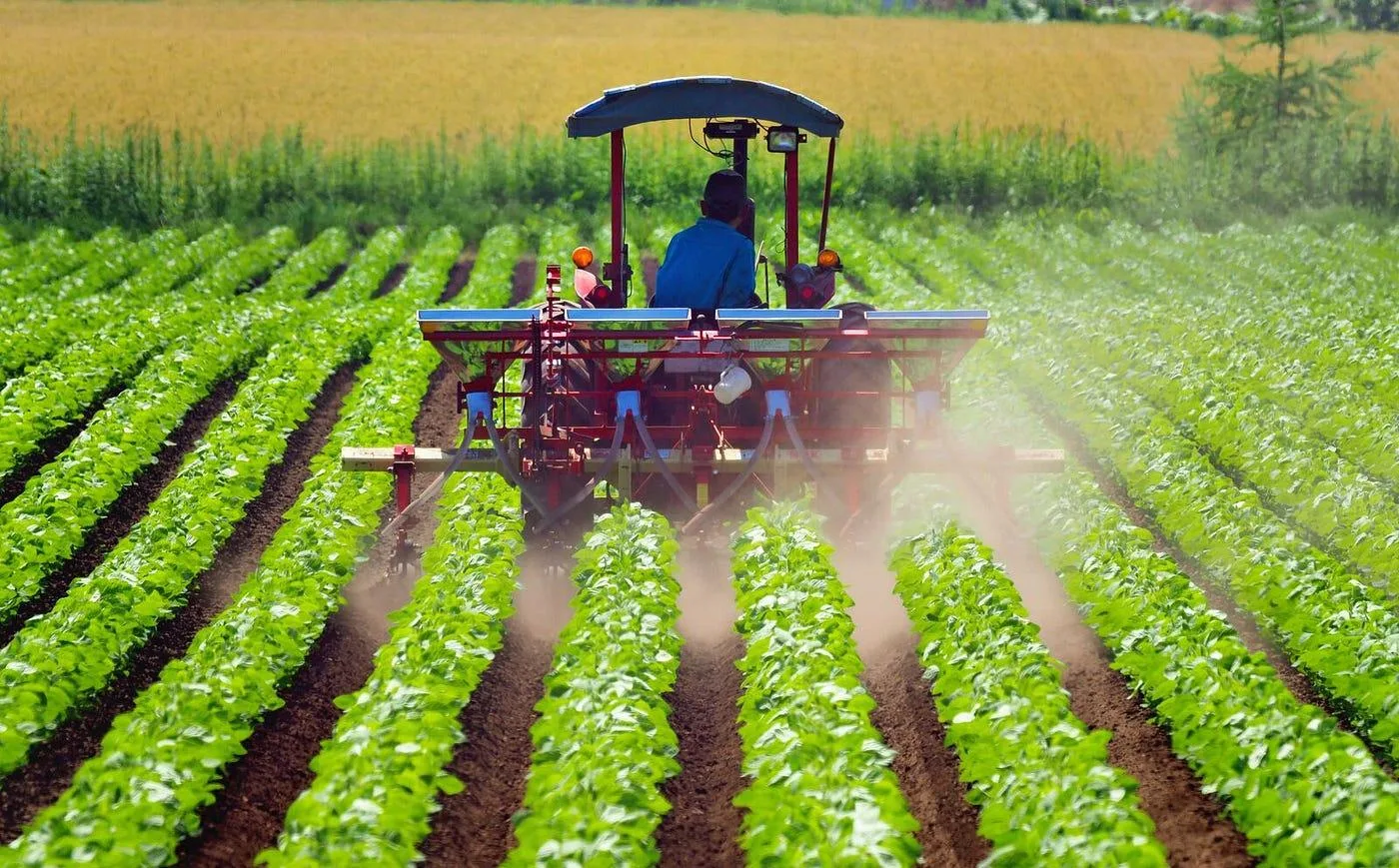
Improves Agricultural Yield
When soil becomes healthier, crop production improves.
Farmers can get:
- Higher yields
- Better quality crops
- Reduced farming costs
- Better long-term productivity
This supports food security.
Improves Water Quality
Carbon-rich soil absorbs water better.
This helps:
- Reduce runoff
- Prevent soil erosion
- Improve groundwater recharge
- Keep water cleaner
This is especially useful during droughts.
Offsets Carbon Emissions
An international initiative called “4 per 1000” showed an important finding.
It suggested that increasing soil carbon by just 0.4% every year could offset annual increases in carbon emissions from fossil fuels.
This initiative was launched by France during 2015 United Nations Climate Change Conference.
It highlighted the important role agriculture can play in climate action.
Supports Climate Change Mitigation
Carbon farming acts as a practical short-term solution while the world transitions to cleaner energy sources.
It helps reduce greenhouse gases while renewable technologies continue to grow.
Restores Carbon Cycle Balance
Soils contain huge carbon reserves.
Scientists estimate that soils contain nearly 10 times more carbon than the atmosphere.
Carbon farming helps restore balance in the carbon cycle by moving carbon back into soil.
This also improves drought resistance.
Challenges of Carbon Farming
Despite many benefits, carbon farming faces challenges.
Requires Large-Scale Participation
Carbon farming works best when adopted on a large scale.
Success requires:
- Strong government policies
- Scientific measurement systems
- Financial support
- Public-private partnerships
Without coordinated action, results remain limited.
Difficult for Some Regions
Carbon farming is easier in areas with:
- Good rainfall
- Long growing seasons
- Irrigation facilities
However, farmers in hot and dry regions may struggle.
Dry soil stores less carbon.
This creates limitations.
High Initial Costs
Many farmers cannot afford the cost of adopting new practices.
Expenses may include:
- New equipment
- Soil testing
- Cover crop seeds
- Training programs
Without financial assistance, adoption remains slow.
Way Forward
To expand carbon farming, several steps are needed.
Direct Incentives for Farmers
Farmers should receive rewards for climate-friendly practices.
Governments can provide:
- Subsidies
- Grants
- Financial rewards
- Insurance support
This encourages wider adoption.
Carbon Credits and Carbon Banks
Farmers can earn carbon credits by storing carbon in soil.
These credits can be sold to companies that want to offset emissions.
A carbon bank can help:
- Buy carbon credits
- Sell credits
- Support carbon trading
This creates extra income for farmers.
Organic Carbon-Rich Fertilizers
Organic fertilizers improve soil carbon naturally.
Examples include:
- Compost
- Animal manure
- Crop residues
These fertilizers release carbon slowly and improve long-term soil quality.
They are better than excessive chemical fertilizers.

Use Biofuels Instead of Fossil Fuels
Biofuels such as:
- Biodiesel
- Bioethanol
produce fewer greenhouse gases than fossil fuels.
Benefits include:
| Biofuel Advantage | Benefit |
| Lower emissions | Cleaner environment |
| New income source | Benefits farmers |
| Reduced fuel dependency | Energy security |
Using biofuels can reduce emissions of:
- Carbon dioxide (CO2)
- Methane (CH4)
- Nitrous oxide (N2O)
Final Thoughts
Carbon farming is a powerful natural solution for climate change. It helps remove carbon dioxide from the atmosphere while improving soil health and agricultural productivity. With proper government support, farmer participation, and better awareness, carbon farming can play a major role in creating a cleaner and healthier future.
FAQs
1. What is carbon farming?
Carbon farming is a farming method that captures carbon from the atmosphere and stores it in soil and plants.
2. Why is carbon farming important?
It reduces greenhouse gases, improves soil health, and helps fight climate change.
3. How does carbon farming help farmers?
It improves soil fertility, increases crop yield, and may provide extra income through carbon credits.
4. What are carbon credits?
Carbon credits are rewards given for reducing or storing carbon emissions.
5. Can carbon farming reduce global warming?
Yes, by storing carbon in soil and reducing greenhouse gas emissions, it helps reduce global warming.