Mount Erebus Gold Crystals Surprise Scientists

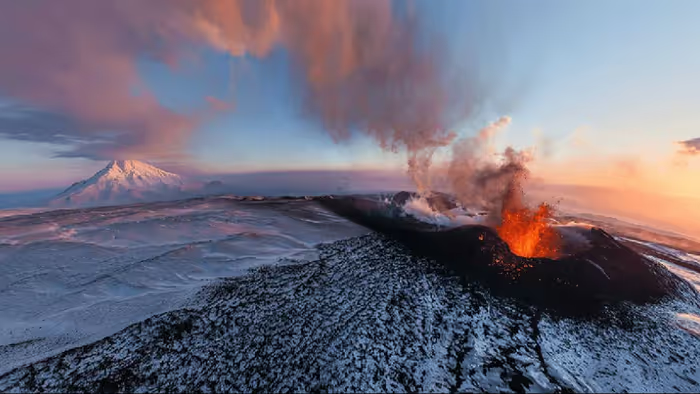
Mount Erebus Gold Crystals have drawn global attention as scientists study a rare natural phenomenon in Antarctica. This active volcano releases tiny particles of gold into the air, making it one of the most unique volcanic systems on Earth.
Thank you for reading this post, don't forget to subscribe!The discovery shows how nature can produce unexpected and fascinating processes deep within the planet.
Location of Mount Erebus
Mount Erebus is located on Ross Island in the Ross Sea region.
It lies around 1,350 kilometres from the South Pole, making it the southernmost active volcano in the world.
Its remote location and extreme weather conditions make it difficult to study, yet it remains an important site for scientific research.
Continuous Volcanic Activity
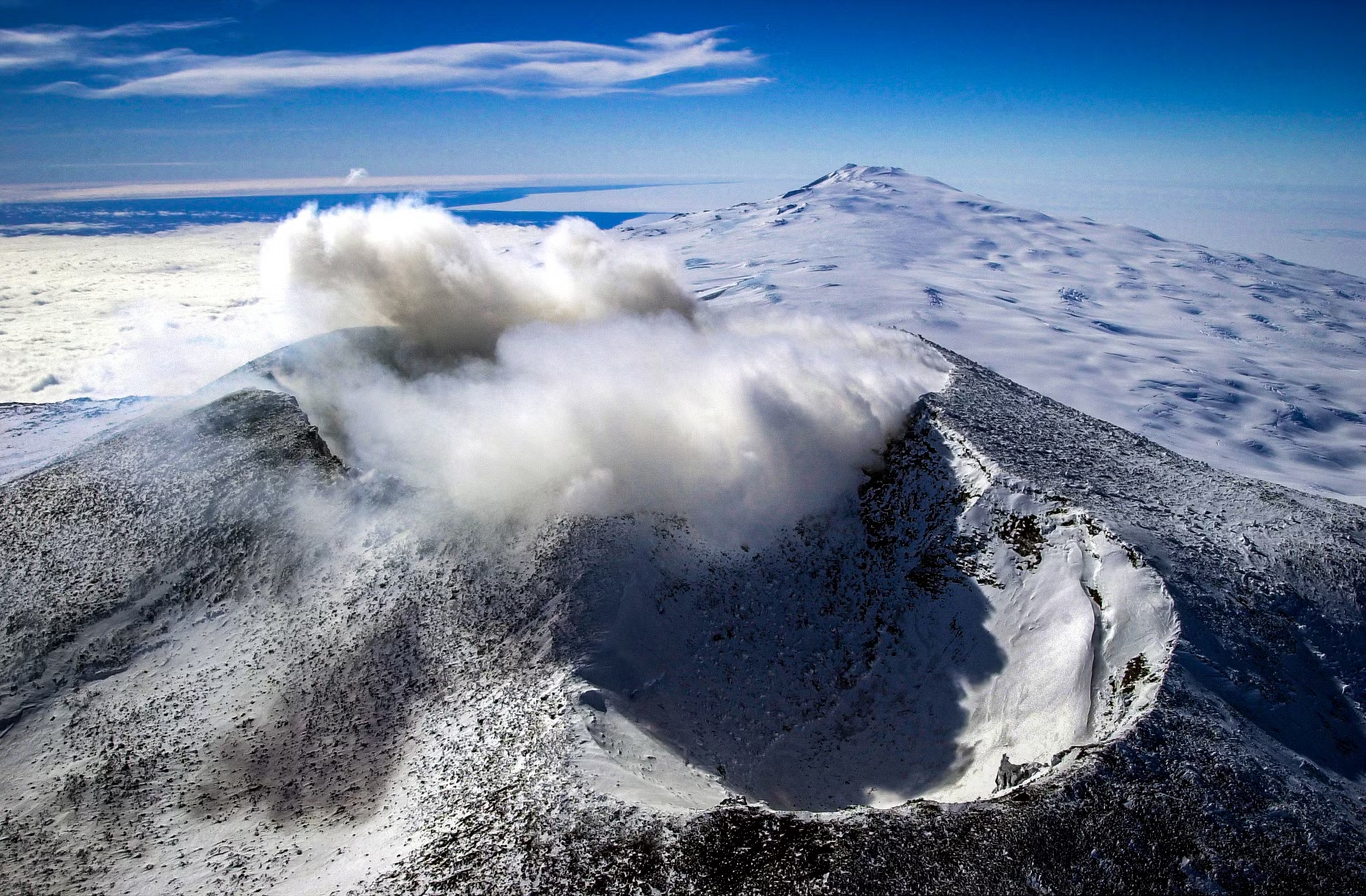
Mount Erebus has been continuously active since 1972.
It is one of the few volcanoes that contains a permanent lava lake, where molten rock remains visible at the surface.
This constant activity allows scientists to observe volcanic processes over long periods.
Gold Crystals in the Air
One of the most surprising features of this volcano is its ability to release gold.
Mount Erebus emits around 80 grams of gold every day in the form of microscopic crystals.
These tiny particles can travel up to 1,000 kilometres through the air before settling.
Although the total value of this gold may seem high, it is not possible to collect it due to its extremely small size.
Size and Nature of the Crystals
The gold crystals released by the volcano are extremely small, measuring only a few micrometres.
To put this into perspective, a micrometre is one-millionth of a metre.
Because of their size, these particles can easily float in the atmosphere and spread across large distances.
Scientific Research and Discovery
The phenomenon of Mount Erebus Gold Crystals was first documented in a scientific study published in Geophysical Research Letters in 1991.
Researchers, including Kimberly Meeker, studied the composition of volcanic emissions and identified the presence of gold particles.
Since then, scientists have continued to explore how and why this happens.
Possible Formation Theories
There is no single confirmed explanation for how these gold crystals form.
One theory suggests that gases containing sulfur or chlorine help carry gold from deep within the Earth.
As these gases cool, the gold crystallises into tiny particles.
Another idea is that the crystals form on the surface of the lava lake before being released into the air.
A Unique Volcanic Feature
Mount Erebus is currently the only known volcano that consistently emits gold crystals.
This makes it a unique natural laboratory for studying volcanic processes and mineral formation.
It also helps scientists understand how elements move within the Earth.
Challenges in Collecting the Gold
Despite the presence of gold, collecting it is not practical.
The crystals are too small and widely dispersed across the icy landscape of Antarctica.
Harsh weather conditions and remote location add to the difficulty.
As a result, the gold remains part of a natural cycle rather than a usable resource.
Growing Interest in Earth Science
The study of Mount Erebus Gold Crystals has increased interest in geology and Earth science.
Such discoveries highlight the complexity of natural systems and the importance of scientific research.
They also remind us that there is still much to learn about our planet.
Nature’s Hidden Wonders
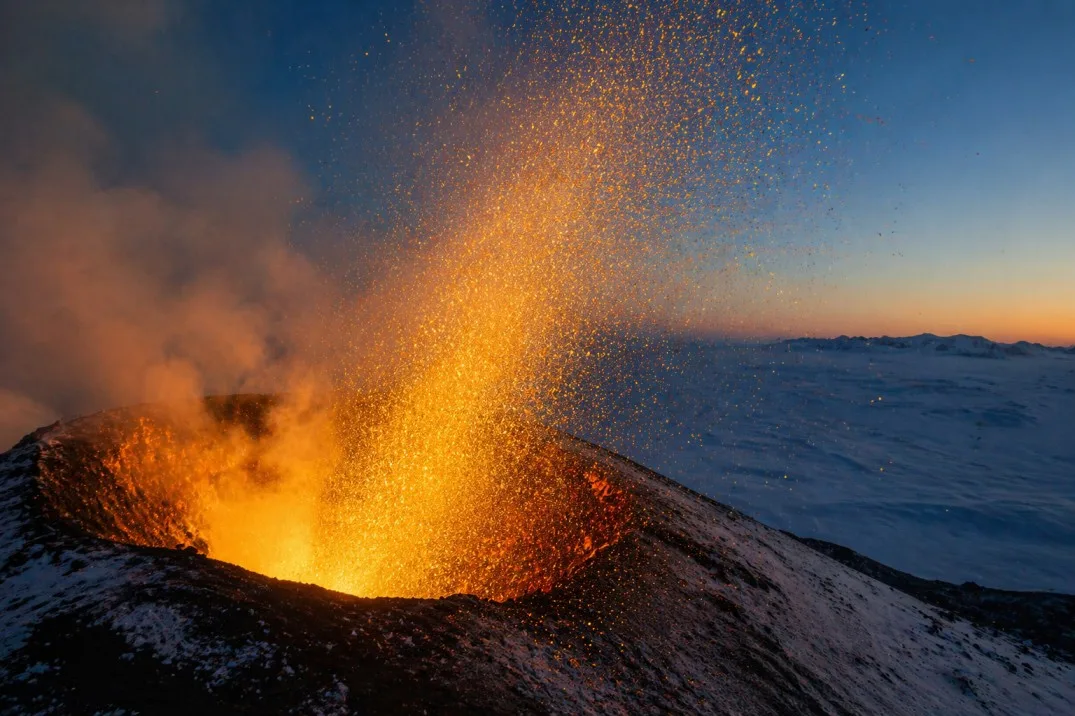
Mount Erebus continues to surprise scientists with its unusual behaviour.
The presence of gold crystals in volcanic emissions shows how unique Earth’s processes can be.
This phenomenon adds to the list of rare natural events that make our planet fascinating and full of mysteries.