Agriculture Schemes : Major Farmer Welfare Programs and Reforms

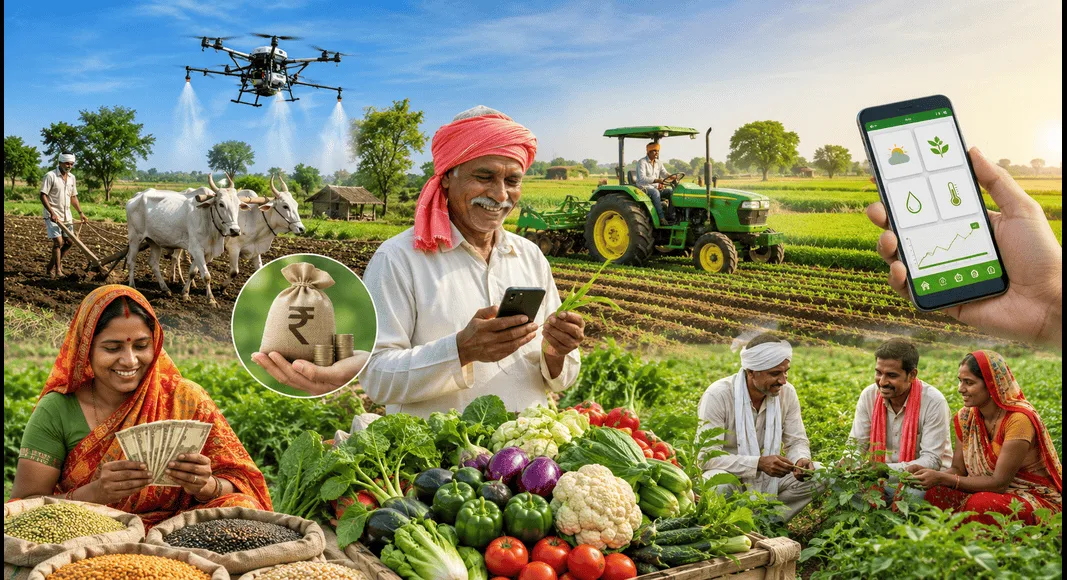
The Agriculture Schemes introduced by the Ministry of Agriculture and Farmers Welfare aimed to improve the lives of Indian farmers through better income support, pension benefits, higher crop prices, digital agricultural markets, and improved seed availability. Agriculture remains the backbone of India’s economy, providing employment to millions of people and ensuring food security for the country.
Thank you for reading this post, don't forget to subscribe!In 2019, the Government launched and strengthened several farmer-focused schemes that addressed financial security, agricultural marketing, and sustainable farming. These initiatives were designed to increase farmers’ income, reduce risks, improve productivity, and make agriculture more profitable.
Since then, many of these schemes have expanded between 2020 and 2025, making agriculture more technology-driven and resilient.
Importance of Agriculture in India
Agriculture supports nearly half of India’s population either directly or indirectly. It provides food, raw materials for industries, and employment in rural areas.
However, Indian farmers face many challenges, such as:
- Uncertain weather
- Rising input costs
- Market price fluctuations
- Water shortages
- Small landholdings
- Climate change
To overcome these problems, the Ministry of Agriculture introduced several welfare schemes and reforms in 2019.
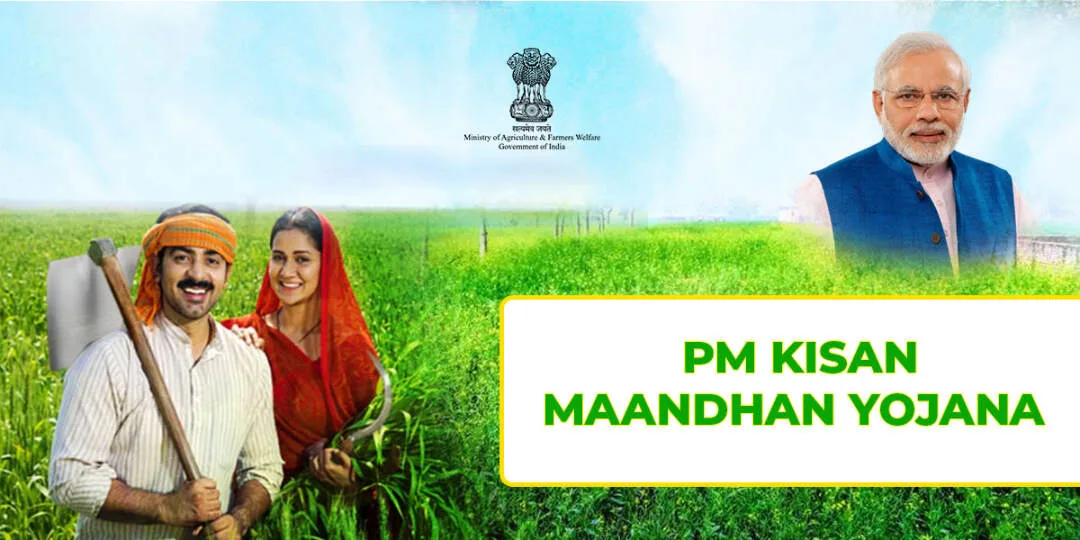
Pradhan Mantri Kisan Maan Dhan Yojana (PM-KMY)
One of the major welfare schemes launched in 2019 was the Pradhan Mantri Kisan Maan Dhan Yojana (PM-KMY).
This pension scheme provides social security to small and marginal farmers who own up to two hectares of cultivable land.
Main Features
- Started in September 2019.
- Voluntary and contributory pension scheme.
- Farmers between 18 and 40 years can join.
- Monthly contribution ranges from ₹55 to ₹200, depending on age.
- The Central Government contributes an equal amount.
- Farmers receive a minimum monthly pension of ₹3,000 after attaining the age of 60 years.
- The Life Insurance Corporation of India (LIC) manages the pension fund.
Family Benefits
If the farmer dies after receiving pension, the spouse receives 50% of the pension as a family pension.
If the subscriber dies during the contribution period, the spouse may continue the scheme by paying the remaining contributions.
This scheme provides financial security to farmers during old age.
Pradhan Mantri Kisan Samman Nidhi (PM-KISAN)
The PM-KISAN Scheme became one of India’s largest farmer welfare programmes.
Initially launched in February 2019 for small and marginal farmers, it was later expanded to cover all eligible farmer families.
Benefits
- Financial assistance of ₹6,000 every year.
- Amount paid in three installments of ₹2,000 each.
- Money transferred directly into farmers’ bank accounts through Direct Benefit Transfer (DBT).
The scheme helps farmers purchase seeds, fertilizers, pesticides, and other farming inputs without depending heavily on loans.
Minimum Support Price (MSP)
Another important decision in 2019 was the increase in Minimum Support Prices (MSP) for Kharif and Rabi crops.
What is MSP?
Minimum Support Price is the price at which the Government purchases crops from farmers.
MSP protects farmers from sudden falls in market prices.
It ensures that farmers receive a minimum income even when market prices decline.
How is MSP Decided?
The Commission for Agricultural Costs and Prices (CACP) recommends MSP every year.
Several factors are considered before fixing MSP:
- Cost of production
- Demand and supply
- Domestic and international prices
- Market trends
- Consumer interests
- Profit margin for farmers
The Government has tried to maintain MSP at least 50% above the production cost, following the recommendations of the Swaminathan Commission.
Swaminathan Committee Recommendations
The National Commission on Farmers, chaired by Dr. M. S. Swaminathan, submitted its recommendations in 2006.
The committee suggested that MSP should be at least 50% higher than the cost of production to ensure fair income for farmers.
It also explained three different methods of calculating farming costs.
A2 Cost
Includes direct expenses such as:
- Seeds
- Fertilizers
- Labour
- Irrigation
- Fuel
- Machinery
A2 + FL
Includes A2 cost plus the value of unpaid family labour.
C2 Cost
Includes A2 + FL along with:
- Rental value of land
- Interest on owned capital
The committee’s recommendations continue to influence agricultural policies.
e-NAM: One Nation, One Market
The National Agriculture Market (e-NAM) is an online trading platform connecting agricultural markets across India.
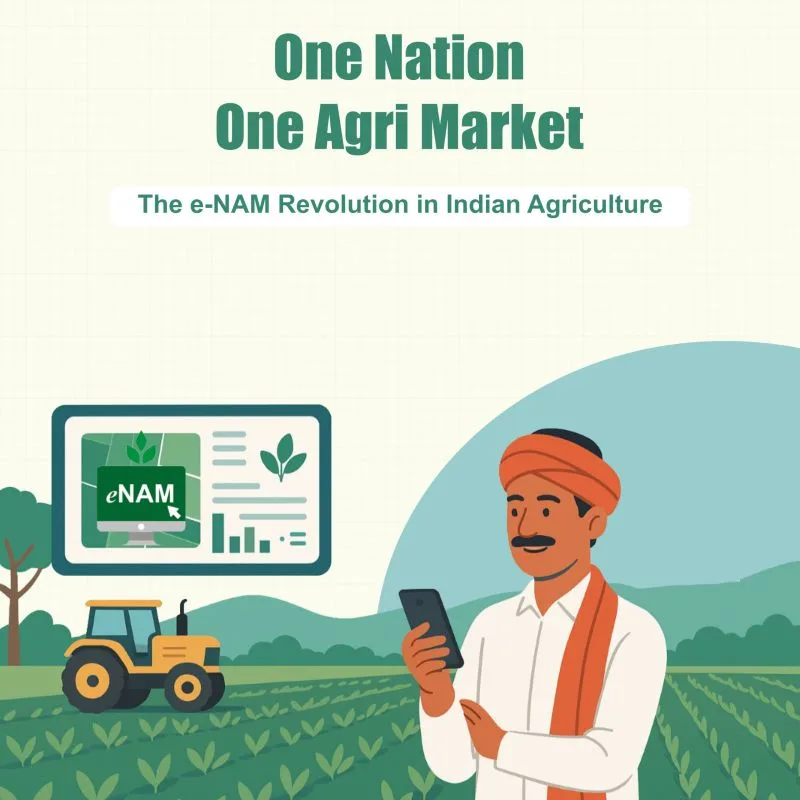
It was launched in 2016, but expanded significantly during 2019.
More than 421 new mandis were approved for integration.
Benefits of e-NAM
- Online trading of crops.
- Better price discovery.
- Reduced middlemen.
- Transparent bidding.
- Online payments.
- Farmers can sell produce beyond local markets.
Farmer Producer Organisations (FPOs) also began selling produce through the platform.
This digital initiative improves market access for farmers.
Seed Hub Centres
The Government established 25 Seed Hub Centres to improve the availability of quality millet seeds.
These centres produce certified seeds for farmers and promote climate-resilient farming.
Better seeds help increase productivity and improve crop quality.
Millets: The Nutri-Cereals
One of the important agricultural initiatives was the promotion of millets, also called Nutri-Cereals.
Millets include:
- Bajra
- Ragi
- Jowar
- Little Millet
- Proso Millet
Why Millets are Important
Millets offer several advantages:
- Rich in nutrients
- High protein content
- Require less water
- Grow well in poor soils
- Resistant to climate change
- Suitable for dry regions
These crops are especially useful for sustainable agriculture.
Millet Growing States
Major millet-producing states include:
- Rajasthan
- Karnataka
- Maharashtra
- Telangana
- Tamil Nadu
- Andhra Pradesh
- Gujarat
- Madhya Pradesh
- Uttar Pradesh
- Chhattisgarh
- Haryana
Millets support farmers living in rain-fed and tribal regions.
International Year of Millets
India proposed observing 2023 as the International Year of Millets, which was approved by the Food and Agriculture Organization (FAO) and the United Nations.
The celebration increased global awareness about the nutritional and environmental benefits of millets.
It also created new export opportunities for Indian farmers.
Developments After 2019 (2020-2025)
Several major developments took place after 2019 that strengthened India’s agricultural sector.
PM-KISAN Continued Expansion
By 2025, PM-KISAN had transferred lakhs of crores of rupees directly into the bank accounts of eligible farmers through Direct Benefit Transfer.
The scheme became one of the world’s largest farmer income support programmes.
Growth of Digital Agriculture
The Government promoted digital farming through:
- Mobile applications
- Digital soil health records
- Crop monitoring
- Satellite-based advisory
- Artificial Intelligence
- Drone technology
Farmers now receive weather updates, crop advisories, and market prices more easily.
Promotion of Natural Farming
Natural farming received greater attention after 2020.
States encouraged reduced use of chemical fertilizers and pesticides while promoting environmentally friendly farming methods.
Expansion of Farmer Producer Organisations (FPOs)
Thousands of Farmer Producer Organisations received support to help small farmers:
- Purchase inputs together
- Sell produce collectively
- Increase bargaining power
- Access better markets
International Year of Millets 2023
India successfully celebrated the International Year of Millets in 2023.
Millets gained popularity both in India and abroad because of their health benefits and climate resilience.
Many restaurants, schools, and government programmes started promoting millet-based foods.
Climate-Smart Agriculture
The Government increased investment in:
- Water conservation
- Micro-irrigation
- Crop diversification
- Weather forecasting
- Climate-resilient seeds
These initiatives help farmers adapt to changing weather conditions.
Challenges Facing Indian Agriculture
Despite many improvements, agriculture continues to face several challenges.
Some of them include:
- Small landholdings
- Climate change
- Water scarcity
- Rising production costs
- Post-harvest losses
- Market price fluctuations
- Limited storage facilities
Addressing these challenges requires continuous policy support and technological innovation.
Conclusion
The Agriculture Schemes introduced by the Ministry of Agriculture and Farmers Welfare played an important role in improving farmers’ income, providing old-age security, strengthening agricultural marketing, and encouraging sustainable farming. Schemes like PM-KISAN, PM-Kisan Maan Dhan Yojana, higher Minimum Support Prices, e-NAM, and the promotion of millets reflected the Government’s commitment to the welfare of farmers.
Between 2020 and 2025, these initiatives expanded further with digital agriculture, natural farming, Farmer Producer Organisations, climate-smart farming, and the successful celebration of the International Year of Millets. Together, these efforts are helping Indian agriculture become more productive, sustainable, and capable of meeting the country’s future food and economic needs.
FAQs
1. What are Agriculture Schemes 2019?
Agriculture Schemes 2019 are farmer welfare programs launched or expanded by the Government of India to improve farmers’ income, provide social security, strengthen agricultural markets, and promote sustainable farming.
2. What is PM-KISAN?
PM-KISAN (Pradhan Mantri Kisan Samman Nidhi) is a Central Government scheme that provides eligible farmer families with ₹6,000 per year in three equal installments through Direct Benefit Transfer (DBT).
3. What is PM-Kisan Maan Dhan Yojana (PM-KMY)?
PM-KMY is a voluntary pension scheme for small and marginal farmers. Eligible farmers receive a minimum monthly pension of ₹3,000 after reaching 60 years of age.
4. What is Minimum Support Price (MSP)?
Minimum Support Price (MSP) is the minimum price at which the Government purchases crops from farmers to protect them from market price fluctuations and ensure fair income.
5. Who recommends the MSP?
The Commission for Agricultural Costs and Prices (CACP) recommends MSP after considering production costs, market demand, supply, and other economic factors.
6. What is e-NAM?
e-NAM (National Agriculture Market) is an online trading platform that connects agricultural markets across India, allowing farmers to sell their produce digitally and receive better prices.
7. Why are millets called Nutri-Cereals?
Millets are called Nutri-Cereals because they are rich in protein, fiber, vitamins, and minerals. They also require less water and are highly resistant to climate change.
8. What was the International Year of Millets?
The United Nations declared 2023 as the International Year of Millets following India’s proposal to promote millet cultivation, healthy diets, and sustainable agriculture worldwide.
9. What are Farmer Producer Organisations (FPOs)?
Farmer Producer Organisations (FPOs) are groups of farmers who work together to purchase farming inputs, improve production, access better markets, and increase their bargaining power.
10. What developments took place in Indian agriculture after 2019?
After 2019, India expanded PM-KISAN, promoted digital farming, natural farming, climate-smart agriculture, Farmer Producer Organisations, drone technology, and millet cultivation under the International Year of Millets.