


Environmental Impact Assessment Draft 2020: Key Changes and Issues

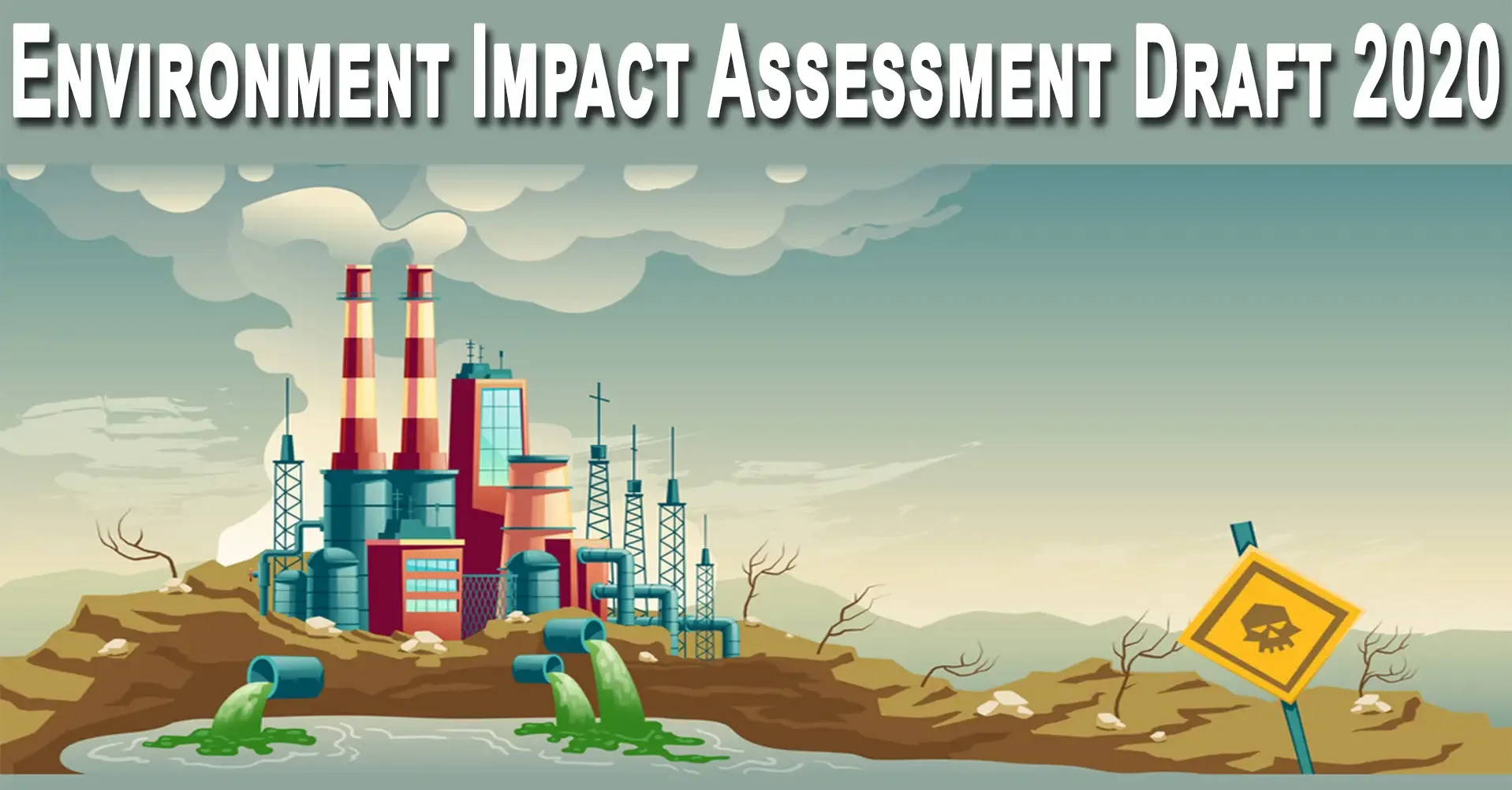
Environmental Impact Assessment Draft 2020 is an important environmental policy in India that created major public discussion. It focuses on how development projects such as roads, dams, factories, mining, and industries can affect nature and people. The draft was introduced to replace the old EIA Notification of 2006 under the Environment Protection Act, 1986.
Thank you for reading this post, don't forget to subscribe!Before understanding the 2020 draft, it is important to know what Environmental Impact Assessment (EIA) means and why it matters.
What is Environmental Impact Assessment (EIA)?
Environmental Impact Assessment, commonly called EIA, is a process used to study the possible environmental effects of a project before it starts.
According to the United Nations Environment Programme (UNEP), EIA is a tool used to identify environmental, social, and economic impacts of a project before decisions are made.
In simple words, EIA helps answer questions like:
- Will the project damage forests?
- Will it pollute rivers or air?
- Will local people face problems?
- Can the project be made safer for nature?
The main aim is to balance development and environmental protection.
Importance of EIA
EIA plays a major role in sustainable development. It helps governments and industries understand possible environmental damage in advance.
Major benefits of EIA:
| Importance | Explanation |
|---|---|
| Reduces environmental damage | Helps identify harmful impacts early |
| Saves money | Fixing problems before construction costs less |
| Better planning | Projects can be designed in safer ways |
| Protects ecosystems | Prevents damage to forests, rivers, and wildlife |
| Public participation | Gives people a chance to share concerns |
EIA ensures that development happens responsibly without harming the environment beyond recovery.
EIA in India
India started considering environmental impacts seriously in the late 1970s.
History of EIA in India
- In 1976–77, the Planning Commission asked experts to study river valley projects from an environmental angle.
- In 1994, India introduced its first official EIA notification through the Ministry of Environment and Forests.
- This made environmental clearance compulsory for many large projects.
The legal base of EIA in India comes from the Environment Protection Act, 1986.
2006 EIA Notification
In 2006, the government made important changes to improve the EIA process.
Project Categories
Projects were divided into two main categories:
Category A
These projects are examined at the national level.
Examples:
- Mining
- Thermal power plants
- Large industries
- Airports
- Ports
These require approval from:
- Impact Assessment Agency (IAA)
- Expert Appraisal Committee (EAC)
Category B
These are reviewed at the state level.
Approval comes from:
- State Environment Impact Assessment Authority (SEIAA)
- State Expert Appraisal Committee (SEAC)
Category B projects are further divided into:
| Category | Meaning |
| B1 | Requires full EIA |
| B2 | Usually does not require full EIA |
Stages of EIA
The 2006 notification introduced four important stages.
1. Screening
Checks whether a project needs EIA.
2. Scoping
Experts identify major environmental concerns.
3. Public Hearing
Local people share opinions and concerns.
4. Appraisal
Authorities review all reports before giving clearance.
Public hearing is one of the most important parts because it gives people a voice.
What is Draft EIA Notification 2020?
The Environmental Impact Assessment Draft 2020 was introduced by the Ministry of Environment, Forest and Climate Change (MoEFCC).
Its goal was to replace the 2006 rules and simplify project approvals.
Supporters said it would improve ease of doing business.
Critics argued that it weakens environmental protection.
Major Changes in Environmental Impact Assessment Draft 2020
1. Reduced Time for Public Hearing
Earlier, people were given 30 days to study project documents and raise objections.
The 2020 draft reduced this to 20 days.
The government argued that internet and mobile technology make communication faster.
However, critics raised concerns.
Why is this a problem?
Many rural and tribal communities:
- Have poor internet access
- May not receive documents on time
- Often do not get reports in local languages
Less time means less awareness.
2. Exemption of Many Projects
One major concern was that many projects were moved into categories requiring less public scrutiny.
Several projects were exempted from mandatory public consultation.
Examples of exempted projects
- Oil and gas exploration
- Hydroelectric projects up to 25 MW
- Small and medium cement plants
- Irrigation projects
- Inland waterways projects
- Highway expansion in specific limits
- Ropeways in sensitive areas
- Construction projects up to 1,50,000 sq. m.
This raised concern because some of these projects can still cause major environmental damage.
3. Annual Compliance Reports
After getting environmental clearance, project owners must submit reports showing whether they follow environmental rules.
Under the 2006 rules:
- Reports were submitted every 6 months
Under Draft 2020:
- Reports only once every year
Why experts objected
Environmental experts believe annual reporting creates problems.
A long gap allows:
- Violations to remain hidden
- Pollution to continue longer
- Damage to go unnoticed
More frequent reporting improves accountability.
4. Reports Prepared by Project Owners
Another issue is that compliance reports are prepared by the project developers themselves.
This can create conflict of interest.
Without independent checks, reports may:
- Hide violations
- Underreport pollution
- Misrepresent facts
Experts recommend third-party monitoring.
5. No Public Reporting of Violations
The draft limited who could report violations.
Under the proposed rules, violations could mainly be reported by:
- Government authorities
- Regulatory authorities
- Appraisal committees
- Project promoters
This reduced the role of the general public.
Why this matters
Local people often notice pollution first.
Examples:
- Dirty river water
- Smoke from factories
- Illegal tree cutting
If public complaints are limited, violations may continue longer.
6. Post-Facto Clearance
This became one of the most controversial parts of the draft.
Post-facto clearance means a project can begin operations without prior environmental clearance and apply later.
This means:
- Project starts
- Environmental damage may happen
- Clearance is requested later
This worried environmental lawyers.
Supreme Court View
In the Alembic Pharmaceuticals vs Rohit Prajapati (2020) case, the judiciary stated that environmental law does not support post-facto clearance.
The court emphasized that permission should come before, not after, environmental damage.
Penalty for Violations
Companies violating rules may have to pay penalties.
But critics argue penalties alone are not enough.
Large industries may treat penalties as a business cost and continue violations.
Major Issues with Environmental Impact Assessment Draft 2020
Opens Door for Violations
Post-facto approval may encourage industries to start projects without permission.
They may think:
“Start now, pay penalty later.”
This weakens environmental law.
Weakens Public Participation
Public consultation is a core strength of EIA.
The draft reduces public involvement by:
- Shortening hearing period
- Exempting many projects
- Limiting public reporting
This weakens democracy in environmental decision-making.
More Power to Government
The draft gives more control to government authorities.
While government oversight is necessary, too much centralized power may reduce transparency.
Critics say balance is important.
Strategic Project Concern
Projects labeled as “strategic” can avoid public disclosure.
This means details of such projects may not be shared publicly.
The concern is that the term “strategic” may be used too broadly.
If many projects are given this label, transparency decreases.
Reduced Awareness in Rural Areas
India has many remote villages and tribal regions.
Challenges include:
- Low internet access
- Lack of awareness
- Language barriers
- Poor communication
Reducing notice time from 30 to 20 days makes participation harder for such communities.
International Concerns
India is part of several major global environmental agreements.
These include:
- 1972 Stockholm Conference
- 1992 Rio Summit
- United Nations Framework Convention on Climate Change
- Paris Agreement
India has committed to strong environmental governance.
Critics say weakening domestic environmental rules may affect India’s global image as a climate leader.
Way Forward
India needs development for economic growth, jobs, and infrastructure. But development should not destroy nature.

A balanced approach is necessary.
Suggested improvements
| Suggestion | Benefit |
| Increase public awareness | Better participation |
| Provide reports in regional languages | More inclusiveness |
| Faster but transparent approvals | Better governance |
| Independent monitoring | Less false reporting |
| Strong penalties | Better compliance |
The government should reduce bureaucratic delays in environmental clearance without weakening environmental safeguards.
Development and environment should move together.
A strong EIA system ensures that India grows while protecting forests, rivers, air, wildlife, and future generations.
FAQs
1. What is Environmental Impact Assessment (EIA)?
EIA is a process used to study how a project may affect the environment before approval.
2. Why is EIA important?
It helps reduce pollution, protect ecosystems, and improve project planning.
3. What changed in Draft EIA 2020?
Major changes included reduced public hearing time, project exemptions, annual compliance reports, and post-facto clearance.
4. What is post-facto clearance?
It allows projects to seek environmental approval after operations have already started.
5. Why was Draft EIA 2020 criticized?
It was criticized for reducing public participation and weakening environmental protection.