

Women Reservation Act 2023: Complete Guide to Women’s Reservation in Politics

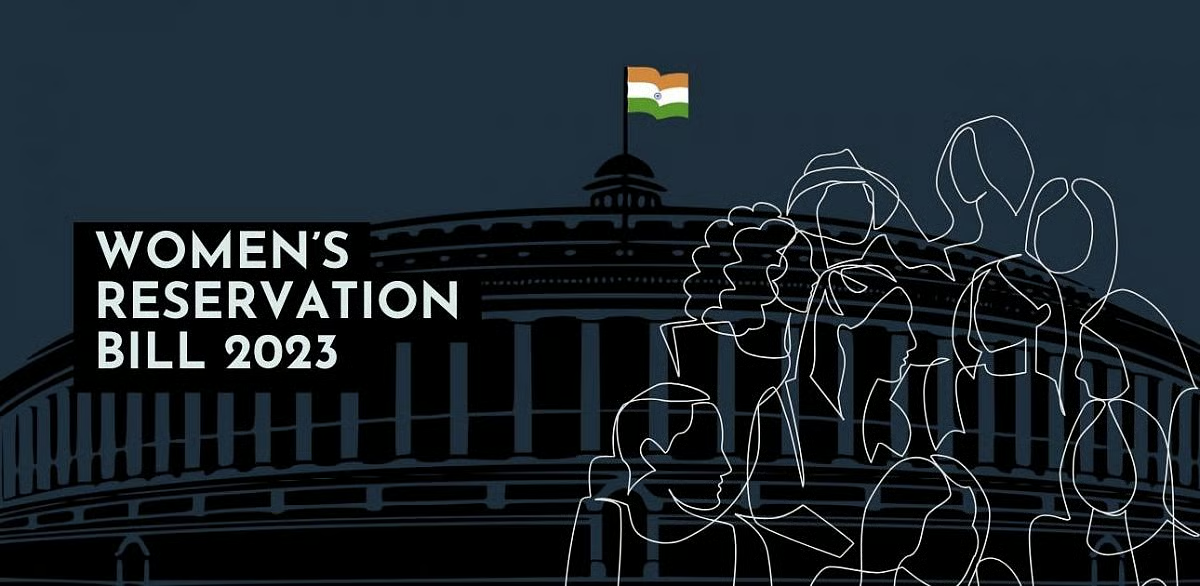
The Women Reservation Act 2023 is one of the biggest constitutional reforms in India for improving women’s participation in politics. The law reserves one-third (33%) of the seats in the Lok Sabha, State Legislative Assemblies, and the Legislative Assembly of Delhi for women. It aims to increase women’s representation in decision-making and strengthen democracy.
Thank you for reading this post, don't forget to subscribe!For many years, women have played an important role in society, but their participation in politics has remained low. Although India has had women leaders at the highest levels, the overall number of women elected to Parliament and State Assemblies has been much lower than men. The Women Reservation Act 2023 is expected to change this situation by giving more women the opportunity to become lawmakers.
What is the Women Reservation Act 2023?
The Women Reservation Act 2023, officially known as the Constitution (106th Amendment) Act, 2023, provides 33% reservation for women in:
- Lok Sabha
- State Legislative Assemblies
- Legislative Assembly of the National Capital Territory of Delhi
The reservation also includes one-third of the seats already reserved for Scheduled Castes (SCs) and Scheduled Tribes (STs).
However, the reservation will come into effect only after the first Census conducted after the Act and the completion of the delimitation process.
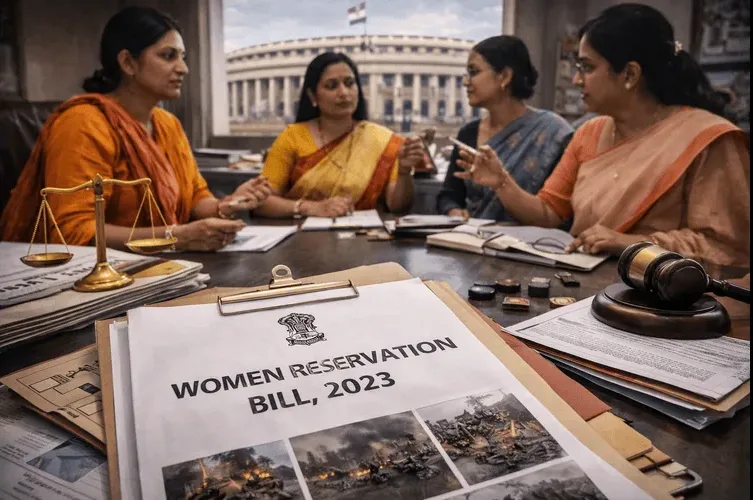
Key Features of the Women Reservation Act 2023
| Feature | Details |
|---|---|
| Amendment | Constitution (106th Amendment) Act, 2023 |
| Reservation | 33% seats for women |
| Applies To | Lok Sabha, State Assemblies, Delhi Assembly |
| SC/ST Reservation | One-third of reserved SC/ST seats for women |
| Duration | 15 years (can be extended by Parliament) |
| Rotation | Seats will rotate after every delimitation |
Why Was This Act Needed?
Women make up nearly half of India’s population, but their political representation has remained low.
In the 17th Lok Sabha, women held only about 15% of the seats. In most State Legislative Assemblies, women represent around 9% of members.
A democracy works best when every section of society has a fair chance to participate. Increasing the number of women lawmakers helps bring different experiences and ideas into the law-making process.
Journey of the Women’s Reservation Bill
The demand for reservation for women is not new.
Several attempts were made before the Act became law.
| Year | Development |
| 1996 | First Women’s Reservation Bill introduced |
| 1998 | Bill reintroduced |
| 1999 | Bill introduced again |
| 2008 | Passed in Rajya Sabha but lapsed |
| 2023 | Constitution (106th Amendment) Act passed |
Earlier Bills could not become law because of political disagreements and the dissolution of Parliament before they were passed.
Important Committees That Supported Women’s Reservation
Many committees studied women’s political participation and recommended reservation.
Committee on the Status of Women in India (1971)
This committee prepared the famous report Towards Equality. It found that women were not getting equal opportunities in education, employment, and politics.
Margaret Alva Committee (1987)
The committee prepared the National Perspective Plan for Women and recommended reservation for women in elected bodies.
Geeta Mukherjee Committee (1996)
The committee supported women’s reservation and also suggested that reservation for women from Other Backward Classes (OBCs) could be considered in the future.
Committee on the Status of Women (2013)
The committee recommended increasing women’s reservation to 50% in local bodies and expanding women’s participation in all important decision-making institutions.
Women’s Representation in India
Women’s participation has improved over the years but is still below the global average.
| Institution | Women’s Representation |
| Lok Sabha | Around 15% |
| State Assemblies | Around 9% |
| Panchayati Raj Institutions | More than 45% nationally |
Many states have already increased women’s reservation in Panchayats to 50%.
Women Reservation in Panchayats
The 73rd and 74th Constitutional Amendments brought a major change by providing at least one-third reservation for women in Panchayats and Urban Local Bodies.
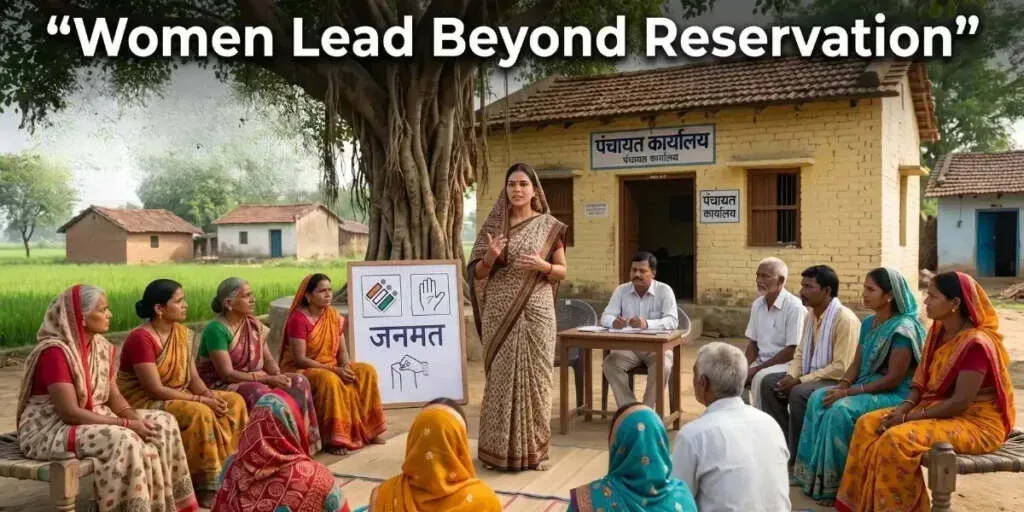
Today, many states such as Assam, Bihar, Kerala, Karnataka, Maharashtra, Rajasthan, Telangana, and Madhya Pradesh provide 50% reservation for women in local bodies.
This has encouraged lakhs of women to participate in local governance and community development.
Women in Different Sectors
Women have made remarkable progress in many fields.
Politics
India has had one woman Prime Minister and two women Presidents. Many women have also served as Chief Ministers and Union Ministers.
Judiciary
The number of women judges is increasing, but India has not yet had a woman Chief Justice of India.
Defence
Women now serve in the Army, Navy, and Air Force. Their role continues to grow every year.
Police
Women make up around 12% of India’s police force. Many states are introducing reservation to increase this number.
Corporate Sector
Women are joining company boards and leadership positions, although they still remain underrepresented compared to men.
Constitutional Provisions
The Women Reservation Act introduces several important constitutional changes.
- Article 330A provides reservation for women in the Lok Sabha.
- Article 332A provides reservation in State Legislative Assemblies.
- Article 334A explains when the reservation will begin and its duration.
- Changes have also been made to Article 239AA for the Delhi Legislative Assembly.
These constitutional amendments provide legal support for women’s reservation.
Delimitation and Census
The reservation will not start immediately.
It will begin only after:
- The next Census is completed.
- Delimitation of constituencies is carried out.
- Reserved seats are identified.
The Delimitation Commission will decide which constituencies will be reserved for women.
OBC Reservation Debate
One important issue is that the Act does not provide a separate reservation for women belonging to Other Backward Classes (OBCs).
Supporters argue that OBC women face both social and gender discrimination and should receive separate representation.
Others believe that adding another quota could make the reservation system more complicated and reduce opportunities for other women.
The debate is likely to continue in the coming years.
Benefits of the Women Reservation Act
The Act can bring many positive changes.
- Increases women’s participation in politics.
- Promotes gender equality.
- Encourages more women to become leaders.
- Improves decision-making through diverse viewpoints.
- Gives greater attention to education, health, nutrition, and women’s welfare.
- Inspires young girls to enter public service and politics.
- Strengthens democracy by making representation more inclusive.
Challenges
Although the Act is an important reform, some challenges remain.
- Delay in implementation due to Census and delimitation.
- Demand for separate reservation for OBC women.
- Political parties may still give fewer election tickets to women.
- Women leaders may face social and political barriers.
- Rotation of reserved seats may affect long-term political planning.
How Can Women’s Political Participation Improve?
The success of the Act depends on more than reservation alone.
Some important steps include:
- Providing political training for women leaders.
- Increasing education and awareness.
- Ensuring equal opportunities within political parties.
- Preventing violence and harassment against women in politics.
- Encouraging young women to join public life.
- Supporting women through leadership development programs.
These measures will help women participate confidently in governance and policymaking.
Why the Act is Important
The Women Reservation Act 2023 is a historic step towards making Indian democracy more inclusive. It recognizes that women should have equal opportunities to participate in law-making and governance.
The Act has the potential to increase women’s representation, improve public policies, and encourage future generations of women leaders. While issues such as delimitation, implementation, and OBC reservation continue to be discussed, the Act marks a major milestone in India’s journey towards gender equality and stronger democratic institutions.
Frequently Asked Questions
What is the Women Reservation Act 2023?
It is the Constitution (106th Amendment) Act, 2023, which reserves 33% of seats for women in the Lok Sabha, State Legislative Assemblies, and the Delhi Legislative Assembly.
How much reservation does the Act provide?
The Act provides one-third (33%) reservation for women.
When will the reservation start?
It will begin after the next Census and the delimitation process.
Does the reservation include SC and ST women?
Yes. One-third of the seats reserved for SCs and STs will also be reserved for women.
How long will the reservation continue?
The reservation will remain in force for 15 years, unless Parliament decides to extend it.
Does the Act provide reservation for OBC women?
No. The Act does not include a separate quota for OBC women.
Why is the Women Reservation Act important?
It promotes gender equality, increases women’s participation in politics, improves governance, and strengthens democracy.