



Wildlife Protection Act 1972 in India

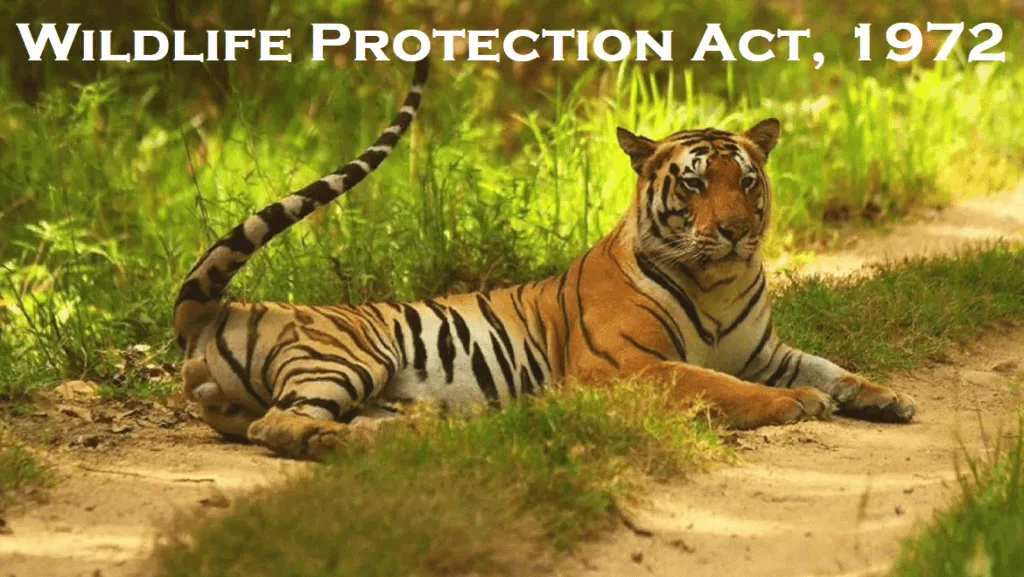
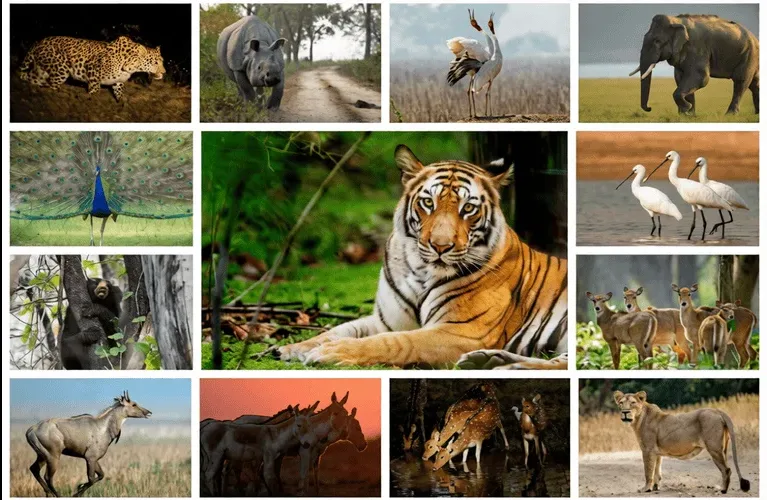
Wildlife Protection Act 1972 is one of India’s most important environmental laws. It was created to protect wild animals, birds, and plants from hunting, illegal trade, and habitat destruction. This law plays a major role in saving endangered species like the Bengal Tiger, Indian Rhinoceros, and Snow Leopard. It also helps protect forests, sanctuaries, and national parks across India.
Thank you for reading this post, don't forget to subscribe!India is home to rich biodiversity. Many rare animals and plants are found only in this country. But due to hunting, deforestation, pollution, and human activities, wildlife has faced serious threats. To stop this damage, the Government of India introduced the Wildlife Protection Act in 1972.
Constitutional Support for Wildlife Protection
The Indian Constitution also supports wildlife conservation.
The 42nd Constitutional Amendment Act, 1976 moved forests and wildlife protection from the State List to the Concurrent List. This means both the Central and State Governments can make laws for wildlife protection.
Article 48A says that the State should protect and improve the environment and safeguard forests and wildlife.
Article 51A(g) says that every citizen has a duty to protect forests, lakes, rivers, and wildlife and to care for nature.
These constitutional provisions make wildlife protection a shared responsibility of both the government and citizens.
What is the Wildlife Protection Act 1972?
The Wildlife Protection Act 1972 was enacted to protect wild animals, birds, and plants. Before this law, India had very limited wildlife protection.
When the Act came into force, India had only five national parks. Today, India has more than 100 national parks and many wildlife sanctuaries.
Main objectives of this Act include:
- Protect wild animals and birds
- Prevent illegal hunting
- Stop wildlife trade
- Protect endangered species
- Create protected areas such as sanctuaries and national parks
- Preserve biodiversity
This law applies across India and provides legal punishment for wildlife crimes.
Authorities Appointed Under the Act
Several officers and departments work under this law.
Central Government Authorities
The Central Government appoints:
- Director of Wildlife Preservation
- Assistant Directors
- Other wildlife officers
These officers help implement wildlife laws at the national level.
State Government Authorities
Each state appoints a Chief Wildlife Warden (CWLW).
The Chief Wildlife Warden:
- Controls protected areas
- Gives permissions under special cases
- Manages wildlife protection in the state
States can also appoint wildlife wardens at district levels.
Important Features of Wildlife Protection Act 1972
1. Ban on Hunting
The Act strictly prohibits hunting of animals listed in Schedules I, II, III, and IV.
Hunting includes:
- Killing
- Poisoning
- Trapping
- Capturing wild animals
However, hunting may be allowed only in special situations if permission is given by the Chief Wildlife Warden.
Examples:
- Animal becomes dangerous to human life
- Animal is seriously injured or diseased
2. Protection of Rare Plants
The Act also protects rare and endangered plants.
Without permission, no one can:
- Uproot plants
- Damage them
- Sell them
- Collect them from forests
Permission may be given for:
- Education
- Scientific research
- Herbarium preservation
3. Protected Areas
The government can declare ecologically important regions as protected areas.
These include:
- Wildlife Sanctuaries
- National Parks
- Tiger Reserves
Protected areas help animals live safely in their natural habitat.
4. Wildlife as Government Property
Certain wildlife items become government property, such as:
- Hunted animals
- Animal products
- Meat of wild animals
- Imported ivory items
No private person can legally own such items without permission.
Bodies Formed Under the Wildlife Protection Act
Several important bodies were formed to strengthen wildlife conservation.
National Board for Wildlife (NBWL)
The National Board for Wildlife is the top advisory body for wildlife matters in India.
It is chaired by the Prime Minister of India.
Main functions:
- Review wildlife-related matters
- Approve projects near protected areas
- Suggest policies for conservation
It promotes wildlife and forest conservation at the national level.
Standing Committee of NBWL
The NBWL has a Standing Committee.
Its role is to approve projects:
- Inside protected areas
- Within 10 km of protected areas
This committee is chaired by the Environment Minister.
State Board for Wildlife (SBWL)
Each state has its own wildlife board.
It is chaired by the Chief Minister.
Main work:
- Suggest areas to declare as protected zones
- Advise on wildlife conservation policy
- Recommend schedule changes
This body supports wildlife protection at the state level.
Central Zoo Authority
The Central Zoo Authority regulates zoos in India.
Main responsibilities:
- Recognize zoos
- Ensure proper animal care
- Set zoo guidelines
- Regulate animal exchange between zoos
It helps maintain scientific management of zoos.
National Tiger Conservation Authority (NTCA)
The National Tiger Conservation Authority was formed in 2005 to strengthen tiger conservation.
Its main goal is to protect the Bengal Tiger population.
Functions include:
- Monitoring tiger reserves
- Protecting tiger habitats
- Preventing poaching
- Recommending new tiger reserves
India has more than 50 tiger reserves today.
Wildlife Crime Control Bureau (WCCB)
The Wildlife Crime Control Bureau fights wildlife crime.
Headquarters: New Delhi
Main functions:
- Collect crime intelligence
- Track wildlife smugglers
- Maintain wildlife crime database
- Help states in legal action
It plays a major role in stopping illegal wildlife trade.
Schedules Under Wildlife Protection Act 1972
The Act divides species into six schedules based on the level of protection.
Schedule I
This gives the highest protection.
Animals under Schedule I get maximum legal protection. Hunting or trade leads to strict punishment.
Examples:
- Blackbuck
- Bengal Tiger
- Clouded Leopard
- Snow Leopard
- Indian Rhinoceros
- Hoolock Gibbon
- Golden Langur
These animals are highly endangered and need strict protection.
Schedule II
These species also receive strong protection.
Hunting is banned except in extreme situations.
Examples:
- Assamese Macaque
- Himalayan Black Bear
- Indian Cobra
- King Cobra
- Jackal
Schedule III and IV
These include species that are protected but are not critically endangered.
Hunting is prohibited, but punishment is less severe than Schedule I and II.
Schedule III Animals
Examples:
- Chital
- Hyena
- Nilgai
- Sambar Deer
Schedule IV Animals
Examples:
- Flamingo
- Kingfisher
- Falcon
- Hares
Schedule V
This schedule contains vermin species.
These animals may damage crops or spread diseases. Hunting may be allowed.
Examples:
- Common Crows
- Fruit Bats
- Rats
- Mice
Schedule VI
This schedule protects rare plants.
Cultivation, trade, transport, and possession require permission.
Examples:
- Blue Vanda Orchid
- Red Vanda Orchid
- Kuth plant
- Slipper Orchids
- Pitcher Plant
These plants are rare and need conservation.
Why Wildlife Protection is Important
Wildlife keeps nature balanced.

Benefits of wildlife conservation:
- Maintains food chain
- Protects forests
- Supports tourism
- Preserves biodiversity
- Helps future generations
If species disappear, ecosystems become weak. That is why wildlife laws are necessary.
Today, threats like:
- Poaching
- Deforestation
- Climate change
- Pollution
- Illegal wildlife trade
continue to endanger animals and plants. Strong laws like the Wildlife Protection Act help reduce these threats.
FAQs
What is the Wildlife Protection Act 1972?
It is an Indian law made to protect wild animals, birds, and plants from hunting, trade, and habitat destruction.
How many schedules are there in the Wildlife Protection Act?
There are six schedules under the Act.
Which schedule gives highest protection?
Schedule I gives the highest level of protection.
What is NTCA?
National Tiger Conservation Authority (NTCA) is a body formed to protect tigers and tiger reserves in India.
What is WCCB?
Wildlife Crime Control Bureau (WCCB) is responsible for controlling wildlife crime and illegal trade.