


Green Revolution in India: Meaning, History, Benefits and Challenges

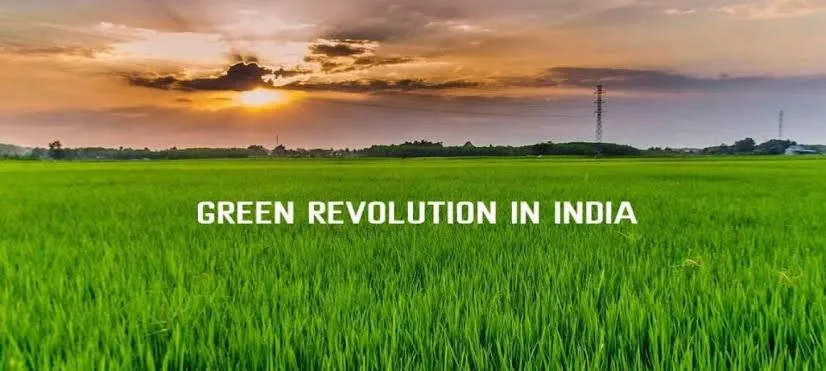
Green Revolution was one of the biggest agricultural changes in modern history. It helped increase food production in many developing countries, especially India. Through improved seeds, irrigation, fertilizers, pesticides, and modern farming machines, agriculture became more productive. This revolution played a major role in making India self-sufficient in food production.
Thank you for reading this post, don't forget to subscribe!The Green Revolution started in the 1960s under the leadership of Norman Borlaug, who is known as the Father of the Green Revolution in the world. He developed high-yielding varieties (HYV) of wheat that produced much more grain than traditional seeds. For this important contribution, he received the Nobel Peace Prize in 1970.
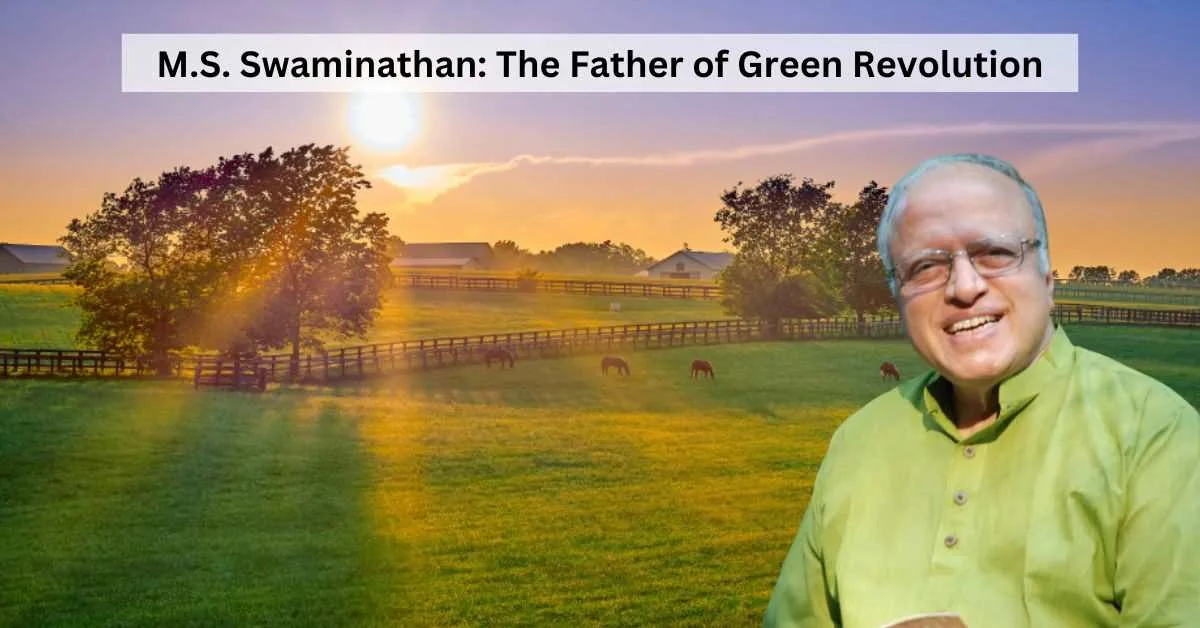
In India, the Green Revolution was mainly led by M. S. Swaminathan, often called the Father of the Green Revolution in India.
What is Green Revolution?
The Green Revolution refers to the use of modern agricultural methods to increase crop production. It involved:
- High Yielding Variety (HYV) seeds
- Chemical fertilizers
- Pesticides and insecticides
- Modern irrigation systems
- Tractors and farming machines
- Better scientific farming methods
These methods helped farmers grow more food in less time.
The Green Revolution in India mainly took place from 1967-68 to 1977-78. During this period, India changed from a food-deficient country to one of the world’s leading agricultural producers.
Objectives of Green Revolution
The Green Revolution was launched with several important goals.
1. Solve Food Shortage
India was facing serious food shortages after independence. The main goal was to increase food grain production and reduce hunger.
2. Modernize Agriculture
Traditional farming methods produced limited output. The Green Revolution introduced scientific farming and modern equipment.
3. Increase Employment
It aimed to create jobs in both agriculture and industries connected to farming.
4. Improve Crop Quality
Scientists worked to create stronger crops that could survive diseases and difficult weather.
5. Spread Agricultural Technology
Modern farming technology was introduced to developing nations to improve global food production.
Main Elements of Green Revolution
Expansion of Farming Land
Since 1947, India had increased cultivated land, but it was still not enough. More land was brought under farming to increase production.
Double Cropping
Earlier, many farmers harvested only one crop per year because farming depended heavily on rainfall. With irrigation facilities, farmers started growing two crops in one year, increasing total output.
Improved Seeds
The use of HYV seeds became the scientific backbone of the revolution. These seeds produced higher yields than traditional seeds.
Irrigation
Large dams, canals, and tube wells supplied water to crops throughout the year.
Use of Machines
Machines like tractors, threshers, harvesters, and pumps reduced manual labour and increased efficiency.
Major Crops of the Green Revolution
The revolution mainly focused on food grains such as:
- Wheat
- Rice
- Jowar
- Bajra
- Maize
Among these, wheat became the biggest success story.
Non-food crops like cotton, tea, sugarcane, and oilseeds did not benefit much.
Background of Green Revolution in India
India had suffered severe food shortages for many years. One of the worst tragedies was the Bengal Famine of 1943, in which around 4 million people died due to hunger and starvation.
Even after independence in 1947, food production could not keep up with the rapidly growing population. India depended heavily on food imports.
This created an urgent need to improve agricultural productivity.
With support from the Indian government, the Ford Foundation and the Rockefeller Foundation, the Green Revolution was introduced in India.
Positive Impacts of Green Revolution
Huge Increase in Food Production
The most important success was a massive increase in food grain production. By 1978-79, India produced about 131 million tonnes of grain.
This helped India become one of the world’s largest agricultural producers.
Reduced Food Imports
Before the Green Revolution, India depended on other countries for food grains. After the revolution, India became largely self-sufficient.
In some years, India even exported food grains.
Higher Farmer Income
Many farmers earned more because crop production increased. They reinvested their profits into better seeds, fertilizers, and machines.
Large farmers benefited the most because they had enough money to invest in modern technology.
Growth of Industries
The Green Revolution increased demand for:
- Tractors
- Harvesters
- Diesel engines
- Pumps
- Fertilizers
- Pesticides
This helped agro-based industries grow rapidly.
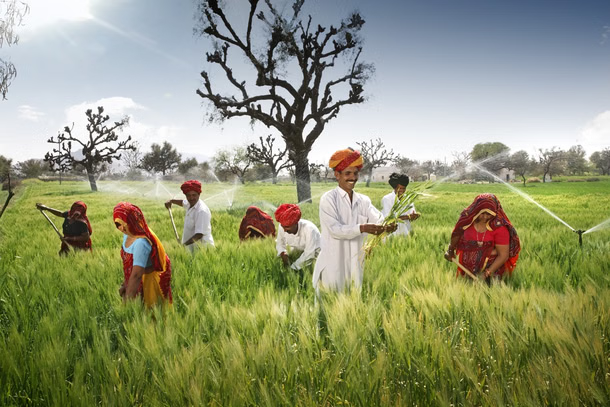
More Rural Employment
Double cropping increased demand for labour. Jobs were also created in factories, transport, and power projects connected to agriculture.
Negative Impacts of Green Revolution
Although the Green Revolution improved food production, it also created several serious problems.
Non-Food Crops Were Ignored
The main focus remained on cereals like wheat and rice. Crops such as:
- Pulses
- Oilseeds
- Cotton
- Jute
- Tea
- Sugarcane
received less attention.
This created imbalance in agricultural development.
Limited Crop Coverage
The HYV program was limited to only five major crops:
- Wheat
- Rice
- Jowar
- Bajra
- Maize
Farmers growing other crops could not benefit equally.
Regional Inequality
The Green Revolution mainly benefited regions with better irrigation and infrastructure.
The most benefited states were:
States like Assam, Bihar, West Bengal, and Odisha benefited much less.
This increased regional inequality.
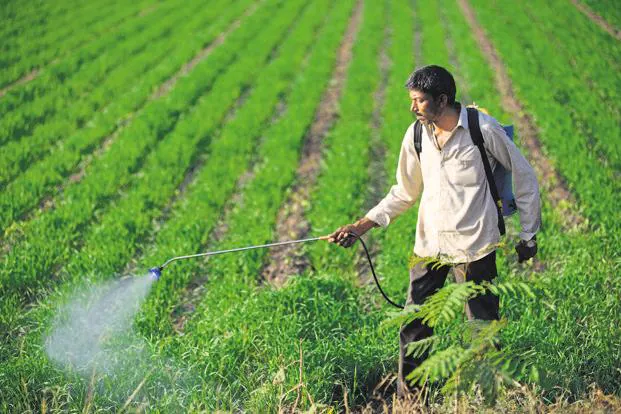
Excessive Chemical Use
Heavy use of pesticides and fertilizers created environmental problems.
Many farmers were not properly trained in safe chemical use. This caused:
- Soil pollution
- Water pollution
- Harm to useful insects
- Damage to crop quality
Water Depletion
Many Green Revolution crops required large amounts of water.
Rice and sugarcane especially consume huge amounts of water. Excessive irrigation caused groundwater levels to fall.
Punjab became one of India’s most water-stressed farming regions.
Soil Damage
Continuous farming without giving soil enough recovery time reduced soil fertility.
Excess fertilizers changed soil chemistry and raised soil pH levels. This weakened long-term productivity.
Rural Unemployment
Mechanization reduced manual labour needs in many areas.
Small farmers and landless labourers suffered because machines replaced many traditional jobs.
Health Problems
Heavy exposure to toxic chemicals caused health risks.
Some commonly used pesticides were linked to:
- Cancer
- Kidney failure
- Birth defects
- Respiratory diseases
This became a serious concern in intensive farming regions.
Green Revolution Krishonnati Yojana
The Government of India launched Green Revolution – Krishonnati Yojana in 2005 to further strengthen agriculture.
Its goal is to improve farming scientifically and increase farmers’ income.
This umbrella scheme includes major agricultural missions such as:
- National Food Security Mission
- National Mission for Sustainable Agriculture
- Agricultural Mechanization Mission
- Seed and Planting Material Mission
- Agricultural Marketing Scheme
- e-Governance in Agriculture
These schemes support farmers with technology, training, and infrastructure.
Evergreen Revolution
The Green Revolution improved food security but caused environmental damage.
To solve this problem, M. S. Swaminathan proposed the idea of the Evergreen Revolution.
Evergreen Revolution means increasing food production in ways that are:
- Environmentally safe
- Economically profitable
- Socially sustainable
This approach combines modern science with ecological balance.
The aim is not just more production, but sustainable production for future generations.
Today, sustainable farming, organic methods, water conservation, and climate-friendly agriculture are becoming more important. The lessons of the Green Revolution continue to guide India’s agricultural future.
FAQs
Q1. Who is called the Father of Green Revolution?
Norman Borlaug is known as the Father of the Green Revolution.
Q2. Who led the Green Revolution in India?
M. S. Swaminathan led the Green Revolution in India.
Q3. When did the Green Revolution start in India?
It mainly started in the late 1960s, especially around 1967-68.
Q4. Which crop benefited the most from the Green Revolution?
Wheat benefited the most.
Q5. What is Evergreen Revolution?
It means increasing agricultural production using sustainable and eco-friendly methods.