




Citizenship Amendment Act 2019: Features, Benefits, Concerns and Impact

Citizenship Amendment Act (CAA) 2019 is one of the most discussed laws in recent Indian history. The Act was passed by the Indian Parliament in December 2019 and received the assent of the President, becoming law shortly afterward.
Thank you for reading this post, don't forget to subscribe!The Citizenship Amendment Act, 2019 amended the Citizenship Act, 1955. The main purpose of the amendment was to provide a faster path to Indian citizenship for certain religious minorities who came to India from Afghanistan, Bangladesh, and Pakistan due to religious persecution.
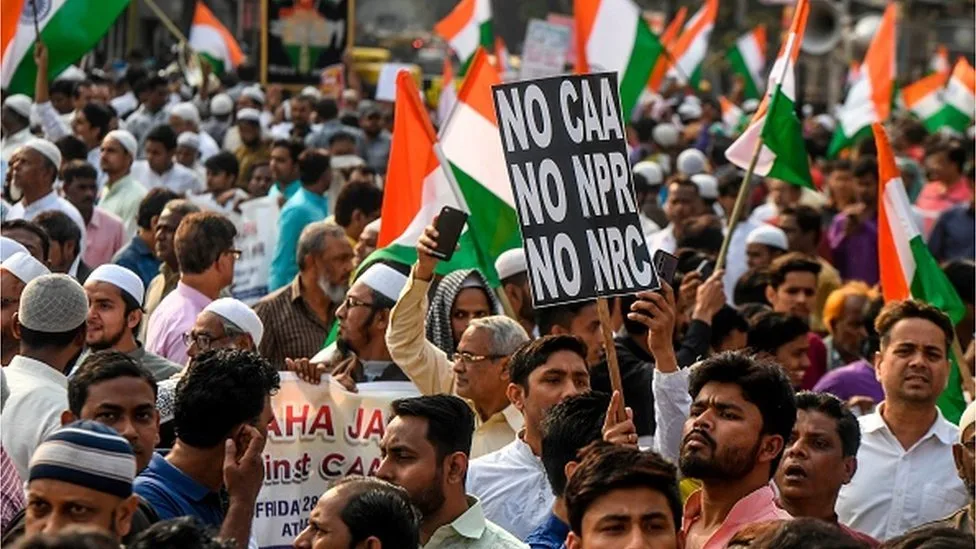
The law generated widespread debate across India. Supporters viewed it as a humanitarian measure for persecuted minorities, while critics raised concerns regarding equality, secularism, and its impact on certain regions, especially the North-East.
What is Citizenship?
Citizenship is the legal status that makes a person a member of a country. Citizens enjoy various rights and protections from the government and are also expected to follow the laws of the country.
In India, citizenship is governed by the Citizenship Act, 1955.
Citizenship Act, 1955
The Citizenship Act, 1955 provides different ways through which a person can become an Indian citizen.
1. Citizenship by Birth
A person born in India may acquire Indian citizenship under certain conditions.
2. Citizenship by Descent
A person can acquire citizenship through Indian parents even if born outside India.
3. Citizenship by Registration
Certain categories of people can apply for citizenship through registration.
4. Citizenship by Naturalisation
Foreign nationals can become Indian citizens after fulfilling residence and other conditions.
5. Citizenship by Incorporation of Territory
If a territory becomes part of India, the people of that territory may become Indian citizens.
The Act also regulates Overseas Citizen of India (OCI) cardholders.
Who is an Illegal Migrant?
An illegal migrant is a foreign citizen who:
- Enters India without valid travel documents such as a passport or visa.
- Enters India legally but stays beyond the permitted period.
Under the Citizenship Act, illegal migrants cannot normally obtain Indian citizenship.
They may face:
- Deportation
- Detention
- Legal action
Background of the Citizenship Amendment Act
Before the amendment, the Government of India issued notifications in 2015 and 2016 providing relief to certain migrants from Afghanistan, Bangladesh, and Pakistan.
These migrants belonged to the following religious communities:
- Hindus
- Sikhs
- Buddhists
- Jains
- Parsis
- Christians
The government exempted them from deportation and imprisonment under certain laws if they had entered India before 31 December 2014.
The Citizenship Amendment Act was introduced to provide a legal framework for granting citizenship to such groups.
What is the Citizenship Amendment Act (CAA) 2019?
The Citizenship Amendment Act, 2019 amends the Citizenship Act, 1955.
The Act provides a special path to Indian citizenship for specific religious minorities from three neighboring countries:
- Afghanistan
- Bangladesh
- Pakistan
The eligible communities are:
- Hindus
- Sikhs
- Buddhists
- Jains
- Parsis
- Christians
These people will not be treated as illegal migrants if they entered India on or before 31 December 2014 and satisfy prescribed conditions.
Main Objectives of the CAA
The major objectives include:
Providing Protection
The Act aims to provide protection to religious minorities who allegedly faced persecution in neighboring countries.
Granting Citizenship
It provides a simpler route for eligible migrants to obtain Indian citizenship.
Humanitarian Relief
The law seeks to offer legal recognition and security to people who have been living in India for years without citizenship.
Reducing Statelessness
It helps certain groups avoid living without a legal nationality.
Key Provisions of the Citizenship Amendment Act
Exemption from Illegal Migrant Status
The Act states that eligible persons belonging to the six specified religious communities from Afghanistan, Bangladesh, and Pakistan will not be considered illegal migrants.
This applies if they entered India on or before 31 December 2014.
Reduced Residency Requirement
Before the amendment, a foreign citizen generally had to reside in India for 11 years to apply for citizenship through naturalisation.
The CAA reduces this requirement to 5 years for the specified groups.
This significantly speeds up the citizenship process.
Closure of Legal Proceedings
After obtaining citizenship:
- Legal proceedings related to illegal migration can be closed.
- The individual is treated as an Indian citizen.
Citizenship from Date of Entry
The law provides that eligible persons may be considered citizens from the date of their entry into India after the completion of legal procedures.
Applicability of the Act
The Citizenship Amendment Act does not apply everywhere in India.
Areas Excluded from the Act
The provisions are not applicable to certain tribal areas covered under the Sixth Schedule of the Constitution.
These include areas in:
The law is also not applicable in regions protected under the Inner Line Permit (ILP) system.
These areas include:
The exclusions were introduced to protect indigenous cultures and demographic balance.
Overseas Citizen of India (OCI)
What is OCI?
An Overseas Citizen of India (OCI) cardholder is a foreign citizen of Indian origin who receives certain benefits in India.
OCI holders enjoy facilities such as:
- Lifelong visa for India
- Multiple entries into India
- Ease of travel and residence
However, OCI is not the same as full Indian citizenship.
Changes Related to OCI
The Citizenship Amendment Act added a new ground for cancellation of OCI registration.
OCI registration may be cancelled if:
- The registration was obtained through fraud.
- The person has been convicted of serious offences under specified conditions.
- National security requires cancellation.
- The person violates provisions of the Citizenship Act or other notified laws.
The Act also provides that the person should be given an opportunity to be heard before cancellation.

Why Did the Government Bring the CAA?
The government presented several reasons for introducing the law.
Historical Background
The government argued that the partition of India in 1947 was based on religion.
As a result, many minorities remained in neighboring countries and faced difficulties over time.
Religious Persecution
The government stated that religious minorities in Afghanistan, Bangladesh, and Pakistan faced discrimination and persecution.
According to this view, India has a responsibility to provide shelter and citizenship opportunities to such people.
Humanitarian Considerations
The government emphasized that the law grants citizenship rather than taking it away from anyone.
Concerns Regarding the Citizenship Amendment Act
Despite government support, the Act has faced criticism from various groups.
Concerns in North-East India
One of the strongest reactions came from North-Eastern states.
Many people argued that the law could affect:
- Local culture
- Indigenous identity
- Language
- Demographic balance
Assam Accord Issue
Critics argue that the Act conflicts with the Assam Accord of 1985.
The Assam Accord stated that illegal migrants entering Assam after 25 March 1971 would be identified and dealt with irrespective of religion.
Some groups believe the CAA changes this approach.
Article 14 and Equality
Article 14 of the Constitution guarantees equality before the law.
Critics argue that the Act classifies migrants on the basis of religion and therefore raises constitutional questions.
Supporters, however, argue that the classification is based on specific historical and humanitarian circumstances.
Exclusion of Other Refugee Groups
Another criticism is that some refugee groups are not included, such as:
- Tamils from Sri Lanka
- Rohingya refugees from Myanmar
- Other persecuted communities from different countries
Critics question why only three countries and six religious communities were selected.
Challenges in Identifying Persecution
Some experts point out that proving whether a person migrated due to persecution can be difficult.
This may create administrative challenges.
Impact on International Relations
Some observers believe that highlighting religious persecution in neighboring countries may affect diplomatic relations.
Others argue that humanitarian concerns should take priority.
Government’s Response to Criticism
The government has defended the Act on several grounds.
Special Circumstances
The government argues that:
- Afghanistan
- Bangladesh
- Pakistan
have Islam as the majority religion.
Therefore, the specified communities are minorities in these countries.
Not Against Any Community
The government has repeatedly stated that the Act does not remove citizenship from any Indian citizen.
It only provides citizenship opportunities to specific groups.
Case-by-Case Approach
The government has said that applications from other groups can be examined separately according to existing laws and policies.
Protection of North-East Identity
The government has assured people in North-East India that:
- Cultural identity
- Linguistic heritage
- Social traditions
will be protected.
The exclusion of Sixth Schedule areas and ILP regions was introduced for this purpose.
Constitutional Debate
The Citizenship Amendment Act has led to important constitutional discussions.
The main questions include:
- Whether the classification used in the Act is reasonable.
- Whether it complies with Article 14.
- Whether it aligns with India’s secular principles.
These issues have been examined through legal challenges and judicial review processes.
Importance of the Citizenship Amendment Act
The Act is important because it touches several major issues:
Citizenship
It changes the legal framework governing citizenship.
Human Rights
It raises questions about protection for persecuted communities.
National Security
It involves migration and border management.
Constitutional Values
It has led to debates about equality and secularism.
Regional Concerns
It affects sensitive regions such as North-East India.
Impact of the Act
The long-term impact of the Citizenship Amendment Act depends on:
- Implementation of rules
- Administrative procedures
- Judicial interpretation
- Public acceptance
The Act has already become an important milestone in India’s citizenship policy and continues to influence political, legal, and social discussions.
Way Forward
A balanced approach is necessary for addressing concerns related to the Citizenship Amendment Act.
Some important steps include:
- Ensuring transparent implementation.
- Protecting the cultural identity of North-Eastern states.
- Maintaining constitutional values.
- Addressing humanitarian concerns of refugees.
- Strengthening public awareness regarding the provisions of the Act.
- Encouraging constructive dialogue among stakeholders.
The government and citizens must work together to ensure that national interests, constitutional principles, and humanitarian responsibilities are balanced effectively.
Conclusion
Citizenship Amendment Act (CAA) 2019 is a significant amendment to India’s citizenship law. It provides a faster path to citizenship for Hindus, Sikhs, Buddhists, Jains, Parsis, and Christians from Afghanistan, Bangladesh, and Pakistan who entered India before 31 December 2014 and meet the prescribed conditions.
Supporters view it as a humanitarian measure designed to protect persecuted minorities, while critics raise concerns regarding equality, secularism, and regional impacts. The Act has generated one of the most important constitutional and political debates in modern India.
As India continues to evolve as a democratic nation, discussions surrounding citizenship, refugee protection, constitutional rights, and national identity will remain important. The ultimate success of the Act will depend on its implementation, legal interpretation, and the ability to balance humanitarian concerns with constitutional values and regional interests.
FAQs on Citizenship Amendment Act 2019
1. What is the Citizenship Amendment Act (CAA) 2019?
CAA 2019 is a law that amended the Citizenship Act, 1955 to provide a path to Indian citizenship for certain migrants from Afghanistan, Bangladesh, and Pakistan.
2. When was the Citizenship Amendment Act passed?
The Act was passed by Parliament in December 2019 and received Presidential assent on 12 December 2019.
3. Which communities are covered under CAA 2019?
The Act covers Hindus, Sikhs, Buddhists, Jains, Parsis, and Christians from Afghanistan, Bangladesh, and Pakistan.
4. What is the cut-off date under CAA?
Eligible migrants must have entered India on or before 31 December 2014.
5. Does CAA grant automatic citizenship?
No. Eligible persons must still apply and complete the citizenship process as per the law.
6. How does CAA change the residency requirement?
The Act reduces the residency requirement for naturalization from 11 years to 5 years for eligible migrants.
7. Does CAA affect existing Indian citizens?
No. The Act does not take away citizenship from any Indian citizen.
8. Is CAA applicable across all parts of India?
No. Certain tribal areas under the Sixth Schedule and Inner Line Permit (ILP) regions are exempt.
9. What is OCI under the Citizenship Act?
OCI (Overseas Citizen of India) is a special status granted to foreign citizens of Indian origin with certain benefits.
10. Why was CAA introduced?
The government stated that the Act was introduced to provide protection and citizenship opportunities to persecuted religious minorities from neighboring countries.