

Special Provisions for States in Indian Constitution

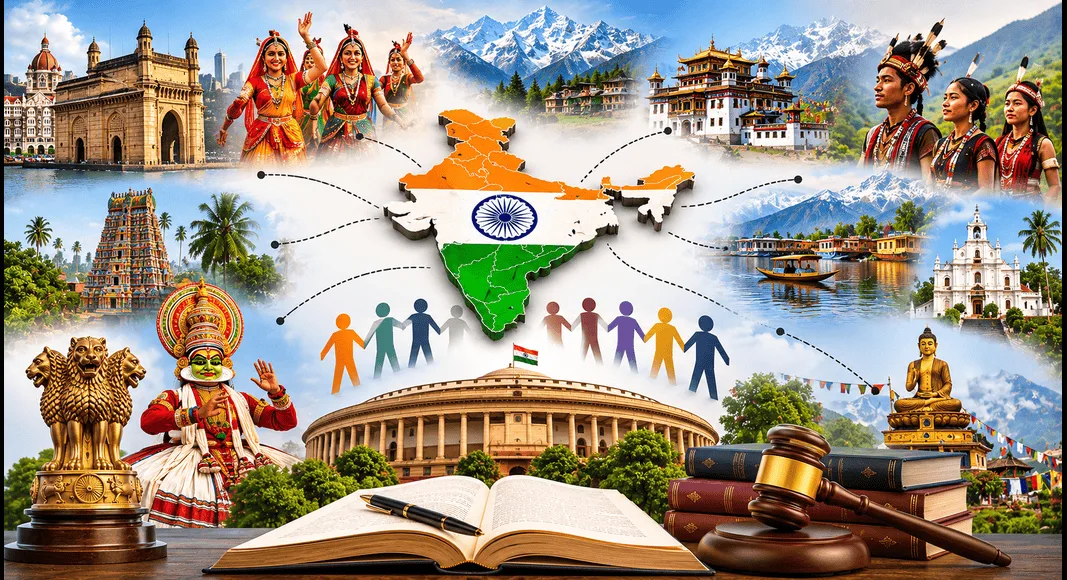
India is one of the most diverse countries in the world. Every state has its own language, culture, traditions, geography, and history. Because of this diversity, the makers of the Indian Constitution understood that some regions would need special protection and different administrative arrangements. To meet these unique needs, the Constitution includes Special Provisions for Some States under Articles 371 to 371J.
Thank you for reading this post, don't forget to subscribe!These provisions protect the cultural identity of local communities, promote balanced development, safeguard tribal rights, and strengthen the relationship between the Centre and the states. They also help maintain national unity while respecting regional diversity.
What are Special Provisions for Some States?
Special Provisions for Some States are constitutional arrangements that give additional powers, safeguards, or administrative benefits to certain states based on their unique historical, cultural, social, or economic conditions.
These provisions are mainly found under Articles 371 to 371J in Part XXI of the Constitution, titled Temporary, Transitional and Special Provisions.
Although Part XXI uses the word “temporary,” most of these provisions continue to remain in force because they do not have any fixed expiry date.
Their main objectives are:
- Protect tribal customs and traditions.
- Preserve local culture and identity.
- Ensure balanced regional development.
- Improve administration in sensitive regions.
- Strengthen national unity without ignoring regional interests.
Why Do Some States Need Special Provisions?
India has several regions that differ greatly from the rest of the country.
Some states have:
- Large tribal populations.
- Difficult geographical conditions.
- Border security concerns.
- Historical agreements made before joining India.
- Backward regions needing special development.
- Distinct languages and customs.
Providing identical governance everywhere may not solve these unique challenges. Therefore, the Constitution gives special safeguards wherever required.
Constitutional Basis of Special Provisions
The Constitution contains different Articles for different states.
The major constitutional provisions include:
- Article 371 – Maharashtra and Gujarat
- Article 371A – Nagaland
- Article 371B – Assam
- Article 371C – Manipur
- Article 371D & 371E – Andhra Pradesh and Telangana
- Article 371F – Sikkim
- Article 371G – Mizoram
- Article 371H – Arunachal Pradesh
- Article 371I – Goa
- Article 371J – Karnataka
Apart from these:
- Article 239A provides special provisions for Puducherry.
- Article 239AA provides special provisions for the National Capital Territory of Delhi.

Why Were These Articles Added Later?
When the Constitution came into force in 1950, most of these Articles did not exist.
As India reorganized states and granted statehood to Union Territories, Parliament introduced these provisions through constitutional amendments.
Many provisions were added after:
- State reorganization
- Peace agreements
- Tribal protection demands
- Regional development concerns
Thus, these Articles evolved with India’s changing political and administrative needs.
State-wise Special Provisions
Article 371 – Maharashtra and Gujarat
Article 371 aims to ensure balanced development in different regions of Maharashtra and Gujarat.
The Governor has special responsibilities regarding:
- Separate development boards
- Fair distribution of development funds
- Equal employment opportunities
- Better educational facilities
Maharashtra
Development boards are created for:
- Vidarbha
- Marathwada
- Rest of Maharashtra
Gujarat
Development boards are created for:
- Saurashtra
- Kutch
- Rest of Gujarat
The Governor submits annual reports on the progress of these regions.
Article 371A – Nagaland
Nagaland enjoys one of the strongest constitutional protections.
Parliament cannot automatically make laws on:
- Naga religious practices
- Social customs
- Customary laws
- Administration based on customary law
- Ownership of land and natural resources
These laws apply only if the Nagaland Legislative Assembly approves them.
The Governor also has special responsibility for maintaining law and order whenever necessary.
These safeguards preserve the unique identity of the Naga people.
Article 371B – Assam
Assam has many tribal communities living in protected areas.
Article 371B allows the President to create a committee within the Assam Legislative Assembly.
This committee represents members elected from tribal areas and helps protect their interests during law-making.
Article 371C – Manipur
The hill regions of Manipur have distinct tribal communities.
Article 371C provides:
- A Hill Areas Committee in the Legislative Assembly.
- Special responsibility of the Governor.
- Annual report to the President.
- Directions from the Central Government regarding hill administration.
These measures ensure better governance in tribal regions.
Article 371D and Article 371E – Andhra Pradesh and Telangana
These Articles focus mainly on equal opportunities.
Their objectives include:
- Fair access to government jobs.
- Equal educational opportunities.
- Regional reservations.
- Local recruitment.
- Administrative tribunals for service-related disputes.
After Telangana became a separate state in 2014, Article 371D also became applicable there.
Article 371E allows Parliament to establish a Central University in Andhra Pradesh.
Article 371F – Sikkim
Sikkim became part of India in 1975.
Article 371F protects its unique social and cultural identity.
Its major provisions include:
- Minimum 30-member Legislative Assembly.
- One Lok Sabha seat.
- Protection of different communities.
- Governor’s responsibility for peace.
- Power of the President to extend Central laws with suitable modifications.
These provisions helped Sikkim integrate smoothly into the Indian Union.
Article 371G – Mizoram

Like Nagaland, Mizoram enjoys protection of its traditional customs.
Parliamentary laws relating to:
- Mizo religious practices
- Social customs
- Customary law
- Land ownership
cannot automatically apply unless approved by the State Legislature.
The Assembly must have at least 40 members.
Article 371H – Arunachal Pradesh
Due to its sensitive international border and strategic importance, Arunachal Pradesh has special provisions.
The Governor has special responsibility for:
- Law and order
The Assembly should consist of at least 30 members.
Article 371I – Goa
Article 371I simply states that Goa’s Legislative Assembly should have at least 30 members.
Unlike many other states under Article 371, Goa does not receive additional administrative powers.
Article 371J – Karnataka
Article 371J was added through the 98th Constitutional Amendment Act, 2012.
It mainly benefits the Hyderabad-Karnataka region (now officially called the Kalyana Karnataka region).
The Governor oversees:
- Separate development board
- Fair allocation of development funds
- Reservation in education
- Reservation in state government jobs
- Skill development
Its objective is to reduce regional imbalance.
Importance of Special Provisions
These constitutional safeguards provide many benefits.
Protect Tribal Identity
Traditional customs, culture, and local governance remain protected.
Promote Balanced Development
Backward regions receive additional financial attention.
Preserve Local Culture
Languages, traditions, and customary laws continue to flourish.
Improve Governance
Special administrative mechanisms solve region-specific problems.
Strengthen National Unity
Respecting diversity helps strengthen India’s unity instead of weakening it.
Criticism of Special Provisions
Despite their advantages, these provisions have also faced criticism.
1. Regionalism
Some people believe these provisions encourage regional identity over national identity.
2. Unequal Development
Certain states receive more constitutional benefits than others, leading to perceptions of inequality.
3. Political Misuse
Political parties sometimes use these provisions to gain electoral support instead of promoting genuine development.
4. Legal Complexity
Different legal systems in different states may create confusion between state and central laws.
5. Limited Benefits
Sometimes the intended beneficiaries, especially tribal communities, do not receive full advantages because of poor implementation.
Way Forward
Several expert committees have suggested improvements.
Strengthen Cooperative Federalism
The Centre and states should work together rather than compete.
Ensure Fair Distribution of Resources
Development funds should reach genuinely backward areas.
Periodic Review
Special provisions should be reviewed regularly to assess whether they are achieving their objectives.
Improve Transparency
Development boards and state governments should publish regular progress reports.
Focus on Inclusive Development
Economic growth should benefit tribal communities, remote villages, women, youth, and marginalized groups.
Important Constitutional Commissions
Several commissions have recommended improving Centre-State relations.

Sarkaria Commission (1983)
- Strengthen cooperative federalism.
- Improve Centre-State coordination.
Punchhi Commission (2007)
- Clarify Centre-State powers.
- Periodically review special provisions.
- Reduce political misuse.
States Reorganisation Commission (1955)
- Suggested reorganizing states mainly on linguistic and cultural basis.
These recommendations continue to influence India’s federal system.
Special Provisions vs Special Category Status
Students often confuse these two concepts.
| Special Provisions | Special Category Status |
|---|---|
| Constitutional provisions | Administrative classification |
| Mentioned in the Constitution | Not mentioned in the Constitution |
| Articles 371 to 371J | Earlier used for financial assistance |
| Protect culture, administration and governance | Mainly provided financial benefits |
| Continue through constitutional amendments | Largely replaced after the 14th Finance Commission |
Conclusion
The Special Provisions for Some States reflect the flexibility and inclusiveness of the Indian Constitution. India is a country of enormous diversity, and treating every region exactly the same may not always ensure justice or balanced development. Articles 371 to 371J recognize the unique history, culture, geography, and administrative needs of different states while keeping them firmly within the framework of the Indian Union.
Although these provisions sometimes attract criticism regarding regionalism or unequal treatment, their primary objective is to protect local identities, promote balanced growth, and strengthen cooperative federalism. With transparent implementation, regular review, and effective Centre-State cooperation, these constitutional safeguards can continue to support both regional aspirations and national unity.
FAQs
1. What are Special Provisions for States in the Indian Constitution?
Special provisions are constitutional arrangements under Articles 371 to 371J that give certain states special rights to protect their culture, traditions, administration, and regional development.
2. Why were Special Provisions given to some states?
They were introduced to address historical, cultural, geographical, tribal, and developmental challenges while promoting national unity.
3. Which Articles deal with Special Provisions for States?
Articles 371 to 371J mainly deal with special provisions for different states. Articles 239A and 239AA provide special arrangements for Puducherry and Delhi.
4. Which states have Special Provisions under Article 371?
Maharashtra, Gujarat, Nagaland, Assam, Manipur, Andhra Pradesh, Telangana, Sikkim, Mizoram, Arunachal Pradesh, Goa, and Karnataka have special provisions under different clauses of Article 371.
5. Is Article 370 the same as Article 371?
No. Article 370 was related to the special status of Jammu and Kashmir and was effectively revoked in 2019, while Articles 371 to 371J continue to provide special provisions for other states.
6. What is the purpose of Article 371A?
Article 371A protects the religious practices, customary laws, land ownership, and resources of the people of Nagaland.
7. How does Article 371D benefit Andhra Pradesh and Telangana?
It ensures fair opportunities in public employment and education through local reservations and administrative arrangements.
8. Are these Special Provisions permanent?
Although they are placed under “Temporary, Transitional and Special Provisions,” most do not have an expiry date and remain in force unless amended by Parliament.
9. What are the criticisms of Special Provisions?
Critics argue that they may encourage regionalism, create legal differences, lead to political misuse, and cause unequal development among states.
10. Why are Special Provisions important for India?
They help protect regional identities, support balanced development, strengthen cooperative federalism, and maintain peace and stability in sensitive regions.