


Different Irrigation Systems in Agriculture

Different Irrigation Systems play a very important role in agriculture. Irrigation means supplying water to crops artificially when rainfall is not enough. In many places, farmers cannot depend only on rain because rainfall may be irregular or too little. Irrigation helps crops grow properly by giving them the right amount of water at the right time.
Thank you for reading this post, don't forget to subscribe!Water is necessary for seed germination, plant growth, and crop production. Without enough water, crops may dry up and farmers may suffer losses. Irrigation systems help solve this problem. They also help reduce weed growth, improve soil condition, and increase agricultural productivity.
There are many types of irrigation systems used in India and around the world. Each system has its own benefits and limitations. Farmers choose irrigation methods based on soil type, water availability, land shape, and crop type.
Why Irrigation is Important
Irrigation is important for several reasons:
- Provides water during low rainfall
- Helps crops grow in dry regions
- Increases crop production
- Improves soil moisture
- Supports farming throughout the year
- Protects crops during drought
In countries like India, irrigation is very important because many farmers depend on agriculture for income and food production.
Major Types of Irrigation Systems
The main irrigation systems are:
| Irrigation Type | Main Water Source | Best For |
|---|---|---|
| Well & Tube Well | Groundwater | Small and medium farms |
| Canal Irrigation | Rivers and dams | Large plain areas |
| Tank Irrigation | Stored rainwater | Plateau and dry regions |
| Drip Irrigation | Pipes and emitters | Fruits and vegetables |
| Sprinkler Irrigation | Pressurized water spray | Uneven lands |
1. Well and Tube Well Irrigation
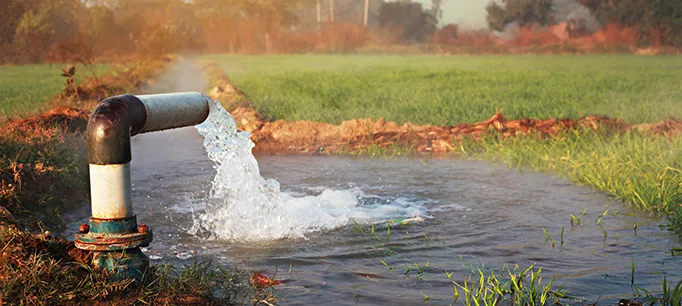
Well irrigation is one of the oldest methods of irrigation. Farmers collect groundwater using wells and use it for farming. Wells are commonly found in states like Uttar Pradesh, Bihar, and Tamil Nadu.
There are different types of wells:
- Shallow wells
- Deep wells
- Tube wells
- Artesian wells
Shallow wells may dry during summer because the water level falls. Deep wells are better because they provide water throughout the year.
Tube wells are modern wells where pipes are drilled deep underground to collect water. They usually work with electric pumps. A tube well can irrigate a much larger area than a normal well.
Tube wells are widely used in:
Advantages
- Cheap and simple method
- Water available when needed
- Reliable during dry periods
- Groundwater often contains minerals that improve soil fertility
Disadvantages
- Only small areas can be irrigated
- Water table may fall during drought
- Excess use can dry nearby land
2. Canal Irrigation
Canal irrigation is a system where water from rivers or dams is carried to fields through canals. This method is suitable for flat lands with fertile soil and a permanent water source.
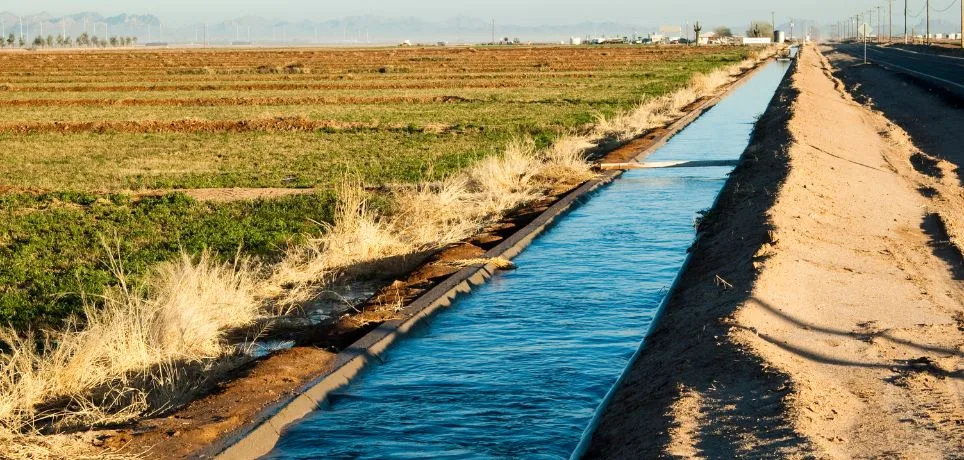
Canal irrigation is mostly found in the northern plains of India, especially in:
It is less common in rocky or uneven plateau areas because digging canals there is difficult and costly.
Types of Canal Irrigation
Inundation Canals
These canals take water directly from rivers without control systems. They mainly work during the rainy season when rivers are full.
Perennial Canals
These canals receive water from rivers throughout the year. Barrages or dams control the water flow.
Most canals in India are perennial canals.
Advantages
- Water available for long periods
- Protects crops from drought
- Improves farm production
- Useful for large agricultural lands
Disadvantages
- Can cause floods during heavy rain
- Suitable mainly for plain lands
- Construction cost is high
3. Tank Irrigation
Tank irrigation stores water by building small bunds or barriers across streams. The collected water is used later for irrigation.
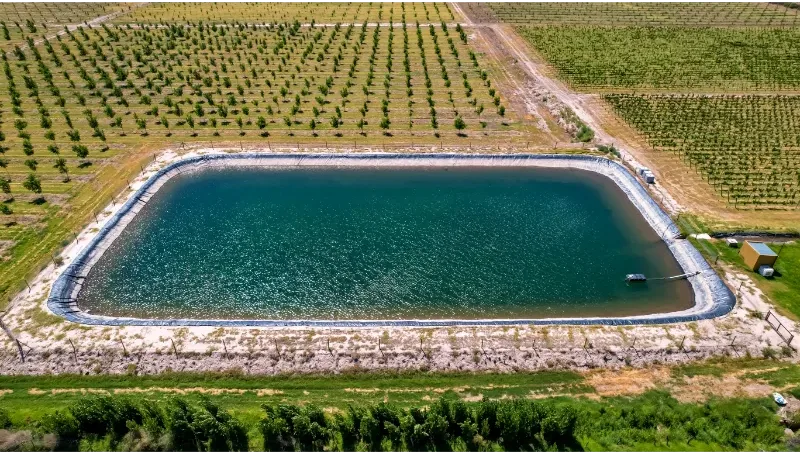
This system is common in:
Tank irrigation is useful in places where rivers are small and rainfall is seasonal.
Advantages
- Low construction cost
- Long-lasting water storage
- Natural tanks require less maintenance
- Can support fish farming for extra income
Disadvantages
- Tanks may dry in summer
- Carrying water to fields can be difficult
- Not suitable for large-scale farming
4. Drip Irrigation
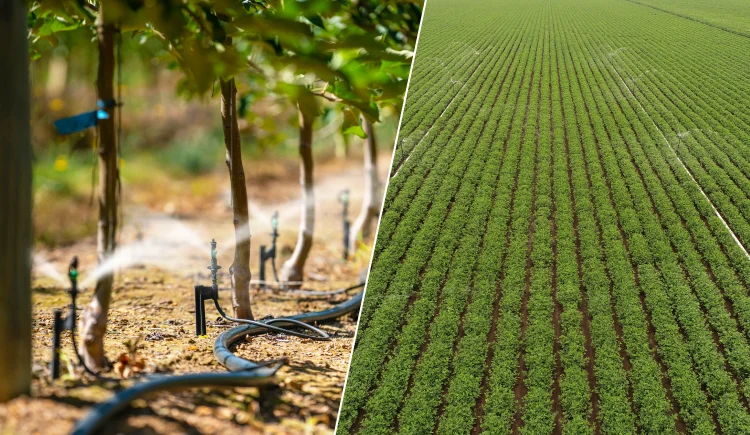
Drip irrigation is one of the most efficient irrigation methods. In this system, water is supplied slowly near the plant roots through pipes and small emitters.
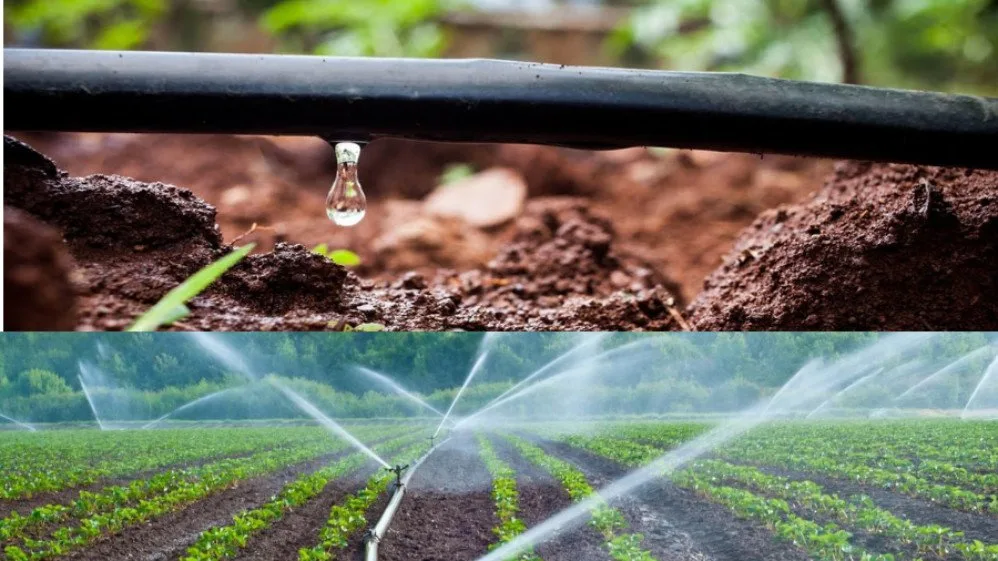
Water is delivered drop by drop. This ensures plants receive only the required amount of water.
Drip irrigation is best for:
- Vegetables
- Fruits
- Flowers
- Orchards
- Plantation crops
How It Works
A pipe network carries water to each plant. Small openings release water slowly near the roots. This reduces water waste.
Advantages
- Saves a lot of water
- Reduces fertilizer loss
- Less weed growth
- Prevents soil erosion
- No land leveling needed
- Increases water efficiency
Disadvantages
- High installation cost
- Pipes may get blocked
- Requires regular maintenance
- Wrong installation may waste water
5. Sprinkler Irrigation
Sprinkler irrigation works like rainfall. Water is sprayed into the air through pipes and nozzles, then falls on crops as small droplets.
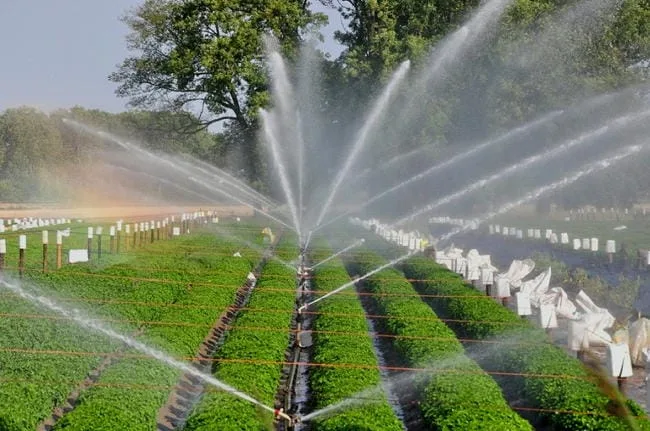
This method is useful for uneven lands and shallow soils.
It is suitable for:
- Vegetables
- Flower crops
- Tea
- Coffee
- Orchards
- Dry crops
It is not suitable for crops like:
- Paddy
- Jute
Advantages
- Saves water
- Suitable for most soil types
- Increases crop yield
- No need for bunds or channels
- Good for uneven land
Disadvantages
- High initial cost
- Strong wind affects water distribution
- Less effective in very hot weather
Other Types of Irrigation
Besides the major irrigation systems, some other methods are also used.
6. Furrow Irrigation
Furrow irrigation is a surface irrigation method. Small channels or furrows are dug between crop rows. Water flows through these channels and slowly enters the soil.
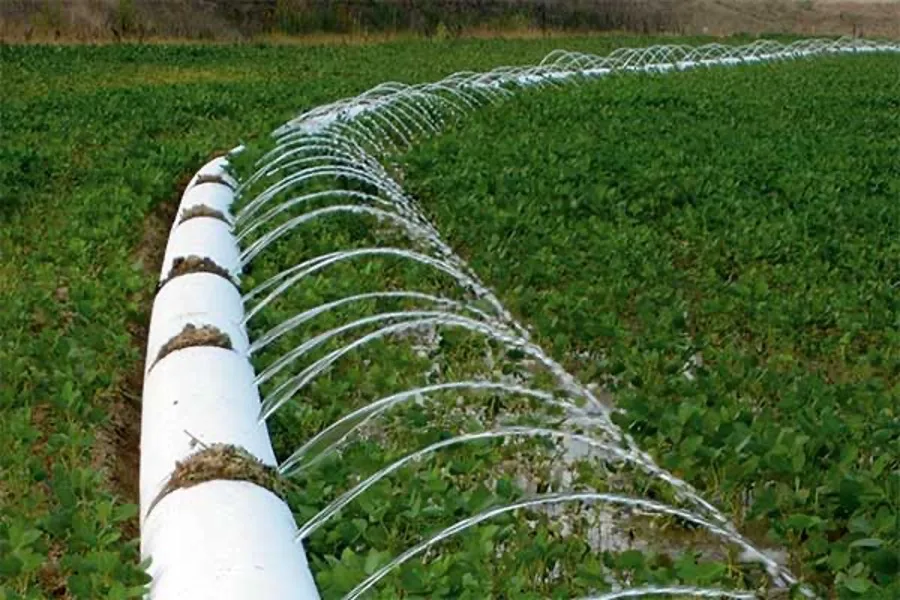
This method is common for row crops.
Advantages
- Simple and easy
- Low cost
- Suitable for row planting
Disadvantages
- Water distribution may be uneven
- Some water may be lost through runoff
7. Surge Irrigation
Surge irrigation is an improved form of furrow irrigation. Water is supplied in intervals instead of continuously.
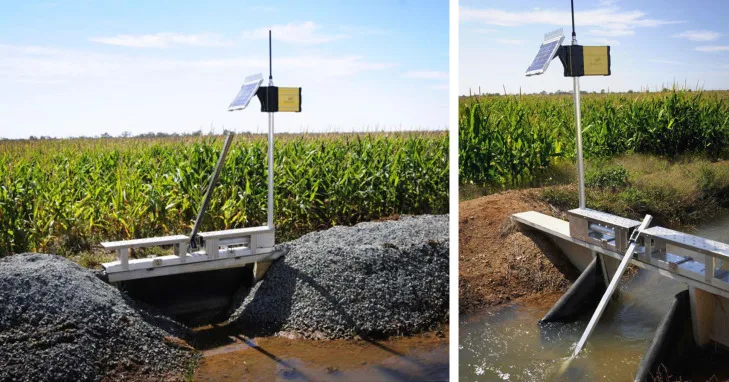
The water flow is turned on and off at planned times.
Advantages
- Better water distribution
- Less water loss
- More efficient than continuous flow
Disadvantages
- Needs proper planning
- Requires control systems
8. Ditch Irrigation
Ditch irrigation is a traditional method. Small ditches are dug between rows of plants. Water flows through these ditches to reach the crops.
Farmers often use siphon tubes to move water from main channels to smaller canals.
Advantages
- Simple traditional method
- Easy to set up
Disadvantages
- Water loss can be high
- Not very efficient
9. Sub Irrigation or Seepage Irrigation
In this method, water is supplied below the soil surface. Plant roots absorb water from underneath.
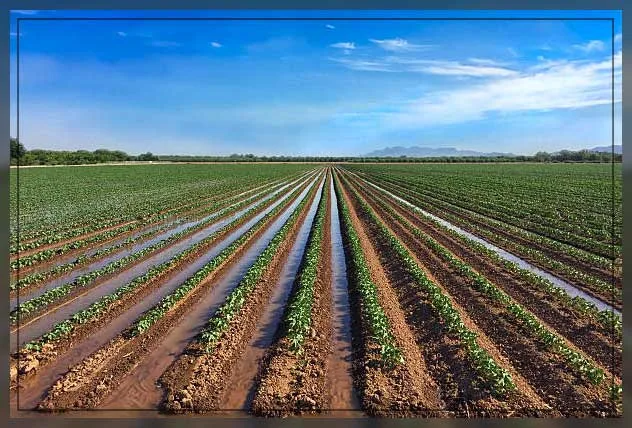
This system keeps the upper soil surface relatively dry while roots get enough moisture.
Advantages
- Saves water
- Saves nutrients
- Reduces labor work
- Excess water can be reused
Disadvantages
- High setup cost
- Disease risk from recycled water
- Needs technical knowledge
Choosing the Right Irrigation System
Farmers should choose irrigation systems carefully. Important factors include:
- Soil type
- Water availability
- Crop type
- Land shape
- Climate conditions
- Cost of installation
For example, drip irrigation is best for water-saving, while canal irrigation works better for large flat lands.
Modern Irrigation and Sustainable Farming
Modern irrigation methods help farmers use water wisely. Water conservation has become very important because freshwater resources are decreasing.
Advanced irrigation methods like drip and sprinkler systems help reduce water waste and improve productivity. These systems are becoming popular in modern agriculture because they support sustainable farming.
Farmers should understand soil moisture, water quality, and irrigation frequency before selecting any irrigation method. Proper irrigation management can increase crop production and improve farmers’ income.
FAQs
Q1. What is irrigation?
Irrigation is the artificial supply of water to agricultural land to help crops grow when rainfall is not enough.
Q2. Why is irrigation important in agriculture?
Irrigation helps crops get enough water, improves production, protects crops during drought, and supports farming in dry areas.
Q3. What are the main types of irrigation systems?
The main types are well irrigation, tube well irrigation, canal irrigation, tank irrigation, drip irrigation, and sprinkler irrigation.
Q4. Which is the most water-efficient irrigation system?
Drip irrigation is considered the most water-efficient system because it supplies water directly to plant roots with very little wastage.
Q5. What is canal irrigation?
Canal irrigation is a method where water from rivers or dams is carried to farms through canals.
Q6. What is tank irrigation?
Tank irrigation stores rainwater or stream water in tanks and uses it later for crop irrigation.
Q7. What is sprinkler irrigation?
Sprinkler irrigation sprays water over crops like rainfall using pipes and nozzles.
Q8. What are the advantages of drip irrigation?
Drip irrigation saves water, reduces weed growth, minimizes fertilizer loss, and improves crop growth.