



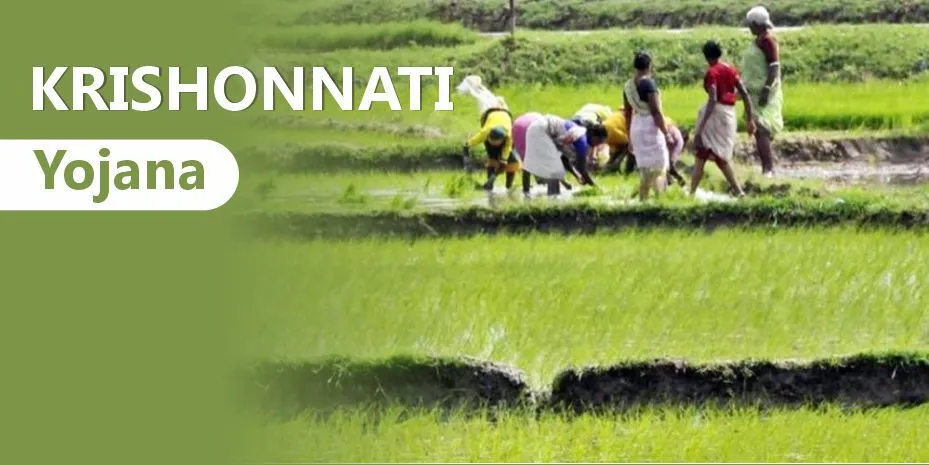
Green Revolution Krishonnati Yojana: Transforming Indian Agriculture and Supporting Farmers

Green Revolution Krishonnati Yojana is one of the major agricultural initiatives of the Government of India aimed at improving agricultural production, increasing farmers’ income, and promoting sustainable farming practices. The scheme brings together several important agriculture-related programs under a single umbrella to ensure the overall development of the agriculture and allied sectors.
Agriculture plays a vital role in India’s economy. A large part of the country’s population depends on farming for livelihood. However, farmers often face challenges such as low productivity, poor market access, climate-related risks, lack of modern technology, and limited financial resources. To address these issues, the Government introduced the Green Revolution Krishonnati Yojana.

What is Green Revolution Krishonnati Yojana?
The Green Revolution Krishonnati Yojana was launched to promote the growth of agriculture through scientific methods, modern technology, better infrastructure, and effective support systems. The main objective of the scheme is to increase agricultural production, improve productivity, and ensure better returns for farmers.
The scheme focuses not only on crop production but also on horticulture, agricultural marketing, mechanization, seed quality, sustainable farming, and digital services for farmers.
By combining multiple agricultural programs under one umbrella, the government aims to create a more coordinated and effective agricultural development system.
Main Objectives of the Scheme
The key objectives of Green Revolution Krishonnati Yojana include:
- Increasing agricultural production and productivity.
- Improving farmers’ income and livelihoods.
- Promoting sustainable farming practices.
- Strengthening agricultural infrastructure.
- Encouraging the use of modern technology.
- Improving market access for agricultural products.
- Enhancing food security across the country.
- Supporting small and marginal farmers.
Major Components of Green Revolution Krishonnati Yojana
The scheme includes several missions and sub-missions that focus on different aspects of agriculture.
1. Mission for Integrated Development of Horticulture (MIDH)
This mission promotes the development of the horticulture sector, including fruits, vegetables, flowers, spices, and medicinal plants.
Its objectives include:
- Increasing horticulture production.
- Improving nutritional security.
- Generating employment opportunities.
- Enhancing farmers’ income.
The mission encourages modern cultivation techniques and better post-harvest management practices.
2. National Food Security Mission (NFSM)
The National Food Security Mission aims to increase the production of major food crops such as:
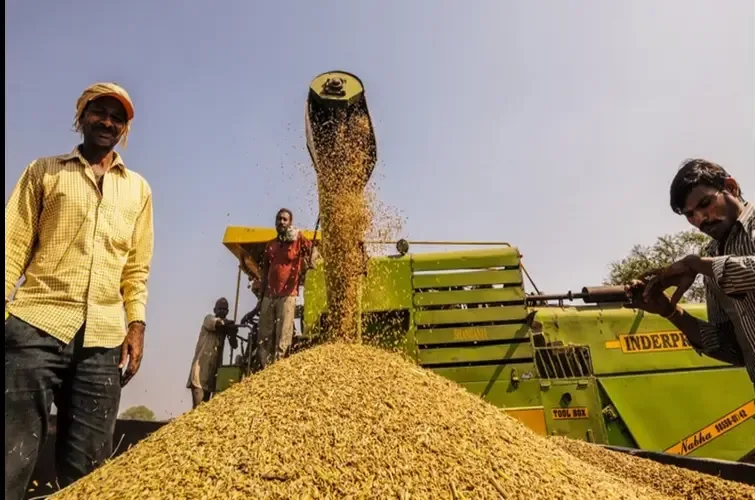
- Rice
- Wheat
- Pulses
- Coarse cereals
- Commercial crops
The mission also focuses on improving soil fertility and enhancing farm productivity through scientific farming practices.
3. National Mission for Sustainable Agriculture (NMSA)
Climate change has become a serious concern for farmers. NMSA promotes environmentally friendly and sustainable agricultural practices.
Key focus areas include:
- Integrated farming systems
- Soil health management
- Water conservation
- Resource-efficient technologies
This mission helps farmers adapt to changing climatic conditions while maintaining productivity.
4. Sub-Mission on Agricultural Extension (SMAE)
Many farmers lack access to modern agricultural information. SMAE bridges this gap by providing knowledge and guidance.
The mission focuses on:
- Farmer education and training.
- Use of information and communication technology (ICT).
- Agricultural awareness programs.
- Better coordination among stakeholders.
Through extension services, farmers learn about modern techniques and government support programs.
5. Sub-Mission on Seeds and Planting Material (SMSP)
Quality seeds are essential for better crop production. This mission works to improve seed availability and quality.
Its goals include:
- Increasing certified seed production.
- Strengthening seed distribution systems.
- Modernizing seed storage infrastructure.
- Promoting advanced seed technologies.
Better seeds lead to higher crop yields and improved farm income.
6. Sub-Mission on Agricultural Mechanization (SMAM)
Farm machinery can significantly increase productivity and reduce labor costs. However, many small farmers cannot afford expensive equipment.
SMAM promotes:
- Farm mechanization.
- Access to modern agricultural machinery.
- Custom Hiring Centers.
- High-tech farming equipment.
Custom Hiring Centers allow farmers to rent machinery at affordable rates instead of purchasing it.
7. Sub-Mission on Plant Protection and Plant Quarantine (SMPPQ)
Crop losses due to pests and diseases can severely affect farmers’ income.
This mission focuses on:
- Pest management.
- Disease control.
- Weed management.
- Agricultural biosecurity.
It also helps protect Indian agriculture from harmful foreign pests and diseases while supporting agricultural exports.
8. Integrated Scheme on Agriculture Census, Economics and Statistics (ISACES)
Reliable agricultural data is necessary for effective planning and policy-making.
This scheme supports:
- Agricultural census activities.
- Crop production statistics.
- Economic studies related to agriculture.
- Research on farming-related challenges.
The collected data helps governments make informed decisions.
9. Integrated Scheme on Agricultural Cooperation (ISAC)
Cooperative societies play an important role in rural development.
ISAC provides support for:
- Strengthening cooperatives.
- Improving farmers’ economic conditions.
- Reducing regional imbalances.
- Promoting value addition in agricultural products.
This helps farmers obtain better prices and market opportunities.
10. Integrated Scheme on Agricultural Marketing (ISAM)
Agricultural marketing is a major challenge for many farmers.
ISAM aims to:
- Develop market infrastructure.
- Improve storage and grading facilities.
- Encourage quality certification.
- Support digital agricultural markets.
The scheme promotes transparent and efficient marketing systems across the country.
11. National e-Governance Plan in Agriculture (NeGP-A)
Digital technology is transforming agriculture.
NeGP-A focuses on:
- Providing farmer-centric digital services.
- Delivering timely agricultural information.
- Improving access to government schemes.
- Supporting better decision-making.
Farmers can access information related to weather, markets, crop management, and government assistance through digital platforms.
Benefits of Green Revolution Krishonnati Yojana
The scheme provides several benefits to farmers and the agricultural sector.
Improved Food Security
Higher production of food grains helps ensure adequate food supply for the growing population.
Better Income for Farmers
Through better productivity, improved market access, and modern technology, farmers can earn higher incomes.
Sustainable Farming
The scheme promotes environmentally friendly agricultural practices that protect natural resources.
Modernization of Agriculture
Farm mechanization, quality seeds, and digital technologies help modernize Indian agriculture.
Development of Rural Infrastructure
The scheme supports the development of:
- Warehouses
- Rural roads
- Markets
- Irrigation systems
- Storage facilities
Better infrastructure reduces post-harvest losses and improves market connectivity.
Strengthened Agricultural Marketing
Farmers gain access to better markets and improved price realization for their produce.
Challenges in Implementing the Scheme
Despite its benefits, several challenges remain.
Small Land Holdings
Most Indian farmers own small pieces of land, making it difficult to adopt advanced technologies and machinery.
Limited Access to Technology
Many farmers still lack access to modern farming tools and scientific knowledge.
Agricultural Research Constraints
Insufficient funding and regulatory challenges can slow agricultural innovation and research activities.
Market Infrastructure Gaps
Many rural areas still need better storage, transportation, and marketing facilities.
Dependence on Agriculture
Limited employment opportunities outside agriculture result in excessive pressure on the farming sector.
Climate Change
Irregular rainfall, droughts, floods, and rising temperatures continue to affect agricultural productivity.
Importance of Agricultural Marketing Reforms
Agricultural marketing reforms are essential for improving farmers’ earnings.
Some important reforms include:
- Expanding electronic trading platforms.
- Encouraging private sector participation.
- Strengthening farmer-consumer markets.
- Improving supply chains.
- Enhancing transparency in price discovery.
These reforms can help farmers receive fair prices for their produce.
Role of Innovation in Agriculture
Innovation is becoming increasingly important in modern farming.
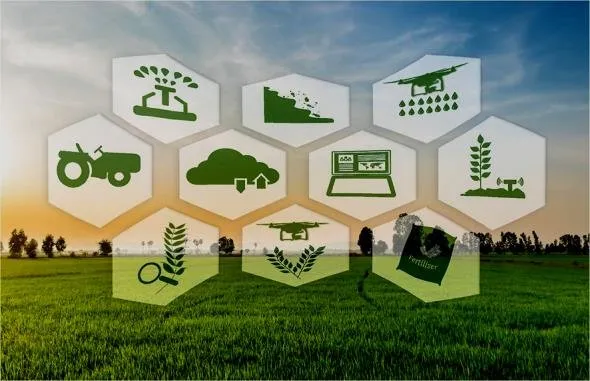
Technologies such as:
- Precision farming
- Mobile-based advisory services
- Drone technology
- Artificial intelligence
- Soil testing tools
can significantly improve productivity and resource efficiency.
Natural farming approaches such as Zero Budget Natural Farming (ZBNF) are also gaining attention for reducing input costs and promoting environmental sustainability.
Future Prospects
The future success of Green Revolution Krishonnati Yojana depends on effective implementation, strong infrastructure, technological innovation, and continuous support for farmers.
Greater investment in research, irrigation, digital services, rural infrastructure, and market reforms can further strengthen the agricultural sector.
As India moves toward becoming a developed economy, agriculture will continue to play a crucial role in ensuring food security, rural employment, and economic growth. The Green Revolution Krishonnati Yojana provides an important framework for achieving these goals by supporting farmers and encouraging sustainable agricultural development across the country.
FAQs
Q1. What is Green Revolution Krishonnati Yojana?
It is a central government umbrella scheme aimed at improving agriculture, increasing productivity, and supporting farmers.
Q2. When was Green Revolution Krishonnati Yojana introduced?
The scheme was introduced to promote holistic development of agriculture and allied sectors through multiple missions and programs.
Q3. What is the main objective of the scheme?
The main objective is to increase agricultural production, improve farmers’ income, and promote sustainable farming.
Q4. How many missions and schemes are included under Krishonnati Yojana?
The scheme includes 11 missions and sub-missions covering different agricultural sectors.
Q5. How does the scheme help small farmers?
It provides access to quality seeds, farm machinery, training, digital services, and better market opportunities.
Q6. What is the role of agricultural mechanization in the scheme?
It helps farmers improve efficiency and productivity through modern machinery and Custom Hiring Centers.
Q7. Does the scheme support digital agriculture?
Yes, through the National e-Governance Plan in Agriculture (NeGP-A), farmers receive digital information and services.
Q8. How does the scheme improve food security?
It increases the production of rice, wheat, pulses, coarse cereals, and other important crops.