


AFSPA: Armed Forces Special Powers Act and Its Impact in India

AFSPA (Armed Forces Special Powers Act) is one of the most discussed security laws in India. It was introduced to help the armed forces deal with insurgency, militancy, and serious law-and-order problems in disturbed areas. Over the years, AFSPA has been applied mainly in parts of Northeast India and Jammu & Kashmir. While supporters believe it is necessary for maintaining security and fighting armed groups, critics argue that it has led to human rights concerns.
In recent years, the Government of India has reduced the areas under AFSPA in several northeastern states due to improved security conditions. This development has renewed discussions about the role and future of the law.

What is AFSPA?
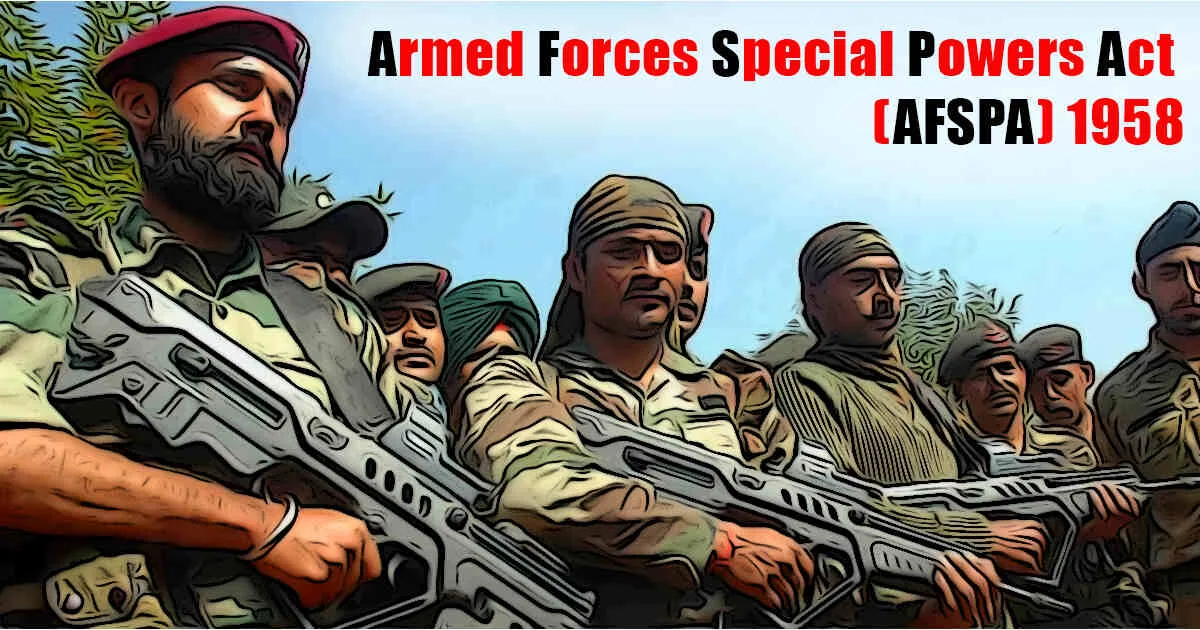
The Armed Forces Special Powers Act (AFSPA), 1958 is a law that gives special powers to the armed forces in areas declared as “disturbed areas.”
The Act was passed by the Indian Parliament in 1958 and received Presidential approval on 11 September 1958. It was introduced at a time when several parts of Northeast India were facing armed insurgencies and violence.
The main purpose of AFSPA is to help security forces restore peace and maintain public order in areas where normal policing becomes difficult.
Historical Background of AFSPA
The roots of AFSPA can be traced back to the British colonial period. During the Quit India Movement in 1942, the British government introduced special laws that gave armed forces extraordinary powers to control protests and unrest.
After India’s independence, the government faced security challenges in several regions, especially in the Northeast. The Assam Disturbed Areas Act of 1955 was introduced to address these challenges.
As insurgent activities increased in the Naga Hills and nearby areas, the government enacted the Armed Forces (Assam and Manipur) Special Powers Act in 1958. Later, it became known as AFSPA and its application expanded to other regions facing similar security threats.
A separate version of AFSPA was enacted for Jammu and Kashmir in 1990.
Powers Given Under AFSPA
AFSPA provides several special powers to members of the armed forces operating in disturbed areas.
These powers include:
1. Use of Force
Security personnel can use force, including opening fire after giving a warning, if they believe it is necessary to maintain public order.
2. Arrest Without Warrant
Armed forces can arrest a person without a warrant if there is reasonable suspicion of involvement in unlawful activities.
3. Search Operations
Security personnel can enter and search premises without obtaining a warrant.
4. Seizure of Weapons
The armed forces can seize weapons, ammunition, and explosives if they suspect illegal possession.
5. Protection from Prosecution
Legal action against armed forces personnel for actions performed under AFSPA generally requires prior approval from the Central Government.
These powers are intended to help security forces respond quickly to insurgency-related threats.
What is a Disturbed Area?
A disturbed area is a region where the government believes that normal law enforcement is not sufficient to maintain peace and security.
An area may be declared disturbed because of:
- Insurgency
- Militancy
- Ethnic conflicts
- Communal violence
- Threats to public order
The Central Government, State Governor, or Union Territory Administrator can declare an area disturbed under Section 3 of AFSPA.
Once declared, the area remains under special security measures for a specified period and is reviewed periodically.
Why Was AFSPA Imposed in Northeast India?
The Northeast region has experienced various insurgent and separatist movements since the early years of independence.
Naga Movement
One of the earliest challenges came from the Naga nationalist movement. The Naga National Council (NNC) demanded independence and began organized political and armed activities.
As violence increased during the 1950s, the government introduced AFSPA to assist security forces in controlling the situation.
Expansion to Other States
Over time, insurgent groups emerged in several northeastern states, including:
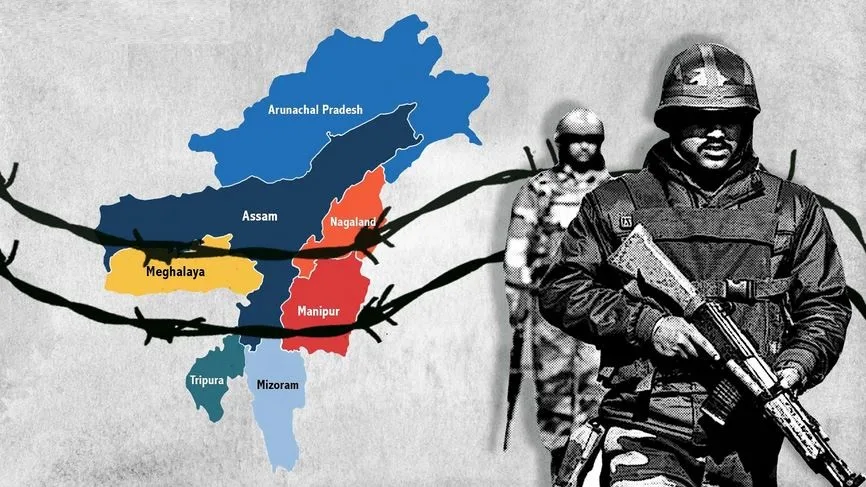
As security challenges spread, AFSPA was extended to various affected regions.
History of the Nagaland Insurgency
The Nagaland insurgency is one of India’s longest-running internal security challenges.
Formation of NNC
In 1946, the Naga National Council (NNC) was formed under the leadership of Angami Zapu Phizo.
The organization demanded an independent Nagaland and declared independence on 14 August 1947.
Underground Government
In 1952, the Naga Federal Government and Naga Federal Army were formed to pursue the movement.
As armed conflict intensified, the Indian government deployed the army and introduced AFSPA in 1958.
Creation of Nagaland State
In 1963, Nagaland was officially granted statehood.
Shillong Accord
In 1975, some NNC leaders signed the Shillong Accord, agreeing to give up arms.
However, not all leaders accepted the agreement.
Formation of NSCN
In 1980, a new organization called the National Socialist Council of Nagaland was formed.
Later, it split into NSCN (IM) and NSCN (K), which became influential insurgent groups in the region.
Why Do Security Forces Support AFSPA?
The armed forces and security agencies argue that AFSPA is necessary in areas affected by insurgency.
According to them:
- Insurgents often operate in difficult terrain.
- Quick action is necessary during security operations.
- Delays caused by legal procedures can help militants escape.
- Soldiers need legal protection while performing dangerous duties.
- Border security operations often require immediate response.
Security agencies believe that removing AFSPA too quickly could create challenges in maintaining peace in sensitive regions.
Reduction of AFSPA in Recent Years
The security situation in many northeastern states has improved significantly over the last decade.
Several peace agreements, surrender programs, and development initiatives have reduced insurgent violence.
As a result:
| State | AFSPA Status |
|---|---|
| Tripura | Revoked in 2015 |
| Meghalaya | Revoked in 2018 |
| Assam | Partially withdrawn |
| Nagaland | Reduced in several areas |
| Manipur | Reduced in some districts |
| Arunachal Pradesh | Limited application in selected areas |
The government has stated that improved law and order conditions made these changes possible.
Impact of AFSPA Withdrawal
The reduction of AFSPA has brought several positive changes.
Greater Public Confidence
Many residents feel more connected to normal democratic processes when military restrictions are reduced.
Easier Movement
The reduction of checkpoints and security restrictions helps people travel more freely.
Economic Growth
Improved security conditions encourage investment, tourism, and business development.
Better Community Relations
Reduced military presence can improve trust between local communities and government institutions.
Human Rights Concerns Related to AFSPA
AFSPA has faced criticism from human rights organizations and civil society groups.
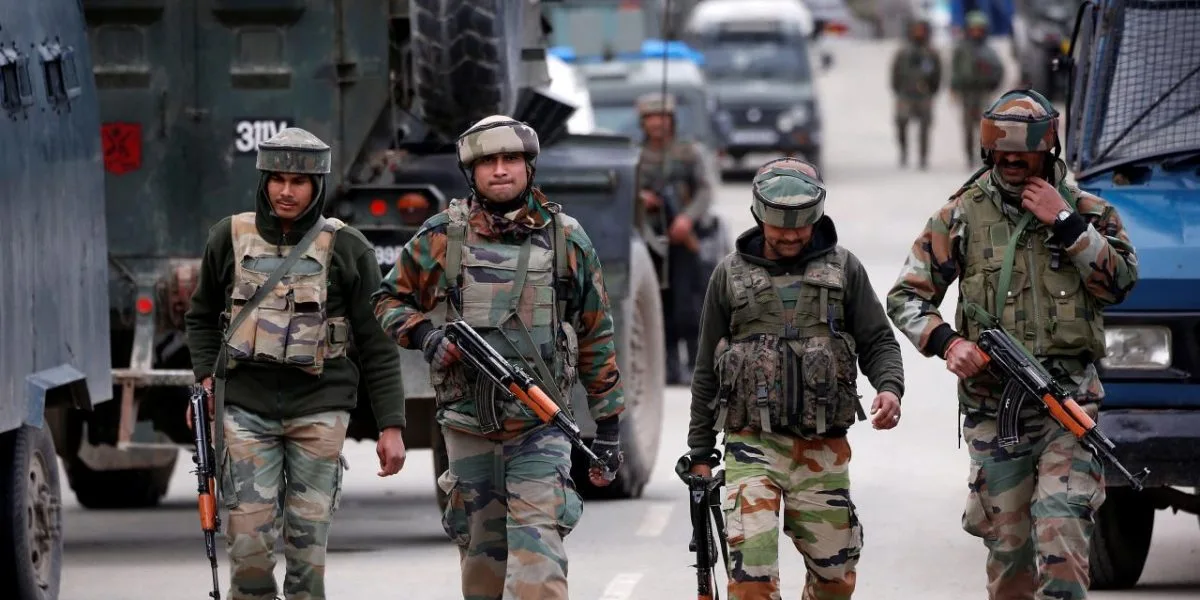
Some major concerns include:
Allegations of Excessive Force
Critics argue that broad powers may sometimes result in misuse.
Fake Encounter Claims
There have been allegations of fake encounters in certain conflict-affected areas.
Lack of Accountability
Since prosecution requires prior approval from the Central Government, critics believe accountability becomes difficult in some cases.
Impact on Daily Life
Long-term deployment of security forces can affect the social and psychological environment of local communities.
Human rights groups have repeatedly called for stronger safeguards and independent investigations into complaints.
International Concerns
Some international organizations have expressed concerns regarding AFSPA.
Critics argue that certain provisions may conflict with principles contained in:
- Universal Declaration of Human Rights (UDHR)
- International Covenant on Civil and Political Rights (ICCPR)
- Convention Against Torture
These concerns have led to repeated debates about balancing national security with individual rights.
Jeevan Reddy Committee Recommendations
In 2004, the Government of India established a committee headed by B. P. Jeevan Reddy to review AFSPA.
The committee made several recommendations:
- Repeal AFSPA.
- Include necessary security provisions within existing laws.
- Strengthen safeguards against misuse.
- Establish grievance redressal mechanisms in affected districts.
- Improve transparency and accountability.
Although the recommendations generated significant discussion, they have not been fully implemented.
Recommendations of the Second Administrative Reforms Commission
The Second Administrative Reforms Commission also examined AFSPA.
Its report suggested:
- Repealing AFSPA.
- Creating a more balanced legal framework.
- Strengthening protection of human rights.
- Improving civilian oversight of security operations.
These recommendations highlighted the need for reforms while recognizing security challenges.
Challenges in Balancing Security and Rights
The AFSPA debate highlights a difficult policy challenge.
On one hand:
- The government must protect citizens from insurgency and violence.
- Security forces need operational flexibility.
On the other hand:
- Citizens deserve protection of their rights.
- Accountability mechanisms must be effective.
- Democratic values should be preserved.
Finding the right balance remains one of the biggest challenges for policymakers.
The Way Forward
Several measures can help improve the effectiveness and acceptance of security laws.
Better Accountability
Independent investigations into complaints can improve public trust.
Periodic Review
The disturbed area status should be reviewed regularly to ensure AFSPA remains only where truly necessary.
Stronger Human Rights Protection
Clear operational guidelines and training can reduce the risk of violations.
Dialogue and Peace Talks
Long-term peace is best achieved through political dialogue and negotiated settlements.
Development of Northeast India
Improving infrastructure, education, healthcare, employment, and connectivity can address many underlying causes of unrest.
District-Based Approach
Instead of applying AFSPA across entire states, it can be limited to specific districts facing genuine security concerns.
Final Thoughts
AFSPA remains one of India’s most important and debated security laws. It was introduced to tackle insurgency and restore stability in conflict-affected regions. While the law has helped security forces conduct operations against armed groups, concerns regarding human rights and accountability have continued for decades.
The recent reduction of AFSPA in many northeastern areas reflects improving security conditions and ongoing peace efforts. Moving forward, a balanced approach that protects both national security and citizens’ rights will remain essential for lasting peace and development.
FAQs
Q1. What is AFSPA?
AFSPA stands for Armed Forces Special Powers Act, a law that gives special powers to security forces in disturbed areas.
Q2. When was AFSPA enacted?
AFSPA was enacted in 1958 to address insurgency in Northeast India.
Q3. Which states have been affected by AFSPA?
Assam, Nagaland, Manipur, Arunachal Pradesh, Tripura, Meghalaya, and Jammu & Kashmir have experienced AFSPA at different times.
Q4. Why was AFSPA introduced?
It was introduced to help security forces control insurgency, militancy, and serious law-and-order problems.
Q5. Can AFSPA be removed from an area?
Yes. The government can withdraw AFSPA when the security situation improves.
Q6. Why is AFSPA controversial?
Critics argue that it gives extensive powers to security forces and may lead to human rights concerns.
Q7. Has AFSPA been removed from any states?
Yes. Tripura revoked AFSPA in 2015, and Meghalaya in 2018. It has also been reduced in several northeastern areas.
Q8. What is a disturbed area under AFSPA?
A disturbed area is a region where the government believes special security measures are necessary to maintain public order.