

Solar Magnetic Threads Found Above the Sun

Solar Magnetic Threads have been detected in the Sun’s chromosphere by an international team of astronomers using the Sunrise-III solar observatory. The findings were published in The Astrophysical Journal Letters on 24 October 2026. Led by the National Astronomical Observatory of Japan (NAOJ), the research examined fine, thread-like magnetic structures in a quiet region of the Sun. The discovery could help scientists better understand how magnetic fields behave in the solar atmosphere and how energy moves from the Sun’s surface into its higher layers.
What Are Solar Magnetic Threads?
Solar Magnetic Threads are narrow, thread-like structures formed by magnetic fields in the Sun’s atmosphere. Magnetic fields play an important role in many solar processes, including the movement of hot gas, the formation of jets and the transfer of energy through the atmosphere.

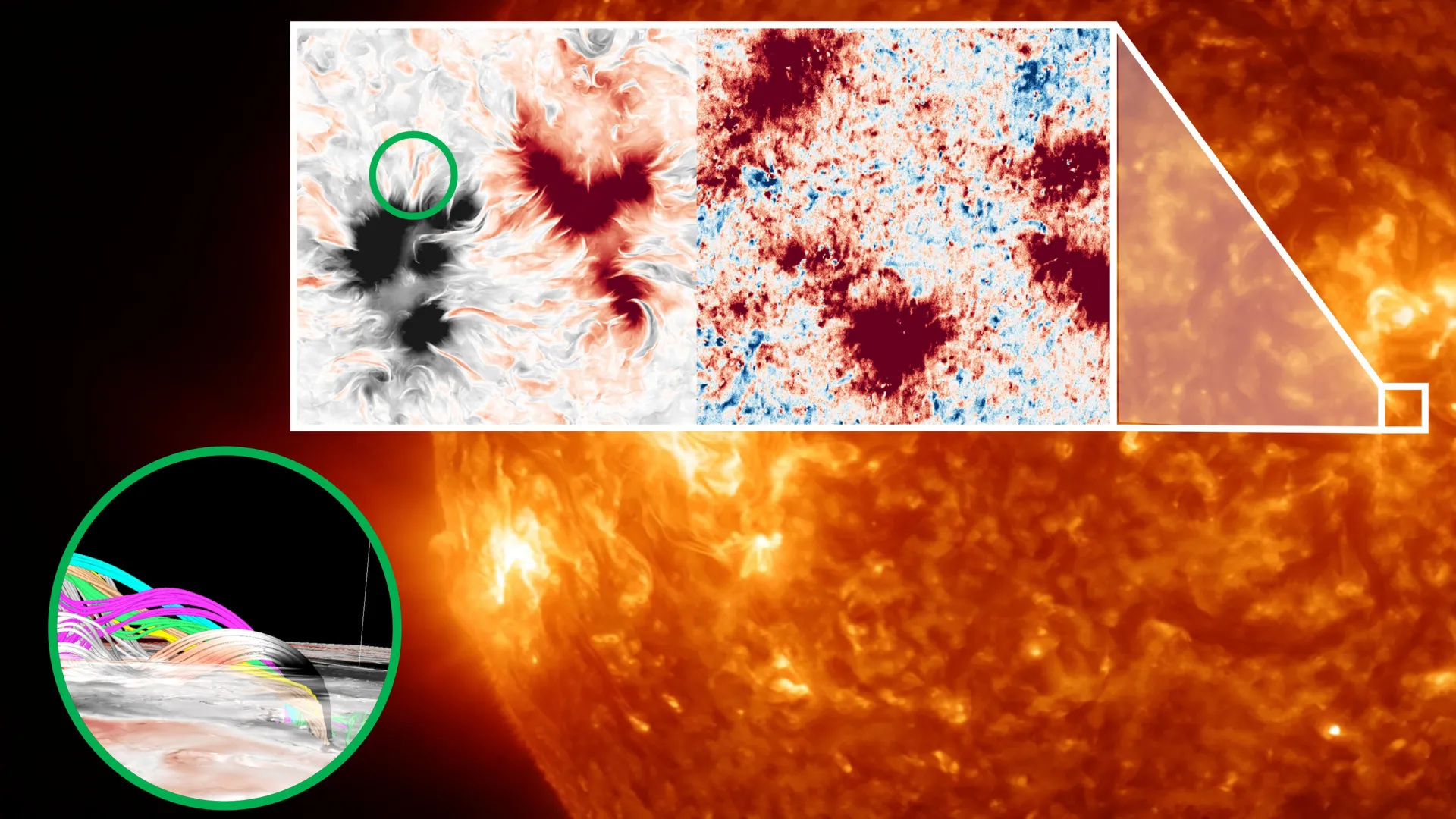
The research identified these fine structures in the chromosphere, a layer located above the Sun’s visible surface. Their shape suggests that the magnetic field in this region is more complex than a smooth, evenly spreading structure.
Understanding these small features is important because magnetic activity occurs at many different scales. Even regions without large sunspots can contain fine magnetic structures that influence the behaviour of the solar atmosphere.
Understanding the Sun’s Three Main Atmospheric Layers
The Sun’s atmosphere has three main layers: the photosphere, chromosphere and corona. Each layer has different properties and provides scientists with information about how the Sun works.
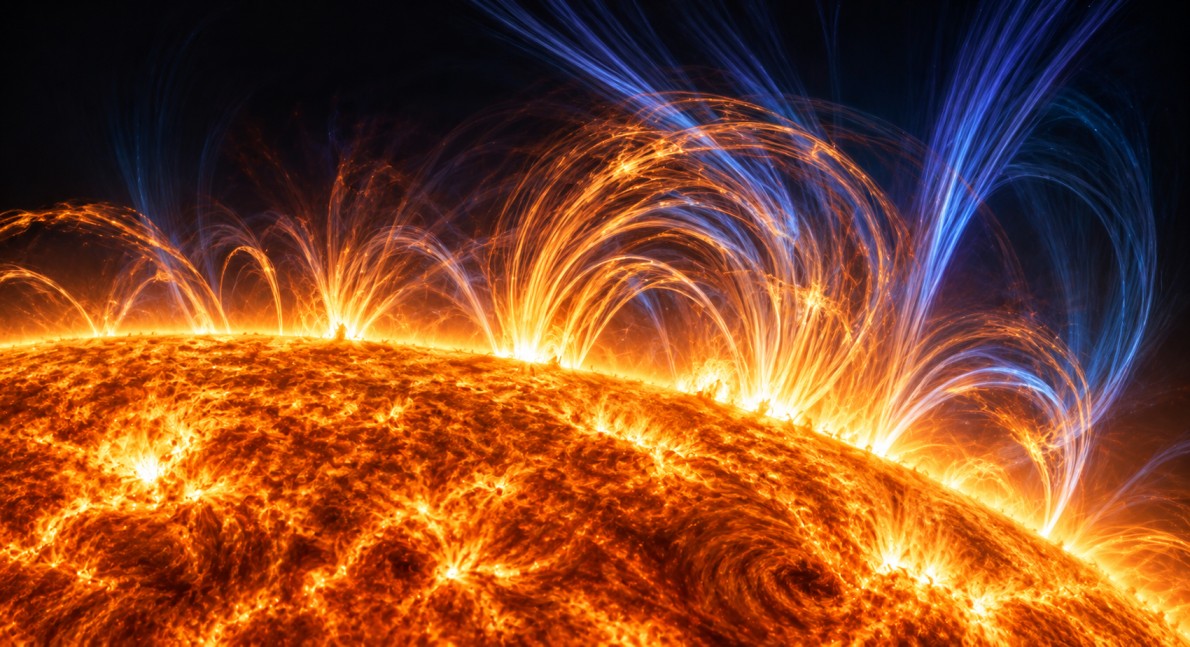
The photosphere is the visible surface of the Sun. Most of the sunlight we see comes from this layer. Above it lies the chromosphere, where scientists study changes in temperature, gas movement and magnetic fields. The outermost main atmospheric layer is the corona, which extends far into space and is visible during a total solar eclipse.
Magnetic fields created and concentrated near the photosphere can spread outwards and form larger structures in the chromosphere. This arrangement is sometimes described as a magnetic canopy. The Sunrise-III observations revealed narrow magnetic features within this canopy.
Why Quiet Regions of the Sun Matter
The Sun is not equally active across its entire surface. Some regions contain sunspots and strong magnetic activity, while others appear relatively calm. These quieter areas are known as quiet-Sun regions.
Although quiet regions lack prominent features such as large sunspots, they are not completely free of magnetic fields. Their weaker and smaller magnetic structures can be difficult to observe, making detailed measurements especially valuable.
The discovery of Solar Magnetic Threads in a quiet region shows why scientists need to study more than the Sun’s most active areas. Fine magnetic structures in these regions may help researchers understand how energy moves through the solar atmosphere.
How the Sunrise-III Observatory Works
Sunrise-III is an international solar research project built around a telescope with a one-metre mirror. Instead of operating from the ground, it uses a high-altitude balloon to carry its instruments into the stratosphere.
During its 2024 mission, Sunrise-III reached an altitude of about 35 kilometres above Earth. At this height, much of the atmosphere that interferes with ground-based observations is below the observatory. This allows scientists to collect detailed measurements of the Sun.
The observatory carries specialised instruments designed to examine different properties of sunlight. These measurements help researchers study structures that may be too small or difficult to detect using ordinary observations.
The Role of the SCIP Instrument
One of Sunrise-III’s important instruments is the Sunrise Chromospheric Infrared spectroPolarimeter, known as SCIP. It was developed under the leadership of the National Astronomical Observatory of Japan.
SCIP observes near-infrared light and measures its polarisation. Changes in polarisation can provide information about magnetic fields in the solar atmosphere. By studying light from different heights, researchers can investigate how magnetic fields change between the photosphere and chromosphere.
These measurements helped the team examine the fine magnetic structures found above the quiet-Sun region. The observations provide a more detailed picture of the magnetic canopy and its complex patterns.
How Solar Motions Shape Magnetic Fields
The research team compared the observations with computer simulations. According to the reported findings, the simulations reproduced patterns seen by Sunrise-III and suggested that twisting motions at the Sun’s surface can shape magnetic field lines into thread-like structures higher in the atmosphere.
The Sun is made of extremely hot, electrically charged gas called plasma. Its movement interacts with magnetic fields, creating complex patterns throughout the atmosphere.
Scientists study these interactions because energy moves from the Sun’s surface into higher atmospheric layers. Understanding this process may help explain how the solar atmosphere is heated and how different types of solar activity develop. The exact contribution of individual magnetic structures to atmospheric heating remains an important area of research.

What Are Solar Spicules?
The Sunrise-III team also measured magnetic fields in structures called spicules. These are narrow jets of solar material that rise from the Sun’s visible edge and extend into the chromosphere.
Spicules are important because they show that material and energy are constantly moving through the solar atmosphere. By measuring their magnetic fields at different heights, scientists can study how these fields change as the jets rise.
Together, the observations of magnetic threads and spicules provide new information about the small-scale processes operating in the Sun’s atmosphere. Further research may help scientists connect these structures with broader questions about solar heating and magnetic activity.
The Sunrise-III findings demonstrate the value of high-resolution solar observations. By examining magnetic structures that are difficult to see, astronomers can improve their understanding of the Sun’s complex atmosphere and the processes that influence its behaviour.