



Military AI: India Plans Secure AI System for Armed Forces

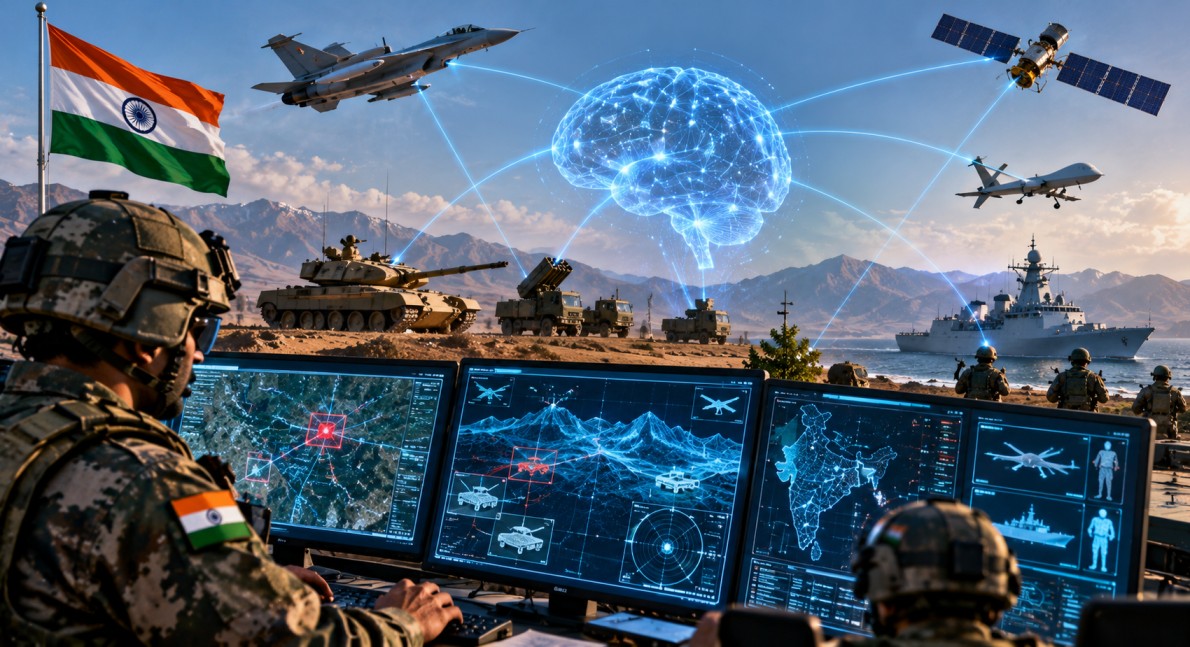
Military AI is becoming an important part of India’s defence modernisation plans. On 23 October 2026, Defence Secretary Rajesh Kumar Singh said that the Ministry of Defence and the IndiaAI Mission are working together to develop a dedicated artificial intelligence (AI) system for the Indian armed forces. The proposed system will use secure computing resources developed within India to support military decision-making, target identification and the analysis of information from different sources.
The initiative aims to strengthen India’s domestic defence technology and reduce dependence on foreign suppliers for critical military systems. It also reflects the growing role of artificial intelligence in modern warfare, where information must be collected, analysed and used quickly.

What Is India’s Military AI System?
The proposed Military AI system is designed to provide a secure computing layer for defence operations. It will help military personnel process large amounts of information and understand changing situations on the battlefield.
The system is expected to support three important functions: decision-making support, target acquisition and data fusion. These functions can help defence teams build a clearer picture of events and make informed operational decisions.
The computing resources required for the proposed system have reportedly been procured. The Defence Ministry plans to work with private-sector companies selected through the IndiaAI Mission to develop the technology.
How Military AI Can Support Defence Operations
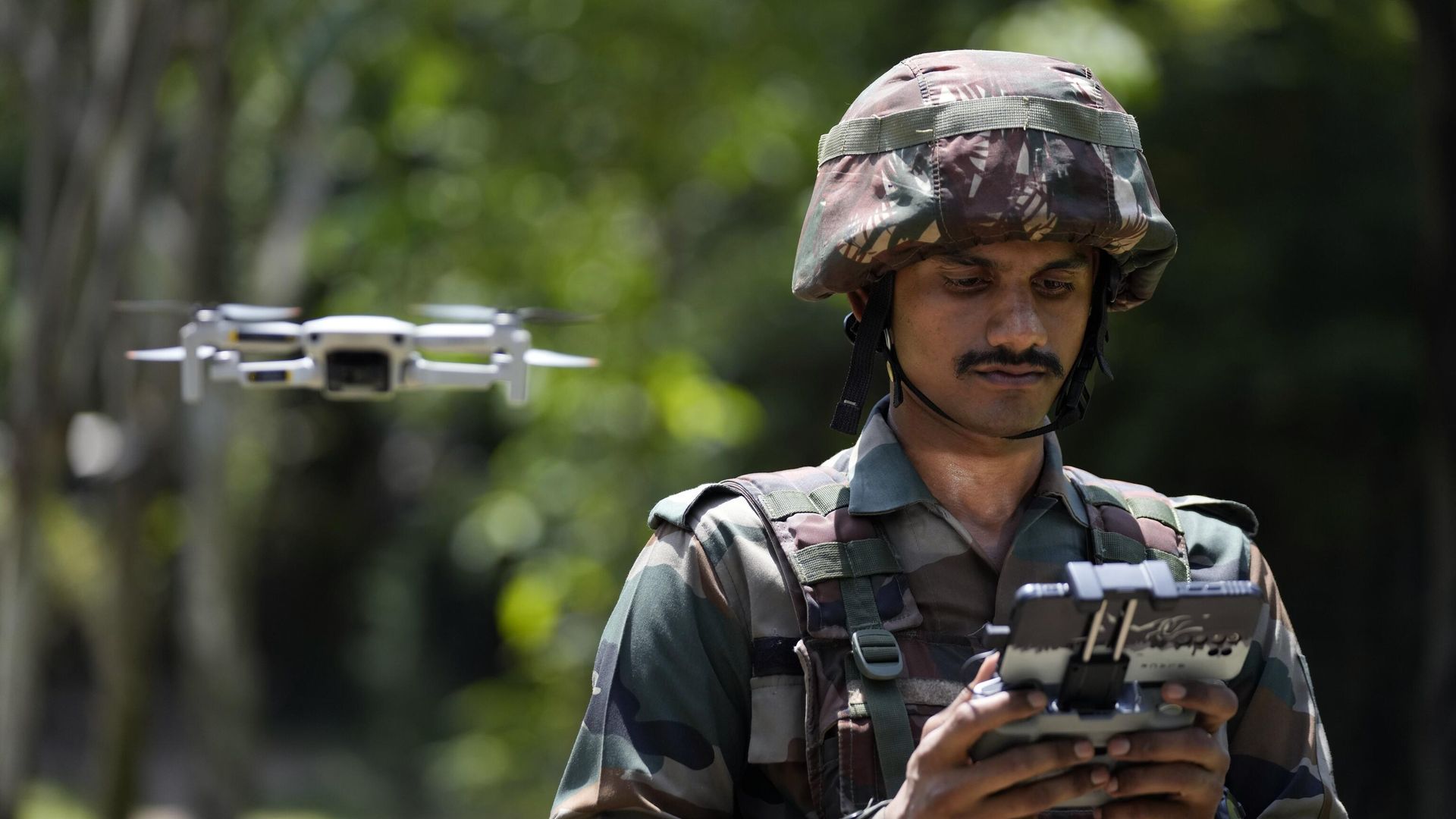
Artificial intelligence can help analyse information from multiple sources, identify patterns and present useful insights to military personnel. However, its role in defence must be carefully managed, especially when decisions could affect human lives.
The proposed system is expected to support a process known as the sensor-to-shooter loop. This process connects information gathered by sensors with the assessment of a situation, operational decisions and, where authorised, the use of weapons.
A faster flow of information may help military teams respond to changing conditions. The exact capabilities of India’s proposed system will depend on its design, testing, security arrangements and operational rules.
What Is Data Fusion?
Data fusion means combining information from different sources to create a more complete picture of a situation. In defence operations, these sources may include radar, cameras, communication systems and other sensors.
For example, information from several sensors may help military personnel understand the location and movement of objects. AI tools can assist in organising and analysing this information, but the quality of the results depends on the accuracy of the data and the system’s ability to handle errors.
Data fusion is an important part of modern military technology because decisions often require information from more than one source.
Why India Wants Domestic Military AI
Dependence on foreign technology can create risks for national security. A supplier may restrict access to important technology, stop providing support or place conditions on its use. Critical systems may also face cybersecurity risks if their design and operation cannot be properly examined.
Defence Secretary Rajesh Kumar Singh highlighted concerns such as hidden backdoors and kill switches in foreign-supplied systems. A backdoor is a hidden way to access a system, while a kill switch can disable a system or a specific function.
Developing domestic Military AI capabilities could give India greater control over important defence technologies. It may also support Indian technology companies and researchers working on secure computing, AI models and defence applications.
India may continue to cooperate with friendly foreign countries where useful. However, the stated aim is to build stronger domestic capabilities in critical areas.
IndiaAI Mission and Its Role
The IndiaAI Mission provides a national framework for developing artificial intelligence in India. The Union Cabinet approved the mission on 7 March 2024, with a financial outlay of ₹10,371.92 crore.
The mission supports access to AI computing resources and the development of indigenous AI models. These resources can help researchers, companies and institutions build and test AI applications.
For the proposed Military AI system, cooperation between the Defence Ministry and the IndiaAI Mission could help bring together computing infrastructure, private-sector expertise and defence requirements. The system will need strong security controls because military information can be highly sensitive.
Safety and Trust in Defence AI
On 22 October 2026, BJP Lok Sabha member Kamaljeet Sehrawat referred to a domestic framework for assessing the trustworthiness of AI used in defence. The principles mentioned included reliability, safety and transparency.
These principles are important because AI systems can produce incorrect results, misunderstand data or perform poorly in situations that differ from their training conditions.
Reliability means that a system should perform consistently under defined conditions. Safety involves reducing the risk of harm, while transparency means that a system’s capabilities and limitations should be understood as far as possible.
Defence AI also requires cybersecurity testing, clear responsibility for decisions and appropriate human oversight. These safeguards are especially important when AI supports sensitive military operations.
India Prepares for Multi-Domain Warfare
On 24 October 2026, Defence Minister Rajnath Singh called for preparing for future warfare through an integrated approach, multi-domain capabilities and better coordination in joint operations.
Multi-domain warfare involves activities across several operational areas, including land, sea, air, space and cyberspace. These areas are increasingly connected, making the exchange of information and coordination between military services more important.

AI may help analyse information across these domains and support planning. However, successful operations also depend on trained personnel, secure communication, reliable equipment and coordination among the armed forces.
What the Military AI Plan Means for India
India’s proposed Military AI layer represents an effort to combine artificial intelligence with domestic defence technology. Its planned functions include decision-making support, target acquisition and data fusion.
The initiative could help strengthen India’s control over critical systems and encourage greater participation by Indian technology companies. At the same time, secure design, careful testing and responsible use will be essential.
As military technology develops, India will need to balance faster data analysis and operational support with human oversight, cybersecurity and accountability. The success of the proposed system will depend on how effectively these requirements are addressed during development and deployment.