


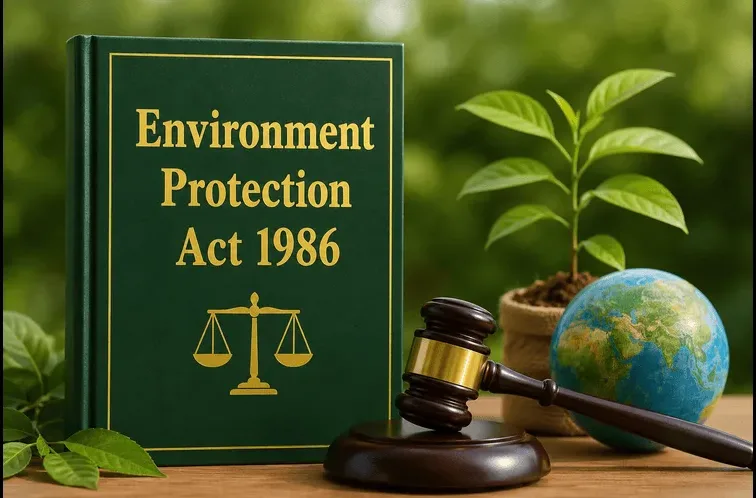
Environment Protection Act 1986: India’s Major Environmental Law

Environment Protection Act 1986 is one of India’s most important environmental laws. It was created to protect and improve the quality of the environment. This law gives the Central Government wide powers to control pollution and take action against activities that harm nature. It covers air, water, land, forests, wildlife, and human health.
Thank you for reading this post, don't forget to subscribe!In simple words, this Act helps the government stop pollution and make sure industries and people follow environmental safety rules.
Introduction to Environment Protection Act 1986
The Environment Protection Act (EPA) was passed in 1986 after growing concerns about pollution and environmental damage in India. The main goal of this law is to protect the environment and reduce pollution caused by industries, chemicals, and harmful human activities.
This Act is considered one of the most comprehensive environmental laws in India because it gives strong legal powers to the Central Government to deal with environmental problems.
The law applies across the whole country, including all states and union territories.
Background of the Act
The roots of the Environment Protection Act go back to the United Nations Conference on Human Environment, held in Stockholm in 1972. India participated in this global conference.
During the conference, many countries agreed that protecting the environment should become a major priority. Pollution, deforestation, and industrial waste were becoming serious threats to human life and nature.
After this conference, India decided to create stronger environmental laws. The Environment Protection Act of 1986 was introduced as a major step in that direction.
Another major reason behind this Act was the Bhopal Gas Tragedy of 1984, one of the world’s worst industrial disasters. The tragedy showed the urgent need for strict environmental and industrial safety laws.
Constitutional Support
The Environment Protection Act is supported by important parts of the Indian Constitution.
Article 253
This article allows Parliament to make laws to fulfill international agreements and treaties. Since India agreed to environmental protection at the Stockholm Conference, this article helped in creating the Act.
Article 48A
This article says the State should protect and improve the environment and safeguard forests and wildlife.
Article 51A(g)
This article says every citizen has a duty to protect and improve the natural environment, including forests, lakes, rivers, and wildlife.
This means environmental protection is not only the government’s responsibility but also the responsibility of every citizen.
Major Features of Environment Protection Act 1986
1. Powers of the Central Government
The Act gives broad powers to the Central Government to protect and improve environmental quality.
The government can:
- Create nationwide pollution control programs
- Set environmental quality standards
- Control harmful emissions from industries
- Restrict industrial activities in sensitive areas
- Appoint officers for monitoring and enforcement
This allows the government to take quick action whenever environmental damage is detected.
2. Power to Control Industries
The Central Government can regulate or even shut down industries that violate environmental rules.
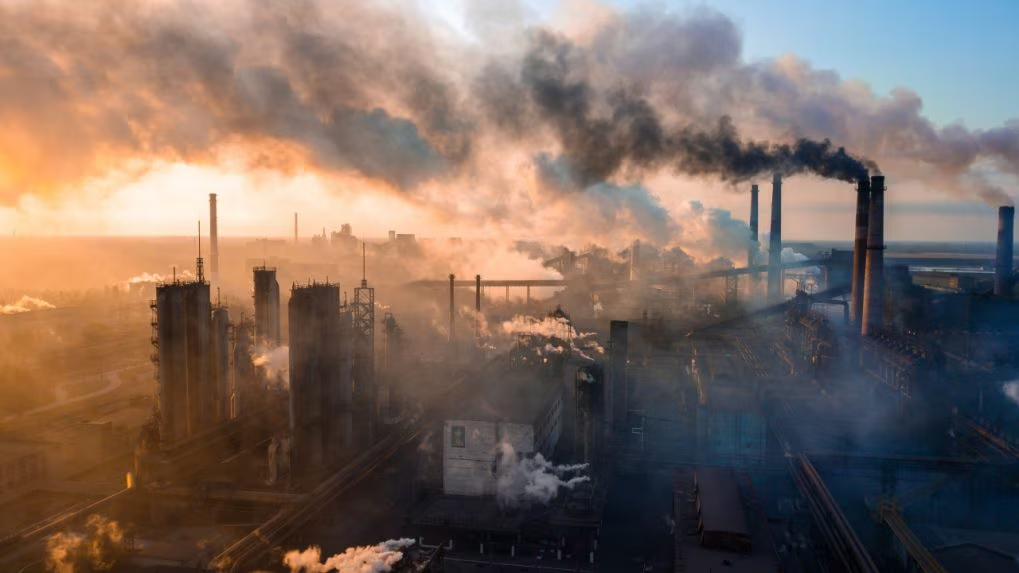
It can order:
- Closure of factories
- Stopping industrial operations
- Regulation of production
- Stoppage of electricity or water supply
These powers help control industries that release dangerous pollutants.
3. Restriction on Pollutant Discharge
No individual, factory, or organization is allowed to release pollutants beyond the prescribed limit.
This includes pollutants released into:
- Air
- Water
- Soil
If pollution levels exceed legal limits, strict action can be taken.
4. Rules for Hazardous Substances
Hazardous substances include chemicals and materials that can harm humans, animals, or nature.
The Act says no person can handle hazardous substances without following proper safety procedures.
This reduces the risk of accidents, chemical leaks, and industrial disasters.
5. Inspection Powers
Authorized officers can inspect factories, industrial sites, and other locations.
They can:
- Check compliance with environmental rules
- Inspect machinery and equipment
- Examine documents and records
- Collect evidence of violations
- Seize harmful materials if necessary
These inspection powers make enforcement stronger.
6. Environmental Laboratories
The Central Government can establish environmental laboratories.
These labs help in:
- Testing pollution levels
- Analyzing water, air, and soil samples
- Detecting harmful chemicals
- Providing scientific evidence in legal cases
Laboratories play an important role in pollution control.
7. Government Analysts
The government appoints trained analysts to examine environmental samples.
These experts test:
- Air quality
- Water quality
- Soil quality
- Chemical substances
Their reports are used as official evidence.
Penalties Under the Act
The Environment Protection Act includes strict punishments for violations.
Anyone breaking the law may face:
- Imprisonment up to 5 years
- Fine up to ₹1 lakh
- Or both
If the violation continues, additional fines may be imposed daily.
This strict punishment acts as a warning against environmental crimes.
Offences by Companies
If a company breaks environmental laws, the people responsible for running the company can also be punished.
This includes:
- Directors
- Managers
- Officers in charge
They are treated as guilty unless they prove they were not responsible.
This prevents companies from avoiding responsibility.
Offences by Government Departments
Government departments must also follow environmental laws.
If a department violates the Act:
- The Head of Department may be held responsible
- Other guilty officers can also face punishment
This ensures accountability in public administration.
Legal Action and Court Cases
Courts cannot automatically take up environmental cases.
A complaint must be filed by:
- The Central Government
- An authorized authority
- Any citizen who gives a 60-day notice to the government
This rule ensures legal procedure is followed properly.
Drawbacks of Environment Protection Act 1986
Although this law is powerful, it has some weaknesses.
1. Too Much Centralization
Most powers are given to the Central Government.
State governments have limited authority under this Act. This may lead to:
- Slow response in local issues
- Over-centralized decision making
- Possible misuse of power
Many experts believe states should have stronger roles.
2. Lack of Public Participation
The Act does not strongly involve citizens in environmental decision-making.
Public participation is important because local people often understand environmental issues better.
Greater public involvement can improve environmental protection.
3. Incomplete Coverage of Modern Pollution
When the law was created in 1986, some modern pollution issues were less common.
The Act does not fully address:
- Noise pollution
- Traffic congestion
- Radiation pollution
- Electronic waste
- New industrial chemicals
These modern challenges require updated laws and stronger rules.
National Environment Appellate Authority and NGT
To handle environmental disputes, special institutions were created.
National Environment Appellate Authority (NEAA)
The NEAA was established in 1997.
Its main role was to hear appeals related to industrial restrictions in environmentally sensitive areas.
However, it was found to be less effective.
National Green Tribunal (NGT)
To improve environmental justice, the National Green Tribunal (NGT) was created in 2010.
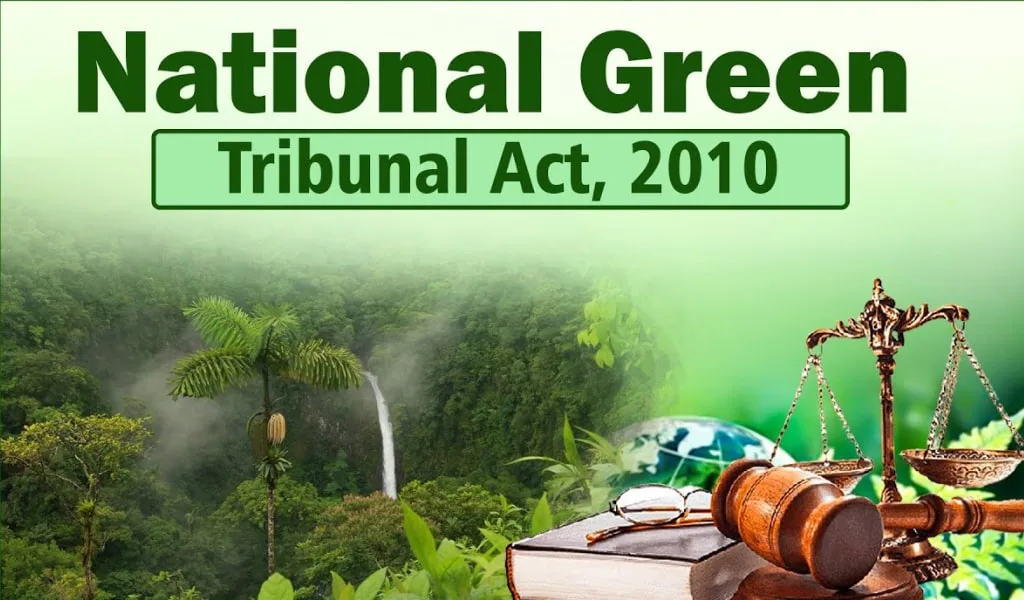
National Green Tribunal handles environmental cases quickly and efficiently.
It deals with cases related to:
- Pollution
- Forest protection
- Environmental damage
- Compensation claims
The NGT has become a major institution for environmental justice in India.
Important Notifications Under EPA
Several important environmental rules were issued under this Act.
Coastal Regulation Zone Notification (CRZ), 1991
This notification controls activities in coastal areas.
Its purpose is to protect:
- Beaches
- Coastal ecosystems
- Marine life
- Mangroves
The CRZ rules were updated in 2018.
Environmental Impact Assessment (EIA)
EIA is an important process under the Act.
Before starting large projects like:
- Dams
- Highways
- Factories
- Mining projects
The environmental impact must be studied.
This helps reduce environmental damage before projects begin.
International Environmental Conventions Signed by India
India is part of many global environmental agreements.
Montreal Protocol (1987)
This agreement helps protect the ozone layer by reducing harmful substances.
Basel Convention (1989)
It controls the movement of hazardous waste between countries.
Rotterdam Convention (1998)
This regulates trade in dangerous chemicals.
Stockholm Convention
This focuses on reducing persistent organic pollutants (POPs).
UNFCCC (1992)
The United Nations Framework Convention on Climate Change focuses on climate change control.
United Nations plays a major role in this treaty.
Convention on Biological Diversity (1992)
This agreement promotes biodiversity conservation.
UN Convention to Combat Desertification (1994)
This focuses on stopping land degradation and desert expansion.
International Tropical Timber Agreement
This agreement promotes sustainable management of tropical forests and responsible timber trade.
India joined this agreement in 1996.
Why Environment Protection Act Matters Today
Environmental challenges are increasing every year.
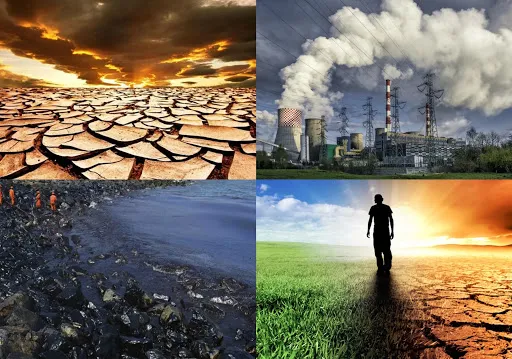
India faces serious issues like:
- Air pollution
- Water pollution
- Deforestation
- Climate change
- Plastic waste
- Industrial pollution
Because of these problems, the Environment Protection Act remains highly important even today.
It acts as a strong legal shield for protecting nature and public health. However, changing environmental challenges also require regular updates, stronger enforcement, and better public awareness.
Protecting the environment is essential for a healthy future. Clean air, safe water, and healthy forests are necessary for the survival of both humans and wildlife.
FAQs
Q1. What is the Environment Protection Act 1986?
The Environment Protection Act 1986 is an Indian law made to protect and improve the environment and control pollution across the country.
Q2. Why was the Environment Protection Act 1986 introduced?
It was introduced to control environmental pollution and improve environmental safety after global concerns and the Bhopal Gas Tragedy.
Q3. Which government body has major powers under the Environment Protection Act?
The Central Government has major powers to create rules, inspect industries, and take action against polluters.
Q4. What are the punishments under the Environment Protection Act 1986?
A person or company violating the Act can face imprisonment up to 5 years, a fine up to ₹1 lakh, or both.
Q5. What is the role of the National Green Tribunal?
National Green Tribunal handles environmental cases and ensures faster justice related to pollution and environmental damage.
Q6. What is Environmental Impact Assessment (EIA)?
Environmental Impact Assessment is a process that checks how a development project may affect the environment before approval.
Q7. Does the Act apply across India?
Yes, the Environment Protection Act applies to the entire country.
Q8. Why is the Environment Protection Act important today?
It is important because it helps control pollution, protect natural resources, and address environmental challenges like climate change and waste management.