Constitutional Morality in India: Meaning, Importance and Role in Governance

Constitutional Morality is one of the most important ideas in Indian democracy. It helps ensure that the government works in a fair, transparent, and responsible way. In public administration, constitutional morality guides leaders, judges, and public servants to act according to the values of the Constitution, not just personal beliefs or public pressure.
Thank you for reading this post, don't forget to subscribe!Dr. B. R. Ambedkar once said, “Constitutional morality is not a natural sentiment. It has to be cultivated.” This means people do not automatically understand or follow constitutional values. These values must be learned, practiced, and protected.
In India, constitutional morality plays a major role in protecting democracy, maintaining the rule of law, and ensuring justice for all citizens.
What is Constitutional Morality?
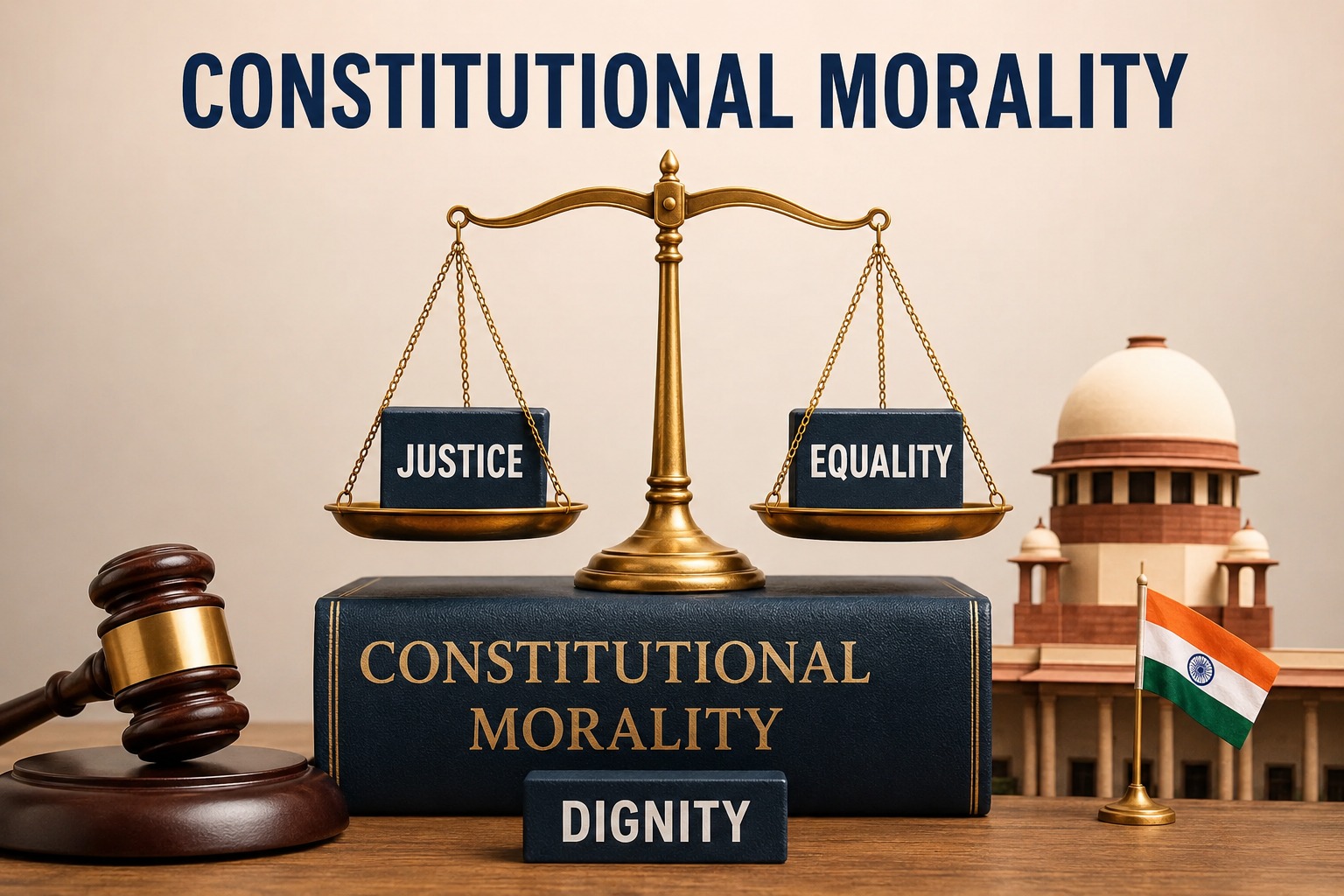
Constitutional morality means respecting and following the values, principles, and spirit of the Constitution. It is not limited to simply obeying written laws. It also includes commitment to justice, liberty, equality, dignity, and fairness.
It ensures that government institutions function according to constitutional principles rather than personal interests, political pressure, or majority opinion.
In simple words, constitutional morality means doing what is right according to the Constitution, even when it is difficult.
The Supreme Court of India has repeatedly said that constitutional morality is essential for good governance because it prevents misuse of power and protects citizens’ rights.
Key Elements of Constitutional Morality
Several important principles form the foundation of constitutional morality.

1. Rule of Law
Rule of law means no one is above the law. Every citizen, including powerful leaders and government officials, must follow the law.
This prevents arbitrary use of power and ensures fairness in governance.
2. Justice
Justice includes social, economic, and political justice. The government must work to reduce inequalities and ensure fair treatment for everyone.
Justice helps protect weaker and vulnerable sections of society.
3. Liberty
Liberty means freedom of thought, speech, belief, faith, and expression.
Citizens should be able to express opinions without fear, as long as they do not harm others or violate the law.
4. Equality
Equality ensures that every person receives equal treatment before the law.
No one should face discrimination based on caste, religion, gender, language, or social background.
5. Fraternity
Fraternity means brotherhood and unity among citizens.
It promotes dignity of every individual and strengthens national unity.
6. Separation of Powers
The Constitution divides power among three branches:
- Legislature
- Executive
- Judiciary
This prevents concentration of power in one institution.
7. Checks and Balances
Each branch of government monitors the others.
This system helps stop abuse of authority and protects democracy.
8. Ethical Governance
Ethical governance promotes:
- Transparency
- Accountability
- Honesty
- Integrity
Public servants should serve people with fairness and responsibility.
Ethical Principles Behind Constitutional Morality
Constitutional morality is strongly connected to ethics in public life.
Respect for Fundamental Rights
Every public servant must protect fundamental rights guaranteed by the Constitution.
These include:
- Right to equality
- Right to freedom
- Right to dignity
- Protection against discrimination
Government decisions should never violate these rights.
Following the Rule of Law
Laws must apply equally to all.
A public servant should make decisions based on law, not favoritism or personal gain.
This builds trust in government institutions.
Commitment to Justice and Equality
India has a long history of social inequality.
Constitutional morality requires the state to address issues like:
- Caste discrimination
- Gender inequality
- Social exclusion
- Economic imbalance
Government policies should promote fairness and social justice.
Secularism and Pluralism
India is a diverse country with many religions, cultures, and languages.
Constitutional morality requires the state to remain neutral in religious matters.
This means the government should treat all religions equally and respect diversity.
Pluralism helps create an inclusive society where everyone feels valued.
Examples of Constitutional Morality in India
Some important court judgments clearly show constitutional morality in action.
Navtej Singh Johar Case (2018)
In the landmark Navtej Singh Johar v. Union of India judgment, the Supreme Court of India struck down part of Section 377 of the IPC.
Section 377 had criminalized homosexuality.
The Court ruled that criminalizing same-sex relationships violated:
- Equality
- Freedom
- Dignity
- Privacy
This judgment reflected constitutional morality because the Court prioritized constitutional values over outdated social beliefs.
Sabarimala Case
In Indian Young Lawyers Association v. State of Kerala, the Supreme Court of India allowed women of all age groups to enter the Sabarimala Temple.
Earlier, women of certain age groups were restricted from entering.
The Court emphasized constitutional values such as:

- Equality
- Dignity
- Non-discrimination
This decision showed how constitutional morality can challenge unfair customs.
Constitutional Morality vs Popular Morality
Constitutional morality and popular morality are not always the same.
Popular Morality
Popular morality is based on:
- Traditions
- Social customs
- Majority opinions
- Cultural beliefs
These beliefs can change over time and may sometimes support discrimination.
Constitutional Morality
Constitutional morality is based on:
- Rational thinking
- Human dignity
- Equality
- Justice
- Fundamental rights
Even if the majority supports something unfair, constitutional morality protects justice and individual rights.
This is why courts sometimes give judgments that may not be popular but are constitutionally correct.
Role of the Preamble in Constitutional Morality
The Preamble of the Constitution of India reflects the highest values of constitutional morality.
It describes India as:
- Sovereign
- Socialist
- Secular
- Democratic
- Republic
These words define the character of the Indian state.
Justice
The state has a moral duty to reduce inequalities and promote fairness.
Liberty
Citizens must enjoy freedom of thought, speech, and belief.
Equality
Every citizen deserves equal opportunity and protection.
Fraternity
The Constitution promotes dignity of individuals and unity of the nation.
The Preamble acts like a moral guide for governance.
How to Develop Constitutional Morality in Public Administration
Public servants play a major role in applying constitutional morality.
They can strengthen it in the following ways.
Transformative Constitutionalism
The Constitution is a living document.
It should help transform society by reducing inequality and creating equal opportunities.
Public servants should work toward this goal.
Courage of Conviction
Officials often face pressure from powerful people.
Constitutional morality requires courage to do what is right.
This includes:
- Fighting corruption
- Protecting whistleblowers
- Defending citizens’ rights
Substantive Equality
Treating everyone exactly the same does not always create fairness.
Some communities have faced historical disadvantages.
Special measures like reservation and welfare schemes help achieve real equality.
Constitutional Culture
Government institutions should build a culture of:
- Openness
- Dialogue
- Transparency
- Reason-based decision making
Public power should be used as a responsibility, not personal authority.
Why Constitutional Morality Matters
Constitutional morality is the moral backbone of Indian democracy. It ensures that governance is not only legal but also fair and ethical.
It protects citizens from misuse of power and strengthens democratic institutions. It also ensures that the rights of every individual, especially weaker sections of society, are respected.
In modern India, constitutional morality remains essential for building a just, inclusive, and accountable governance system. By following constitutional values, public servants and citizens can help create a stronger democracy where justice, equality, and dignity are protected for all.
FAQs
1. What is Constitutional Morality in simple words?
Constitutional Morality means following the values and principles of the Constitution such as justice, equality, liberty, and dignity while making decisions.
2. Why is Constitutional Morality important in India?
Constitutional Morality is important because it protects democracy, prevents misuse of power, and ensures equal rights for all citizens.
3. Who introduced the idea of Constitutional Morality in India?
B. R. Ambedkar strongly emphasized the importance of Constitutional Morality during the making of the Indian Constitution.
4. What is the difference between Constitutional Morality and Popular Morality?
Constitutional Morality is based on constitutional values like equality and justice, while Popular Morality is based on traditions, customs, and majority opinion.
5. What are the key elements of Constitutional Morality?
The key elements include rule of law, justice, liberty, equality, fraternity, separation of powers, and ethical governance.
6. How does Constitutional Morality help public administration?
It guides public servants to work fairly, honestly, and according to constitutional values while serving citizens.
7. Which court cases are examples of Constitutional Morality?
Important examples include Navtej Singh Johar v. Union of India and Indian Young Lawyers Association v. State of Kerala.
8. What is the role of the Preamble in Constitutional Morality?
The Preamble reflects core constitutional values such as justice, liberty, equality, and fraternity, which form the foundation of Constitutional Morality.