


The Citizenship (Amendment) Bill, 2016

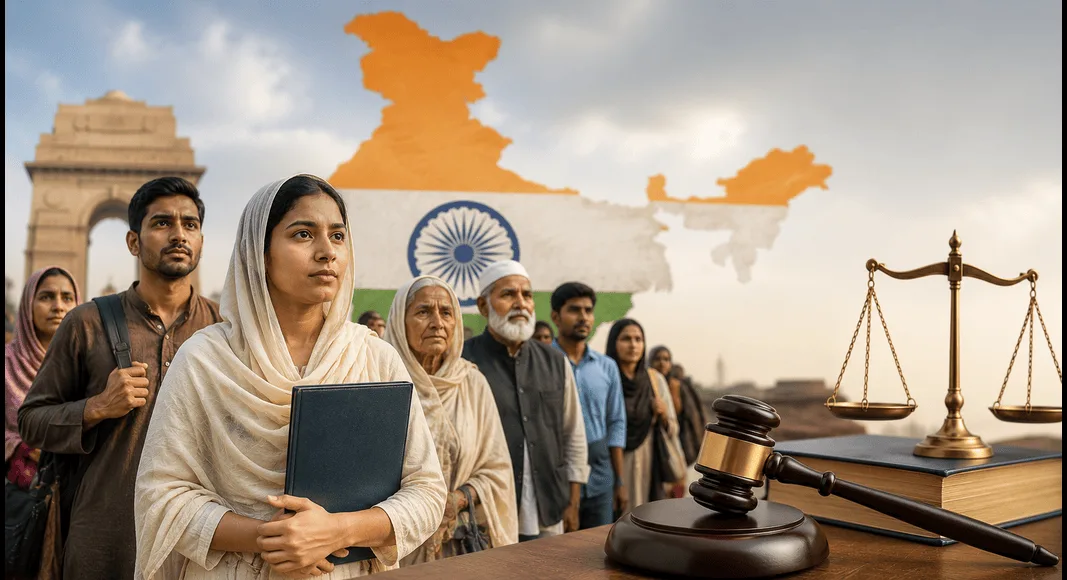
The Citizenship (Amendment) Bill, 2016 became one of the most discussed political and constitutional topics in India. The Bill was introduced to amend the Citizenship Act, 1955 and provide citizenship to certain groups of illegal migrants belonging to minority communities from neighboring countries. The Bill created widespread debate across the country, especially in the northeastern states.
Thank you for reading this post, don't forget to subscribe!Supporters of the Bill argued that it aimed to protect persecuted minorities from neighboring countries such as Pakistan, Bangladesh, and Afghanistan. Critics, however, believed that the Bill violated the principle of equality and secularism mentioned in the Indian Constitution.
The issue gained more attention because of the National Register of Citizens (NRC) process in Assam. Many people feared that the Bill would affect the cultural identity, language, and social structure of northeastern states.
Understanding the Citizenship (Amendment) Bill, 2016 is important because it deals with citizenship, constitutional rights, migration, secularism, and national security. It also highlights the challenges faced by India in balancing humanitarian concerns with constitutional values.
What is Citizenship?
Citizenship refers to the legal relationship between a person and a country. A citizen enjoys certain rights and duties within the country. Citizens can vote, contest elections, own property, and enjoy constitutional protections.
In India, citizenship is governed by the Constitution and the Citizenship Act, 1955.
Citizenship in the Indian Constitution
The Indian Constitution discusses citizenship under Part II, Articles 5 to 11.
These articles explain who became citizens of India at the time when the Constitution came into force on 26 January 1950.
The Constitution also gives Parliament the power to make laws related to citizenship. Based on this power, Parliament passed the Citizenship Act, 1955.
Citizenship Act, 1955
The Citizenship Act, 1955 provides different ways through which a person can become an Indian citizen.
These methods include:
Citizenship by Birth
A person born in India can become a citizen according to conditions mentioned in the law.
Citizenship by Descent
A person born outside India can claim Indian citizenship if his or her parents are Indian citizens.
Citizenship by Registration
Certain persons such as spouses of Indian citizens can apply for citizenship through registration.
Citizenship by Naturalization
A foreign person can become an Indian citizen after living in India for a specified period and fulfilling conditions.
Citizenship by Incorporation of Territory
When a new territory becomes part of India, people living there can become Indian citizens.
Who is an Illegal Migrant?
According to the Citizenship Act, 1955, an illegal migrant is a person who:
- Enters India without valid travel documents like a passport or visa, or
- Stays in India after the expiry of the visa period.
Illegal migrants are generally not allowed to become Indian citizens under the existing law.
Background of the Citizenship (Amendment) Bill, 2016
The Citizenship (Amendment) Bill, 2016 was introduced in Lok Sabha by the Ministry of Home Affairs in July 2016.
The Bill was passed by the Lok Sabha in January 2019.
The main objective of the Bill was to provide Indian citizenship to certain religious minorities who came from Afghanistan, Bangladesh, and Pakistan due to religious persecution.
The Bill became highly controversial because it selected beneficiaries based on religion.
Why was the Bill Introduced?
The government stated that many minority communities in neighboring Islamic countries faced religious persecution and violence. These people entered India seeking protection and shelter.
The Bill aimed to provide relief to:
- Hindus
- Sikhs
- Buddhists
- Jains
- Parsis
- Christians
from:
- Pakistan
- Bangladesh
- Afghanistan
The government argued that these minorities had nowhere else to go because those countries had Islam as the state religion.
Main Features of the Citizenship (Amendment) Bill, 2016
Citizenship to Certain Religious Minorities
The Bill made illegal migrants from six religious communities eligible for Indian citizenship if they belonged to Afghanistan, Bangladesh, or Pakistan.
These communities were:
- Hindus
- Sikhs
- Buddhists
- Jains
- Parsis
- Christians
Reduction in Residency Requirement
Normally, a person seeking citizenship through naturalization had to stay in India for 11 years.
The Bill reduced this requirement to 6 years for the above-mentioned groups.
This made it easier for them to obtain Indian citizenship.
Changes Regarding OCI Cardholders
The Bill also gave the government power to cancel the registration of Overseas Citizen of India (OCI) cardholders if they violated any law.
This provision was criticized because even minor violations could become grounds for cancellation.
What is Overseas Citizen of India (OCI)?
OCI is a special immigration status given to foreign citizens of Indian origin.
An OCI cardholder is not a full Indian citizen.
They do not have:
- Voting rights
- Right to contest elections
- Right to hold constitutional offices
However, they enjoy many benefits such as:
- Lifelong visa to visit India
- Permission to work and study in India
- Multiple-entry travel facility
Difference Between Citizen and OCI
| Feature | Indian Citizen | OCI Cardholder |
|---|---|---|
| Voting Rights | Yes | No |
| Contest Elections | Yes | No |
| Constitutional Posts | Yes | No |
| Indian Passport | Yes | No |
| Lifelong Visa | Not Needed | Yes |
Connection Between NRC and Citizenship Bill
The Citizenship (Amendment) Bill became important because of the NRC process in Assam.
The NRC aimed to identify illegal migrants in Assam.
Many people feared that:
- Non-Muslim migrants excluded from NRC would get protection under the Bill.
- Muslim migrants would not get the same protection.
This created social and political tensions.
What is NRC?
The National Register of Citizens (NRC) is a list of genuine Indian citizens.
It was updated in Assam to identify illegal migrants who entered after March 24, 1971.
The NRC process created fear and confusion among many communities.
Why Northeastern States Opposed the Bill
Several northeastern states strongly opposed the Bill.
Their concerns included:
Threat to Indigenous Identity
People feared that large-scale migration would change local culture, language, and traditions.
Pressure on Resources
Migrants could increase pressure on:
- Land
- Employment
- Education
- Healthcare
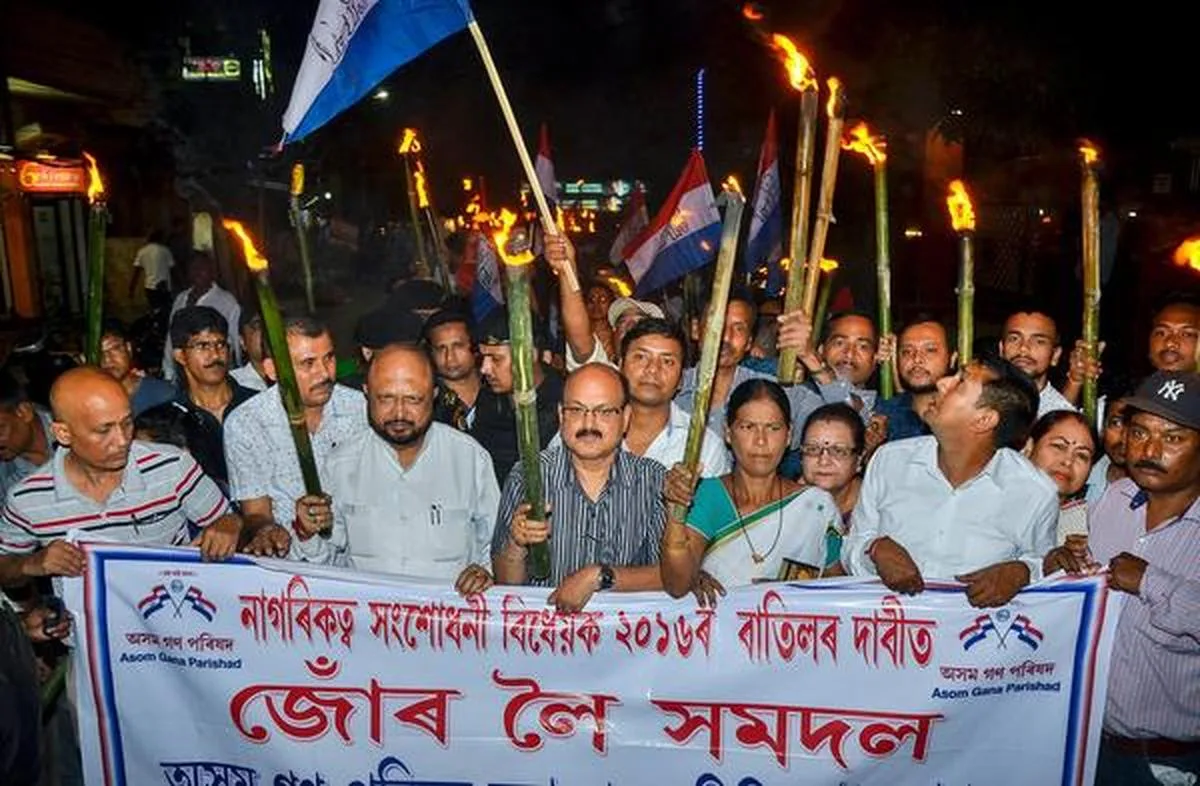
Violation of Assam Accord
Many groups believed the Bill violated the Assam Accord signed in 1985.
What is the Assam Accord?
The Assam Accord was signed in 1985 between:
- Government of India
- All Assam Students’ Union (AASU)
- All Assam Gana Sangram Parishad
The Accord aimed to end the Assam Movement against illegal migration.
Main Provisions of Assam Accord
Migrants Before 1961
People who entered Assam before 1961 were granted full citizenship rights.
Migrants Between 1961 and 1971
These people were allowed citizenship but denied voting rights for 10 years.
Migrants After 1971
People entering after March 24, 1971 were to be deported.
Constitutional Issues with the Bill
The Bill faced criticism for allegedly violating constitutional principles.
Article 14 and Equality
Article 14 guarantees equality before law and equal protection of laws.
Critics argued that the Bill discriminated on the basis of religion because it excluded Muslims.
According to critics, citizenship should not depend on religious identity.
Secularism and the Constitution
India is a secular country.
Secularism means the state treats all religions equally.
Opponents argued that the Bill went against the secular character of the Constitution.
Basic Structure Doctrine
The Supreme Court in the Kesavananda Bharati Case (1973) stated that Parliament cannot destroy the basic structure of the Constitution.
Secularism is considered part of the basic structure.
Therefore, critics argued that religion-based citizenship could violate this principle.
Arguments in Support of the Bill
Supporters of the Bill gave several arguments.
Protection of Persecuted Minorities
Minority communities in neighboring countries often faced:
- Religious violence
- Forced conversion
- Discrimination
India, according to supporters, had a moral duty to help them.
Humanitarian Approach
Supporters argued that India has always welcomed refugees and protected people facing oppression.
Historical Responsibility
During Partition, many minorities were left behind in neighboring countries.
The Bill aimed to address their suffering.
Limited Scope
Supporters said the Bill only applied to three neighboring countries where minorities faced persecution.
Arguments Against the Bill
Opponents strongly criticized the Bill.
Religion-Based Citizenship
Critics argued that citizenship should not depend on religion.
Exclusion of Muslims
The Bill excluded Muslim groups facing persecution such as:
- Ahmadiyyas
- Shias
- Rohingyas
This raised questions about fairness.
Threat to Northeast India
Local communities feared demographic and cultural changes.
Broad Powers Over OCI
The government could cancel OCI registration for violation of any law, even minor offences.
Refugee vs Migrant
The debate also raised the issue of difference between refugees and migrants.
Refugee
A refugee is someone forced to leave his or her country due to:
- War
- Violence
- Religious persecution
Migrant
A migrant usually moves voluntarily for work, education, or better opportunities.
Many experts argued that India should create a proper refugee policy.
India and Refugee Policy
India is not a signatory to the 1951 Refugee Convention of the United Nations.
However, India has historically given shelter to:
- Tibetans
- Sri Lankan Tamils
- Afghans
- Bangladeshis
India generally follows humanitarian values in dealing with refugees.
Impact of the Bill
The Bill had major political and social impacts.
Protests Across India
Large protests took place in:
- Assam
- Tripura
- Meghalaya
- West Bengal
- Delhi
Many students and civil society groups participated.
Debate on Citizenship
The Bill started nationwide discussions about:
- Citizenship
- Secularism
- Human rights
- National identity
Political Polarization
Political parties had sharply divided opinions on the Bill.
Citizenship (Amendment) Act, 2019
Later, the Citizenship (Amendment) Bill became the Citizenship (Amendment) Act, 2019 after being passed by Parliament.
The Act kept most provisions of the original Bill.
Key Features of Citizenship (Amendment) Act, 2019
The Act:
- Grants citizenship to six minority communities
- Applies to Afghanistan, Bangladesh, and Pakistan
- Reduces residency requirement from 11 years to 5 years
Areas Exempted from the Act
Some tribal and protected areas were exempted to protect indigenous populations.
These included areas under:
- Sixth Schedule of Constitution
- Inner Line Permit system
Supreme Court and Legal Challenges
Several petitions challenging the Act were filed in the Supreme Court.
The petitioners argued that the Act violates:
- Article 14
- Secularism
- Basic Structure Doctrine
The legal debate continues to remain important.
Importance of Citizenship Laws
Citizenship laws are important because they decide:
- Who belongs to the country
- Who can vote
- Who gets constitutional protections
- Who can hold public office
Therefore, citizenship policies must balance:
- National security
- Human rights
- Constitutional values
Challenges Before India
India faces several challenges regarding migration and citizenship.
Border Management
India shares long borders with neighboring countries, making illegal migration difficult to control.
Humanitarian Concerns
People fleeing persecution need protection and support.
Social Harmony
Citizenship issues can create communal and regional tensions.
Constitutional Balance
Any citizenship law must respect constitutional principles.
Way Forward
India needs a balanced and humane approach toward citizenship and migration issues.
Protect Constitutional Values
Equality and secularism must remain central to all laws.
Create Clear Refugee Policy
India should consider creating a separate refugee law to handle humanitarian crises better.
Protect Indigenous Communities
The identity and culture of northeastern states must be protected.
Transparent Citizenship Process
Citizenship procedures should be fair, transparent, and free from discrimination.
Strong Legal Safeguards
Checks and balances are necessary to prevent misuse of power.
Conclusion
The Citizenship (Amendment) Bill, 2016 became one of the most debated laws in recent Indian history. It highlighted important issues related to citizenship, migration, religion, constitutional rights, and national identity.
Supporters viewed the Bill as a humanitarian step to protect persecuted minorities from neighboring countries. Critics believed that it violated the principles of equality and secularism.
The debate also showed the challenges India faces in balancing humanitarian responsibilities with constitutional values and regional concerns.
As the world continues to witness migration crises and refugee movements, India must adopt policies that are fair, constitutional, and sensitive to both national interests and human rights.
FAQs The Citizenship (Amendment) Bill, 2016
1. What is the Citizenship (Amendment) Bill, 2016?
It is a bill introduced to amend the Citizenship Act, 1955 and provide citizenship to certain religious minorities from neighboring countries.
2. Which countries are covered under the Bill?
The Bill covers migrants from Pakistan, Bangladesh, and Afghanistan.
3. Which religious communities are included in the Bill?
Hindus, Sikhs, Buddhists, Jains, Parsis, and Christians are included.
4. What is the main purpose of the Bill?
The main purpose is to provide Indian citizenship to persecuted minority communities from neighboring countries.
5. What is the Citizenship Act, 1955?
It is the law that explains how a person can acquire or lose Indian citizenship.
6. What is NRC?
NRC stands for National Register of Citizens, which is a list prepared to identify genuine Indian citizens.
7. Why did northeastern states oppose the Bill?
Many people feared that it would affect their culture, language, and identity due to migration.
8. What is the Assam Accord?
It is an agreement signed in 1985 to identify and deport illegal migrants who entered Assam after 1971.
9. What is an OCI cardholder?
OCI means Overseas Citizen of India. OCI holders are not Indian citizens but receive special travel and residency benefits.
10. Why was the Bill criticized?
Critics argued that the Bill discriminates on the basis of religion and violates Article 14 of the Constitution.