



Doubling Farmers’ Income: Challenges, Government Schemes and the Way Forward

Doubling Farmers’ Income has been one of the most important goals of India’s agricultural policy in recent years. Agriculture remains the backbone of the Indian economy and provides livelihood to millions of families across the country. Despite producing large quantities of food grains, fruits, vegetables, milk, and other agricultural products, many farmers continue to face financial difficulties.
To improve the economic condition of farmers, the Government of India announced the goal of doubling farmers’ income. The objective was not only to increase agricultural production but also to ensure that farmers receive better earnings from their hard work. This approach focuses on increasing income through higher productivity, lower production costs, better market access, and diversification of farming activities.

Why Doubling Farmers’ Income Became Necessary
For many decades, agricultural policies mainly focused on increasing food production and achieving food security. India successfully increased its food grain production through the Green Revolution and other agricultural reforms. However, the income earned by farmers did not rise at the same pace.
Several factors made it necessary to focus on farmers’ income:
Low Earnings from Farming
Many farmers own small land holdings and earn limited income from crop cultivation. Rising costs of seeds, fertilizers, pesticides, and machinery often reduce their profits.
Income Gap Between Farmers and Other Workers
People employed in industries, services, and other non-farm sectors generally earn more than farmers. This income gap has continued to increase over time.
Farmer Distress
Crop failures, natural disasters, market fluctuations, and debt have created financial stress for many farming families. In some cases, this has resulted in severe hardships.
Youth Leaving Agriculture
Young people are increasingly moving away from farming because they see limited opportunities and low earnings in agriculture. This trend can affect future food production.
Food Security Concerns
If farmers continue to leave agriculture, the country’s ability to produce enough food for its growing population may be affected in the future.
Because of these reasons, improving farmers’ income became a national priority.
Key Factors for Increasing Farmers’ Income
The strategy for increasing farmers’ income focuses on three major areas:
| Objective | Purpose |
|---|---|
| Increase Gross Income | Produce more and earn better prices |
| Reduce Production Costs | Lower spending on inputs and resources |
| Stabilize Income | Protect farmers from risks and income shocks |
These three pillars work together to improve the overall financial condition of farmers.
Improving Agricultural Productivity
One of the most effective ways to increase farmers’ income is by improving agricultural productivity.
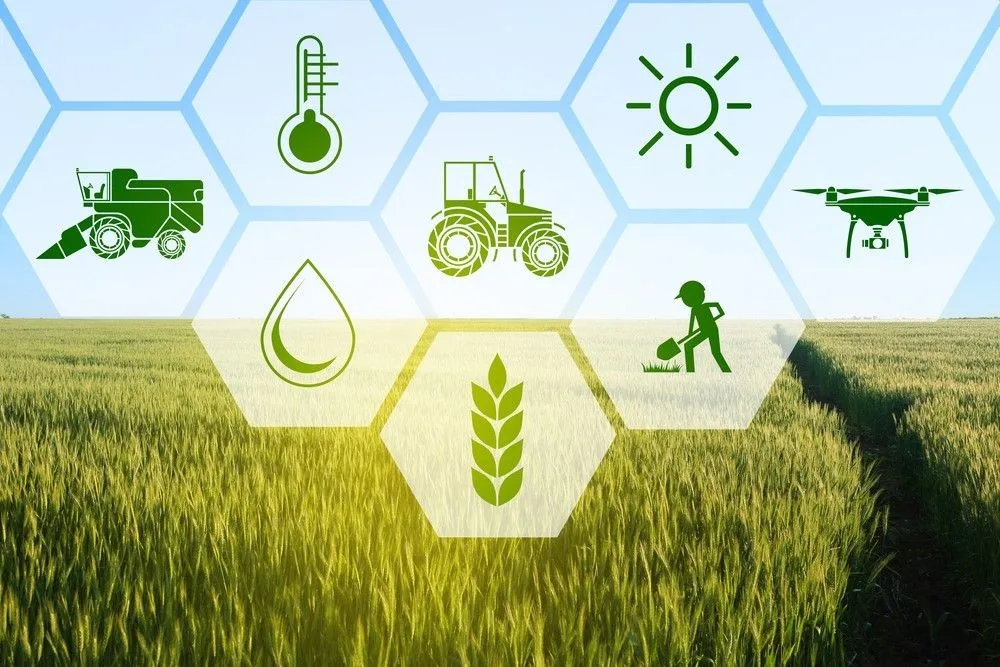
Better Irrigation Facilities
Many farmers still depend on rainfall for cultivation. Expanding irrigation facilities helps farmers grow crops throughout the year and reduces dependence on monsoon rains.
Improved Seeds and Technology
High-quality seeds, modern farming equipment, and scientific methods can increase crop yields significantly. Farmers can produce more from the same piece of land.
Mechanization
The use of tractors, harvesters, drip irrigation systems, and other modern equipment saves time and labor while improving efficiency.
Reducing the Cost of Cultivation
Increasing income is not only about producing more. Farmers also need to spend less on cultivation.
Efficient Use of Inputs
Proper use of fertilizers, pesticides, water, and electricity can reduce unnecessary expenses.
Soil Testing
Regular soil testing helps farmers understand nutrient requirements and avoid excessive fertilizer use.
Scientific Farming Practices
Modern farming techniques such as precision farming help farmers use resources efficiently while increasing production.
Increasing Cropping Intensity
Cropping intensity refers to growing more than one crop on the same land during a year.
For example:
| Season | Crop |
| Kharif | Rice |
| Rabi | Wheat |
| Summer | Vegetables |
This allows farmers to earn income from the same land multiple times a year.
Increasing cropping intensity helps maximize land use and improves annual income.
Diversification of Agriculture
Depending on a single crop can be risky. Diversification helps farmers generate multiple sources of income.
High-Value Crops
Farmers can shift toward:
- Fruits
- Vegetables
- Spices
- Flowers
- Medicinal plants
- Sugarcane
These crops often provide better returns compared to traditional crops.
Allied Agricultural Activities
Income can also increase through:
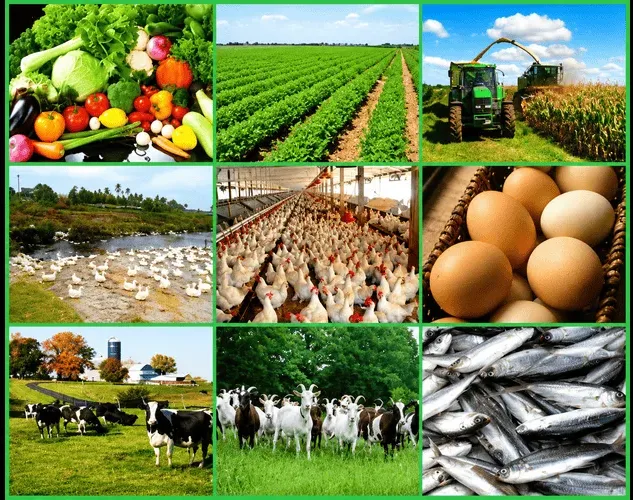
These activities provide additional earnings throughout the year.
Role of Non-Farm Employment
Rural families often depend on both farm and non-farm activities.
Examples include:
- Small businesses
- Handicrafts
- Rural industries
- Transportation services
- Food processing
Non-farm employment creates additional income opportunities and reduces dependence on agriculture alone.
Understanding the Income Scenario
The government estimated the annual income of farm households at around ₹96,703 during 2015-16, which was approximately ₹8,059 per month.
To achieve the target of doubling income while considering inflation, farmers’ monthly income needed to reach approximately ₹21,146 by 2022.
However, later surveys showed that average monthly farm household income increased to around ₹10,218 by 2018-19. Although this represented significant growth, it was still below the desired target.
Sources of Farmers’ Income
Income comes from different activities:
| Source | Contribution |
| Wages | Major Share |
| Crop Cultivation | Significant Share |
| Animal Husbandry | Growing Contribution |
| Non-Farm Business | Increasing Share |
| Land Leasing | Additional Income |
An important observation was that wage income increased considerably. This indicates that many farmers also work as laborers to support their families.
Government Initiatives for Doubling Farmers’ Income
The Government of India introduced several schemes and reforms to support farmers.
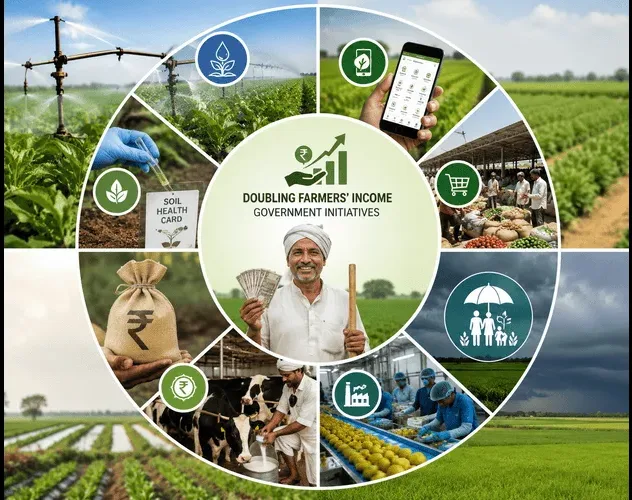
Pradhan Mantri Krishi Sinchai Yojana (PMKSY)
This scheme aims to improve irrigation coverage and ensure efficient water use in agriculture.
Soil Health Card Scheme
The scheme provides farmers with information about soil nutrients and helps them apply fertilizers scientifically.
Paramparagat Krishi Vikas Yojana (PKVY)
This programme promotes organic farming and sustainable agricultural practices.
Pradhan Mantri Fasal Bima Yojana (PMFBY)
Crop insurance protects farmers from losses caused by droughts, floods, pests, and other natural disasters.
River Interlinking Projects
These projects aim to improve water availability for agriculture and increase productivity.
Operation Greens
This initiative focuses on reducing price fluctuations of perishable crops such as:
- Tomato
- Onion
- Potato
The programme helps farmers receive more stable prices.
PM Kisan Sampada Yojana
The scheme supports food processing industries and helps reduce post-harvest losses.
Technological Reforms in Agriculture
Technology plays an important role in improving farmers’ income.
National Agriculture Market (e-NAM)
e-NAM is an online agricultural trading platform that connects markets across India.
Benefits include:
- Better price discovery
- Transparent transactions
- Wider market access
- Reduced dependence on local traders
Technology Mission on Cotton
The mission focuses on:
- Improving cotton productivity
- Reducing cultivation costs
- Increasing farmers’ earnings
Technology Mission on Oilseeds, Pulses and Maize
The mission supports production improvement in important crops through better technologies and extension services.
Mission for Integrated Development of Horticulture (MIDH)
MIDH promotes:
- Fruits
- Vegetables
- Flowers
- Spices
- Coconut
- Bamboo
- Mushrooms
This helps farmers diversify and earn higher profits.
Sugar Technology Mission
The mission works to improve sugar production efficiency and reduce production costs.
National Mission for Sustainable Agriculture
This mission promotes:
- Water conservation
- Climate-resilient farming
- Better seeds
- Pest management
- Nutrient management
- Agricultural insurance
The goal is to make farming sustainable and profitable.
Importance of Livestock and Dairy Farming
Livestock contributes significantly to rural income.
Income can be improved through:
- Better cattle breeds
- Improved feed quality
- Veterinary healthcare
- Artificial insemination
- Scientific animal management
Dairy farming provides daily cash income and supports small farmers.
Importance of Irrigation Expansion
A large portion of Indian agriculture remains dependent on monsoon rainfall.
Expanding irrigation helps farmers:
- Grow multiple crops
- Reduce crop failures
- Increase productivity
- Improve income stability
Micro-irrigation systems such as drip and sprinkler irrigation also help save water.
Need for Better Market Reforms
Farmers often receive lower prices because of weak market systems.
Important reforms include:
Better Storage Facilities
Proper warehouses and cold storage facilities reduce post-harvest losses.
Strong Supply Chains
Efficient transportation and logistics help farmers reach larger markets.
Direct Market Access
Farmers should have opportunities to sell directly to consumers, processors, and exporters.
Competitive Value Chains
Better integration with food processing industries can increase farmers’ earnings.
Role of Farmer Producer Organizations (FPOs)
Small farmers often face difficulties in purchasing inputs and selling produce.
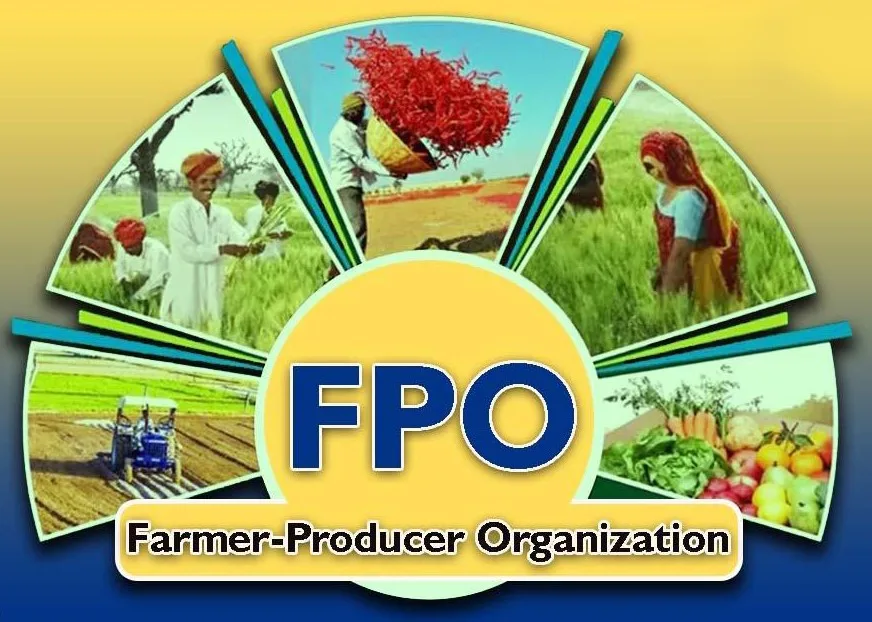
FPOs help farmers by:
- Purchasing inputs in bulk
- Accessing better markets
- Improving bargaining power
- Obtaining financial support
These organizations can play a major role in increasing rural income.
Challenges in Achieving Higher Farm Income
Several challenges still exist:
- Small and fragmented land holdings
- Climate change impacts
- Water scarcity
- Rising input costs
- Market uncertainties
- Poor storage facilities
- Limited access to technology
- Dependence on monsoon rainfall
Addressing these challenges requires coordinated efforts from governments, private organizations, and farmers.
The Way Forward
Doubling farmers’ income requires a combination of higher productivity, lower costs, better prices, and diversified income sources. Expanding irrigation, promoting modern technology, strengthening market systems, improving livestock management, and supporting Farmer Producer Organizations can significantly improve the financial condition of farmers.
Agriculture remains vital for India’s economy and food security. Ensuring better income for farmers is essential not only for rural development but also for sustainable national growth. With continued reforms, infrastructure development, technological innovation, and active participation from states and farmers, India’s agricultural sector can become more productive, profitable, and resilient in the years ahead.
FAQs
What is meant by Doubling Farmers’ Income?
It refers to increasing the earnings of farmers significantly through better productivity, lower costs, diversification, and improved market access.
Why was there a need to double farmers’ income?
Farmers faced low earnings, rising costs, financial distress, and a growing income gap compared to non-farm workers.
How does irrigation help farmers increase income?
Irrigation improves crop production, allows multiple cropping, and reduces dependence on rainfall.
What is e-NAM?
e-NAM is an electronic agricultural trading platform that connects markets across India and helps farmers get better prices.
What role do FPOs play in agriculture?
Farmer Producer Organizations help small farmers access markets, purchase inputs at lower costs, and improve bargaining power.
Which allied activities can increase farmers’ income?
Dairy farming, poultry farming, fisheries, beekeeping, and goat rearing are important income-generating activities.
How does crop insurance support farmers?
Crop insurance provides financial protection against losses caused by natural disasters, pests, and adverse weather conditions.
What are the major challenges facing Indian farmers?
Climate change, water scarcity, fragmented land holdings, rising input costs, and market fluctuations are key challenges.