



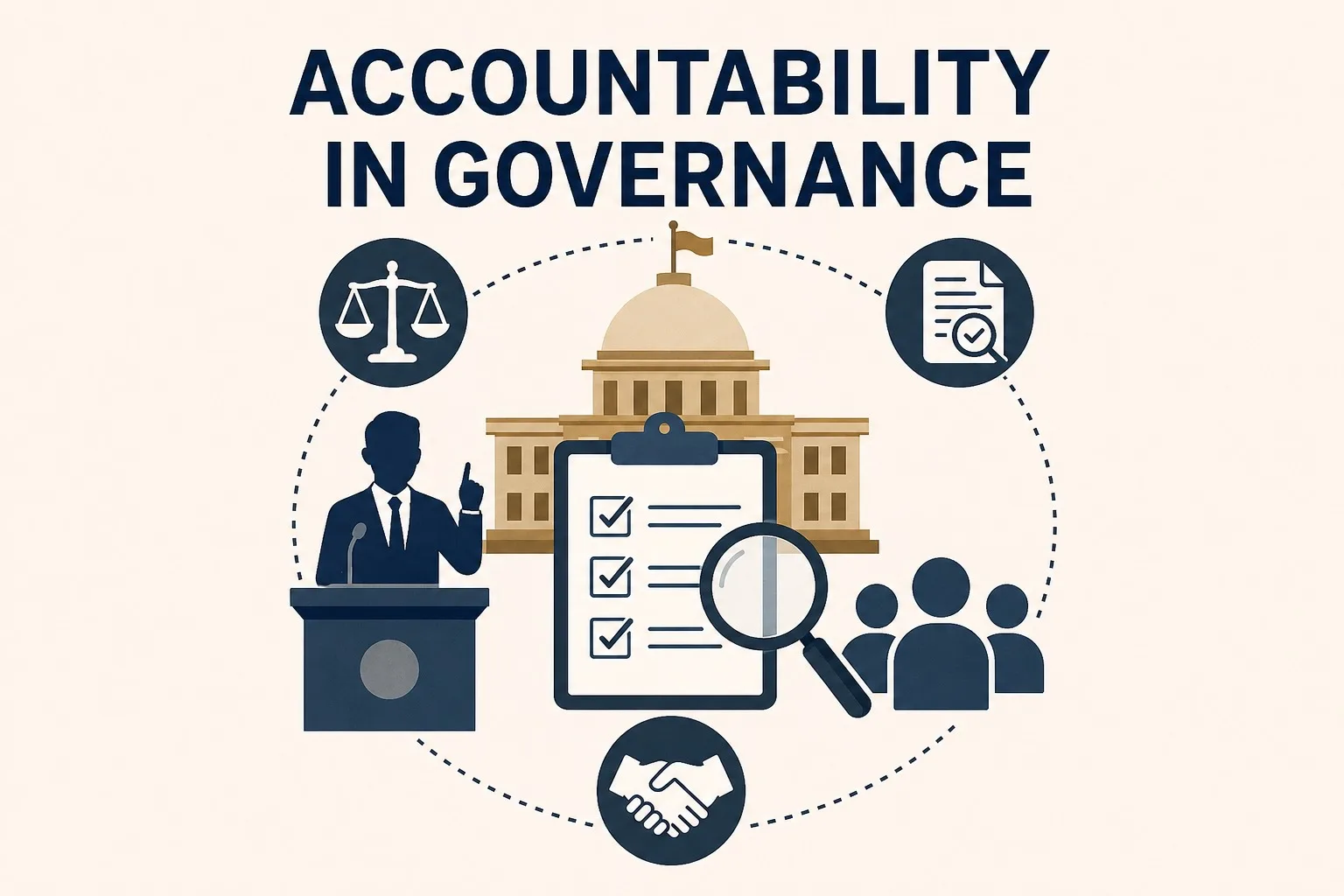
Accountability in Governance: Importance, Benefits and Role in Good Governance

Accountability in Governance is one of the most important pillars of a democratic system. It means that people in power, such as government officials, ministers, and public servants, must answer for their decisions and actions. They should explain why they made certain decisions and how those decisions affect citizens.
Thank you for reading this post, don't forget to subscribe!In simple words, accountability means being responsible for actions and being ready to give explanations when needed. In governance, this ensures that the government works honestly, fairly, and in the best interest of the people.
Today, citizens expect more transparency and better services from the government. Because of this, accountability has become a major part of modern governance. It helps build trust between the government and the people.
What is Accountability in Governance?
Accountability refers to the process and rules that make decision-makers answerable to those who are affected by their decisions. In governance, the decision-makers are government authorities, and the people affected are citizens.
A government must not only make policies and implement schemes but also explain whether these actions are useful, fair, and lawful. If mistakes happen, there should be corrective action.
Accountability is important because it reduces misuse of power and ensures that public resources are used properly.
Importance of Accountability in Governance
1. Strengthens Democracy
In a democracy, power comes from the people. Therefore, the government must remain accountable to citizens. Elected leaders are expected to work for public welfare and answer questions from the people.
Citizens can demand accountability through voting, public discussions, media, and legal rights.
2. Creates Answerability
Accountability means government officials must justify their actions. If a project fails or money is misused, responsible persons must explain what happened.
This creates a system where public servants think carefully before making decisions.
3. Ensures Corrective Action
Accountability also includes punishment or corrective steps when rules are broken. If corruption, negligence, or misuse of authority is found, action must be taken.
This discourages wrong practices in administration.
4. Builds Public Trust
When governments work transparently and responsibly, people trust them more. Public trust is necessary for smooth governance and successful policy implementation.
A government with strong accountability gains greater support from citizens.
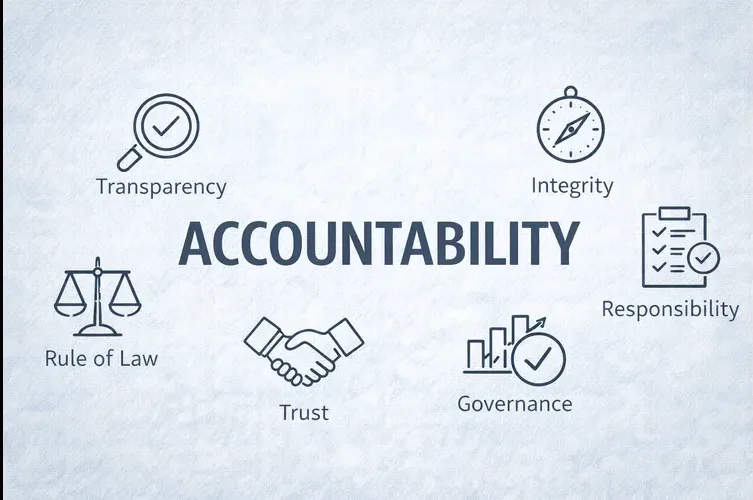
Major Stakeholders in Accountability
Many groups are involved in ensuring accountability in governance.
Citizens as Voters
Citizens are the most important stakeholders. They elect governments and therefore have the right to question elected representatives.
Through elections, citizens can reward good governance or reject poor leadership.
Citizens as Taxpayers
People pay taxes to the government. Therefore, they have the right to know how public money is being used.
Citizens can ask questions like:
- Is the money being used properly?
- Are welfare schemes reaching the right people?
- Are public projects completed on time?
These questions improve accountability.
Institutions for Checks and Balances
India follows the principle of separation of powers between the Legislature, Executive, and Judiciary. These institutions check each other to prevent misuse of power.
This creates balance and improves accountability.
Accountability as a Continuous Process
Accountability is not a one-time activity. It is a continuous process in governance.
Government Planning and Public Participation
Government creates policies and schemes for development. Citizens and stakeholders indirectly help by expressing their needs and priorities.
After implementation, results are evaluated. If problems are found, changes are made.
This cycle improves governance.
Empowering Citizens
Accountability gives citizens the power to ask questions and demand explanations.
Government officials are expected to provide answers and evidence for their actions.
This makes governance more responsive.
Accountability Requires Responsibility
Those in authority must understand that accountability is not optional. It is their duty.
Every action taken by a public authority should be recorded and justified.
Role of Transparency in Accountability
Transparency and accountability are closely connected.
Without transparency, accountability becomes weak.
Transparency means making information openly available to the public. This includes:
- Government decisions
- Spending details
- Policy implementation
- Project progress
If information is hidden, citizens cannot know whether the government is functioning properly.
Reliable records and accurate data are necessary for accountability.
Accountability and Right to Information (RTI)
The Right to Information Act, 2005 is one of India’s most important laws for accountability. Right to Information Act, 2005
This law allows citizens to request information from government offices.
Through RTI, people can ask:
- How much money was spent?
- Why was a decision taken?
- Why is a service delayed?
RTI has increased transparency and reduced secrecy in administration.
It has empowered citizens to monitor government performance.
Role of Digitisation in Accountability
Digital technology has improved accountability in many ways.
Online services provide faster service delivery and create clear records of transactions.
Examples include:
- Online certificates
- Digital payments
- Online tax filing
- E-governance portals
Since every transaction leaves a digital record, monitoring becomes easier.
Digital systems reduce human errors and corruption.
Accountability and Citizen’s Charter
A Citizen’s Charter is a document that tells citizens about government services, timelines, and responsibilities.
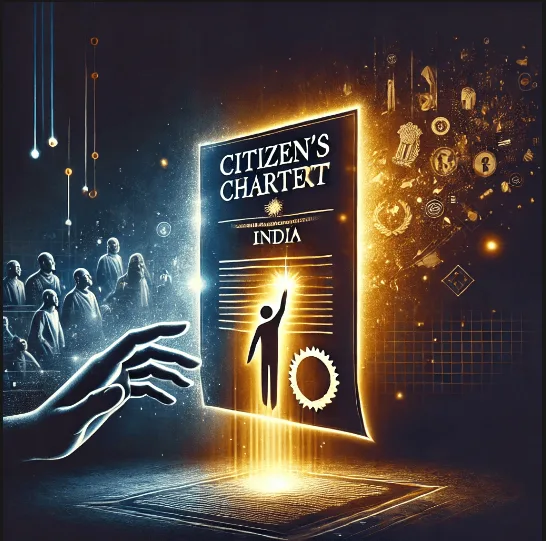
Central Board of Direct Taxes is one example of an agency with a Citizen’s Charter.
The charter clearly mentions:
- Services provided
- Time required
- Complaint process
- Rights of citizens
For example, it may specify how quickly tax refunds should be issued or grievances resolved.
This makes government departments directly accountable to citizens.
Role of Vigilance in Accountability
Strong vigilance systems are necessary for good governance.
Vigilance helps detect:
- Corruption
- Abuse of power
- Poor administration
- Rule violations
Independent institutions monitor whether government agencies follow laws and procedures.
These institutions are essential for accountability.
Checks and Balances in India
India’s Constitution provides strong checks and balances.
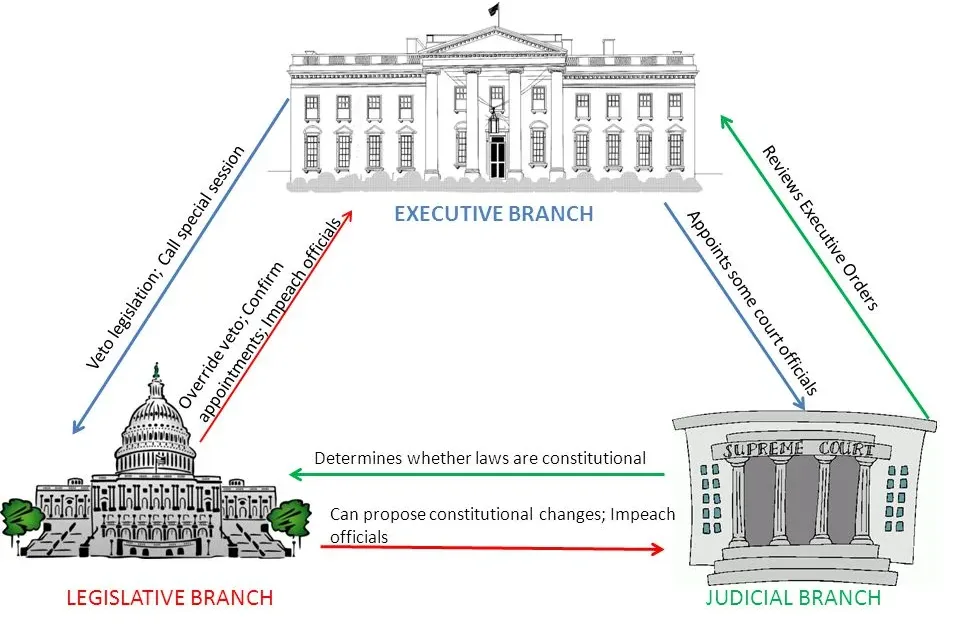
The three major branches are:
- Legislature
- Executive
- Judiciary
Each branch has powers to monitor the others.
This reduces the chances of misuse of authority.
Horizontal Accountability Institutions
Horizontal accountability means one government institution checks another.
Important institutions in India include:
- Comptroller and Auditor General (CAG) Comptroller and Auditor General of India
- Election Commission of India Election Commission of India
- Central Vigilance Commission Central Vigilance Commission
- Central Information Commission Central Information Commission
Regulatory bodies also help, such as:
- Securities and Exchange Board of India
- Telecom Regulatory Authority of India
These bodies monitor different sectors and improve accountability.
Financial Accountability in Governance
Financial accountability is very important because governments manage huge public funds.
Every year, Parliament approves the national budget and allocates money to ministries and departments.
This money is used for:
- Development projects
- Welfare schemes
- Infrastructure
- Public services
The government must ensure every rupee is spent properly.
Financial accountability ensures there is no waste or misuse.
Role of Comptroller and Auditor General (CAG)
The Comptroller and Auditor General (CAG) plays a major role in financial accountability. Comptroller and Auditor General of India
Under Article 148 of the Constitution of India, CAG works as an independent constitutional authority. Constitution of India
CAG audits government accounts and reports findings to Parliament.
This helps ensure government spending remains lawful and efficient.
Types of Audit by CAG
Compliance Audit
Compliance audit checks whether government departments follow rules, regulations, and legal procedures.
It examines:
- Legality
- Transparency
- Prudence
- Efficiency
This ensures government actions follow proper standards.
Performance Audit
Performance audit studies whether a scheme or project achieves its goals efficiently.
It checks:
- Was money used wisely?
- Were targets achieved?
- Did people benefit?
This helps evaluate the success of public programs.
Why CAG Independence Matters
CAG is independent from both the Executive and Legislature.
This independence is important because oversight bodies must work without pressure.
An independent auditor can expose misuse of funds without fear.
Strong institutions create stronger accountability.
Challenges in Accountability
Modern governance is becoming more complex.
Governments face:
- Growing population
- Limited resources
- Competing demands
- Complex laws
- Fast-changing technology
These challenges make accountability harder.
Governments need stronger systems to maintain trust.
Way Forward for Better Accountability
Stronger Accountability Systems
Governments need modern and resilient accountability systems.
These systems should adapt to new governance challenges.
Better Use of Technology
Digital monitoring tools can improve transparency and reduce delays.
Technology can help track government performance in real time.

Clear Standard Operating Procedures (SOPs)
Every government task should have clear procedures.
Well-defined SOPs reduce confusion and improve service quality.
Reduce Unnecessary Discretion
Too much personal discretion can lead to corruption.
Rules should be clear so decisions are based on objective standards.
Training Public Officials
Government employees should be trained about ethics, responsibility, and accountability.
Awareness improves better governance.
Final Thoughts
Accountability in Governance is essential for a strong democracy. It ensures that governments remain answerable to citizens and public resources are used responsibly. Accountability improves transparency, reduces corruption, strengthens trust, and creates better governance.
In today’s digital era, accountability systems must continue evolving. Strong institutions, informed citizens, transparent processes, and responsible leadership together create a better and more accountable government.
FAQs
Q1. What is accountability in governance?
Accountability in governance means government officials must answer for their decisions and actions.
Q2. Why is accountability important?
It improves transparency, reduces corruption, and builds public trust.
Q3. What is the role of RTI in accountability?
RTI allows citizens to access government information and increases transparency.
Q4. What is financial accountability?
Financial accountability ensures public money is spent properly and legally.
Q5. What is the role of CAG?
CAG audits government accounts and reports misuse or inefficiency in spending.