



Good Governance in India: Meaning, Principles and Challenges

Good Governance means the way a government makes decisions and implements them for the welfare of people. It ensures that public resources are used properly, laws are followed, and citizens receive better services. Good governance is important for the growth, peace, and development of any country.
Thank you for reading this post, don't forget to subscribe!Governance is the process through which decisions are made and carried out. It can be seen in many areas such as government, business, local administration, and international organizations. According to the World Bank, good governance is the way power is used to manage a country’s economic and social resources for development.
Good governance helps reduce corruption, protects the rights of citizens, and ensures equal opportunities for all. It also gives importance to the voices of poor, weak, and minority communities.
8 Principles of Good Governance
The United Nations has identified 8 major principles of good governance.
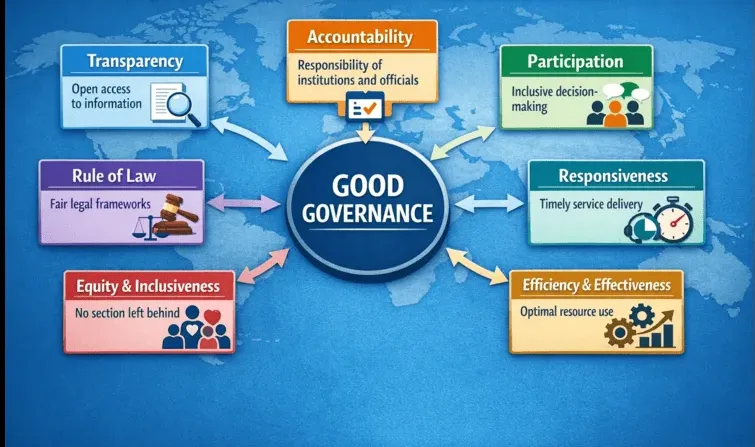
1. Participation
Participation means people should have the right to express their opinions and take part in decision-making. Every citizen, including women, minorities, and weaker sections, should have equal opportunities to participate.
Participation also includes freedom of speech and freedom to join organizations or groups.
2. Rule of Law
Rule of law means laws should apply equally to everyone. No person should be above the law.
A strong legal system protects human rights and ensures justice. Without rule of law, stronger people may exploit weaker people.
3. Consensus-Oriented
In a society, different groups often have different opinions. Good governance tries to create agreement among them.
Consensus-oriented governance helps in making balanced decisions that benefit most people and avoid harm.
4. Equity and Inclusiveness
Good governance ensures that every person gets a fair chance to improve their life.
No one should be left behind because of caste, religion, gender, income, or social status.
5. Effectiveness and Efficiency
Government institutions should provide services effectively and without wasting resources.
Resources such as money, manpower, and time should be used properly to achieve the best results.
6. Accountability
Accountability means government officials and institutions must answer for their actions.
If mistakes happen, responsible people should be answerable to citizens.
Accountability improves trust between government and people.
7. Transparency
Transparency means government decisions and information should be open to the public.
Citizens should be able to understand government actions easily. Free media and public access to information are important for transparency.
8. Responsiveness
Government institutions should respond to people’s needs quickly.
Citizens should not wait for years to get services or justice. Timely action is necessary for good governance.
References of Good Governance
The idea of good governance is not new. It has existed in Indian and global philosophy for centuries.
The Bhagavad Gita teaches leadership, duty, and moral responsibility. These values are important in governance.
Kautilya in the Arthashastra said that the welfare of people should be the main duty of a ruler.
Mahatma Gandhi promoted the idea of Swaraj or good self-governance.
The India Constitution also supports democracy, justice, equality, and welfare for all citizens.
Under the United Nations Sustainable Development Goals, Goal 16 focuses directly on peace, justice, and strong institutions.
Former UN Secretary-General Kofi Annan said good governance is one of the most important factors in reducing poverty and promoting development.
Initiatives for Good Governance in India
India has launched many programs to improve governance.
Right to Information (RTI)
The Right to Information Act 2005 gives citizens the right to ask for information from government offices.
This law increased transparency and reduced secrecy in administration. It allows citizens to monitor government work.
E-Governance
E-Governance means using digital technology to deliver government services.
It makes services faster, easier, and more transparent.

Examples include:
- Digital India
- PRAGATI
- Online income tax filing
- Passport Seva Kendra
These services save time and improve efficiency.
Legal Reforms
The government removed many old and unnecessary laws to improve efficiency.
Legal reforms help reduce delays and improve administrative functioning.
Ease of Doing Business
India introduced reforms to make business easier.
Examples include:
- Goods and Services Tax (GST)
- Insolvency and Bankruptcy Code
- Make in India
These reforms encourage investment and economic growth.
Decentralization
Decentralization means giving more power to states and local bodies.
The NITI Aayog replaced the Planning Commission to promote cooperative federalism.
This gives states more freedom to plan according to local needs.
Police Reforms
Police reforms aim to improve law and order.
Important steps include:
- Modern police equipment
- Online FIR registration
- Emergency helpline services
These improve public safety and trust.
Aspirational Districts Programme
The Aspirational Districts Programme was launched in 2018.
It focuses on improving backward districts in:
- Health
- Education
- Agriculture
- Water management
- Financial inclusion
This helps reduce regional inequality.
Good Governance Index
The Good Governance Index was launched on 25 December 2019.
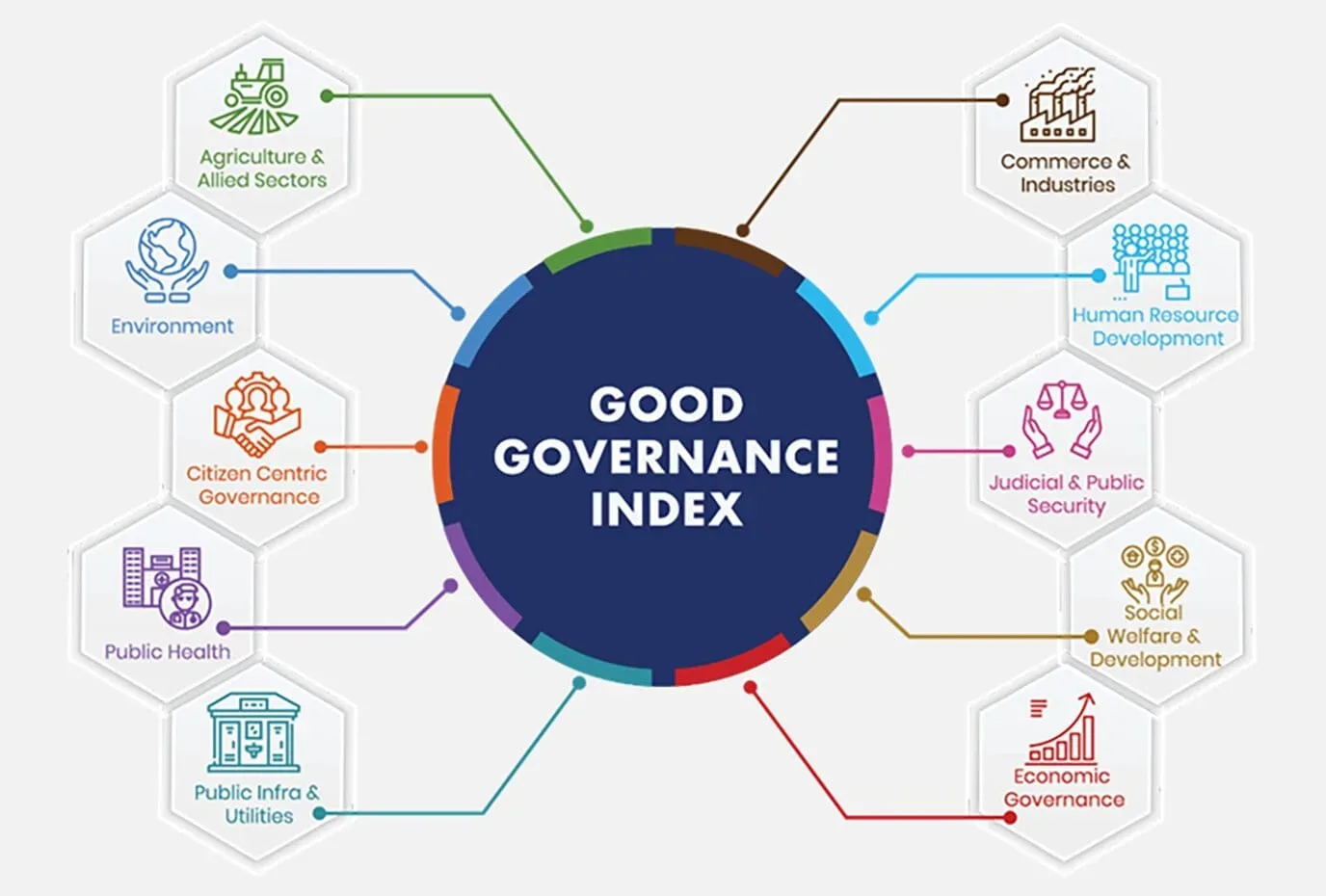
It measures governance performance of states and union territories.
This helps compare progress and improve administration.
Challenges to Good Governance
Even with many reforms, India still faces several challenges.
Criminalization of Politics
Many politicians face criminal charges.
This affects public trust and weakens democracy.
Politics should be free from criminal influence for better governance.
Corruption
Corruption remains a major challenge.
Bribery, misuse of power, and weak enforcement reduce government efficiency.
Corruption harms development and public trust.
Gender Disparity
Women make up nearly half of the population, but they are still underrepresented in leadership and governance.
Swami Vivekananda said society cannot progress if women are not empowered.
Women’s participation is necessary for good governance.
Growing Violence
Violence creates fear and disturbs peace.
Without peace and law and order, development becomes difficult.
Security is essential for governance.
Delay in Justice
Justice delayed often means justice denied.
Court delays make people suffer for years.
A fast and fair judicial system is necessary.
Centralization of Power
Too much power at the central level can slow local development.
Local bodies like Panchayati Raj Institutions need more funds and authority.
Strong local governance improves service delivery.
Marginalization of Poor Communities
Poor and backward communities often remain excluded from development.
They may lack education, jobs, healthcare, and financial support.
Inclusive governance must ensure equal opportunities for them.
Probity in Governance
Probity in Governance means honesty, integrity, and strong moral values in public administration.
Probity is not only about avoiding corruption. It also means following ethical rules and maintaining fairness.
Good governance becomes stronger when leaders and officials work with honesty.
Objectives of Probity in Governance
- Ensure accountability
- Maintain integrity in public service
- Prevent corruption and fraud
- Increase public trust in government
- Improve ethical decision-making
Philosophers like Confucius, Plato, and Max Weber also discussed ethics and administration.
Their ideas still influence modern governance.
Final Thoughts
Good Governance is necessary for a strong and developed nation. It ensures transparency, accountability, justice, and equal opportunities for all citizens.
India has made progress through digital services, reforms, and welfare programs, but challenges like corruption, delayed justice, and inequality still remain.
To achieve better governance, the country must strengthen ethics, reduce corruption, empower local bodies, and ensure that development reaches every citizen. A governance system based on honesty, fairness, and inclusion can build a better future for everyone.
FAQs
1. What is Good Governance?
Good governance is the process of making and implementing decisions in a transparent, accountable, and efficient way for public welfare.
2. What are the 8 principles of Good Governance?
Participation, rule of law, consensus, inclusiveness, efficiency, accountability, transparency, and responsiveness.
3. Why is Good Governance important?
It improves public services, reduces corruption, ensures justice, and supports development.
4. What is probity in governance?
Probity means honesty, integrity, and ethical behavior in public administration.
5. What are the major challenges to Good Governance in India?
Corruption, criminal politics, gender inequality, delayed justice, and social exclusion.