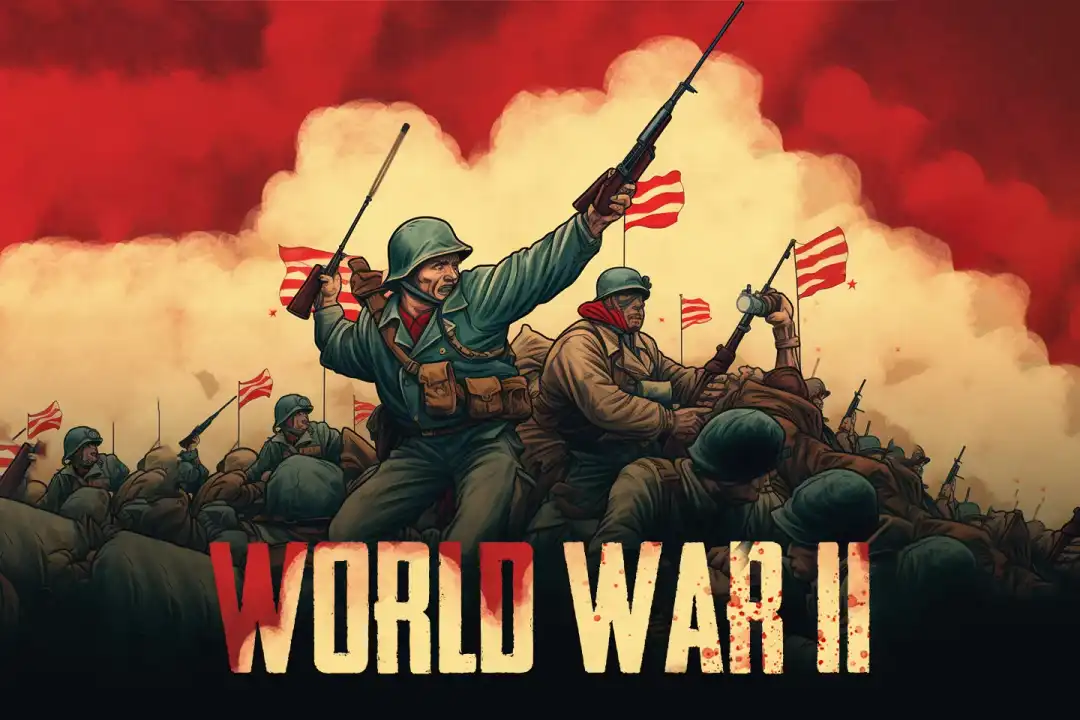
World War II – A Comprehensive Study of Causes, Events, and Consequences

World War II was one of the most devastating and widespread conflicts in human history. It lasted from 1939 to 1945 and involved almost every continent and nation. This war reshaped global politics, economies, and societies in ways that still influence the modern world.
Thank you for reading this post, don't forget to subscribe!The two major opposing sides in this war were the Axis Powers Germany, Italy, and Japan and the Allied Powers, which included countries like Britain, France, the United States, the Soviet Union, and China. Around 100 million people were involved in military service, and nearly 50 million people lost their lives, making it the deadliest conflict ever recorded.
The war was not just about territorial expansion but also about ideologies, economic power, and global dominance. It marked the end of colonial empires, the rise of superpowers, and the beginning of a new world order.
Major Causes of World War II
The outbreak of World War II was not sudden; it was the result of multiple long-term and short-term causes.
1. Impact of the Treaty of Versailles
After World War I, Germany was forced to sign the Treaty of Versailles in 1919. This treaty placed harsh penalties on Germany:
- Germany had to accept full responsibility for the war.
- It had to pay heavy reparations.
- Its military strength was drastically reduced.
- Large territories were taken away.
These humiliating conditions created anger and resentment among Germans. This dissatisfaction became fertile ground for extremist ideologies, especially under leaders like Adolf Hitler.
2. Failure of the League of Nations
The League of Nations was formed to maintain peace after World War I. However, it failed due to several reasons:
- Major powers like the United States never joined.
- It had no military force to enforce its decisions.
- It failed to stop aggression by countries like Japan, Italy, and Germany.
For example:
- Japan invaded Manchuria.
- Italy attacked Ethiopia.
The League could not take strong action, which encouraged aggressive nations.
3. The Great Depression
The Great Depression of 1929 affected economies worldwide. It led to:
- Massive unemployment
- Economic instability
- Political unrest
In countries like Germany and Italy, people lost faith in democratic governments and turned towards authoritarian leaders who promised economic recovery and national pride.
4. Rise of Fascism
Fascism is a political ideology that promotes dictatorship, nationalism, and militarism.
In Italy, Benito Mussolini established a fascist government in 1922. Fascism spread rapidly across Europe because it promised stability and strength.
5. Rise of Nazism under Adolf Hitler
Hitler and the Nazi Party promoted extreme nationalism, racism, and expansionism. Key ideas included:
- Aryan racial superiority
- Anti-Semitism (hatred towards Jews)
- Expansion of German territory (Lebensraum)
Hitler became Chancellor in 1933 and soon turned Germany into a dictatorship. He began rebuilding Germany’s military and violating the Treaty of Versailles.
6. Policy of Appeasement
Britain and France followed a policy of appeasement, allowing Hitler to expand his territory in hopes of avoiding war.
The most famous example is the Munich Agreement (1938), where Hitler was allowed to annex parts of Czechoslovakia. However, this only encouraged further aggression.
Key Events and Turning Points of World War II
1. Beginning of the War (1939)
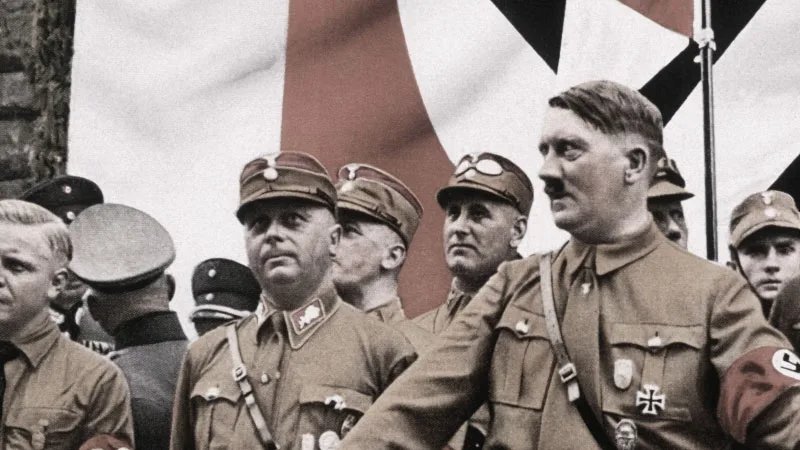
The roots of the war can be traced to rising international tensions during the late 1930s. Events such as the Spanish Civil War, the annexation of Austria by Germany (Anschluss), Hitler’s occupation of the Sudetenland, and the invasion of Czechoslovakia worsened relations between the Axis and Allied powers.
The war officially began when Germany invaded Poland on 1 September 1939. In response, Britain and France declared war on Germany two days later, marking the start of World War II.
2. The Phoney War
In the early months of the war, Western Europe remained relatively quiet. This period is known as the “Phoney War.”
Although there was little direct fighting, both sides prepared heavily for large-scale conflict. Civilians in Allied countries were moved to safer areas in anticipation of attacks.
3. The Molotov-Ribbentrop Pact
By 1939, Adolf Hitler was determined to invade Poland. However, he wanted to avoid conflict with the Soviet Union.
In August 1939, Germany and the Soviet Union signed a non-aggression pact in Moscow. This agreement ensured that the Soviet Union would not oppose Germany’s invasion of Poland.
Soon after Germany attacked Poland, Soviet forces also invaded from the east. Poland was divided between the two powers.
4. Winter War and Scandinavian Campaign (1940)
The “Winter War” between the Soviet Union and Finland ended in March 1940. Shortly after, Germany invaded Denmark and Norway.
Denmark surrendered quickly, but Norway resisted with support from Britain and France before finally surrendering in June 1940.
5. Fall of France (1940)
Germany launched attacks on France, Belgium, and the Netherlands using Blitzkrieg (“lightning war”), a fast and coordinated military strategy combining tanks and air power.
Despite having larger forces, the Allies could not match Germany’s speed and coordination. France fell rapidly, and a puppet government known as Vichy France was established.
After this victory, Hitler shifted his focus towards Britain.
6. The Battle of Britain
Fought between July and September 1940, this was the first major battle fought entirely in the air.
Germany targeted British airfields, factories, and cities. However, the Royal Air Force successfully defended Britain, forcing Germany to postpone its invasion plans indefinitely.
This marked Hitler’s first major defeat.
7. Expansion of War (1941)
With most of Europe under Nazi control and Britain still resisting, the war expanded globally in 1941.
- Germany invaded Greece and Yugoslavia.
- German forces also moved into North Africa to support Italian troops.
At the same time, Hitler broke the non-aggression pact and launched Operation Barbarossa, invading the Soviet Union.
Initially, German forces advanced rapidly, reaching near Moscow. However, the harsh Russian winter weakened them, and Soviet forces launched a counterattack, halting German progress.
8. Pearl Harbor attack
On 7 December 1941, Japan launched a surprise attack on the U.S. naval base at Pearl Harbor in Hawaii.
This attack led to the United States entering the war. Soon after, Germany declared war on the U.S., turning the conflict into a truly global war.
Within days, Japan expanded its control by invading the Philippines, Burma, and Hong Kong.
9. American Entry and Turning Point in the Pacific (1942)
The United States played a crucial role after entering the war. In the Battle of Midway (1942), U.S. forces destroyed four Japanese aircraft carriers, marking a major turning point in the Pacific theatre.
At the same time, reports of mass killings of Jews and other groups by Nazi Germany shocked the world, strengthening Allied resolve.
10. Turning Point – Battle of Stalingrad
By late 1942, the war began to shift in favor of the Allies.
- British forces gained success in North Africa.
- Soviet forces defeated Germany at Stalingrad in February 1943.
This was the first major defeat of Hitler’s army and marked the beginning of Germany’s decline.
Soon after, Axis forces in North Africa surrendered, and Soviet troops began advancing westward, recapturing key cities like Kharkiv and Kiev.
11. Allied Victory in Europe (1945)
As Allied forces advanced from both east and west:
- Soviet troops reached Berlin on 21 April 1945.
- Adolf Hitler committed suicide on 30 April 1945.
- Germany surrendered unconditionally on 7 May 1945.
The following day was celebrated as Victory in Europe (VE) Day, marking the end of the war in Europe.
12. Nuclear Bombing and End of War
Even after Germany’s defeat, the war continued in Asia. The United States planned an invasion of Japan but feared heavy casualties.
Under President Harry S. Truman, the U.S. decided to use atomic weapons:
- Hiroshima was bombed on 6 August 1945.
- Nagasaki was bombed on 9 August 1945.
These devastating attacks forced Japan to surrender on 14 August 1945.
With Japan’s surrender, World War II finally came to an end.
Aftermath of World War II
1. Rise of Superpowers (New Superpowers)
After the end of World War II, the global balance of power changed dramatically. The traditional European powers, especially Britain and France, lost their dominant positions due to heavy economic losses and war damage. In their place, two new superpowers emerged:
- The United States
- The Soviet Union
These two nations became the most powerful countries in the world, both militarily and economically. Their influence shaped global politics for decades.
2. Beginning of Decolonisation (Start of Decolonisation)
The war weakened European colonial powers like Britain and France both economically and politically. They were no longer capable of controlling their vast overseas empires.
- Many countries in Asia and Africa began demanding independence.
- Colonial rule started collapsing across the world.
- Nations like India gained independence soon after the war.
Thus, World War II played a major role in ending colonialism and giving rise to new independent nations.
3. Formation of the United Nations (Birth of UN)
One of the most important outcomes of World War II was the creation of the United Nations.
- It was established to maintain international peace and security.
- It replaced the failed League of Nations.
- The UN Charter reflected the hopes of humanity for a peaceful and cooperative world.
It is important to note that the idea of the United Nations was agreed upon even before the war ended, under the Atlantic Charter.
4. Start of the Cold War
After the war, a major political shift occurred that led to long-term global tension.
- A conference was held in Potsdam, Germany, to establish peace arrangements.
- Germany and its capital Berlin were divided into four zones controlled by:
- Great Britain
- United States
- France
- Soviet Union
Due to ideological differences between capitalist and communist systems:
- Germany was eventually divided into:
- East Germany (Communist)
- West Germany (Democratic)
These divisions and disagreements marked the beginning of the Cold War between the USA and USSR.
5. New Economic World Order (New Economic System)
World War II also led to the creation of a new global economic system to ensure stability and growth.
The Bretton Woods Conference played a crucial role in this transformation.
- It was officially known as the United Nations Monetary and Financial Conference.
- It aimed to rebuild the global economy after the war.
Key outcomes included:
- Creation of the World Bank (IBRD) to provide long-term financial assistance.
- Establishment of the International Monetary Fund (IMF) to stabilize global currencies.
- Introduction of the US dollar as the main reserve currency for international trade.
These institutions helped in economic recovery and laid the foundation for modern global finance.
India and World War II
World War II had a deep impact on India:
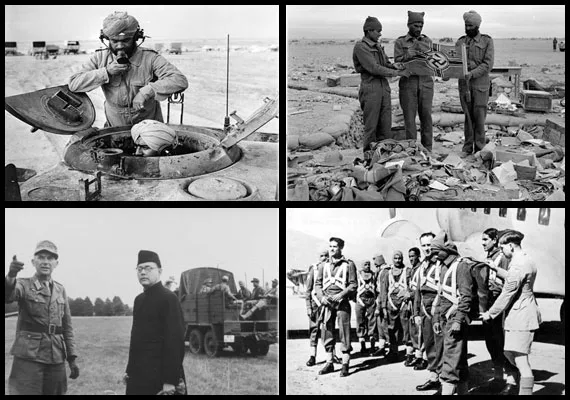
- Britain used India’s resources and manpower during the war.
- Indian leaders opposed British rule.
Mahatma Gandhi led movements against British control.
After the war, Britain was weakened and could not maintain its empire. Under Prime Minister Clement Attlee, the process of granting independence to India began, leading to independence in 1947.
Conclusion
World War II was not just a military conflict; it was a turning point in world history. It reshaped political boundaries, ended colonial empires, and led to the rise of new global powers. The war also highlighted the dangers of extreme nationalism, economic instability, and weak international institutions.
Its lessons remain relevant today, reminding the world of the importance of peace, cooperation, and strong global governance.
FAQs on World War II
Q1. What was World War II?
World War II was a global conflict fought between 1939 and 1945 involving major world powers divided into Axis and Allied groups. It is considered the deadliest war in history.
Q2. Which countries were part of the Axis Powers?
The main Axis Powers were Germany, Italy, and Japan.
Q3. Which countries were part of the Allied Powers?
The Allied Powers included Britain, France, the United States, the Soviet Union, and China.
Q4. What caused World War II?
The major causes included the Treaty of Versailles, rise of fascism and Nazism, economic depression, failure of the League of Nations, and the policy of appeasement.
Q5. Who was Adolf Hitler?
Adolf Hitler was the leader of Nazi Germany who played a key role in starting World War II through aggressive expansion policies.
Q6. When did World War II begin and end?
It began on 1 September 1939 with Germany’s invasion of Poland and ended on 14 August 1945 after Japan’s surrender.
Q7. What was the turning point of World War II?
The Battle of Stalingrad is considered a major turning point where Germany suffered a decisive defeat.
Q8. Why did the United States enter the war?
The U.S. entered the war after the Pearl Harbor attack by Japan on 7 December 1941.