


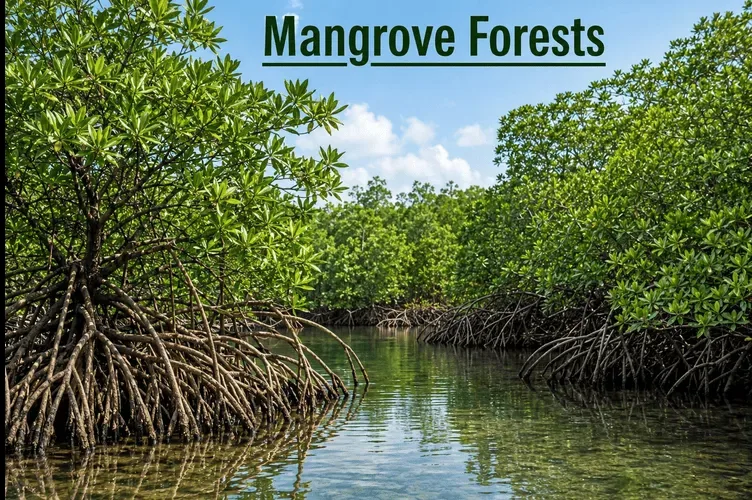
Mangrove Forests: Nature’s Coastal Protectors

Mangrove Forests are special forests that grow near sea coasts, river mouths, and tidal areas where water is salty or mixed with fresh water. These forests are made up of small trees and shrubs that can survive in muddy, salty, and low-oxygen soil. Most plants cannot grow in such difficult conditions, but mangroves have unique features that help them survive.
Thank you for reading this post, don't forget to subscribe!The word “mangrove” can mean both the trees and the coastal habitat where they grow. Mangrove trees belong to plant families such as Rhizophoraceae, Acanthaceae, Lythraceae, Combretaceae, and Arecaceae. These trees play an important role in protecting coastal regions and supporting marine life.
Features of Mangrove Forests
Mangrove trees are very different from normal trees because they can survive in extreme conditions.
1. Ability to Live in Salty Water
Mangroves grow in places where water contains a lot of salt. High salt levels can kill many plants, but mangroves have adapted to survive in such environments.
Some mangrove species remove salt through their roots, while others store salt in older leaves and later shed them.
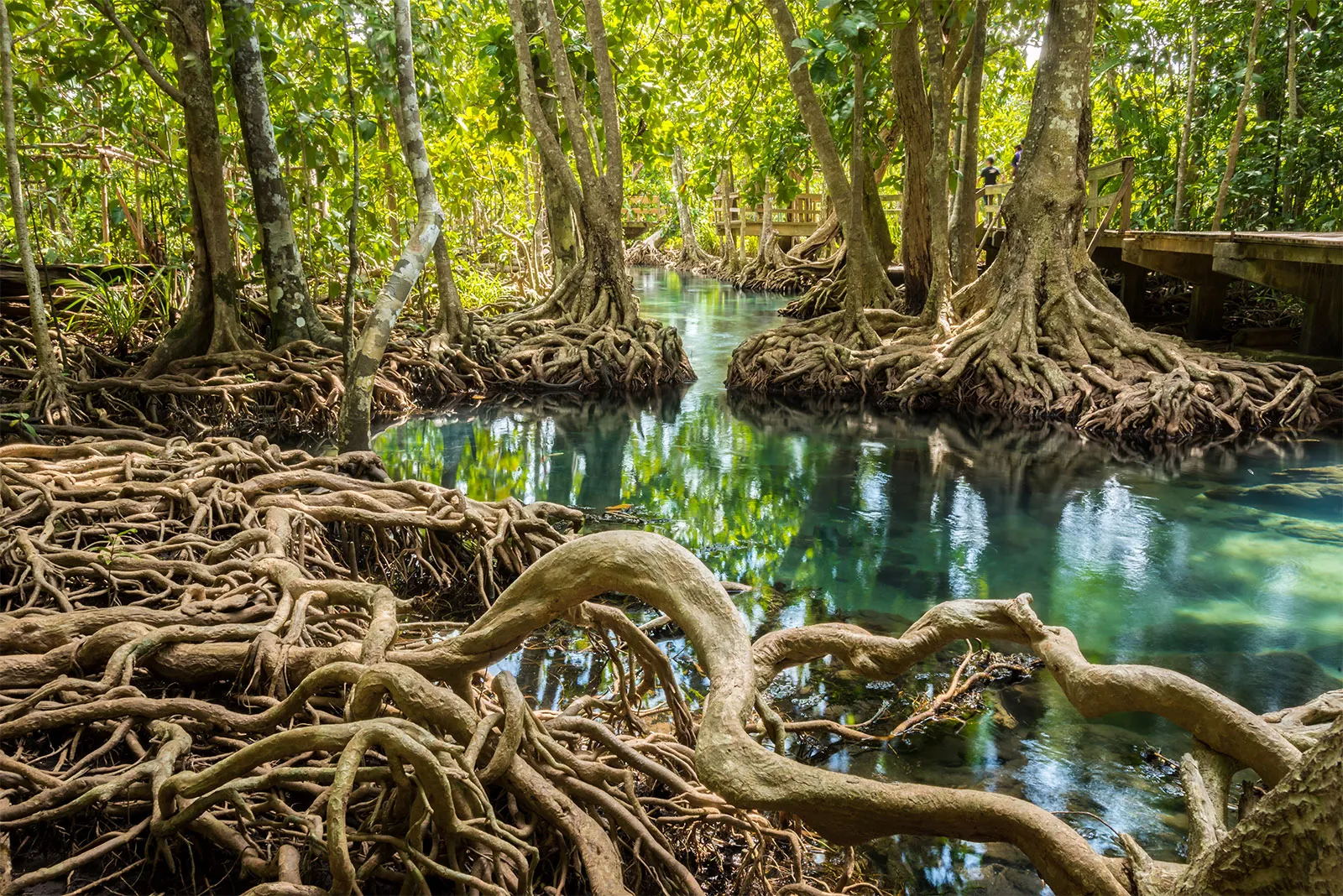
2. Special Roots for Breathing
Mangrove soil often has very little oxygen because it stays underwater for long periods. Plants need oxygen for respiration, especially in their roots.
To solve this problem, mangroves have special roots called pneumatophores or breathing roots. These roots rise above the mud and water, allowing the plant to absorb oxygen directly from the air.
3. Survival in Extreme Conditions
Mangrove roots remain underwater during high tides and exposed during low tides. Even in hot, muddy, and salty conditions, these trees continue to grow well.
4. Thick Leaves
Mangroves have thick, fleshy leaves that store fresh water. Their leaves also have a waxy coating that reduces water loss through evaporation.
This helps them survive in salty environments where fresh water is limited.
5. Viviparous Seeds
Mangroves have a unique way of reproduction. Their seeds start growing while still attached to the parent tree. This process is called vivipary.
The growing seed becomes a propagule, which later falls into the water and floats until it reaches suitable ground, where it takes root and grows into a new tree.
Geographical Distribution of Mangrove Forests
Mangroves are found mainly in tropical and subtropical coastal areas. They cannot survive in freezing temperatures.
These forests grow best in sheltered coastlines, estuaries, river deltas, and lagoons where tides regularly rise and fall.
Global Mangrove Cover
The total mangrove cover in the world is about 1,50,000 square kilometers.
- Asia has the largest mangrove area in the world.
- South Asia has about 6.8% of global mangrove cover.
- India contributes around 45.8% of South Asia’s mangrove area.
This shows India’s major role in mangrove conservation.
Mangrove Forests in India
According to the India State of Forest Report, India has about 4,975 square kilometers of mangrove cover. This is around 0.15% of India’s total geographical area.
Major Mangrove Areas in India
| Region | Importance |
|---|---|
| West Bengal | Highest mangrove cover in India |
| Gujarat | Second largest coverage |
| Andaman & Nicobar Islands | Large and rich mangrove ecosystem |
| Odisha | Famous for Bhitarkanika mangroves |
| Andhra Pradesh | Godavari-Krishna mangroves |
| Tamil Nadu | Pichavaram mangroves |
| Kerala | Dense mangroves in backwaters |
Sundarbans
The Sundarbans is the largest mangrove forest in the world and a UNESCO World Heritage Site.
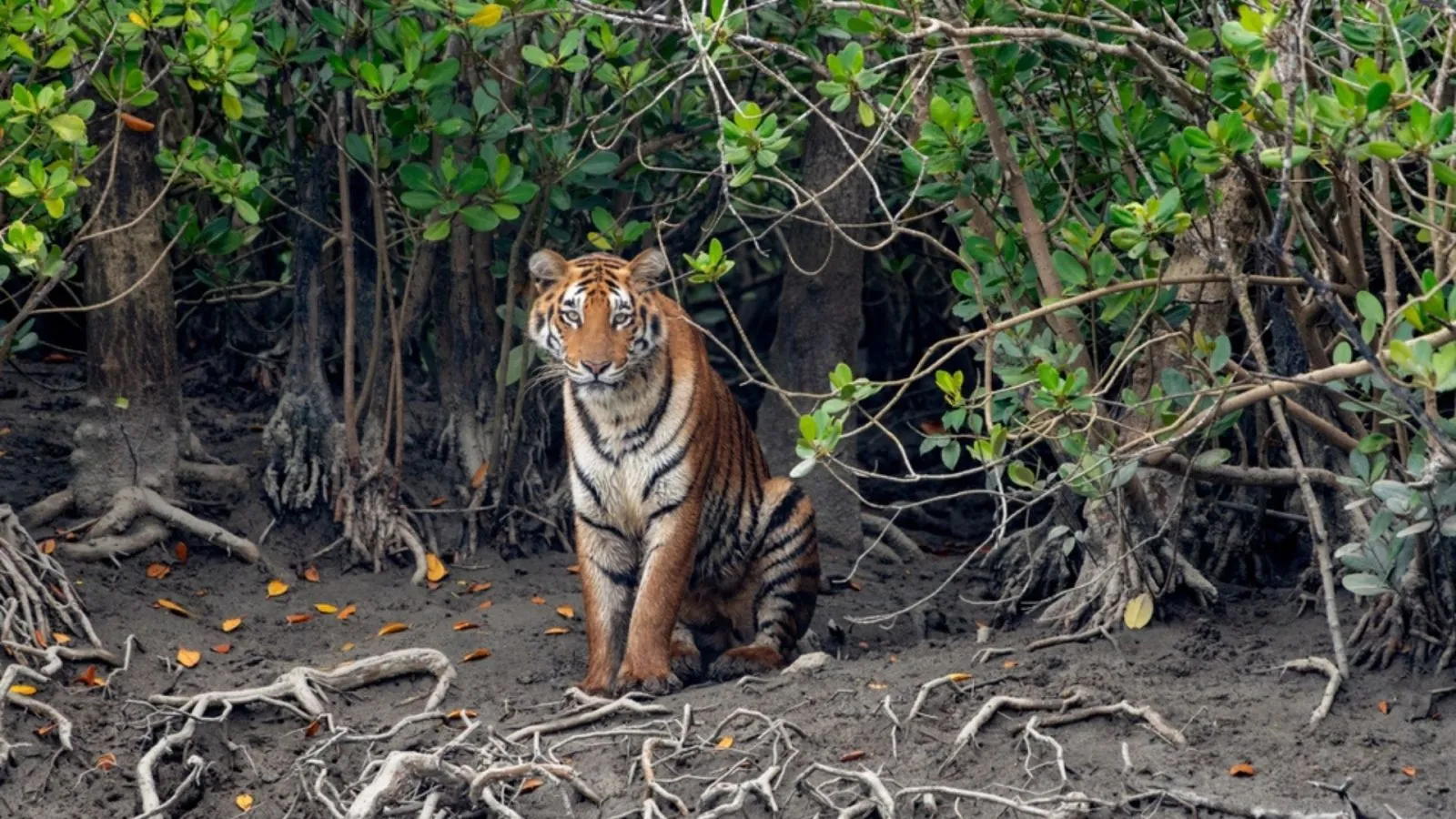
It is famous for wildlife such as:
- Royal Bengal Tiger
- Gangetic Dolphin
- Estuarine Crocodile
Bhitarkanika Mangroves
The Bhitarkanika National Park in Odisha is India’s second-largest mangrove forest. It was formed by the deltas of the Brahmani River and Baitarani River.
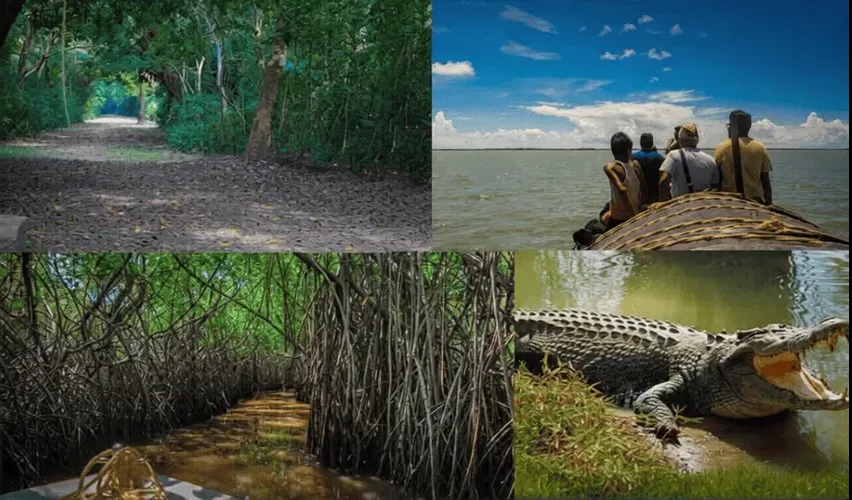
It is also one of India’s important Ramsar wetlands.
Importance of Mangrove Forests
Mangroves provide many environmental and economic benefits.
1. Protection from Cyclones and Storms
Mangrove forests act as natural barriers. Their dense roots and trees reduce the force of:
- Cyclones
- Storm surges
- Strong winds
- Sea waves
This protects coastal villages and cities.
2. Prevent Soil Erosion
Mangrove roots hold mud and soil tightly. This prevents coastal erosion caused by waves and tides.
They help stabilize coastlines and stop land loss.
3. Improve Water Quality
Mangroves naturally filter water. They absorb harmful nutrients and pollutants from runoff before they reach the sea.
This keeps water clean and supports healthy marine ecosystems.
4. Store Blue Carbon
Mangroves are important in fighting climate change.
Although they cover less than 2% of marine environments, they store huge amounts of carbon.
When leaves and old trees die, they fall into mud and store carbon underwater. This stored carbon is called Blue Carbon.
Blue carbon reduces carbon dioxide in the atmosphere and helps control global warming.
5. Support Biodiversity
Mangroves provide shelter, food, and breeding grounds for many species.
Animals living in mangrove ecosystems include:
- Fish
- Crabs
- Shellfish
- Birds
- Reptiles
- Mammals
Many rare species depend completely on mangroves for survival.
6. Support Fishing Communities
Mangroves serve as nursery grounds for fish and prawns. This improves fish production and supports the livelihoods of coastal fishermen.
Threats to Mangrove Forests
Despite their importance, mangrove forests are disappearing rapidly.
1. Coastal Development
Construction of roads, ports, industries, and urban settlements destroys mangrove habitats.
Rapid development near coasts is a major threat.
2. Shrimp Farming
Shrimp farms have caused heavy destruction of mangrove forests.
Nearly 35% of mangrove loss is linked to shrimp farming.
The growing global demand for shrimp has increased pressure on coastal lands.
3. Climate Change
Rising temperatures, sea-level rise, and changing rainfall patterns affect mangrove survival.
Some species cannot tolerate sudden temperature changes.
Even short freezing periods can damage mangrove trees.
4. Low Oxygen Soil
Mangroves already grow in difficult soil with very little oxygen.
If environmental stress increases, survival becomes harder.
5. Human Activities
Excessive cutting, pollution, and land conversion damage mangrove ecosystems.
Oil spills are especially harmful because they block root respiration and poison marine life.
6. Limited Inland Movement
In the past, mangroves moved inland when sea levels rose.
Today, roads, buildings, and cities block this natural movement.
As a result, mangroves lose space to grow.
Conservation of Mangrove Forests
Protecting mangroves is necessary for environmental safety and climate balance.
UNESCO Protected Sites
Mangrove regions included in UNESCO sites receive better conservation support.
This improves management and awareness.
International Society for Mangrove Ecosystem
The International Society for Mangrove Ecosystem (ISME) was established in 1990.
Its goal is to promote research, conservation, and sustainable use of mangroves.
Blue Carbon Initiative
The Blue Carbon Initiative focuses on reducing climate change by protecting coastal ecosystems.
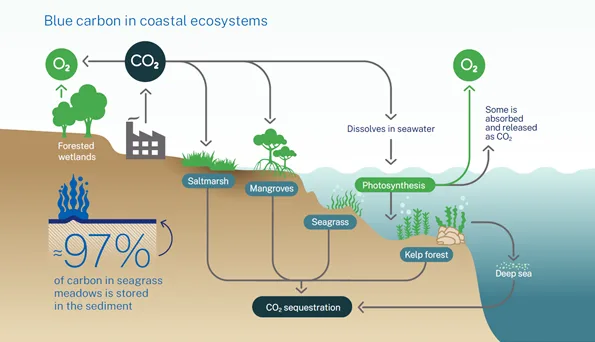
It is supported by:
- Conservation International
- International Union for Conservation of Nature
- Intergovernmental Oceanographic Commission
International Day for Mangrove Conservation
International Day for the Conservation of the Mangrove Ecosystem is observed every year on 26 July.
Its aim is to spread awareness about mangrove protection.
Mangroves for the Future Initiative
This initiative was developed by United Nations Development Programme and International Union for Conservation of Nature.
It encourages countries to invest in coastal ecosystem conservation.
India is one of the member nations.
National Mangrove Committee
The Government of India formed the National Mangrove Committee in 1976.
It advises the government on mangrove conservation and development.
Mangrove forests are among the most valuable ecosystems on Earth. They protect coastlines, support wildlife, store carbon, and improve water quality. Protecting them today means securing a safer environment for future generations.
FAQs
1. What are mangrove forests?
Mangrove forests are coastal forests made up of salt-tolerant trees that grow in muddy and tidal areas.
2. Where is the largest mangrove forest in India?
The Sundarbans in West Bengal is the largest mangrove forest in India and the world.
3. Why are mangroves important?
They protect coastlines, reduce erosion, support wildlife, improve water quality, and store carbon.
4. What is blue carbon?
Blue carbon is carbon stored in coastal ecosystems like mangroves, seagrass beds, and salt marshes.
5. What are the main threats to mangroves?
Major threats include coastal development, shrimp farming, climate change, pollution, and deforestation.