


South China Sea: Strategic Importance and Disputes

South China Sea is one of the most important and disputed maritime regions in the world. It connects major economies, carries a large share of global trade, and contains valuable natural resources. Because of its strategic location, several countries claim parts of this sea, making it a major geopolitical hotspot. The South China Sea is also important for India because developments in this region affect trade routes, regional security, and the balance of power in Asia.
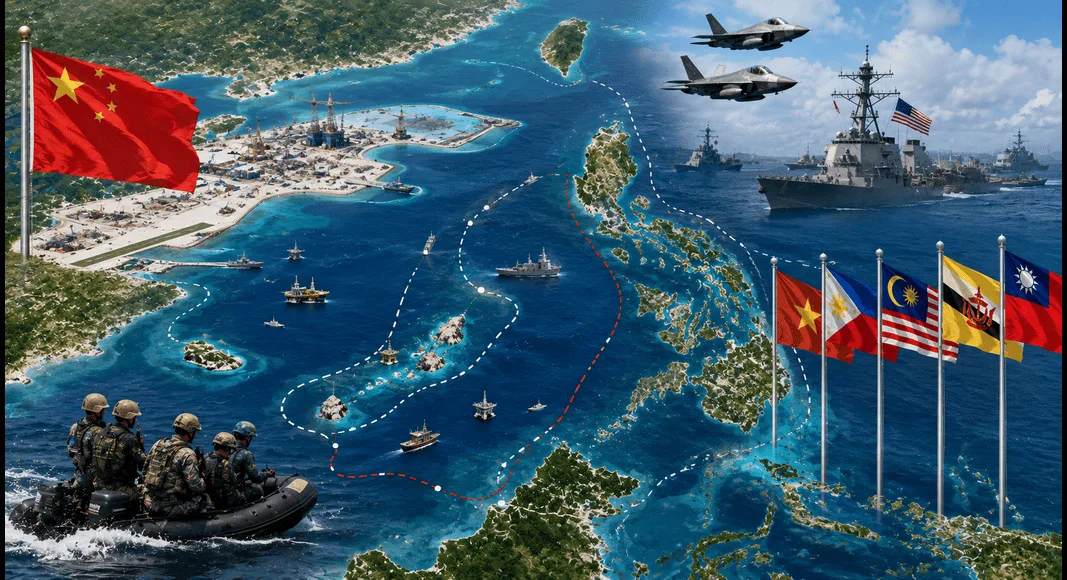
Thank you for reading this post, don't forget to subscribe!The South China Sea is a large sea located in Southeast Asia. It is part of the western Pacific Ocean and lies between China, Vietnam, the Philippines, Malaysia, Brunei, and Taiwan. The sea contains many islands, reefs, shoals, and atolls. Some of the most important island groups in this region are the Spratly Islands, Paracel Islands, and Scarborough Shoal.
Over the years, the South China Sea has become the center of territorial disputes among several countries. China claims most of the sea, while Vietnam, the Philippines, Malaysia, Brunei, and Taiwan also claim parts of it. These competing claims have led to tensions, diplomatic disagreements, and military activities in the region.
Growing Tensions in the South China Sea
The South China Sea frequently appears in international news because of territorial disputes and military activities. Countries often accuse each other of violating international laws and maritime boundaries.
One major issue is China’s construction of artificial islands and military facilities in disputed areas. China argues that it has historical rights over these territories. However, many countries and international organizations disagree with these claims.
Another important development was the ruling by an international tribunal that rejected many of China’s claims in the South China Sea. China did not accept the ruling and continues to maintain its position.
These events have increased global attention on the region and raised concerns about peace and stability in Asia.
Location of the South China Sea
The South China Sea is located between several Asian countries and serves as a maritime bridge between the Indian Ocean and the Pacific Ocean.
Countries and Territories Around the South China Sea
- China
- Taiwan
- Vietnam
- Philippines
- Malaysia
- Brunei
- Indonesia
- Singapore
Important Waterways
The South China Sea is connected to:
- East China Sea through the Taiwan Strait
- Philippine Sea through the Luzon Strait
- Indian Ocean through the Strait of Malacca
Because of these connections, the South China Sea is one of the busiest shipping routes in the world.
Important Islands and Features
Spratly Islands
The Spratly Islands consist of numerous small islands, reefs, and shoals. Several countries claim ownership of these islands due to their strategic and economic value.
Paracel Islands
The Paracel Islands are claimed by China, Taiwan, and Vietnam. China currently controls most of these islands.
Scarborough Shoal
Scarborough Shoal is a disputed area between China and the Philippines. It is important for fishing and maritime activities.
Strategic Importance of the South China Sea
The South China Sea is important for many reasons.
1. Global Trade Route
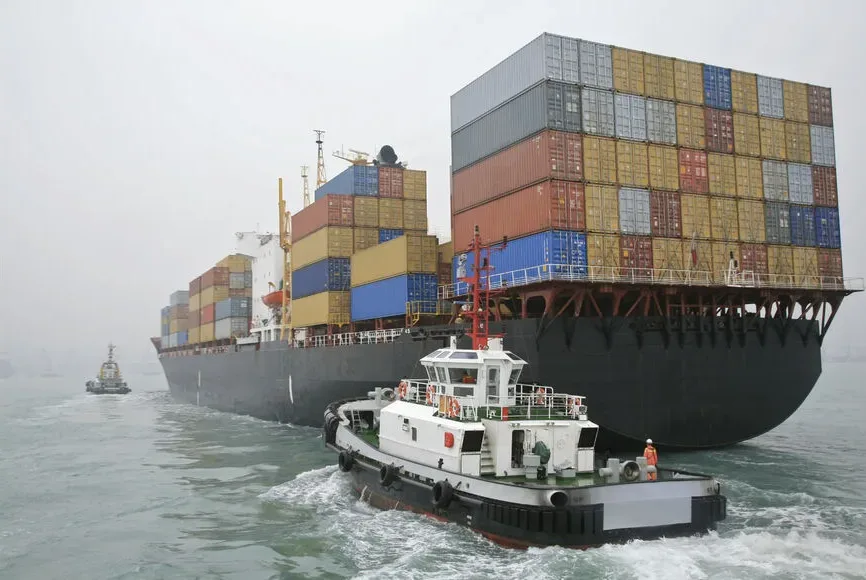
A large portion of world trade passes through the South China Sea every year. Ships carrying goods, raw materials, oil, and manufactured products use this route.
Any disruption in this region can affect international trade and global supply chains.
2. Link Between Oceans
The sea acts as a bridge between the Pacific Ocean and the Indian Ocean. This makes it strategically valuable for both commercial and military purposes.
3. Energy Resources
Experts believe that the South China Sea contains significant reserves of:
- Crude oil
- Natural gas
- Petroleum resources
Control over these resources is one reason for the ongoing disputes.
4. Rich Fisheries
The region supports one of the world’s richest fishing industries. Millions of people in Southeast Asia depend on these fisheries for food and employment.
5. Military Importance
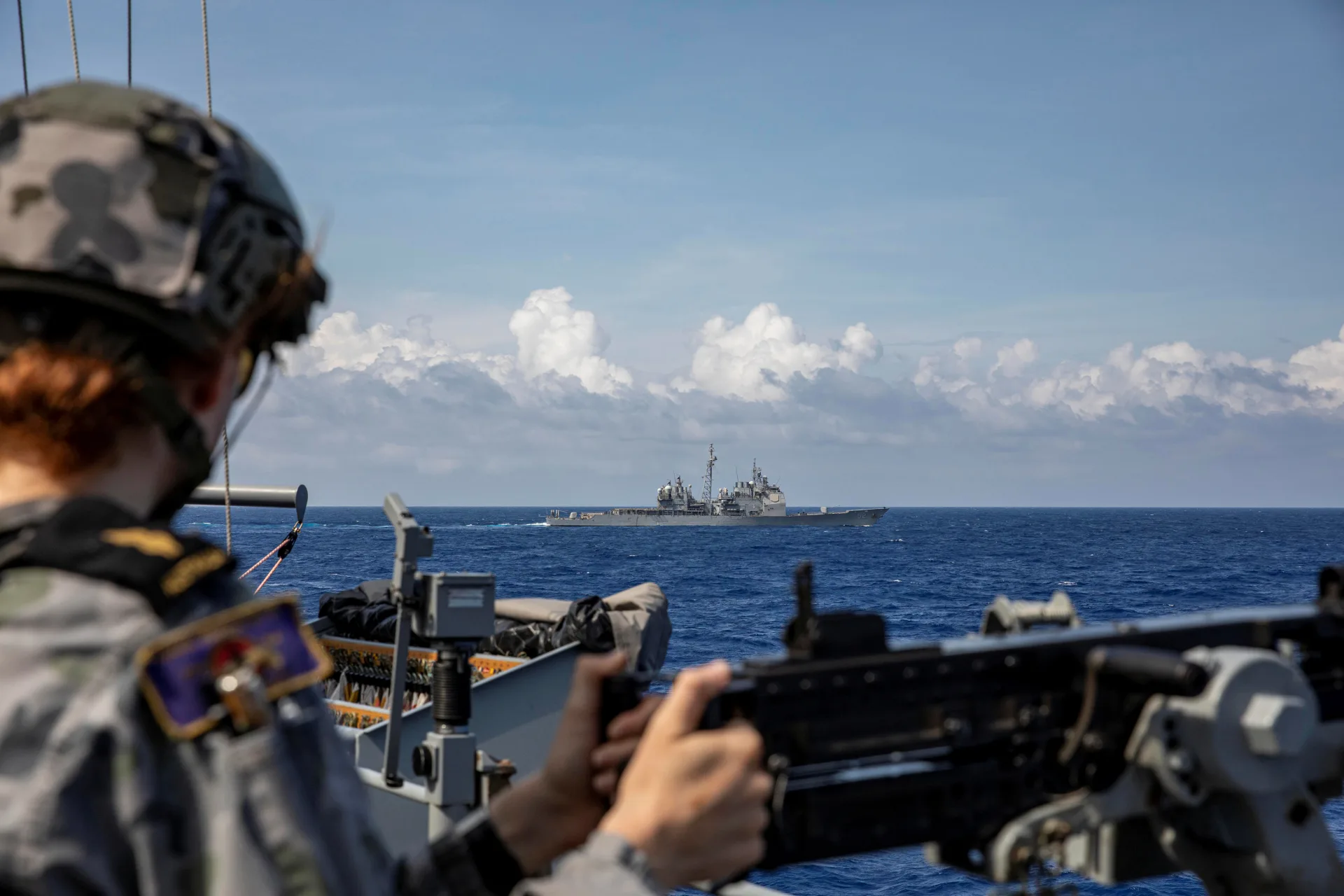
The South China Sea provides strategic military advantages. Countries controlling important islands can monitor shipping lanes and strengthen their naval presence.
Historical Background of the Dispute
The territorial disputes in the South China Sea have existed for decades.
Early Claims
China argues that Chinese sailors and traders used the islands over two thousand years ago. Based on this historical connection, China claims sovereignty over much of the sea.
Other countries disagree and point to international law and modern maritime boundaries.
United Nations Convention on the Law of the Sea (UNCLOS)
UNCLOS is an international treaty that establishes rules regarding the use of oceans and maritime boundaries.
It defines the rights and responsibilities of nations regarding:
- Territorial waters
- Exclusive Economic Zones (EEZs)
- Navigation rights
- Marine resources
Most countries involved in the South China Sea dispute rely on UNCLOS to support their claims.
The Nine-Dash Line
One of the most controversial aspects of the dispute is China’s Nine-Dash Line.
What is the Nine-Dash Line?
The Nine-Dash Line is a map used by China to show its claim over most of the South China Sea.
This line extends hundreds of kilometers from China’s mainland and covers:
- Spratly Islands
- Paracel Islands
- Large portions of surrounding waters
Why is it Controversial?
The Nine-Dash Line overlaps with the Exclusive Economic Zones of several neighboring countries.
As a result:
- Philippines opposes it.
- Vietnam opposes it.
- Malaysia opposes it.
- Brunei opposes it.
Many experts argue that the claim is inconsistent with UNCLOS provisions.
Exclusive Economic Zone (EEZ)
An Exclusive Economic Zone is a sea area extending up to 200 nautical miles from a country’s coastline.
Within its EEZ, a country has rights to:
- Explore natural resources
- Fish in the area
- Conduct marine research
- Build artificial structures
Many South China Sea disputes arise because China’s claims overlap with the EEZs of neighboring countries.
Major Events in the South China Sea Dispute
1994
UNCLOS came into force and established international maritime rules.
2002
China and ASEAN signed the Declaration on the Conduct of Parties in the South China Sea.
2009
China submitted diplomatic documents reinforcing its maritime claims.
2013
The Philippines initiated arbitration proceedings against China.
2016
An international tribunal ruled in favor of the Philippines and rejected China’s extensive maritime claims beyond what UNCLOS permits.
China refused to accept the ruling.
Role of ASEAN
The Association of Southeast Asian Nations (ASEAN) has played an important role in managing tensions.
Objectives of ASEAN
- Promote peace
- Encourage dialogue
- Prevent military conflict
- Develop cooperative mechanisms
Declaration on the Conduct of Parties (DOC)
Signed in 2002, the DOC encourages countries to:
- Resolve disputes peacefully
- Avoid activities that increase tensions
- Promote cooperation
Although useful, the declaration is not legally binding.
Challenges in Resolving the Dispute
Several factors make the dispute difficult to solve.
Conflicting Territorial Claims
Multiple countries claim the same islands and maritime zones.
Strategic Competition
Major powers such as China and the United States have strategic interests in the region.
Military Activities
The presence of military ships, aircraft, and bases increases tensions.
Lack of Binding Agreements
Current agreements are often voluntary and lack enforcement mechanisms.
Historical Differences
Countries interpret history differently and use different evidence to support their claims.
International Tribunal and UNCLOS
The International Tribunal for the Law of the Sea (ITLOS) and UNCLOS provide legal frameworks for resolving maritime disputes.
Functions of UNCLOS
- Defines maritime boundaries
- Protects navigation rights
- Regulates marine resources
- Encourages peaceful dispute resolution
Importance of ITLOS
ITLOS helps countries settle maritime disputes according to international law.
However, tribunal decisions depend on the willingness of countries to comply.
India’s Position on the South China Sea
India is not a claimant in the South China Sea dispute. However, the region is important for India’s economic and strategic interests.
Support for Freedom of Navigation
India supports:
- Free movement of ships
- Respect for international law
- Peaceful dispute resolution
- UNCLOS principles
Strategic Interests
India conducts trade through these sea routes. Any disruption could affect Indian exports, imports, and energy supplies.
Relations with ASEAN
India has strengthened relations with Southeast Asian countries through its Act East Policy.
Balancing Diplomacy
India maintains good relations with both ASEAN countries and China. Therefore, it generally avoids taking sides in territorial disputes.
Importance of the South China Sea for India
Economic Importance
A significant portion of India’s international trade passes through these waters.
Energy Security
Oil and gas shipments moving through the South China Sea are important for India’s energy needs.
Regional Stability
Peace in the region supports economic growth and security across Asia.
Strategic Connectivity
The sea is an important part of India’s broader Indo-Pacific vision.
Possible Solutions
Experts suggest several ways to reduce tensions.
Peaceful Negotiations
Countries should continue diplomatic talks and avoid military confrontation.
Stronger Code of Conduct
ASEAN and China can develop a legally binding Code of Conduct.
Joint Development Projects
Countries can cooperate in:
- Oil exploration
- Natural gas extraction
- Fisheries management
- Environmental protection
Respect for International Law
Following UNCLOS and tribunal rulings can help create a stable maritime order.
Confidence-Building Measures
Regular communication among governments and military forces can reduce misunderstandings.
Conclusion
The South China Sea is one of the most strategically important regions in the world. It serves as a major trade route, contains valuable natural resources, and holds significant military importance. Competing territorial claims by China and several Southeast Asian countries have made it a major source of regional tension.
Despite the challenges, peaceful dialogue, international law, and regional cooperation remain the best ways to manage disputes. For India, the South China Sea is important because it affects trade, maritime security, and regional stability. A peaceful and rules-based order in the South China Sea will benefit not only the countries directly involved but also the entire Indo-Pacific region and the global economy.
FAQs About South China Sea
1. What is the South China Sea?
The South China Sea is a part of the western Pacific Ocean located in Southeast Asia. It is surrounded by countries such as China, Vietnam, the Philippines, Malaysia, Brunei, and Taiwan.
2. Why is the South China Sea important?
It is one of the world’s busiest trade routes, carrying about one-third of global maritime trade. It also contains rich fishing grounds and potential oil and gas reserves.
3. Which countries claim parts of the South China Sea?
China, Taiwan, Vietnam, the Philippines, Malaysia, and Brunei have overlapping territorial claims in the region.
4. What is China’s Nine-Dash Line?
The Nine-Dash Line is a map used by China to claim most of the South China Sea based on historical grounds, covering a large part of the disputed waters.
5. What are the Spratly Islands?
The Spratly Islands are a group of small islands, reefs, and atolls in the South China Sea that are claimed by several countries.
6. What is the role of UNCLOS in the South China Sea dispute?
The United Nations Convention on the Law of the Sea (UNCLOS) provides legal rules for maritime boundaries, navigation rights, and Exclusive Economic Zones (EEZs).
7. What was the 2016 South China Sea Tribunal ruling?
An international tribunal ruled in favor of the Philippines and stated that China’s Nine-Dash Line claims had no legal basis under UNCLOS.
8. What is an Exclusive Economic Zone (EEZ)?
An EEZ is a sea area extending up to 200 nautical miles from a country’s coastline where it has special rights over natural resources.
9. What is ASEAN’s role in the dispute?
ASEAN works with China to promote peace and stability and has negotiated agreements like the Declaration on the Conduct of Parties in the South China Sea.
10. What is India’s position on the South China Sea issue?
India supports freedom of navigation, peaceful dispute resolution, and adherence to international law, including UNCLOS, while avoiding direct involvement in territorial disputes.