



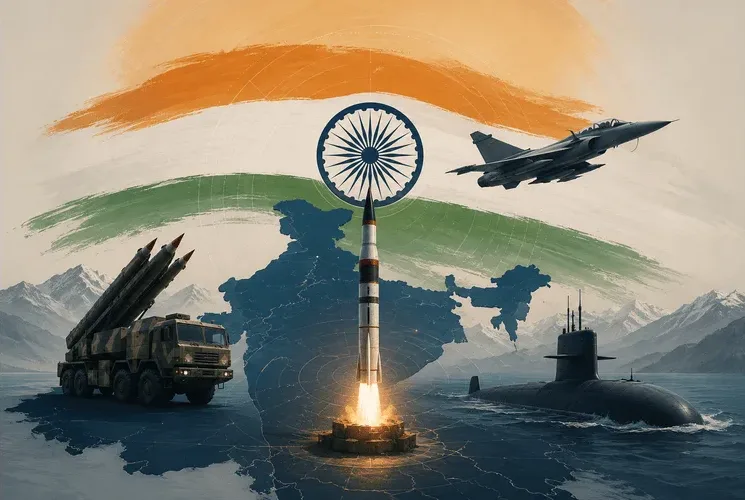
Nuclear Doctrine of India: Understanding India’s Nuclear Policy and No First Use Strategy

The Nuclear Doctrine of India is the official policy that explains how India would use nuclear weapons during peace and war. It provides guidance to the government, military, and strategic planners regarding the country’s nuclear capabilities and responsibilities. India’s nuclear doctrine is mainly based on the principle of “No First Use” (NFU), which means India will not use nuclear weapons first in a conflict.
The doctrine has remained an important part of India’s national security strategy for many years. However, debates continue about whether the policy should remain unchanged due to changing security challenges in the region.

What is a Nuclear Doctrine?
A nuclear doctrine is a set of principles and guidelines that determine how a country will use its nuclear weapons.
The main purposes of a nuclear doctrine are:
- To prevent enemies from launching attacks.
- To maintain national security.
- To communicate military intentions to other countries.
- To guide decision-making during crises and wars.
- To ensure responsible handling of nuclear weapons.
A strong nuclear doctrine helps a country maintain peace by discouraging adversaries from taking aggressive actions.
History of India’s Nuclear Program
India’s nuclear journey began shortly after independence.
| Year | Major Event |
|---|---|
| Late 1940s | Nuclear program started under Homi J. Bhabha |
| 1964 | China conducted its first nuclear test |
| 1974 | India carried out its first nuclear explosion |
| 1998 | India conducted Pokhran-II nuclear tests |
| 2003 | Official Nuclear Doctrine adopted |
Early Development
India’s nuclear program was launched under the leadership of Dr. Homi Jehangir Bhabha, often called the father of India’s nuclear program.
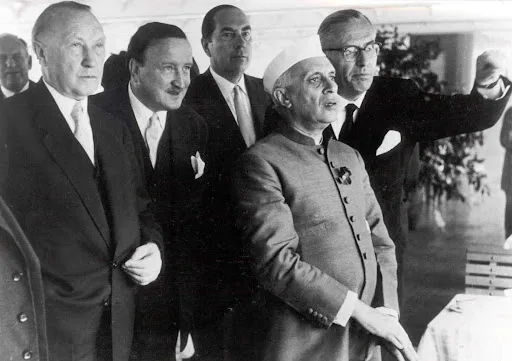
India’s first Prime Minister, Jawaharlal Nehru, supported peaceful uses of nuclear energy and advocated global nuclear disarmament. However, international security concerns gradually changed India’s strategic thinking.
Impact of China’s Nuclear Test
A major turning point came in 1964 when China successfully tested nuclear weapons. This development raised security concerns for India and influenced future decisions regarding nuclear capability.
Nuclear Non-Proliferation Treaty (NPT)
The Nuclear Non-Proliferation Treaty (NPT) was signed in 1968 and became effective in 1970.
Main Objectives of NPT
| Objective | Purpose |
|---|---|
| Non-Proliferation | Prevent the spread of nuclear weapons |
| Disarmament | Reduce global nuclear arsenals |
| Peaceful Use | Promote peaceful nuclear technology |
More than 190 countries are members of the treaty.
Why India Did Not Sign NPT
India has consistently argued that the treaty is discriminatory because it recognizes only a few countries as nuclear weapon states while restricting others.
India believed that:
- The treaty favored existing nuclear powers.
- It created unequal responsibilities among nations.
- It did not guarantee complete nuclear disarmament.
As a result, India chose not to become a member of the treaty.
India’s Nuclear Tests
Pokhran-I (1974)
In May 1974, India conducted its first nuclear explosion at Pokhran in Rajasthan. The government described it as a peaceful nuclear explosion.
This test demonstrated India’s scientific and technological capabilities.
Pokhran-II (1998)
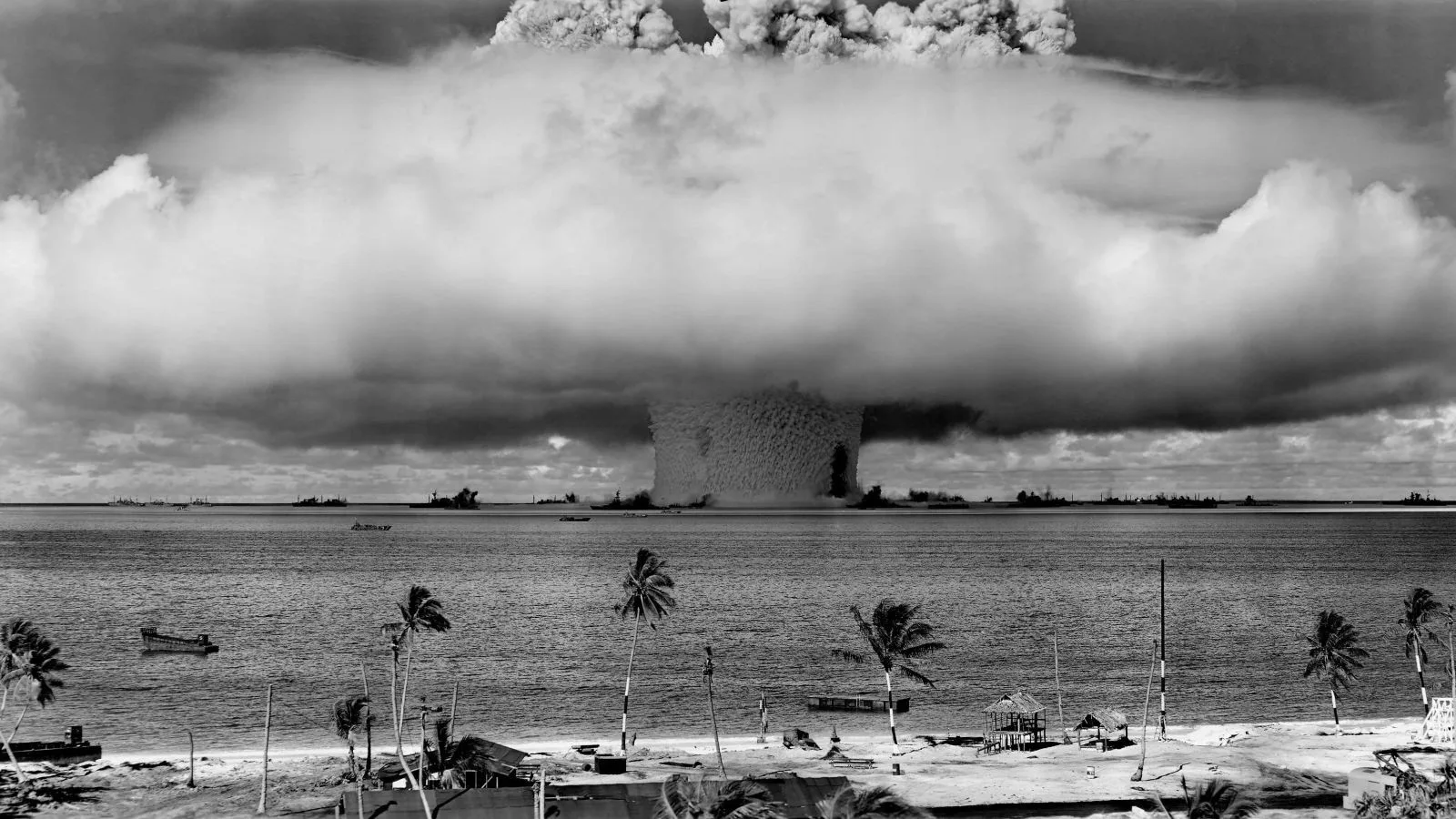
In May 1998, India conducted a series of nuclear tests that officially established the country as a nuclear weapon state.
The tests attracted international attention and led to sanctions from several countries. However, many of these sanctions were later removed.
Soon after India’s tests, Pakistan also conducted nuclear tests, increasing nuclear tensions in South Asia.
India’s No First Use Policy
Following the 1998 nuclear tests, India introduced the concept of No First Use (NFU).
The doctrine was formally adopted in 2003.
What Does No First Use Mean?
Under NFU:
- India will not initiate a nuclear attack.
- Nuclear weapons will only be used in retaliation.
- Retaliation will occur if India or Indian forces are attacked with nuclear weapons.
This policy aims to maintain stability and reduce the chances of nuclear conflict.
Key Features of India’s Nuclear Doctrine
| Feature | Description |
|---|---|
| No First Use | India will not use nuclear weapons first |
| Credible Minimum Deterrence | Maintain only the required nuclear capability |
| Massive Retaliation | Strong response to nuclear attack |
| Civilian Control | Political leadership controls nuclear decisions |
| Responsible Nuclear Power | Commitment to global stability |
These principles form the foundation of India’s nuclear strategy.
Advantages of No First Use Policy
Many experts believe the NFU doctrine offers several benefits.
1. Reduces Risk of Nuclear War
Since India promises not to use nuclear weapons first, the possibility of accidental nuclear conflict decreases.
2. Encourages Stability
The doctrine promotes responsible behavior and lowers tensions during military crises.
3. Limits Arms Race
Countries may feel less pressure to rapidly expand nuclear arsenals when a nation follows NFU.
4. Improves International Image
India’s commitment to restraint strengthens its reputation as a responsible nuclear power.
5. Simplifies Command Structure
The policy reduces the need for complex systems that require immediate nuclear launch decisions.
Criticism of No First Use Policy
Despite its advantages, some strategic experts criticize the NFU doctrine.
Security Concerns
Critics argue that NFU limits India’s military options during serious threats.
Pakistan’s Nuclear Strategy
Pakistan has never adopted a No First Use policy. Some experts believe this creates an imbalance because Pakistan reserves the option of using nuclear weapons first.
Changing Threat Environment
The evolving security situation in Asia has led some policymakers to question whether the doctrine should be reviewed.
These concerns have sparked periodic debates about India’s future nuclear strategy.
Cuban Missile Crisis and Mutual Assured Destruction
One of the most important events in nuclear history was the Cuban Missile Crisis.
The crisis occurred in 1962 when the world came dangerously close to nuclear war between the United States and the Soviet Union.
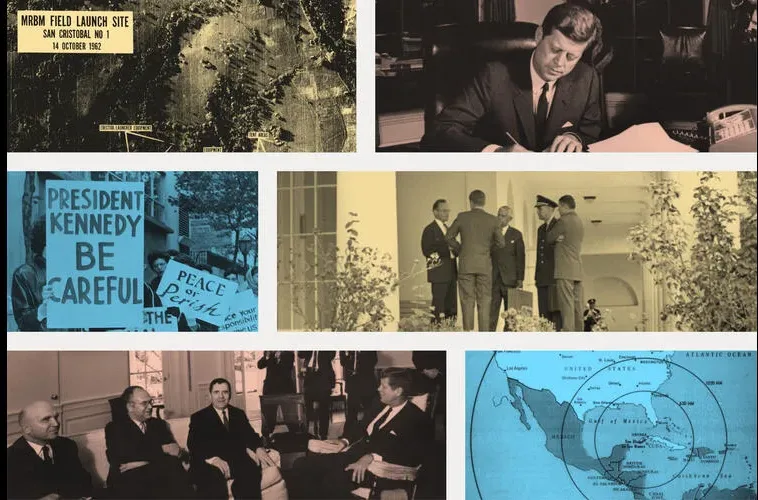
The event highlighted the dangers of nuclear confrontation and led to the development of the concept known as Mutual Assured Destruction (MAD).
What is MAD?
MAD is a military strategy based on the idea that:
- If one nuclear power attacks another,
- Both countries will ultimately suffer devastating destruction.
This concept acts as a deterrent because no country wants to face complete devastation.
Debate Over Changing India’s Nuclear Doctrine
In recent years, discussions have emerged regarding possible changes to India’s NFU policy.
Supporters of a review argue that:
- Security challenges have changed.
- Regional threats have increased.
- Greater flexibility may strengthen deterrence.
Others believe that changing the doctrine could create new risks and increase tensions.
The debate remains an important part of India’s strategic discussions.
Possible Effects of Abandoning No First Use
If India officially abandons the NFU doctrine, several consequences could follow.
Diplomatic Impact
India’s image as a responsible nuclear power may face scrutiny from the international community.
Regional Instability
Changing the policy could increase tensions with neighboring countries.
Higher Military Spending
A first-use strategy would require:
- More nuclear weapons.
- Advanced missile systems.
- Better intelligence networks.
- Enhanced surveillance systems.
Increased Risk of Escalation
Conflicts could become more dangerous if countries fear a possible first nuclear strike.
Strategic Challenges
Experts believe India would need significant technological upgrades to support a first-use nuclear posture.
India’s Relationship with China and Nuclear Policy
Like India, China officially supports a No First Use policy.
This similarity provides opportunities for dialogue and cooperation on nuclear risk reduction.

At the same time, strategic competition and border disputes continue to influence security planning between the two countries.
The Way Forward
National security policies must adapt to changing realities. Therefore, periodic reviews of the Nuclear Doctrine of India are natural and necessary.
Before making any major changes, policymakers should carefully evaluate:
- Security benefits.
- Economic costs.
- Diplomatic consequences.
- Regional stability.
- Long-term strategic goals.
India can strengthen its deterrence capabilities through improved surveillance systems, stronger border infrastructure, advanced missile technology, and better early-warning mechanisms while continuing to support global nuclear disarmament efforts.
The Nuclear Doctrine of India remains a key pillar of national security. Its future evolution will depend on balancing strategic needs with India’s commitment to responsible nuclear behavior and regional stability.
FAQs
What is the Nuclear Doctrine of India?
The Nuclear Doctrine of India is a policy framework that explains how India would use nuclear weapons and respond to nuclear threats.
What is India’s No First Use policy?
The No First Use policy states that India will not use nuclear weapons first and will only use them in retaliation against a nuclear attack.
When did India adopt its nuclear doctrine?
India formally adopted its nuclear doctrine in January 2003.
Why did India not sign the Nuclear Non-Proliferation Treaty?
India considered the treaty discriminatory because it allowed a few countries to retain nuclear weapons while restricting others.
What is Credible Minimum Deterrence?
It means maintaining only the minimum nuclear capability necessary to deter potential adversaries.
Has India ever conducted nuclear tests?
Yes. India conducted nuclear tests in 1974 and again in 1998 at Pokhran in Rajasthan.