

Non-Aligned Movement: History, Principles, Relevance and India’s Role

Non-Aligned Movement (NAM) is one of the most important international groupings in modern world history. It was formed during the Cold War period by countries that wanted to remain independent and avoid joining either of the two major power blocs led by the United States and the Soviet Union. The movement aimed to protect the sovereignty, independence, and interests of newly independent nations.
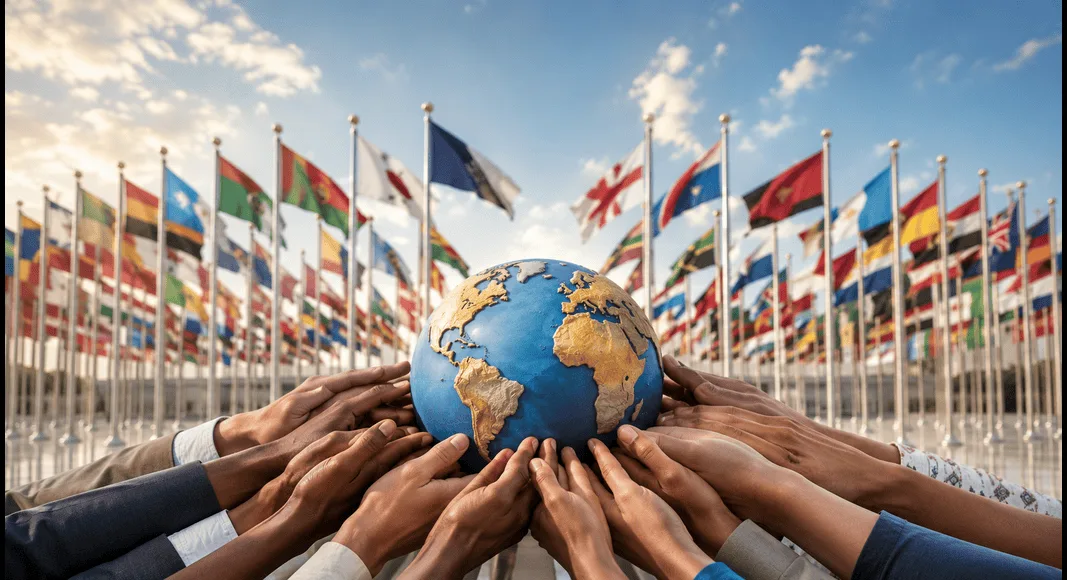
The Non-Aligned Movement gave a voice to developing countries in international affairs. It encouraged peace, cooperation, respect for sovereignty, and opposition to colonialism and foreign domination. India played a major role in the creation and growth of NAM and continues to support many of its principles even today.

Although the world has changed significantly since the Cold War, NAM remains an important platform for developing countries to discuss global challenges such as poverty, climate change, terrorism, trade inequality, and international cooperation.
Why Was the Non-Aligned Movement Created?
After the Second World War, the world was divided into two major camps:
- The United States-led Western Bloc
- The Soviet Union-led Eastern Bloc
This period became known as the Cold War. Many newly independent countries in Asia, Africa, and Latin America did not want to become part of either bloc. They wanted to make independent decisions based on their national interests.
As a result, leaders from several countries came together to create a movement that would allow nations to remain free from military alliances and external influence. This idea eventually led to the formation of the Non-Aligned Movement.
The movement promoted peaceful coexistence and encouraged countries to avoid becoming tools in the power struggle between superpowers.
Historical Background of NAM
The idea of non-alignment first gained momentum during the Bandung Conference held in Indonesia in 1955. Leaders from Asian and African countries discussed ways to promote cooperation and resist colonialism.
The first official NAM Summit took place in Belgrade, Yugoslavia, in 1961.
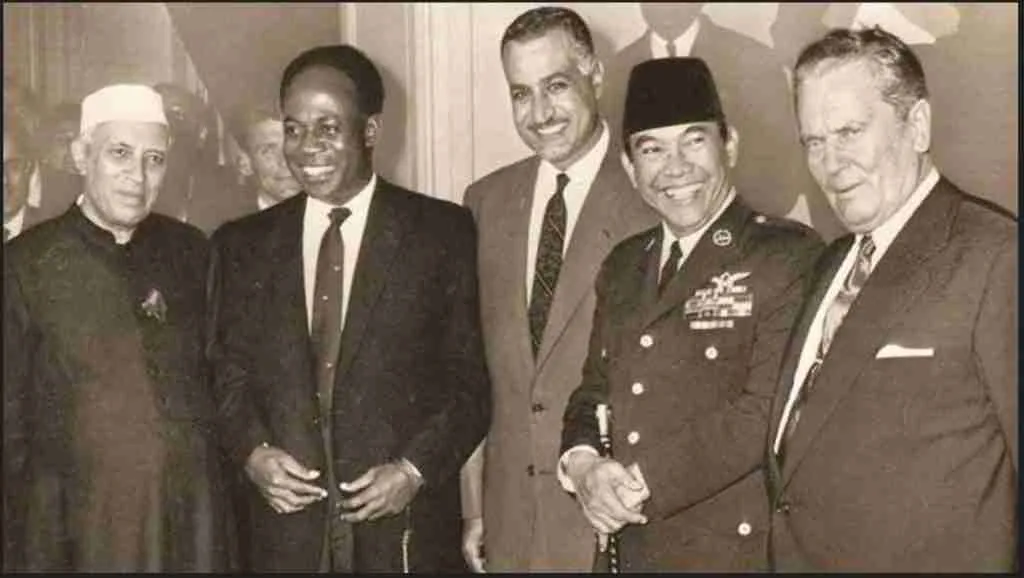
The movement was established under the leadership of five prominent leaders:
- Jawaharlal Nehru (India)
- Josip Broz Tito (Yugoslavia)
- Gamal Abdel Nasser (Egypt)
- Kwame Nkrumah (Ghana)
- Sukarno (Indonesia)
These leaders believed that newly independent nations should not be forced to choose sides in the Cold War.
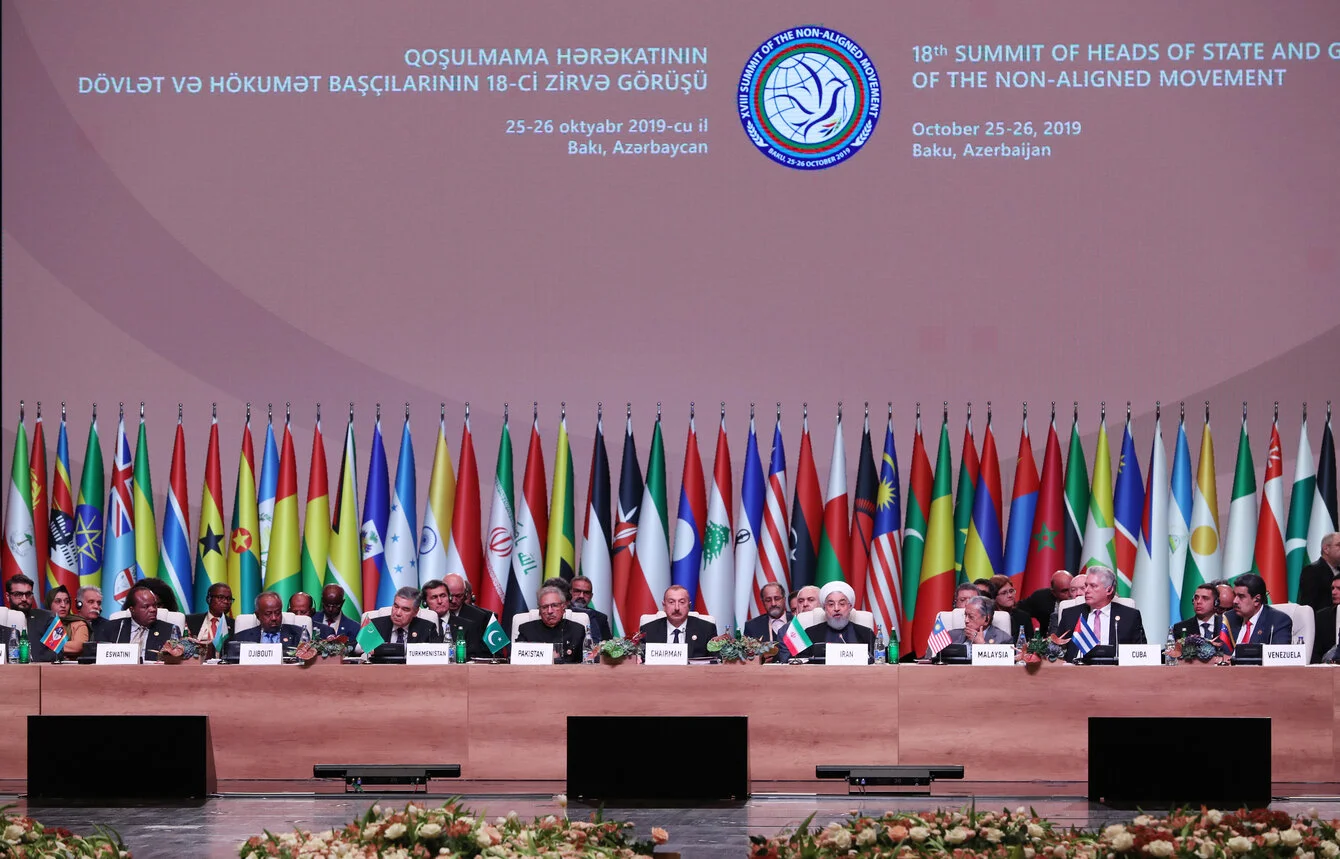
Today, NAM is one of the largest international groupings in the world, consisting of more than 120 member countries.
Meaning of Non-Alignment
Non-alignment does not mean neutrality or isolation. It means maintaining independence in foreign policy and making decisions based on national interests rather than pressure from powerful countries.
A non-aligned country can support or oppose any international issue depending on its own judgment. Therefore, non-alignment is often described as a policy of independent decision-making.
The movement encourages countries to cooperate with all nations while avoiding military alliances that may compromise their sovereignty.
Main Principles of Non-Aligned Movement
The principles of NAM were strongly influenced by India’s Panchsheel principles. Some of the major principles include:
1. Respect for Sovereignty
Every country has the right to govern itself without external interference.
2. Territorial Integrity
The territorial boundaries of nations must be respected.
3. Peaceful Settlement of Disputes
Conflicts should be resolved through dialogue, negotiation, and diplomacy rather than war.
4. Non-Interference
No country should interfere in the internal affairs of another nation.
5. Equality of Nations
All countries, whether large or small, are equal in international relations.
6. Mutual Cooperation
Countries should cooperate for common development and prosperity.
7. Promotion of International Peace
NAM promotes global peace and opposes aggression and violence.
8. Support for Multilateralism
The movement supports international organizations and collective efforts to solve global problems.
Objectives of the Non-Aligned Movement
The main objectives of NAM are:
- Protect the independence of member countries.
- Promote peace and security.
- Oppose colonialism and imperialism.
- Encourage economic development.
- Strengthen cooperation among developing countries.
- Support disarmament and reduction of nuclear weapons.
- Create a fair and balanced international order.
- Defend the interests of developing nations.
These objectives continue to guide the movement even in the modern era.
Role of NAM During the Cold War
The Non-Aligned Movement played an important role during the Cold War.
Against Colonialism
Many countries in Asia and Africa were still under colonial rule when NAM was formed. The movement strongly supported independence movements and opposed colonial domination.
Fight Against Apartheid
NAM actively opposed apartheid in South Africa. It demanded equal rights for all races and supported international efforts against racial discrimination.
Promotion of Peace
The movement encouraged peaceful coexistence among nations and worked to reduce tensions between superpowers.
Nuclear Disarmament
NAM consistently advocated for the reduction and elimination of nuclear weapons.
Support for Developing Countries
The movement highlighted the problems of poverty, inequality, and underdevelopment faced by newly independent nations.
Demand for United Nations Reforms
NAM called for reforms in the United Nations, especially the Security Council, to ensure better representation of developing countries.
NAM and India
India has been one of the most influential members of NAM since its creation.
India’s Leadership Role
India’s first Prime Minister, Jawaharlal Nehru, was a strong supporter of non-alignment. He believed that India should maintain strategic independence and avoid military alliances.
India used NAM as a platform to:
- Promote world peace.
- Support anti-colonial struggles.
- Advocate nuclear disarmament.
- Strengthen South-South cooperation.
- Protect the interests of developing nations.
India’s Foreign Policy
The principles of non-alignment became a major part of India’s foreign policy. India maintained friendly relations with both the United States and the Soviet Union while preserving its independence.
Challenges Faced by NAM
Despite its achievements, NAM faced several challenges.
1. Internal Differences
Member countries often had different political systems and national interests, making consensus difficult.
2. Regional Conflicts
NAM was unable to prevent several conflicts among its own members.
Examples include:
- India-China conflict
- India-Pakistan wars
- Various disputes in Africa and the Middle East
3. Influence of Superpowers
Some NAM countries developed close ties with either the United States or the Soviet Union, weakening the idea of complete non-alignment.
4. End of the Cold War
The collapse of the Soviet Union in 1991 changed the global political landscape. Many observers questioned whether NAM was still relevant.
Emerging Global Challenges
The world today is very different from the Cold War era. However, several new challenges have emerged:
Climate Change
Global warming and environmental degradation affect all countries.
International Terrorism
Terrorism remains a major threat to global peace and security.
Economic Inequality
The gap between rich and poor countries continues to grow.
Migration Crisis
Large-scale migration due to wars, conflicts, and economic problems has become a global issue.
Trade Protectionism
Trade disputes between major powers affect developing economies.
Technological Competition
Competition in technology, artificial intelligence, and digital infrastructure is creating new geopolitical tensions.
Rise of New Power Centers
Countries such as China, India, and other emerging economies are reshaping global politics.
Relevance of NAM in the Modern World
Many experts believe that NAM remains relevant because its core principles continue to be important.
Promoting Strategic Autonomy
Countries today still want the freedom to make independent foreign policy decisions.
Protecting Developing Nations
NAM provides a collective platform for developing countries to raise their concerns.
Supporting Global Peace
The movement continues to advocate peaceful resolution of conflicts.
Climate Change Cooperation
Developing nations can use NAM to build consensus on climate justice and sustainable development.
Reform of Global Institutions
NAM supports reforms in international institutions to make them more democratic and representative.
Countering Global Inequality
The movement can work toward a fairer global economic system.
India’s Current Position on NAM
India’s foreign policy today is often described as strategic autonomy, which is closely related to the original idea of non-alignment.
India maintains relations with multiple countries and organizations while preserving its independent decision-making.
For example, India cooperates with:
- United Nations
- G20
- BRICS
- Shanghai Cooperation Organisation
- Quadrilateral Security Dialogue
This balanced approach reflects the modern interpretation of non-alignment.
India also continues to support a multipolar world where power is shared among several nations rather than concentrated in one or two countries.
Importance of NAM for Developing Countries
Non-Aligned Movement (NAM) remains important for developing nations because:
- It provides a common platform for cooperation.
- It helps small countries protect their sovereignty.
- It promotes economic development.
- It strengthens collective bargaining power.
- It supports peace and conflict resolution.
- It encourages cultural diversity and mutual respect.
- It gives developing countries a stronger voice in international affairs.
Future of the Non-Aligned Movement
The future success of NAM depends on its ability to adapt to changing global realities.
The movement must focus on:
- Climate change
- Sustainable development
- Food security
- Energy security
- Cyber security
- Poverty reduction
- Global health challenges
- Terrorism
- Fair international trade
If NAM successfully addresses these issues, it can continue to play a meaningful role in world affairs.
Conclusion
Non-Aligned Movement is one of the most significant international movements of the modern era. Created during the Cold War, it provided newly independent countries with a platform to maintain their sovereignty and pursue independent foreign policies.
The movement played a major role in supporting decolonization, promoting peace, opposing apartheid, and advocating nuclear disarmament. India, as a founding member, contributed greatly to its growth and development.
Although global politics has changed, the principles of non-alignment remain relevant. In a world facing challenges such as climate change, terrorism, economic inequality, and geopolitical competition, NAM continues to offer a valuable platform for cooperation among developing nations.
The idea of strategic autonomy, peaceful coexistence, and mutual respect among nations ensures that the Non-Aligned Movement remains an important force in international relations even in the 21st century.
FAQs on Non-Aligned Movement (NAM)
1. What is the Non-Aligned Movement (NAM)?
NAM is an international group of countries that do not formally align with any major power bloc and follow an independent foreign policy.
2. When was NAM established?
NAM was officially established in 1961 at the Belgrade Summit in Yugoslavia.
3. Who were the founders of NAM?
The founders were Jawaharlal Nehru, Josip Broz Tito, Gamal Abdel Nasser, Kwame Nkrumah, and Sukarno.
4. Why was NAM formed?
NAM was formed to help countries remain independent and avoid joining either the US-led or Soviet-led bloc during the Cold War.
5. How many member countries are in NAM?
NAM has more than 120 member countries, making it one of the largest international organizations.
6. What are the main principles of NAM?
Its principles include sovereignty, territorial integrity, peaceful coexistence, non-interference, equality, and mutual cooperation.
7. What role did India play in NAM?
India was a founding member and played a leading role in shaping NAM’s policies and objectives.
8. Is NAM still relevant today?
Yes, NAM remains relevant in addressing issues such as climate change, global inequality, terrorism, and international cooperation.
9. How does NAM support developing countries?
It provides a platform for developing nations to voice concerns and work together on global issues.
10. What is the significance of NAM for India?
NAM supports India’s policy of strategic autonomy and helps strengthen relations with developing nations worldwide.