

Mission Chandrayaan: India’s Journey to the Moon and Beyond

Mission Chandrayaan is one of India’s greatest achievements in space exploration. Through this ambitious lunar program, the Indian Space Research Organisation (ISRO) has successfully explored the Moon, discovered important scientific facts, and developed advanced space technologies. The Chandrayaan missions have made India a respected name in global space research and inspired millions of people across the country.
Thank you for reading this post, don't forget to subscribe!The Chandrayaan program is a series of lunar missions launched by ISRO. Its main goal is to study the Moon, especially the lunar south pole, search for water ice, map the lunar surface, and develop technologies for landing and operating spacecraft on another celestial body.
What is the Chandrayaan Program?
The Chandrayaan program is India’s lunar exploration project. The word “Chandrayaan” means “Moon Vehicle” in Sanskrit.
The program focuses on:
- Mapping the Moon’s surface
- Studying lunar minerals
- Searching for water and ice
- Understanding the Moon’s atmosphere
- Developing soft-landing technology
- Operating robotic rovers on the Moon
- Preparing for future space exploration missions
Over the years, Chandrayaan missions have helped scientists learn more about the Moon and its history.
Mission Timeline of Chandrayaan
Chandrayaan-1 (2008)
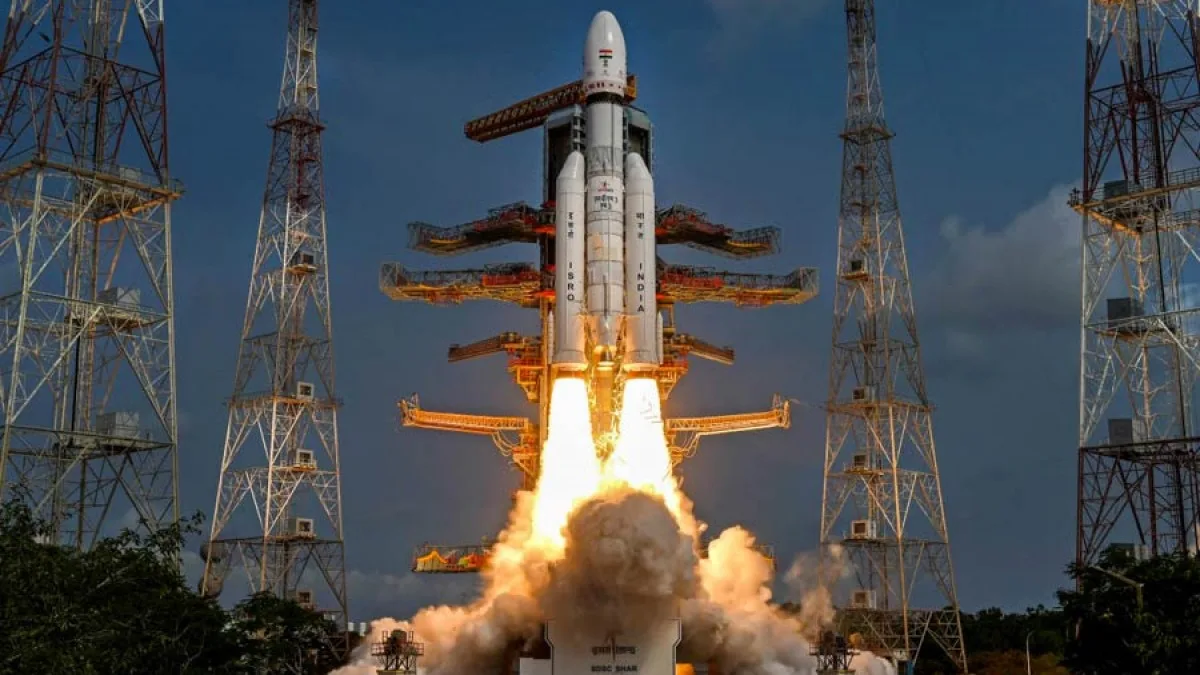
India launched its first lunar mission, Chandrayaan-1, on 22 October 2008.
The spacecraft orbited the Moon and carried scientific instruments from India and other countries.
Major Achievements of Chandrayaan-1
| Achievement | Details |
|---|---|
| Discovery of Water | Confirmed the presence of water molecules on the Moon |
| Surface Mapping | Created detailed maps of the lunar surface |
| Mineral Studies | Identified various minerals present on the Moon |
| Scientific Data | Collected valuable information about lunar geology |
Although communication with the spacecraft was lost in 2009, it successfully completed around 95% of its objectives.
The discovery of water molecules on the Moon became one of the most important findings in lunar science and brought worldwide recognition to India.
Chandrayaan-2: India’s Ambitious Moon Mission
After the success of Chandrayaan-1, ISRO planned a more advanced mission called Chandrayaan-2.
It was launched on 22 July 2019 from the Satish Dhawan Space Centre in Sriharikota using the powerful GSLV Mk III rocket.
The mission aimed to land near the Moon’s south pole, a region that had never been explored closely before.
Background of Chandrayaan-2
The project began in 2007 through a partnership between ISRO and Russia’s space agency ROSCOSMOS.
Initially:
- Russia was expected to provide the lander.
- India would develop the orbiter.
However, delays in the Russian lander forced changes in the project. Eventually, India decided to build the entire mission independently.
This decision marked a major milestone in India’s self-reliance in space technology.
Components of Chandrayaan-2
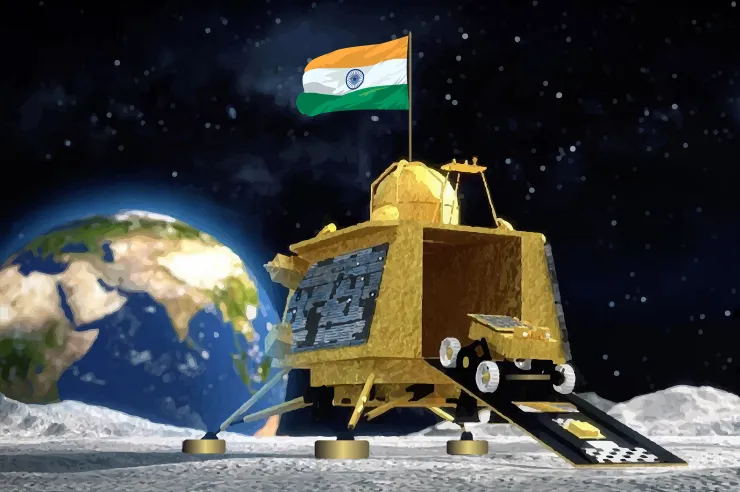
Chandrayaan-2 consisted of three major parts:
| Component | Purpose |
|---|---|
| Orbiter | Orbit the Moon and conduct scientific observations |
| Vikram Lander | Soft-land on the Moon’s surface |
| Pragyan Rover | Move on the lunar surface and study rocks and soil |
The total weight of the mission was approximately 3,877 kilograms.
Vikram Lander
The lander was named after Vikram Sarabhai, known as the father of the Indian space program.
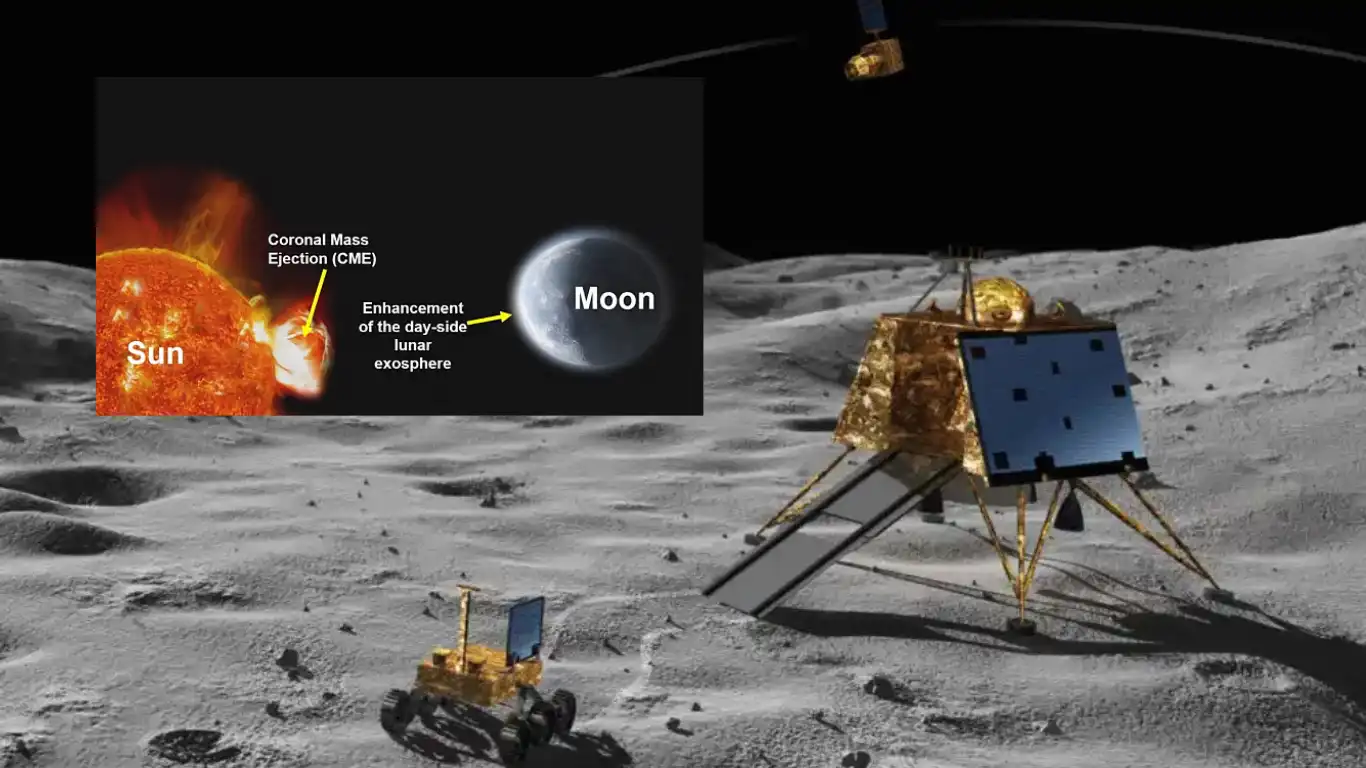
Its objectives included:
- Soft landing on the Moon
- Studying the lunar atmosphere
- Measuring moonquakes
- Conducting scientific experiments
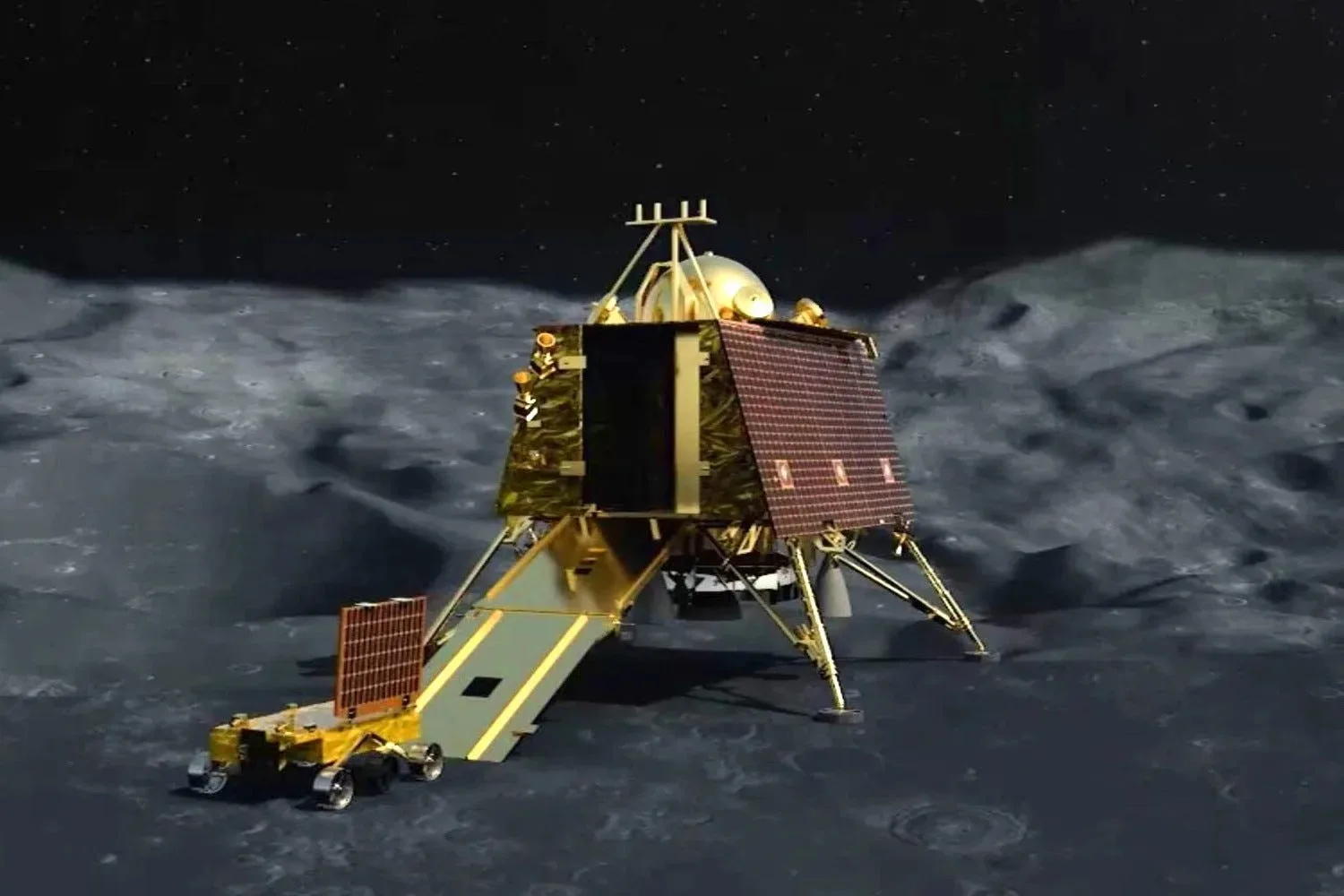
Pragyan Rover
Pragyan means “wisdom.”
It was a six-wheeled robotic vehicle designed to:
- Move on the lunar surface
- Analyze soil and rocks
- Identify minerals
- Measure chemical composition
The rover was powered by solar energy and designed to operate for one lunar day (about 14 Earth days).
Chandrayaan-2 Orbiter
The orbiter became the most successful part of the mission.
It continues to orbit the Moon and provide valuable scientific data.
Major Functions of the Orbiter
- High-resolution imaging
- Surface mapping
- Mineral analysis
- Water ice detection
- Atmospheric studies
The orbiter carries several advanced instruments and has already produced a large amount of useful scientific information.
Scientific Instruments on the Chandrayaan-2 Orbiter
The orbiter includes advanced payloads such as:
| Instrument | Function |
|---|---|
| Terrain Mapping Camera (TMC-2) | Creates detailed lunar maps |
| Dual Frequency Synthetic Aperture Radar (DFSAR) | Detects water ice and studies the lunar surface |
| Imaging Infrared Spectrometer | Studies minerals |
| Orbiter High Resolution Camera | Captures detailed images |
These instruments help scientists understand the Moon in greater detail than ever before.
What Happened During the Landing?
The most challenging phase of Chandrayaan-2 was the landing process.
The Vikram lander successfully separated from the orbiter and began its descent toward the Moon.
However, during the final moments of landing, a software-related issue caused communication to be lost.
As a result, Vikram crashed before completing a soft landing.
Although the landing was unsuccessful, the mission was still considered an important achievement because:
- The orbiter remained operational.
- Valuable scientific data continued to be collected.
- ISRO gained crucial experience for future missions.
Mission Objectives of Chandrayaan-2
The mission had several scientific goals.
1. Study Water on the Moon
Scientists wanted to learn:
- How much water exists
- Where it is located
- How it is distributed
2. Explore the South Pole
The lunar south pole contains regions that remain permanently shadowed.
Scientists believe these areas may contain frozen water ice.
3. Study Lunar Surface Composition
Researchers wanted to understand:
- Minerals
- Rocks
- Chemical elements
4. Create Detailed Maps
The mission aimed to create high-quality three-dimensional maps of the Moon.
5. Understand Lunar Evolution
Studying ancient craters and rocks helps scientists learn how the Moon formed and evolved.
Challenges Faced by Chandrayaan-2
The mission involved several technological challenges.
Launching the Heavy Rocket
The GSLV Mk III was India’s heaviest operational launch vehicle.
Launching such a massive spacecraft required precision engineering.
Long-Distance Navigation
The spacecraft traveled nearly 384,000 kilometers from Earth to the Moon.
Even a tiny navigation error could affect the mission.
Soft Landing
Landing safely on the Moon is extremely difficult because:
- There is no atmosphere for parachutes.
- The surface contains rocks and craters.
- Temperatures are extreme.
South Pole Conditions
The Moon’s south pole receives limited sunlight.
This creates challenges for solar-powered instruments.
Chandrayaan-3: India’s Historic Success
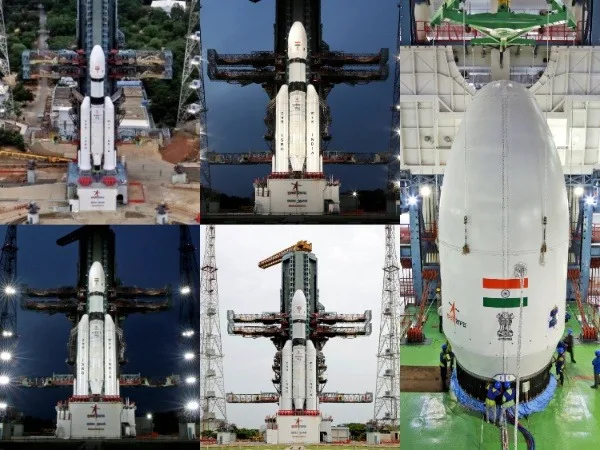
After learning from Chandrayaan-2, ISRO launched Chandrayaan-3 in July 2023.
The mission became a historic success on 23 August 2023.
Achievements of Chandrayaan-3
| Achievement | Details |
|---|---|
| Soft Landing | India became the fourth nation to achieve a soft landing on the Moon |
| South Pole Landing | First country to land near the lunar south pole |
| Rover Operations | Pragyan rover explored the surface successfully |
| Scientific Experiments | Conducted several important studies |
This achievement made India a global leader in lunar exploration.
Chandrayaan-3 Scientific Instruments
Vikram Lander Instruments
ChaSTE
The Chandra’s Surface Thermophysical Experiment measured:
- Surface temperature
- Thermal conductivity
ILSA
Instrument for Lunar Seismic Activity monitored:
- Moonquakes
- Vibrations beneath the lunar surface
Pragyan Rover Instruments
LIBS
Laser-Induced Breakdown Spectroscope studied:
- Chemical composition of lunar soil
APXS
Alpha Particle X-Ray Spectrometer analyzed:
- Rocks
- Dust
- Surface elements
The mission confirmed the presence of important elements and provided valuable scientific observations.
Importance of Mission Chandrayaan
Scientific Benefits
The Moon preserves clues about the early Solar System.
Studying it helps scientists understand:
- Planet formation
- Earth’s history
- Solar System evolution
Technological Growth
Developing lunar missions improves:
- Robotics
- Artificial intelligence
- Navigation systems
- Communication technologies
Economic Benefits
Space technology contributes to:
- Industry development
- Innovation
- Startup growth
- High-tech manufacturing
Educational Inspiration
The success of Chandrayaan motivates students to pursue careers in:
- Science
- Engineering
- Technology
- Research
National Pride
Every Chandrayaan mission strengthens India’s position as a leading space nation.
Women Leadership in Chandrayaan
Mission Chandrayaan also highlights women’s leadership in science.
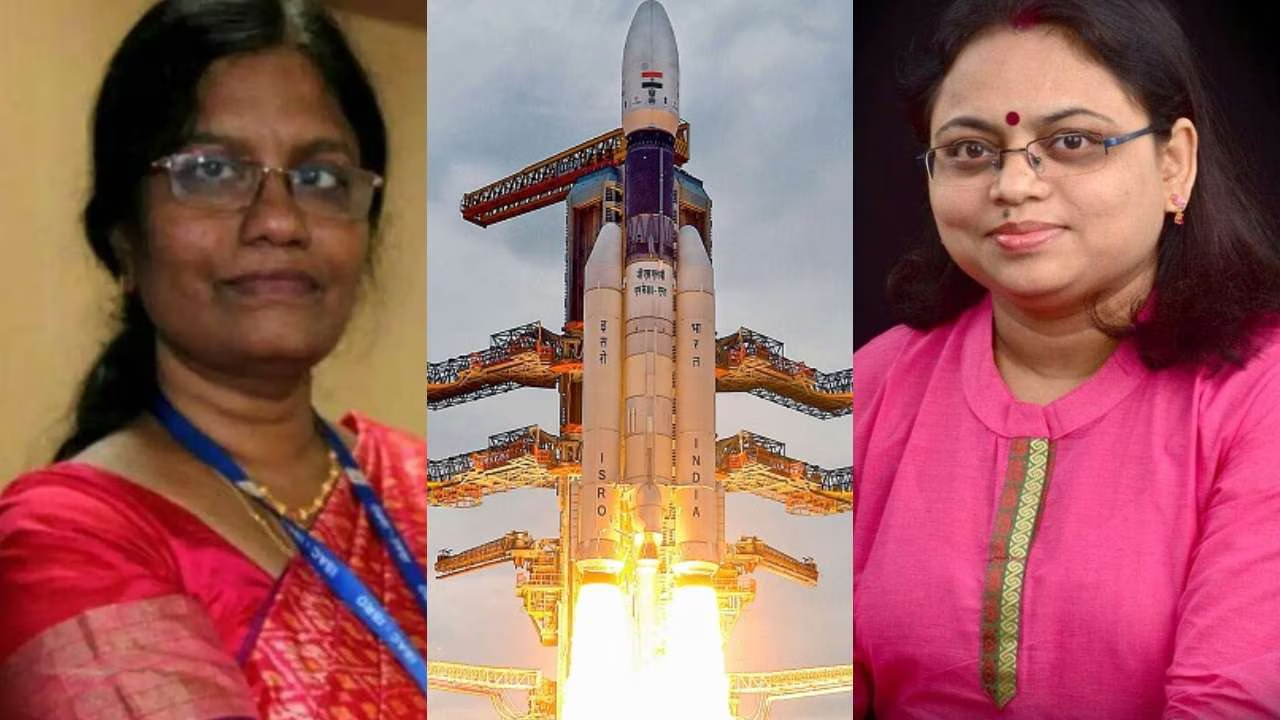
Scientists such as:
- Ritu Karidhal
- Muthayya Vanitha
played key roles in the success of India’s lunar missions.
Their achievements have inspired countless young women across India.
Future of Mission Chandrayaan
Following the success of Chandrayaan-3, ISRO is preparing more advanced lunar missions.
Chandrayaan-4
The proposed Chandrayaan-4 mission aims to:
- Collect lunar soil samples
- Bring them back to Earth
- Conduct advanced scientific studies
This mission would be a major step toward sample-return technology.
Cooperation with International Agencies
India is working with international partners, including:
- JAXA
to develop future lunar exploration projects.
Connection with Other ISRO Missions
The technologies developed through Chandrayaan are helping future projects such as:
| Mission | Objective |
|---|---|
| Gaganyaan | Send Indian astronauts into space |
| Aditya-L1 | Study the Sun |
| Future Space Station | Establish long-term human presence in space |
These missions will further strengthen India’s space capabilities.
Could Humans Live on the Moon One Day?
Scientists believe water ice found near the lunar poles could support future human missions.
Water can provide:
- Drinking water
- Oxygen for breathing
- Hydrogen fuel for spacecraft
If technologies continue to improve, future lunar bases may become possible.
The Moon could also serve as a launch point for missions to Mars and beyond.
Why Mission Chandrayaan Matters for Humanity
Humanity faces many challenges, including:
- Climate change
- Resource shortages
- Population growth
Space exploration helps scientists discover new technologies and resources that may benefit future generations.
Mission Chandrayaan demonstrates how scientific innovation can expand human knowledge and open new possibilities for exploration beyond Earth.
India’s lunar journey has already transformed global space science, and future Chandrayaan missions are expected to play an even bigger role in understanding the Moon, the Solar System, and humanity’s future in space.
FAQs About Mission Chandrayaan
What is Mission Chandrayaan?
Mission Chandrayaan is ISRO’s lunar exploration program designed to study the Moon, search for water, and develop advanced space technologies.
When was Chandrayaan-1 launched?
Chandrayaan-1 was launched on 22 October 2008.
What was the biggest discovery of Chandrayaan-1?
The mission confirmed the presence of water molecules on the Moon.
What happened to Chandrayaan-2?
The Vikram lander crashed during landing, but the orbiter remains operational and continues scientific observations.
Why is Chandrayaan-3 important?
Chandrayaan-3 made India the fourth country to soft-land on the Moon and the first to land near the lunar south pole.
What is the purpose of Chandrayaan-4?
Chandrayaan-4 is expected to collect lunar samples and bring them back to Earth for scientific study.
Why is the Moon’s south pole important?
Scientists believe it contains water ice and preserves important information about the early Solar System.
How does Mission Chandrayaan benefit India?
It advances science, technology, education, innovation, and strengthens India’s position as a major space power.