Gender Budgeting: A Powerful Tool for Women’s Empowerment and Inclusive Development

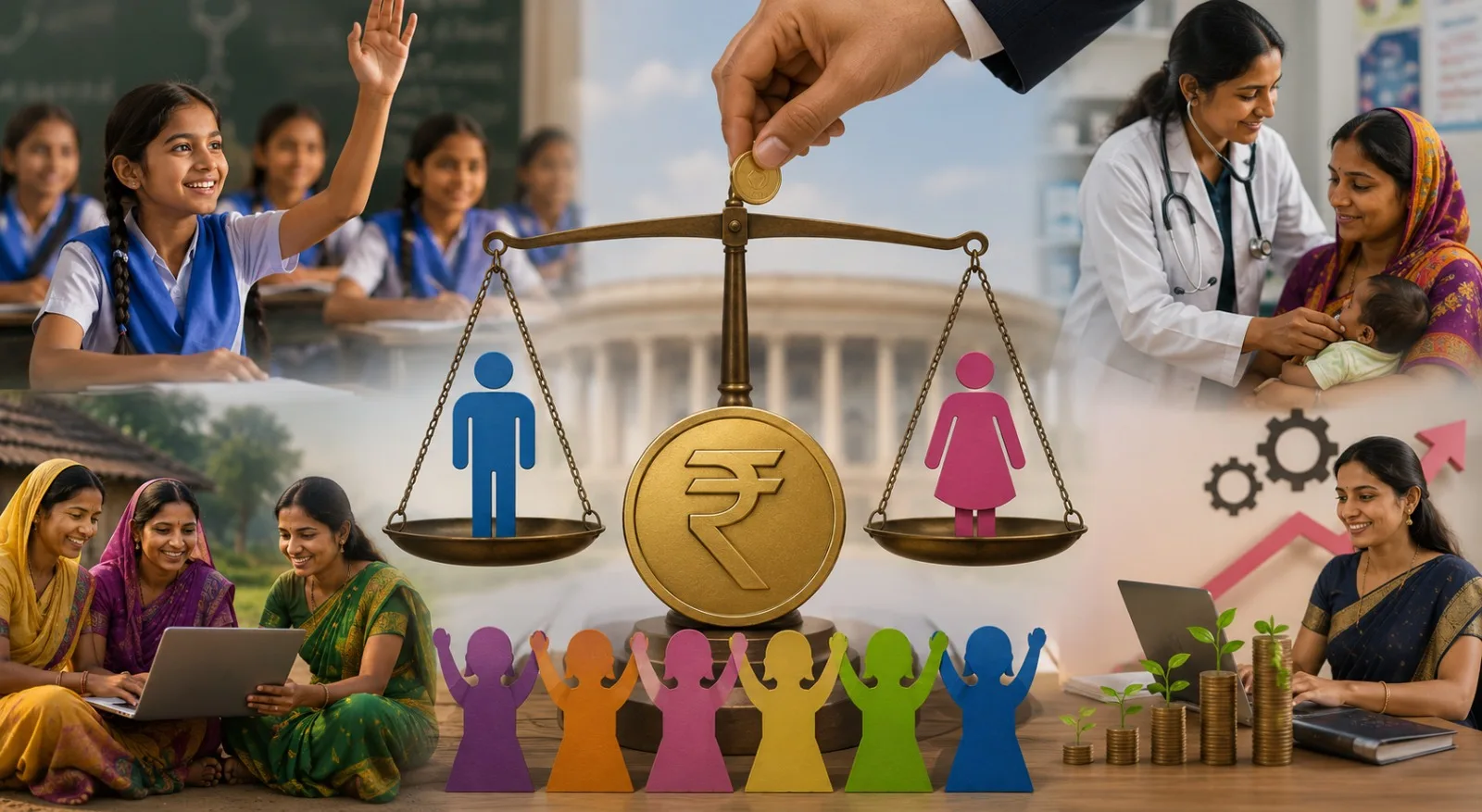
Gender Budgeting is an important approach that helps governments ensure that women and men benefit equally from public spending and development programs. It is not a separate budget for women. Instead, it is a method of planning, allocating, and monitoring government funds in a way that addresses the different needs of women and men.
In India, women make up nearly half of the country’s population. However, they often face challenges in education, healthcare, employment, safety, and access to resources. To reduce these inequalities, the government uses Gender Budgeting as a tool to make policies and programs more inclusive.

In 2019-20, the Government of India proposed increasing the gender budget allocation to Rs. 1,31,700 crore from Rs. 1,21,961 crore in the previous year. This reflected the government’s focus on women-led development through schemes related to nutrition, Anganwadi services, skill development, and employment opportunities for women.
What is Gender Budgeting?
Gender Budgeting (GB) is the process of preparing budgets and government policies while considering the needs and concerns of women and men separately.
It involves:
- Gender-sensitive policy formulation
- Allocation of resources for women’s welfare
- Effective implementation of schemes
- Monitoring and evaluation of outcomes
- Corrective actions to reduce gender inequality
The main aim of Gender Budgeting is to ensure that the benefits of government programs reach women and men fairly.
It is important to understand that Gender Budgeting does not create a separate budget for women. Instead, it analyzes existing budgets to determine how government spending affects women and whether it helps reduce gender disparities.
Objectives of Gender Budgeting
The major objectives of Gender Budgeting include:
1. Promoting Gender Equality
The primary goal is to reduce inequalities between men and women and provide equal opportunities for growth and development.
2. Ensuring Fair Distribution of Resources
Government resources should be distributed in a way that addresses the specific needs of women and girls.
3. Improving Women’s Participation
Gender Budgeting encourages greater participation of women in education, employment, entrepreneurship, and decision-making.
4. Monitoring Government Spending
It helps evaluate whether public funds are actually benefiting women and improving their quality of life.
5. Strengthening Women’s Empowerment
The approach aims to empower women socially, economically, and politically.
Why is Gender Budgeting Important?
Gender Budgeting is necessary because women continue to face various forms of discrimination and unequal access to opportunities.
Women Form a Large Part of the Population
According to the 2011 Census, women account for nearly 48% of India’s population. Therefore, development policies must consider their needs and aspirations.
Unequal Access to Resources
Women often have less access to:
- Education
- Healthcare
- Property ownership
- Employment opportunities
- Financial services
Gender Budgeting helps address these gaps.
Hidden Impact of Policies
Many government programs appear gender-neutral, but their effects may differ for women and men. Gender Budgeting helps identify these differences.
Better Economic Growth
When women participate equally in economic activities, productivity increases, poverty decreases, and economic growth becomes more inclusive.
Human Development
Improving women’s access to health, education, and employment leads to better outcomes for families and society as a whole.
The Five-Step Framework of Gender Budgeting
Gender Budgeting follows a structured approach consisting of five important steps.
Step 1: Analyze the Situation
The first step involves studying the status of women and men in a particular sector.
Questions considered include:
- Are women receiving equal opportunities?
- What challenges do women face?
- What gender gaps exist?
Step 2: Assess Existing Policies
The next step is to examine whether current government policies address the identified gender issues.
Officials evaluate whether the policies are helping women effectively.
Step 3: Evaluate Budget Allocations
After identifying policy needs, authorities assess whether sufficient funds have been allocated for implementing gender-sensitive programs.
Step 4: Monitor Expenditure
This step involves checking:
- Whether funds were spent properly
- Whether services reached intended beneficiaries
- Whether women actually benefited
Step 5: Measure Impact
Finally, the government evaluates the impact of the programs.
Questions include:
- Have gender inequalities reduced?
- Have women’s living conditions improved?
- Have development goals been achieved?
This assessment helps improve future policies and programs.
Gender Budgeting in India
India is among the countries that have adopted Gender Budgeting as an important policy tool.
Introduction of Gender Budget Statement
The Gender Budget Statement (GBS) was first introduced in the Union Budget of 2005-06.
The purpose was to identify government expenditures that directly or indirectly benefit women.
Two Parts of Gender Budget Statement
The Gender Budget Statement consists of two sections.
Part A: Women-Specific Schemes
These are schemes where 100% of the budget allocation is meant for women.
Examples include programs specifically designed for women’s welfare and empowerment.
Part B: Pro-Women Schemes
These are schemes where at least 30% of the funds are expected to benefit women.
Many development programs fall under this category.
Evolution of Gender Budgeting in India
India’s Gender Budgeting process has evolved through several stages.
Knowledge Building
Initially, awareness about gender issues was created among policymakers and government departments.
Institutionalization
Government institutions were encouraged to include gender concerns in planning and budgeting processes.
Capacity Building
Officials received training to understand gender analysis and budgeting techniques.
Accountability Enhancement
Mechanisms were developed to ensure that government departments are accountable for gender-related outcomes.
Gender Budgeting Cells (GBCs)
To strengthen implementation, the Government of India directed all ministries and departments to establish Gender Budgeting Cells (GBCs).
Functions of Gender Budgeting Cells
These cells perform several important tasks:
- Gender impact analysis
- Assessment of beneficiaries
- Budget review
- Monitoring program implementation
- Identifying gaps in service delivery
Importance of GBCs
Gender Budgeting Cells help ministries integrate gender concerns into planning and expenditure decisions.
They ensure that women’s needs are not overlooked during policy formulation.
How Gender Budgeting Benefits Society
Gender Budgeting creates positive outcomes not only for women but also for society as a whole.
Improved Education
Special funding can increase girls’ enrollment in schools and reduce dropout rates.
Better Healthcare
Women receive better maternal healthcare, nutrition services, and reproductive health support.
Economic Empowerment
Programs supporting skill development, entrepreneurship, and employment improve women’s financial independence.
Enhanced Safety
Funding for safety initiatives, legal support, and awareness programs helps create safer environments for women.
Poverty Reduction
When women earn income and gain access to resources, entire families benefit, reducing poverty levels.
Inclusive Development
Gender Budgeting ensures that development benefits everyone rather than a specific section of society.
Major Women-Focused Schemes in India
Several government schemes contribute to Gender Budgeting objectives.
Beti Bachao Beti Padhao
This scheme promotes education and welfare of the girl child.
Nirbhaya Fund
The fund supports projects aimed at improving women’s safety and security.
Anganwadi Services
These services provide nutrition, healthcare, and early childhood education support.
Pradhan Mantri Matru Vandana Yojana
The scheme provides financial assistance to pregnant and lactating mothers.
National Creche Scheme
It supports working women by providing childcare facilities.
Women Skill Development Programs
Various schemes help women acquire vocational and entrepreneurial skills.
Challenges and Shortcomings of Gender Budgeting
Despite progress, several challenges remain.
Declining Share in Overall Budget
Although allocations have increased in absolute terms, the share of gender budgeting in total government expenditure has not grown significantly.
Limited Women-Specific Schemes
There are only a few large-scale schemes dedicated entirely to women.
Lack of Trained Personnel
Many departments lack adequately trained staff to conduct gender analysis and budgeting.
Weak Monitoring Mechanisms
Monitoring remains one of the weakest areas of Gender Budgeting.
Without proper monitoring, it becomes difficult to assess whether funds are achieving intended goals.
Data Limitations
Reliable gender-disaggregated data is often unavailable, making evaluation difficult.
Questionable Allocations
Some allocations reported under the Gender Budget Statement may not directly benefit women to the extent claimed.
Limited Awareness
Many government officials and stakeholders still lack awareness about the importance and methodology of Gender Budgeting.

Global Importance of Gender Budgeting
Many countries around the world have adopted Gender Budgeting practices.
Countries such as:
- Australia
- Canada
- South Africa
- Austria
- Sweden
have integrated gender considerations into public finance systems.
India’s efforts are often recognized internationally because Gender Budgeting influences both expenditure and revenue policies.
Role of Gender Budgeting in Sustainable Development
Gender Budgeting contributes significantly to the achievement of Sustainable Development Goals (SDGs).
Particularly:
- SDG 1: No Poverty
- SDG 3: Good Health and Well-being
- SDG 4: Quality Education
- SDG 5: Gender Equality
- SDG 8: Decent Work and Economic Growth
By ensuring equal access to resources, Gender Budgeting helps create a more inclusive society.
Measures Needed to Strengthen Gender Budgeting
Several improvements can make Gender Budgeting more effective.
Increase Budget Allocations
Greater financial commitment is needed for women’s welfare and empowerment programs.
Strengthen Monitoring Systems
A dedicated national-level monitoring mechanism should be established.
Improve Data Collection
Accurate gender-disaggregated data will help assess the real impact of government spending.
Build Capacity
Officials and policymakers should receive regular training on gender analysis and budgeting.
Encourage Women’s Participation
Women should be involved in planning, budgeting, and decision-making processes.
Focus on Outcomes
The government should move beyond merely reporting allocations and focus on actual results and impact.
Integrate Gender Concerns Across Sectors
Every ministry should consider gender implications while designing programs and allocating resources.
Conclusion
Gender Budgeting is an important tool for promoting gender equality and women’s empowerment in India. It helps ensure that government policies, programs, and expenditures benefit women fairly and address long-standing social and economic inequalities.
India has made significant progress since the introduction of the Gender Budget Statement in 2005-06. The establishment of Gender Budgeting Cells, increased focus on women-oriented schemes, and growing awareness among policymakers are positive developments.
However, challenges such as inadequate monitoring, limited resources, lack of trained personnel, and insufficient women-specific programs continue to affect its effectiveness. To achieve true gender equality, India must strengthen Gender Budgeting through better planning, greater accountability, improved data collection, and increased participation of women in decision-making.
A shift from simply reporting gender-related expenditures to purposeful planning and measurable outcomes will ensure that Gender Budgeting becomes a powerful instrument for inclusive growth, social justice, and sustainable development.
FAQs on Gender Budgeting
1. What is Gender Budgeting?
Gender Budgeting is a process of planning and allocating government funds while considering the needs of women and men equally.
2. Is Gender Budgeting a separate budget for women?
No. It is not a separate budget. It ensures that government spending benefits women fairly and reduces gender inequality.
3. Why is Gender Budgeting important?
It helps improve women’s access to education, healthcare, employment, and other development opportunities.
4. When was Gender Budgeting introduced in India?
Gender Budget Statement was first introduced in the Union Budget in 2005-06.
5. What is the main objective of Gender Budgeting?
Its main objective is to promote gender equality and women’s empowerment through public spending.
6. What are Gender Budget Cells (GBCs)?
GBCs are special units in government ministries that analyze policies and budgets from a gender perspective.
7. What are Women-Specific Schemes?
These are schemes where 100% of the budget allocation is meant for women.
8. What are Pro-Women Schemes?
These are schemes where at least 30% of the budget allocation benefits women.
9. What are some challenges in Gender Budgeting?
Challenges include inadequate funding, weak monitoring systems, and lack of trained personnel.
10. How can Gender Budgeting be improved?
It can be improved through better planning, increased funding, stronger monitoring, and greater participation of women in policymaking.