


Deglaciation and Threats: A Complete Understanding of Melting Glaciers and Their Impact

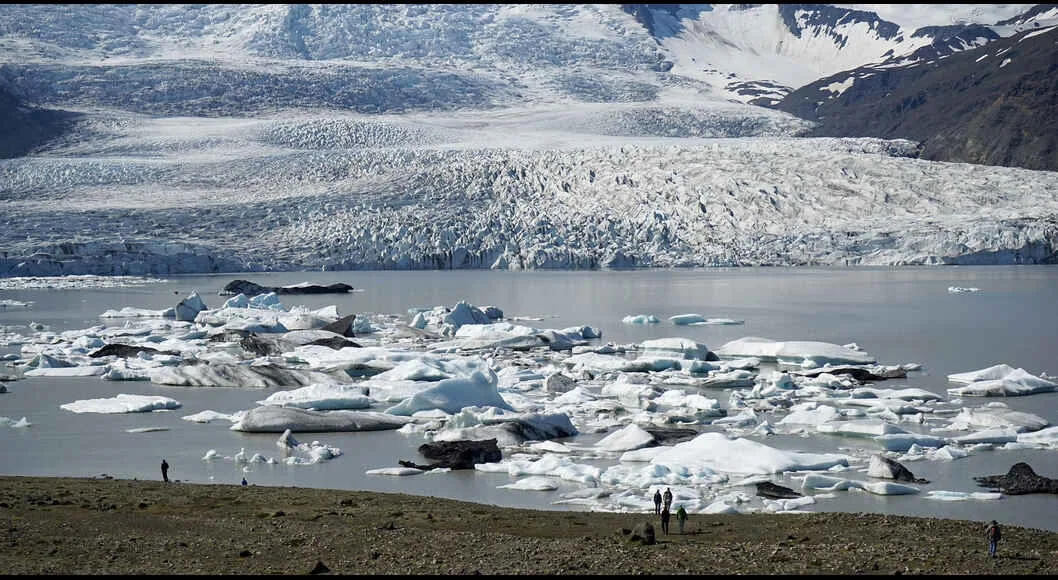
Deglaciation and Threats have become one of the most serious environmental concerns in the modern world. The Earth is experiencing rapid climate changes, and one of the clearest signs of this change is the continuous melting of glaciers. Glaciers, ice caps, and large ice sheets currently cover about 10% of the Earth’s land surface. However, during the Ice Ages, they covered nearly three times this area. These frozen bodies are extremely important because they store nearly three-fourths of the world’s freshwater resources.
Thank you for reading this post, don't forget to subscribe!Deglaciation refers to the gradual melting and disappearance of glaciers from the Earth’s surface. This process has accelerated significantly in the 20th and 21st centuries due to human activities. If this continues at the current rate, the planet may face severe environmental, economic, and social challenges.
What is Deglaciation?
Deglaciation is the process through which glaciers shrink and disappear due to rising temperatures. It occurs when ice melts faster than it accumulates.
A related concept is ablation, which refers to the removal of snow and ice from a glacier. Ablation includes processes like:
- Melting
- Evaporation
- Erosion
- Calving (breaking off of ice chunks into water)
Deglaciation is a natural process, but today it is happening at an unusually fast rate due to human-induced climate change.
Causes of Deglaciation
1. Global Warming
The most important cause of deglaciation is global warming. Human activities such as burning fossil fuels, deforestation, and industrial production release greenhouse gases like carbon dioxide and methane into the atmosphere. These gases trap heat and increase the Earth’s temperature.
As a result, glaciers begin to melt rapidly, especially in sensitive regions like the Arctic and Antarctic.
2. Ocean Warming
Oceans absorb nearly 90% of the Earth’s heat. This warming of ocean water directly affects marine glaciers, especially those located near the poles.
Warmer ocean water melts glaciers from below, making them unstable and causing them to break apart more quickly.
3. Rapid Industrialisation
Since the Industrial Revolution, the level of greenhouse gases in the atmosphere has increased sharply. Industrial growth, transportation, and urbanisation have all contributed to rising temperatures.
This has led to:
- Faster glacier melting
- Increased calving into oceans
- Retreat of glaciers on land
Impacts of Deglaciation
1. Rising Sea Levels
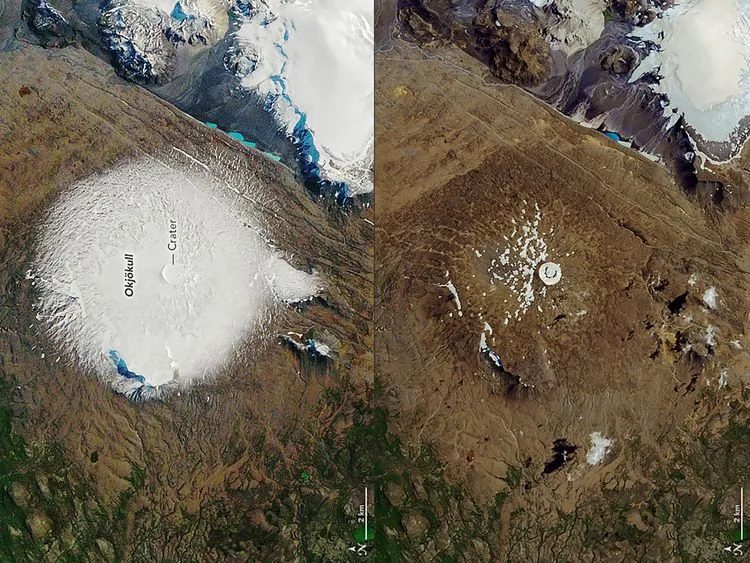
Melting glaciers contribute significantly to rising sea levels. Over the past 100 years, global sea levels have risen by about 10 to 20 centimeters.
This leads to:
- Coastal flooding
- Loss of land
- Increased storm surges
- More powerful cyclones and hurricanes
2. Changes in Mountain Glaciers
Many famous glaciers around the world are disappearing rapidly.
- The snow on Mount Kilimanjaro has reduced by more than 80% since 1912.
- Glaciers in the Himalayan region are retreating quickly and may disappear in some areas by 2035.
This affects water supply for millions of people.
3. Changes in the Northern Hemisphere
Climate change is also affecting seasonal ice patterns:
- Ice melts earlier in spring by about 9 days compared to 150 years ago.
- Freezing in autumn happens about 10 days later.
- Arctic sea ice has reduced by around 10% in the last 30 years.
4. Greenland Ice Sheet Melting
The Greenland ice sheet is melting four times faster than it was in 2003. It now contributes nearly 20% of global sea-level rise.
This is a major concern because it holds a massive amount of freshwater.
5. Thwaites Glacier (Doomsday Glacier)
The Thwaites Glacier in Antarctica is one of the most dangerous glaciers in the world.
- It is about 120 km wide.
- It contains enough ice to raise sea levels by more than 0.5 meters.
- Its melting contributes about 4% to global sea-level rise each year.
Scientists believe it could collapse within the next 200 to 900 years, which would have catastrophic effects worldwide.
6. Loss of Biodiversity
Glaciers provide habitat for many animals and plants. As glaciers disappear:
- Many species lose their natural habitat
- Food chains get disturbed
- Risk of extinction increases
This affects both land and aquatic ecosystems.
Himalayan Glaciers: The Third Pole
Overview
The Himalayan glaciers are known as the “Third Pole” because they contain the largest amount of ice outside the polar regions.
These glaciers:
- Store about 12,000 cubic kilometers of freshwater
- Include around 15,000 glaciers
- Feed major rivers like the Indus, Ganga, and Brahmaputra
These rivers are lifelines for millions of people across countries like India, Nepal, Bhutan, Pakistan, and Bangladesh.
Importance for Human Population
The Indo-Gangetic plains depend heavily on these glaciers.
- Around 500 million people live in the Ganga basin alone
- Agriculture, drinking water, and industries depend on glacier-fed rivers
Any change in glaciers directly affects human life in this region.
Receding Himalayan Glaciers
Rate of Melting
Himalayan glaciers are melting faster than glaciers in most other parts of the world.
- Since 2000, glaciers have been losing more than one foot of ice every year
- This rate is double compared to the period from 1975 to 2000
- Around 400 crore tons of ice have melted in the last 25 years
The Gangotri Glacier, one of the most important glaciers, is shrinking rapidly.
Causes of Glacier Retreat
The main reasons for glacier retreat include:
- Increase in greenhouse gas emissions
- Rising temperatures due to climate change
- Deforestation in nearby areas
- High population pressure
- Changes in land use
These factors together accelerate glacier melting.
Impact on Hindu Kush Himalayan Region
The Hindu Kush Himalayan (HKH) region includes some of the world’s highest mountains, including Mount Everest.
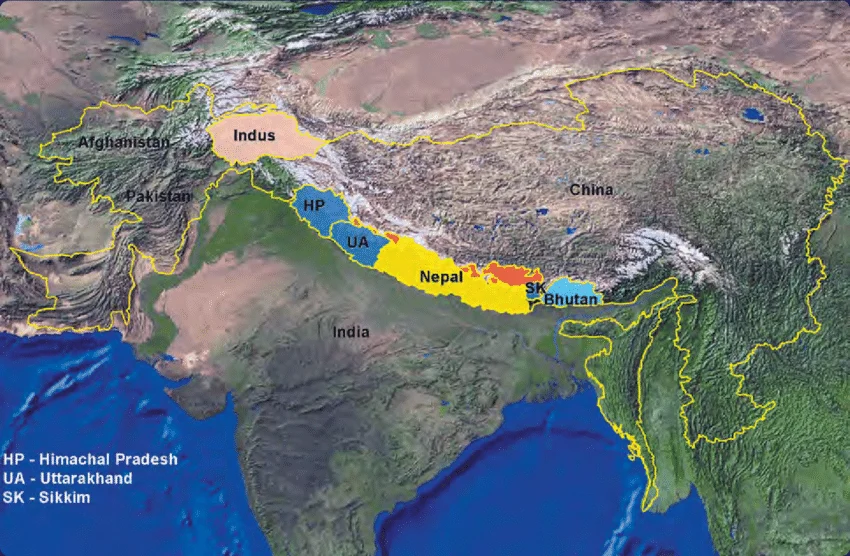
Climate change has caused:
- Faster glacier melting
- Increased natural disasters
- Floods due to glacier collapse
A recent example is the disaster in Uttarakhand’s Chamoli district, where glacier collapse caused massive flooding in the Dhauli Ganga river.
Temperature Rise in Himalayas
Studies show that temperatures in the Himalayan region are rising quickly:
- Average increase of 0.2°C per decade from 1951 to 2014
- At higher altitudes (above 4000 meters), the increase is about 0.5°C per decade
Future projections suggest:
- Temperature may rise by 2.6°C to 4.6°C by 2100
- In the worst case, it could reach 5.2°C
This will accelerate glacier melting even further.
Long-Term Threats of Deglaciation
Deglaciation and threats are not limited to the present; they will have long-term impacts:
1. Water Crisis
Initially, melting glaciers increase water flow. But once glaciers disappear, rivers may dry up, leading to water shortages.
2. Increased Natural Disasters
- Floods due to glacial lake bursts
- Landslides in mountain regions
- Coastal flooding due to rising sea levels
3. Impact on Agriculture
Changing water availability affects irrigation, leading to reduced crop production and food insecurity.
4. Economic Loss
- Damage to infrastructure
- Loss of tourism in glacier regions
- Increased disaster management costs
Conclusion
Deglaciation and Threats represent a major environmental challenge that demands urgent global attention. The rapid melting of glaciers is a clear sign of climate change and human impact on the Earth. From rising sea levels to water shortages and biodiversity loss, the consequences are widespread and serious.
The Himalayan glaciers, in particular, are crucial for millions of people in South Asia. Protecting them is not just an environmental issue but also a matter of survival for future generations.
Reducing greenhouse gas emissions, promoting sustainable development, and increasing awareness are essential steps to slow down deglaciation. If immediate action is not taken, the long-term consequences could be irreversible.
FAQs on Deglaciation and Threats
1. What is deglaciation?
Deglaciation is the process of melting and shrinking of glaciers due to rising temperatures. It happens when ice melts faster than it forms.
2. What causes deglaciation?
The main causes include global warming, greenhouse gas emissions, ocean warming, deforestation, and rapid industrialisation.
3. What is ablation in glaciers?
Ablation refers to the loss of ice from a glacier through melting, evaporation, erosion, and breaking off of ice (calving).
4. How does deglaciation affect sea levels?
Melting glaciers add water to the oceans, which raises sea levels. This can lead to coastal flooding and stronger storms.
5. Why are Himalayan glaciers important?
Himalayan glaciers are a major source of freshwater. They feed rivers like the Ganga, Brahmaputra, and Indus, which support millions of people.
6. What is the “Third Pole”?
The Himalayan region is called the “Third Pole” because it holds the largest amount of ice outside the Arctic and Antarctic regions.
7. What are the impacts of glacier melting on humans?
It can cause water shortages, floods, loss of agriculture, and damage to infrastructure, affecting millions of people.
8. What is the Thwaites Glacier?
Thwaites Glacier, also known as the “Doomsday Glacier,” is a large glacier in Antarctica that is melting rapidly and could significantly raise sea levels.
9. How fast are glaciers melting today?
Glaciers are melting faster than ever before. In the Himalayas, melting has doubled since the year 2000.
10. How does deglaciation affect wildlife?
Many animals depend on glaciers for habitat. Melting glaciers can lead to habitat loss, food chain disruption, and possible extinction of species.