


Kabaddi: From Village Game to Global Sport

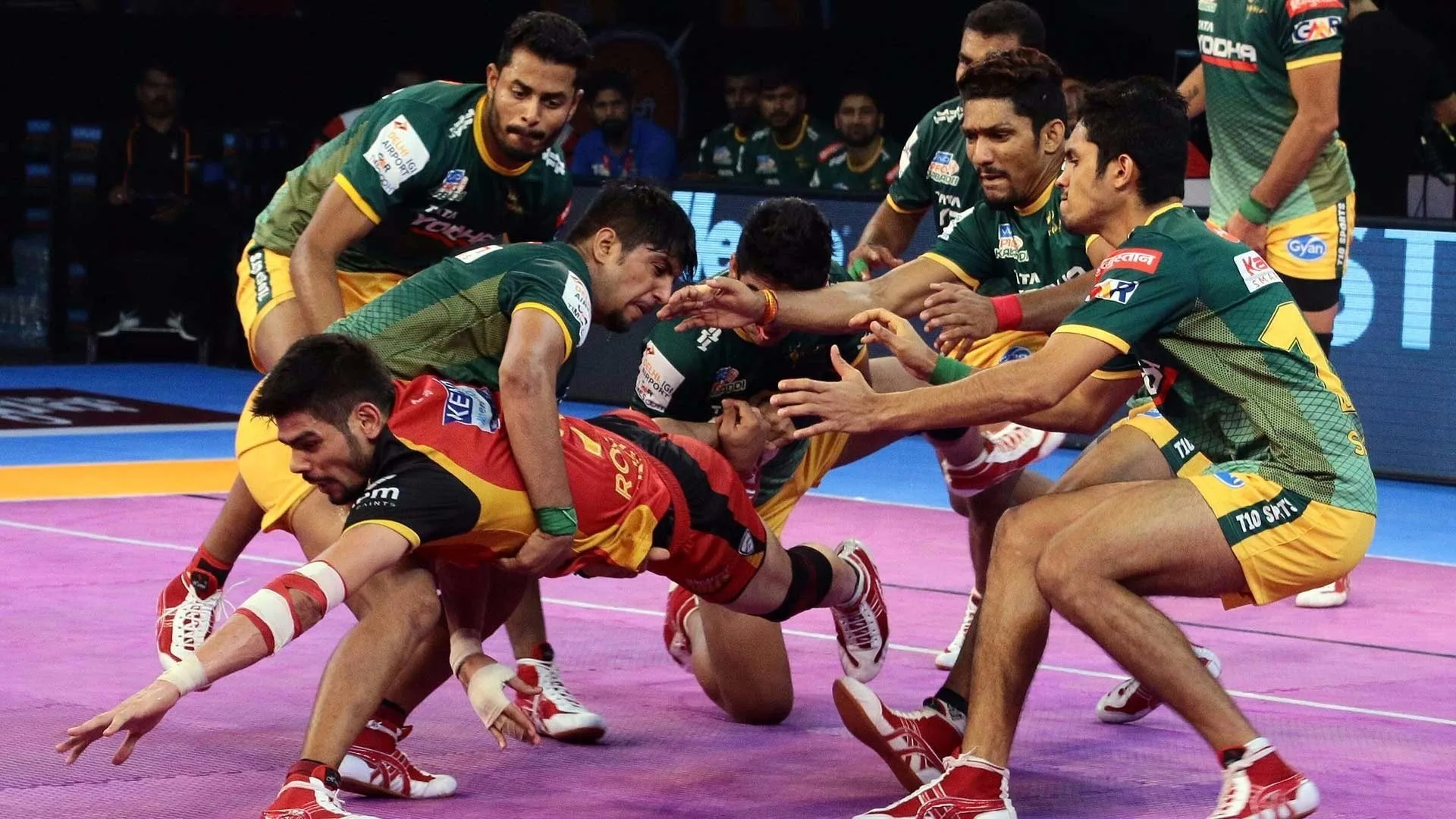
Kabaddi is one of the oldest and most exciting team sports in the world. It is a contact sport played between two teams of seven players each. The game is simple to understand but requires great strength, speed, and smart thinking. In Kabaddi, a player called a raider enters the opponent’s side, tries to touch players, and returns safely without being caught all in a single breath while chanting “kabaddi, kabaddi.”
Thank you for reading this post, don't forget to subscribe!This sport is very popular in South Asia, especially in India, Bangladesh, Pakistan, Nepal, and Iran. Today, Kabaddi is played at national and international levels, and its popularity is growing worldwide.
History of Kabaddi
Kabaddi has a long and rich history that goes back thousands of years. It is believed to have started during the Vedic period (around 1500 BC to 500 BC), and stories suggest that figures like Gautama Buddha and Lord Krishna played similar games in ancient times. The sport was also linked to traditional activities like Jallikattu, where strength and bravery were important. Ancient Tamil literature mentions a game called Sadugudu, considered an early form of Kabaddi, and records show that it was also played in Iran about 2,000 years ago. In modern times, Kabaddi developed into a proper competitive sport during the 20th century, with key milestones such as organized competitions in the 1920s, inclusion in the National Games of India in 1938, the formation of the All India Kabaddi Federation in 1950, and its demonstration at the Asian Games 1951. It became an official medal sport in the Asian Games from 1990. The launch of the Pro Kabaddi League in 2014 further transformed the sport, making it more popular, modern, and exciting for audiences.
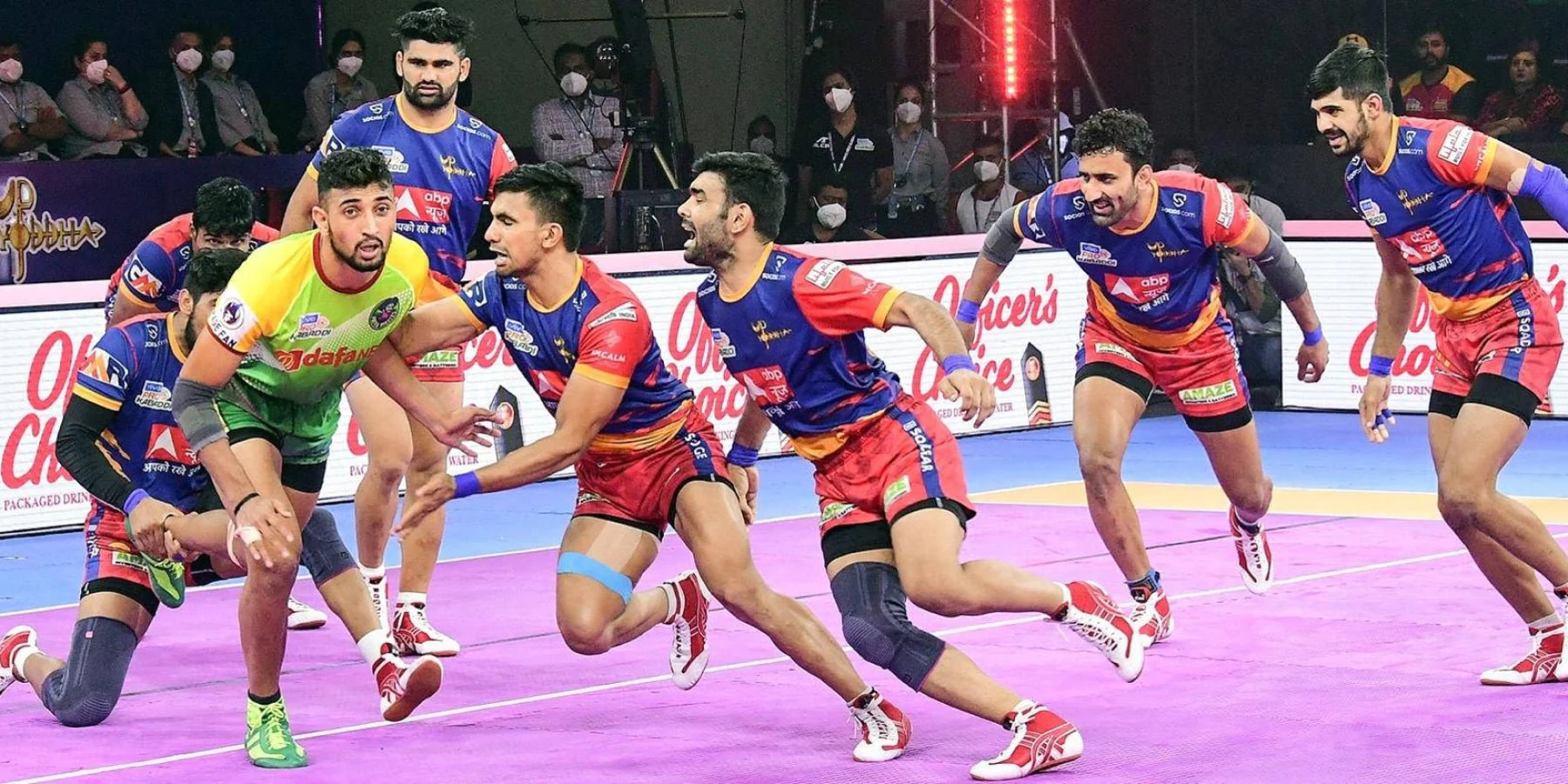
Number of Players in Kabaddi
Each Kabaddi team has:
- 7 players on the field
- 5 substitute players
Total squad size: 12 players
Player Eligibility
To play Kabaddi, players must meet some basic requirements:
- Good physical fitness
- Strong stamina and endurance
- Quick reflexes and agility
- Ability to hold breath for raids
- Teamwork and discipline
- In professional leagues, players must follow age and weight rules (for example, PKL players must be under 85 kg)
Dress Code in Kabaddi
Kabaddi players wear simple and comfortable sportswear:
- T-shirt or jersey
- Shorts
- Barefoot (no shoes allowed in most formats)
- Some players use knee caps or supports for safety
The dress should allow easy movement and flexibility.
Duration of Matches
A standard Kabaddi match is played in:
- Two halves of 20 minutes each
- 5-minute break between halves
Total match duration: 40 minutes
In some formats like beach or indoor Kabaddi, the time may be shorter.
Basic Rules of Kabaddi
Kabaddi rules are easy but require practice to master:
- A player (raider) enters the opponent’s side.
- The raider must chant “kabaddi” continuously.
- The raider tries to touch defenders and return safely.
- If the raider is caught, the defending team gets a point.
- If the raider touches players and comes back safely, points are awarded.
- Each raid has a 30-second time limit.
- Players who are out can return when their team scores.
- If all players of one team are out, it is called an All Out, and extra points are given.
Techniques in Kabaddi
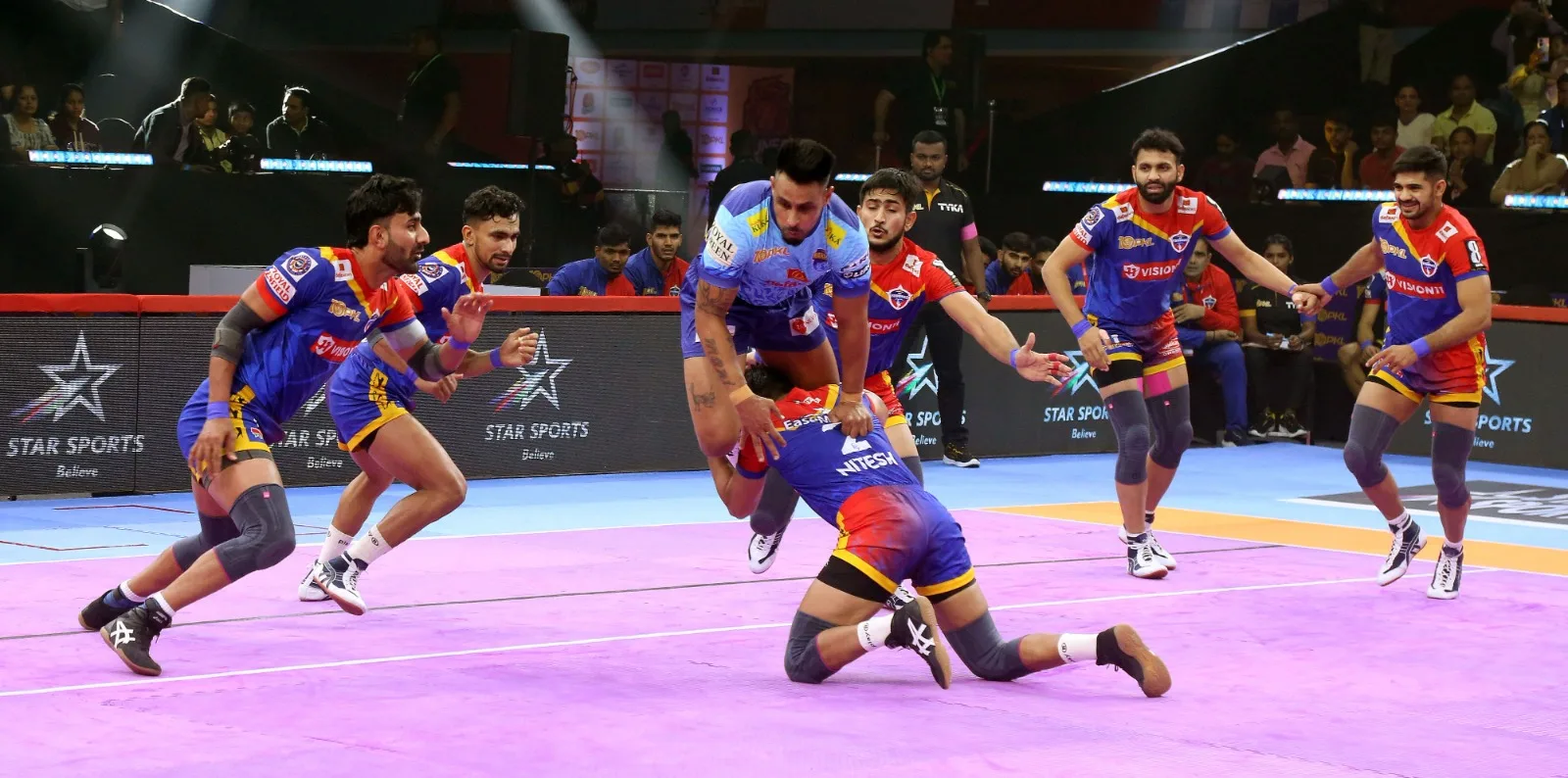
Kabaddi is not just about strength it is also about smart techniques.
Raiding Techniques
- Hand Touch
- Toe Touch
- Kick
- Dubki (ducking move)
- Running Hand Touch
Defensive Techniques
- Ankle Hold
- Thigh Hold
- Block
- Chain Tackle
- Dash
Good players combine speed, balance, and strategy to win.
Benefits of Playing Kabaddi
Kabaddi offers many physical and mental benefits:
Physical Benefits
- Improves strength and stamina
- Builds muscle power
- Increases flexibility
- Enhances reflexes and speed
Mental Benefits
- Improves focus and concentration
- Builds confidence
- Develops teamwork
- Enhances decision-making skills
Challenges in Kabaddi
Even though Kabaddi is exciting, it also has some challenges:
- Risk of injuries due to physical contact
- Requires high fitness level
- Less popularity compared to sports like cricket
- Limited facilities in some regions
- Need for better international exposure
Successful Kabaddi Players
Famous Male Players
- Anup Kumar
- Pardeep Narwal
- Rahul Chaudhari
- Ajay Thakur
- Manjeet Chhillar
Famous Female Players
- Tejaswini Bai
- Mamatha Poojary
- Abhilasha Mhatre
- Payel Chowdhury
These players have brought great success and recognition to the sport.
Major International Competitions
Kabaddi is played in many international tournaments:
- Kabaddi World Cup
- Asian Games
- Asian Kabaddi Championship
- South Asian Games
- Junior Kabaddi World Cup
- European Kabaddi Championship
- Kabaddi Masters
India has been one of the most successful teams in these competitions.
Kabaddi Leagues Worldwide
Kabaddi leagues have helped the sport grow globally:
- Pro Kabaddi League (India)
- Super Kabaddi League (Pakistan)
- Indo International Premier Kabaddi League
- Yuva Kabaddi Series (India)
- Nepal Kabaddi League
- Iran Kabaddi League (Iran)
- Korean Kabaddi League (South Korea)
- Japan Kabaddi League (Japan)
These leagues provide opportunities for young players and increase the sport’s popularity worldwide.
Famous Kabaddi Clubs
Some well-known Kabaddi teams include:
- Patna Pirates
- U Mumba
- Jaipur Pink Panthers
- Bengaluru Bulls
- Bengal Warriors
- Dabang Delhi
These clubs compete in professional leagues and have large fan followings.
India’s Role and Success in Kabaddi
India has played a major role in developing Kabaddi into a popular and organized sport at both national and international levels. The country helped standardize the rules, organize structured competitions, and promote Kabaddi across the world. India’s efforts led to the sport being included in major events like the Asian Games, where Indian teams dominated for many years. India has also won multiple titles in the Kabaddi World Cup, showing its strength in the game. In addition, strong domestic leagues such as the Pro Kabaddi League have further boosted the sport’s popularity and helped produce talented players, making India the leading nation in Kabaddi.
Future of Kabaddi
The future of Kabaddi looks bright:
- Growing popularity worldwide
- Expansion of leagues
- Inclusion in more international events
- Better training facilities
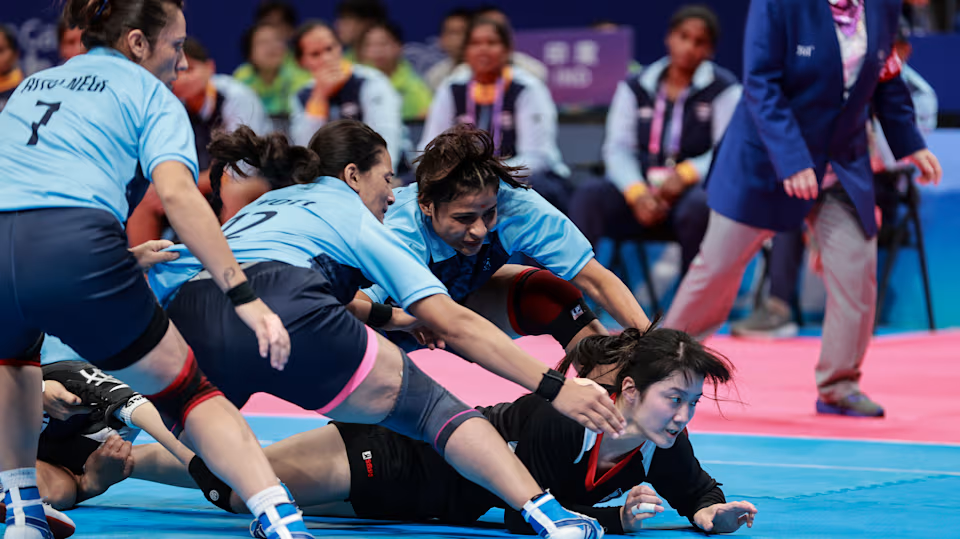
- More opportunities for women players
With proper support and promotion, Kabaddi can become a global sport like football or basketball.
Conclusion
Kabaddi is a powerful and exciting sport that combines strength, speed, and intelligence. From ancient times to modern international competitions, it has grown into a popular global game. It teaches discipline, teamwork, and courage.
Even though there are challenges, Kabaddi continues to grow with the help of leagues, tournaments, and talented players. With increasing global interest, the sport has a very promising future.
Kabaddi is not just a game it is a symbol of tradition, energy, and determination.
FAQs about Kabaddi
- What is Kabaddi?
Kabaddi is a team sport where players score points by tagging opponents and returning safely. - How many players are in a Kabaddi team?
Each team has 7 players on the field and 5 substitutes. - What is a raid in Kabaddi?
A raid is when a player enters the opponent’s side to score points. - How long is a Kabaddi match?
A standard match is 40 minutes, divided into two halves of 20 minutes each. - What is an All Out in Kabaddi?
When all players of a team are out, it is called an All Out, giving extra points. - Is Kabaddi played internationally?
Yes, Kabaddi is played in events like the Asian Games. - Which country is best in Kabaddi?
India is the most successful country in Kabaddi. - What is the Pro Kabaddi League?
The Pro Kabaddi League is a popular professional Kabaddi league in India. - Can girls play Kabaddi?
Yes, Kabaddi is played by both men and women at all levels. - What skills are needed in Kabaddi?
Strength, speed, stamina, and quick thinking are important skills.