


Mission Gaganyaan: India’s First Human Space Mission

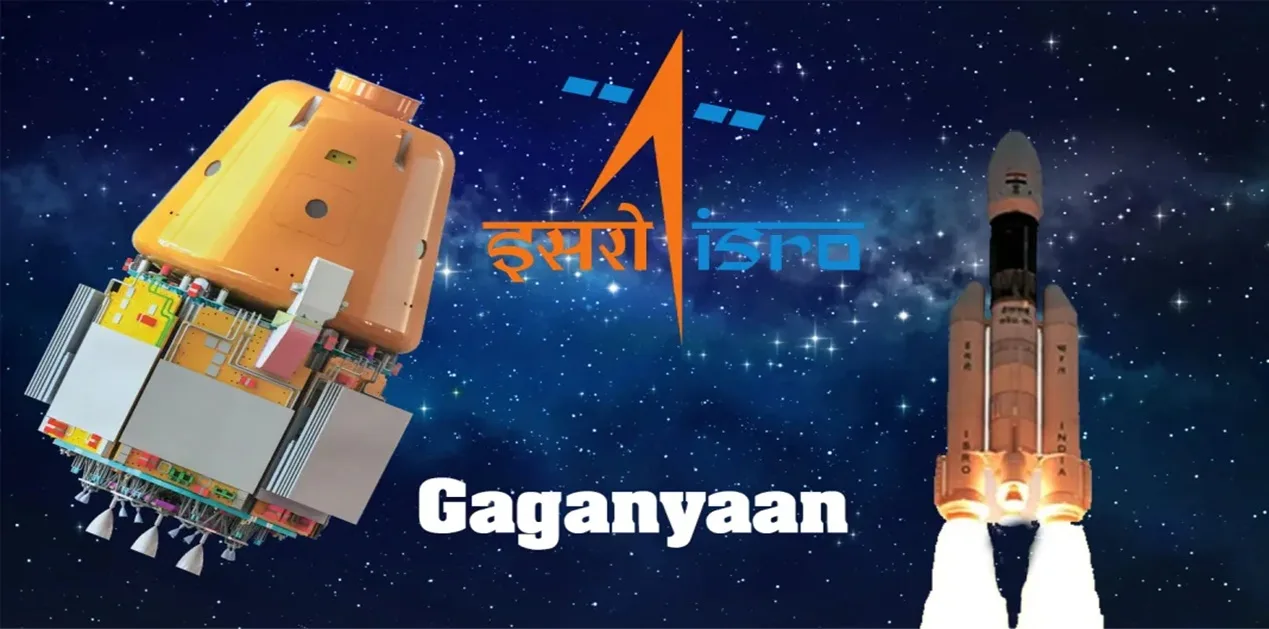
Mission Gaganyaan is one of the most important space projects of India. It is the first human spaceflight mission planned by the Indian Space Research Organisation (ISRO). Through this mission, India aims to send Indian astronauts into space and safely bring them back to Earth. This mission is a symbol of India’s growing power in science and technology.
India has already achieved success in missions like Chandrayaan and Mangalyaan. Now, Mission Gaganyaan is the next big step in India’s space journey. It will help India join the group of countries that have the ability to send humans into space.

The mission is not only important for space science but also for the development of new technologies, industries, education, and international cooperation.
What is Mission Gaganyaan?
Mission Gaganyaan is India’s first manned space mission developed by ISRO. The word “Gaganyaan” means “Sky Vehicle” in Sanskrit. Under this mission, Indian astronauts, also called “Vyomanauts,” will travel to space in an Indian spacecraft.
The mission plans to send astronauts into Low Earth Orbit (LEO), about 300 to 400 kilometers above the Earth. The astronauts will stay in space for about 5 to 7 days before returning safely.
The mission includes:
- Two unmanned missions
- One manned mission carrying astronauts
The unmanned missions are important because they help ISRO test the safety and performance of the spacecraft before sending humans.
Main Objectives of Mission Gaganyaan
The major objectives of Mission Gaganyaan are:
- To send Indian astronauts into space safely.
- To develop India’s own human spaceflight technology.
- To improve scientific research and innovation.
- To inspire students and young scientists.
- To strengthen India’s position in global space research.
This mission is a major step towards making India self-reliant in advanced space technology.
Components of Mission Gaganyaan
1. Crew Module
The Crew Module is the part of the spacecraft where astronauts will stay during the mission. It is designed to provide a safe environment for the astronauts.
Features of the Crew Module:
- Supports human life in space
- Protects astronauts from extreme temperatures
- Has communication systems
- Includes emergency escape systems
The crew module will return to Earth after the mission and land safely in the sea.
2. Service Module
The Service Module supports the crew module during the mission. It contains:
- Fuel tanks
- Engines
- Power systems
- Oxygen and life support systems
It helps the spacecraft move and function properly in space.
3. Launch Vehicle
Mission Gaganyaan will be launched using the powerful GSLV Mk III rocket, also known as LVM3.
This rocket is one of the heaviest and most advanced launch vehicles developed by ISRO. It has the ability to carry humans and heavy payloads into space safely.
The rocket has three stages:
- Solid fuel stage
- Liquid fuel stage
- Cryogenic upper stage
The cryogenic engine is a major achievement for India because it uses extremely cold fuel technology.
Training of Indian Astronauts
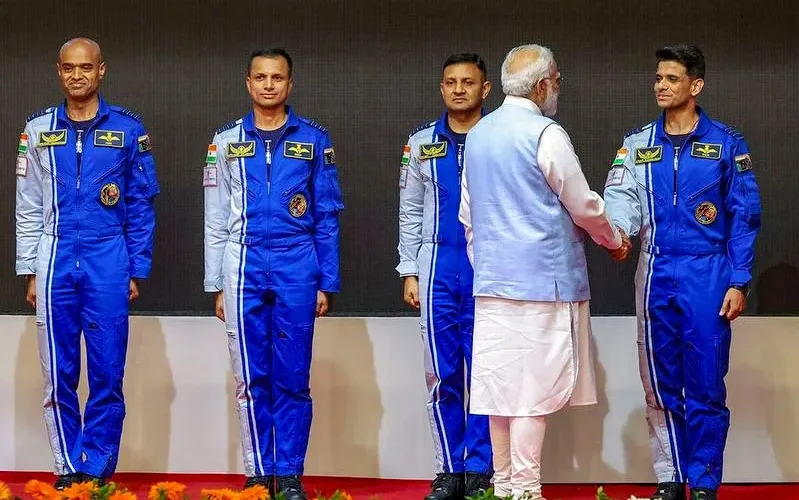
Astronaut training is one of the most important parts of Mission Gaganyaan. ISRO selected Indian Air Force pilots for astronaut training.
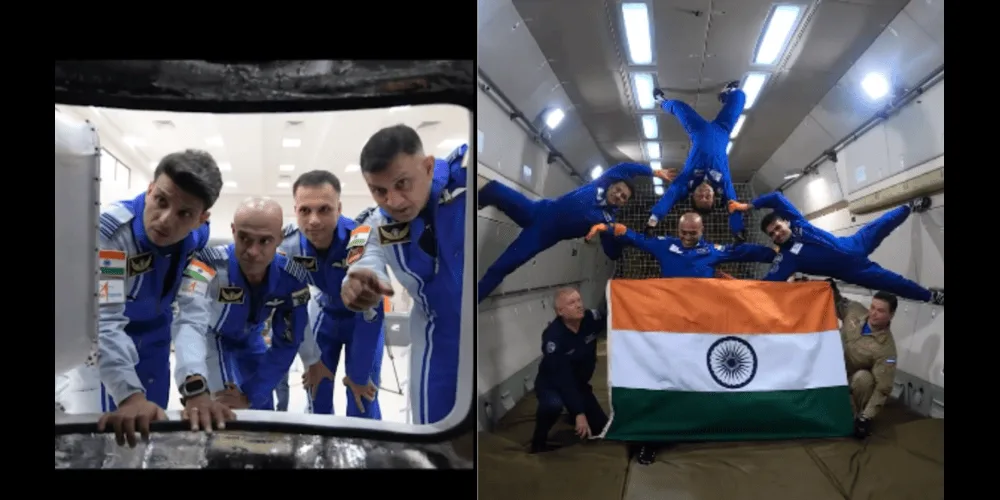
India signed an agreement with the Russian space agency for astronaut training support. The astronauts received special training in Russia.
The training includes:
- Physical fitness
- Space survival techniques
- Zero gravity training
- Spacecraft operation
- Emergency handling
Astronauts are trained to survive in difficult conditions during launch, space travel, and landing.
Abort Mission and Safety Tests
Human safety is the top priority in Mission Gaganyaan. ISRO is conducting several safety tests before the final mission.
One important test is the Abort Mission Test. In this test, the crew escape system is checked. If any problem happens during launch, the system can quickly separate the crew module from the rocket and save the astronauts.
ISRO has also tested:
- Parachute systems
- Re-entry systems
- Heat shields
- Communication systems
These tests are necessary to ensure the mission is safe.
Low Earth Orbit Explained
The astronauts in Mission Gaganyaan will travel in Low Earth Orbit.
Low Earth Orbit is a region in space located around 300 to 400 kilometers above Earth. Satellites and spacecraft in this orbit move very fast and complete one round around Earth in about 90 minutes.
Advantages of Low Earth Orbit:
- Easier communication with Earth
- Lower fuel requirement
- Safer for human missions
- Better observation of Earth
Importance of Mission Gaganyaan
1. Development of Science and Technology
Mission Gaganyaan will help India develop advanced technologies in:
- Robotics
- Artificial intelligence
- Communication
- Navigation systems
- Space medicine
- Material science
The technologies developed for space missions can also be used in daily life.
2. Inspiration for Students
The mission will inspire millions of students to study science and technology. Young people may become interested in careers related to:
- Space science
- Engineering
- Research
- Aviation
It will create scientific awareness among the youth.
3. Growth of Industries
Mission Gaganyaan will increase industrial growth in India. Many private companies are working with ISRO to build spacecraft parts and technologies.
This will create:
- New jobs
- Better manufacturing systems
- Growth in private space companies
India is also encouraging private participation in the space sector through organizations like IN-SPACe.
4. International Cooperation
Human space missions require cooperation between countries. Mission Gaganyaan has improved India’s partnership with countries like Russia and France.
International cooperation helps in:
- Sharing technology
- Scientific research
- Space safety
- Future missions
India may also work with other countries on future space stations and deep space missions.
Other Important ISRO Missions
Chandrayaan Missions
ISRO launched Chandrayaan missions to explore the Moon. Chandrayaan-1 discovered water molecules on the Moon, which was a major achievement.
Chandrayaan-3 successfully landed on the Moon and made India one of the few countries to achieve soft landing on the lunar surface.
Aditya-L1 Mission
Aditya-L1 is India’s mission to study the Sun. It is placed near the Lagrange Point (L1), where gravitational forces help spacecraft remain stable.
The mission studies:
- Solar storms
- Solar radiation
- Space weather
Shukrayaan Mission
Shukrayaan is a planned mission to Venus. The mission aims to study:
- Venus atmosphere
- Surface temperature
- Climate conditions
XpoSat Mission
XpoSat is a space observatory developed to study cosmic X-rays and black holes.
It helps scientists understand the mysteries of the universe.
Launch Vehicles Used by ISRO
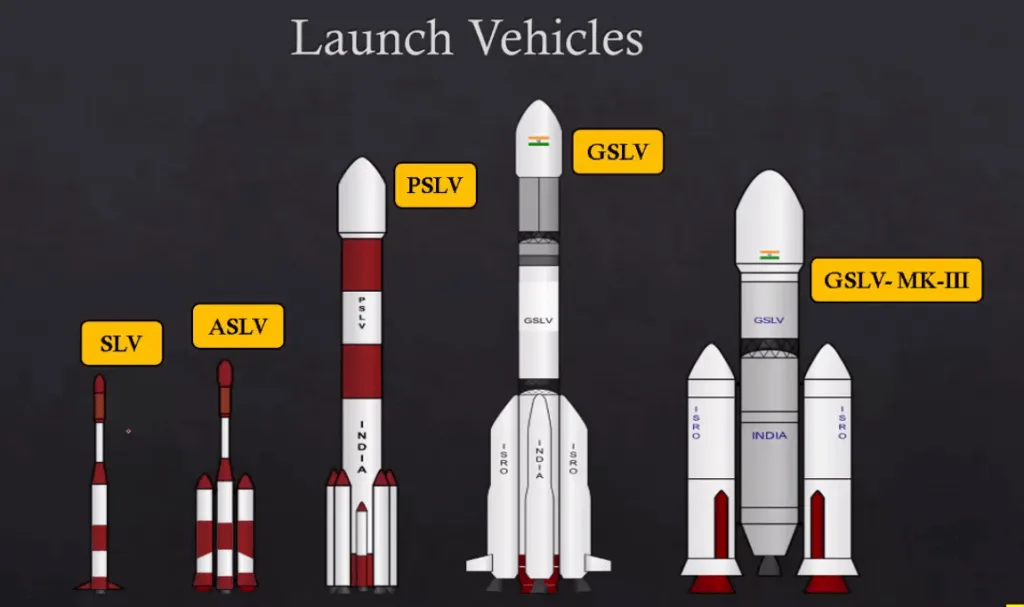
Satellite Launch Vehicle (SLV)
SLV was the first rocket developed by ISRO. It was used for launching small satellites.
Augmented Satellite Launch Vehicle (ASLV)
ASLV was an improved version of SLV. It carried satellites into low Earth orbit.
Polar Satellite Launch Vehicle (PSLV)
PSLV is one of ISRO’s most successful rockets.
It has launched:
- Chandrayaan-1
- Mars Orbiter Mission
- Many foreign satellites
PSLV is known for its reliability and accuracy.
Geosynchronous Satellite Launch Vehicle (GSLV)
GSLV is a more powerful rocket used for heavier satellites.
The GSLV Mk III or LVM3 is used for Mission Gaganyaan because it can carry heavy payloads safely.
Small Satellite Launch Vehicle (SSLV)
SSLV is designed for launching small satellites at low cost.
It supports the growing demand for commercial satellite launches.
Reusable Rockets
ISRO is also working on reusable rockets. These rockets can return and be used again.
Benefits include:
- Lower launch costs
- Reduced space debris
- Better efficiency
ISRO tested the RLV-TD reusable launch vehicle successfully.
Challenges Faced by Mission Gaganyaan
Although the mission is important, it also faces many challenges.
1. Human Safety
Human spaceflight is very risky. Even a small mistake can be dangerous for astronauts.
ISRO must ensure:
- Safe launch
- Proper life support
- Safe landing
2. Advanced Technology Requirements
India is still developing some important systems such as:
- Space suits
- Environmental control systems
- Life support systems
- Tracking systems
These technologies require high accuracy and testing.
3. Astronaut Training Facilities
India is still improving its astronaut training facilities. Training astronauts requires advanced simulators and special equipment.
4. High Costs
Human space missions are very expensive. They require:
- Research
- Testing
- Infrastructure
- Safety systems
Managing costs while maintaining quality is a major challenge.
Future of India’s Space Programme
Mission Gaganyaan is only the beginning of India’s future space plans.
In the future, India may work on:
- Space stations
- Moon missions with astronauts
- Mars human missions
- Deep space exploration
India’s success in human spaceflight will help the country become a global leader in space science.
Conclusion
Mission Gaganyaan is a historic step in India’s space journey. It represents the country’s scientific progress, technological strength, and national pride. Through this mission, India aims to send its astronauts safely into space and develop advanced human spaceflight technology.
The mission will not only improve India’s space capabilities but also inspire students, support industries, create jobs, and strengthen international cooperation. Although there are challenges, ISRO is working hard to ensure the success of the mission.
Mission Gaganyaan shows that India is ready to achieve bigger goals in space exploration and become one of the leading space powers in the world.
FAQs on Mission Gaganyaan
1. What is Mission Gaganyaan?
Mission Gaganyaan is India’s first human spaceflight mission launched by ISRO to send astronauts into space.
2. Which organization is leading Mission Gaganyaan?
The mission is being conducted by the Indian Space Research Organisation.
3. How many astronauts will travel in Mission Gaganyaan?
The mission is planned to carry three Indian astronauts into space.
4. Which rocket will launch Mission Gaganyaan?
The mission will use the GSLV Mk III, also called LVM3.
5. How long will astronauts stay in space during the mission?
The astronauts are expected to stay in space for about 5 to 7 days.
6. What is the main aim of Mission Gaganyaan?
The main aim is to develop India’s human spaceflight capability and advance space technology.
7. Why is Mission Gaganyaan important for India?
It will improve science, technology, industrial growth, and inspire students towards space research.
8. Where were Indian astronauts trained for the mission?
Indian astronauts received part of their training in Russia with Russian support.
9. What is Low Earth Orbit in Mission Gaganyaan?
Low Earth Orbit is the region around 300–400 km above Earth where the spacecraft will travel.
10. What are the major challenges of Mission Gaganyaan?
Major challenges include astronaut safety, advanced technology development, and high mission costs.