



National Land Monetisation Corporation Explained

National Land Monetisation Corporation (NLMC) is an important initiative launched by the Government of India to make better use of unused government land and assets. Many government departments and public sector companies own large pieces of land that are either unused or underused. These lands have economic value, but they often remain idle for years.
Thank you for reading this post, don't forget to subscribe!To solve this problem, the Union Cabinet approved the creation of the National Land Monetisation Corporation (NLMC) in 2022. Its main goal is to unlock the value of surplus government land and generate revenue for future development.
Why Was NLMC Established?
The Union Cabinet approved the establishment of NLMC as a Special Purpose Vehicle (SPV). Earlier, the Union Finance Minister announced this plan in the Union Budget 2021–22.
The corporation was created to manage and monetize surplus land owned by:
- Central government departments
- Public Sector Undertakings (PSUs)
- Closed government enterprises
- Underused public assets
The idea is simple: instead of allowing valuable land to remain unused, the government wants to use it for economic growth.
What is National Land Monetisation Corporation?
The National Land Monetisation Corporation (NLMC) is a company fully owned by the Government of India.
It works under the Ministry of Finance.
Capital Structure
NLMC was established with:
| Capital Type | Amount |
|---|---|
| Authorized Share Capital | ₹5,000 crore |
| Paid-up Capital | ₹150 crore |
This capital helps the corporation start its operations and manage large land assets.
Main Functions of NLMC
NLMC has several important responsibilities.
1. Monetisation of Government Assets
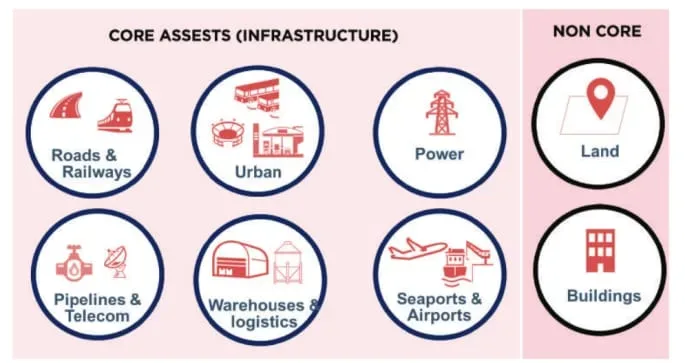
Its primary function is to monetize unused or underused government land.
This includes:
- Vacant land
- Unused buildings
- Closed factory land
- Surplus office spaces
Instead of leaving these assets idle, NLMC helps convert them into revenue-generating resources.
2. Support Strategic Disinvestment
Some public sector companies have stopped operations or are being privatized.
In such cases, NLMC helps manage their land assets.
Examples include:
- Closed PSUs
- Loss-making public companies
- Enterprises under privatization
Their surplus land may be transferred to NLMC, which then manages and monetizes it.
3. Advisory Role
NLMC also works as an advisory body.
It helps government departments and CPSEs identify:
- Non-core assets
- Surplus land
- Best monetisation methods
This ensures better planning and higher returns.
4. Best Practice Development
NLMC is expected to become a model organization for land monetisation.
It will create systems and guidelines for:
- Property valuation
- Legal verification
- Market analysis
- Investor engagement
This will improve professional management of public assets.
Why Professionals Are Needed in NLMC?
Land monetisation is not easy.
It requires expert knowledge in:
| Skill | Importance |
| Property Valuation | Determines land value |
| Market Research | Identifies demand |
| Investment Banking | Attracts investors |
| Land Management | Handles land use planning |
| Legal Due Diligence | Prevents disputes |
Because of this, NLMC plans to hire skilled professionals from the private sector.
This model is similar to institutions like National Investment and Infrastructure Fund and Invest India.
What Does Monetisation Mean?
Monetisation means converting an asset into a source of money.
When the government monetizes an asset, it usually transfers the revenue rights of that asset to a private company for a fixed period.
The government does not always sell ownership permanently.
Instead, it may:
- Lease the asset
- Share revenue
- Allow private operation for some years
In return, the government receives:
- Upfront payment
- Revenue share
- Investment commitments
- Better asset usage
After the agreement ends, ownership usually remains with the government.
Methods of Asset Monetisation
The government can monetize assets in multiple ways.
Real Estate Investment Trust (REIT)
A REIT is a company that owns and manages income-generating real estate.
For example:
- Office buildings
- Commercial land
- Warehouses
Investors can invest money, and the asset generates income.
Public Private Partnership (PPP)
In the PPP model, both government and private companies work together.
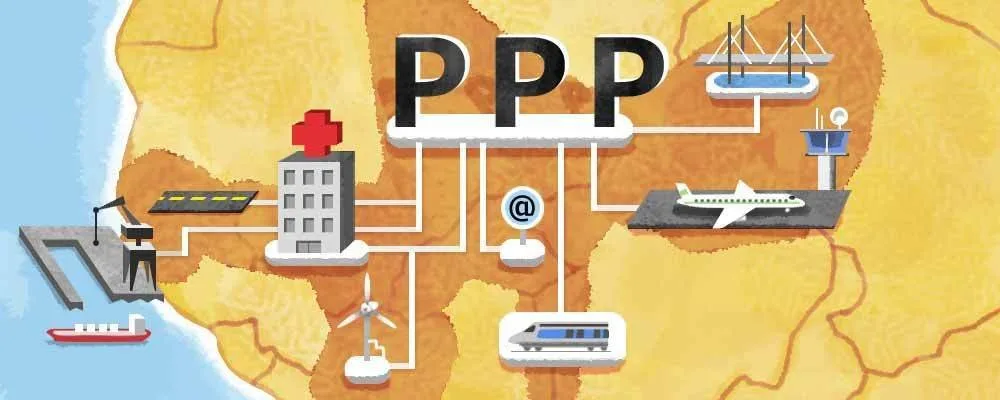
Examples include:
- Highways
- Railways
- Airports
- Warehouses
Private players invest money and improve operations while the government retains ownership or control.
Why Does the Government Monetize Assets?
There are several reasons.
Generate Revenue
Monetisation creates a new income source for the government.
This helps reduce pressure on public finances.
Use Idle Assets Efficiently
Many government lands remain unused for decades.
Monetisation helps unlock their hidden value.
Build New Infrastructure
Money earned from monetisation can be used to build:
- Roads
- Bridges
- Railways
- Airports
- Power projects
This supports long-term economic growth.
How Much Land is Available for Monetisation?
According to the Economic Survey 2021–22, CPSEs identified around 3,400 acres of land for possible monetisation.
Some major land holders include:
BSNL
Bharat Sanchar Nigam Limited had identified properties worth around ₹24,980 crore for monetisation in 2020.
Indian Railways
Indian Railways owns more than 11 lakh acres of land.
Out of this:
| Land Type | Area |
| Total Land | 11 lakh acres |
| Vacant Land | 1.25 lakh acres |
This shows massive monetisation potential.
Defence Ministry
The Defence Ministry has around 17.95 lakh acres of land.
Breakup:
| Category | Area |
| Inside Cantonments | 1.6 lakh acres |
| Outside Cantonments | Over 16 lakh acres |
This makes defence one of the largest landholders in India.
Challenges Before NLMC
Although NLMC has great potential, many challenges remain.
Difficulty in Revenue Identification
Not every asset generates easy revenue.
Some lands may:
- Be in remote areas
- Lack market demand
- Have legal issues
This reduces investor interest.
Slow Privatisation
Privatisation in India has often moved slowly.
Delays in approvals and policy changes affect investor confidence.
Limited Private Interest
Getting private investment is not always easy.
Some recent PPP projects received weak response from investors.
This shows monetisation needs strong planning.
Asset-Specific Challenges
Different sectors have unique problems.
Gas and Petroleum Pipelines
Many pipeline networks are underused.
Low usage reduces their value.
Power Sector Assets
Electricity tariffs are regulated by government bodies.
This limits profit potential for investors.
Highways
Highways with fewer than four lanes often attract less private investment.
Investors prefer high-traffic routes.
National Monetisation Pipeline (NMP)
The Government of India launched the National Monetisation Pipeline (NMP).
Its aim is to monetize core infrastructure assets over four years.
The plan targets around ₹6 lakh crore worth of monetisation between FY 2022–25.
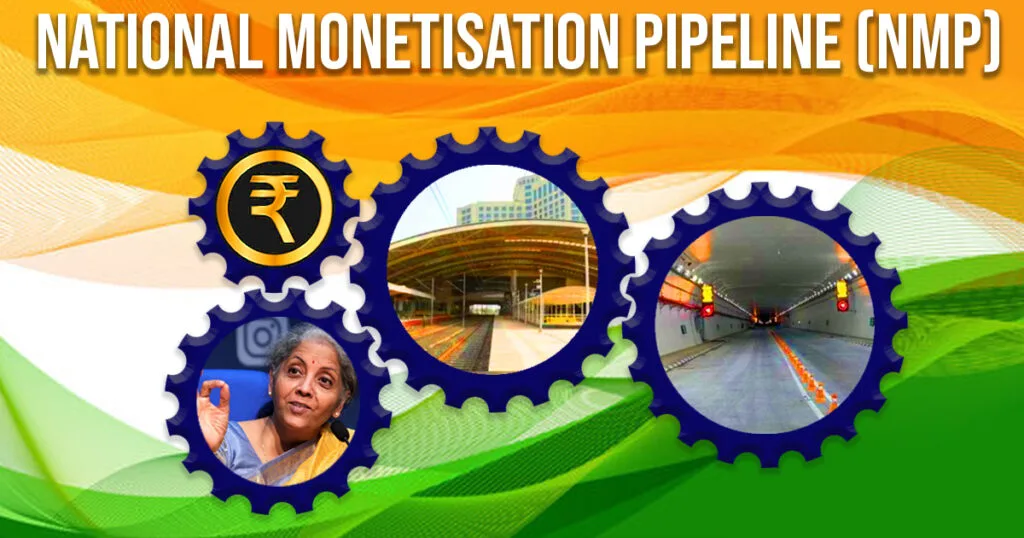
Key sectors include:
- Roads
- Railways
- Power
- Oil and Gas Pipelines
- Telecom
- Civil Aviation
NLMC supports this larger monetisation strategy.
What is Disinvestment?
Disinvestment means selling or reducing government ownership in public sector companies or assets.
This helps the government:
- Raise funds
- Reduce fiscal burden
- Improve efficiency
Strategic Disinvestment
Strategic disinvestment is a deeper process.
Here, the government transfers:
- Ownership
- Management control
Usually to a private company.
This is close to privatization.
The sale may involve up to 50% or more stake, depending on government decisions.
Role of DIPAM
The Department of Investment and Public Asset Management (DIPAM) under the Ministry of Finance manages strategic stake sales in PSUs.
It plays an important role in:
- Disinvestment
- Asset sales
- Privatization processes
Way Forward
For NLMC to succeed, strong reforms are necessary.
Transparency is Essential
Every monetisation deal must be transparent.
Clear auctions and fair valuation improve trust.
Better Coordination
Success requires cooperation between:
- Central government
- State governments
- Public sector enterprises
- Private investors
All stakeholders must work together.
Strong Dispute Resolution
Land disputes can delay projects.
An efficient dispute resolution system is needed for faster solutions.
Improve PPP Framework
Modern PPP models should ensure:
- Clear risk sharing
- Fair returns
- Competitive bidding
This attracts better investors.
Policy Reforms
Government policies should remain stable and investor-friendly.
Frequent policy changes create uncertainty.
Final Thoughts
National Land Monetisation Corporation is a major reform in India’s asset management system. It aims to unlock the hidden value of unused government land and generate funds for infrastructure development. If implemented properly with transparency and efficiency, NLMC can help improve public finances, support economic growth, and ensure better use of valuable public assets.
FAQs
1. What is NLMC?
NLMC is a government-owned corporation created to monetize unused or surplus government land.
2. When was NLMC approved?
It was approved by the Union Cabinet in 2022.
3. What is asset monetisation?
Asset monetisation means converting assets into revenue through leasing or other financial models.
4. Is monetisation the same as selling land?
No. In many cases, ownership remains with the government while revenue rights are shared temporarily.
5. What is the goal of NLMC?
Its main goal is to unlock the value of unused land and generate funds for infrastructure.