Cold War: A Detailed Study of Global Rivalry, Ideological Conflict, and Its Impact (1945–1991)

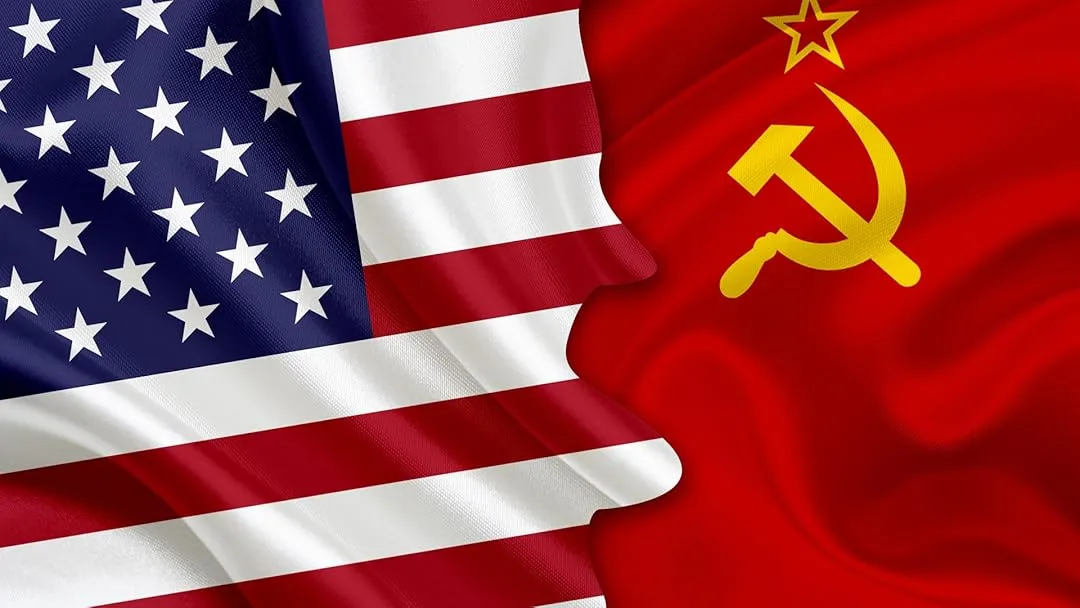
The Cold War was one of the most important periods in modern world history. It shaped global politics, economics, military strategies, and international relations for nearly half a century. Beginning after the end of World War II in 1945 and lasting until 1991, the Cold War was not a direct war fought on battlefields between two superpowers, but rather a long period of tension, rivalry, and competition between the United States and the Soviet Union.
Thank you for reading this post, don't forget to subscribe!What is the Cold War?
The Cold War refers to a period of geopolitical tension between two major power blocs:
- The United States and its allies (mainly Western European countries)
- The Soviet Union and its allies (mainly Eastern European countries)
It is called “Cold” because there was no direct large-scale military conflict between the two superpowers. Instead, the conflict was fought through:
- Ideological differences
- Political pressure
- Economic aid programs
- Proxy wars
- Arms race and space race
The world during this time was divided into two major camps:
| Bloc | Leader | Ideology |
|---|---|---|
| Western Bloc | USA | Capitalism |
| Eastern Bloc | Soviet Union | Communism |
Background of the Cold War
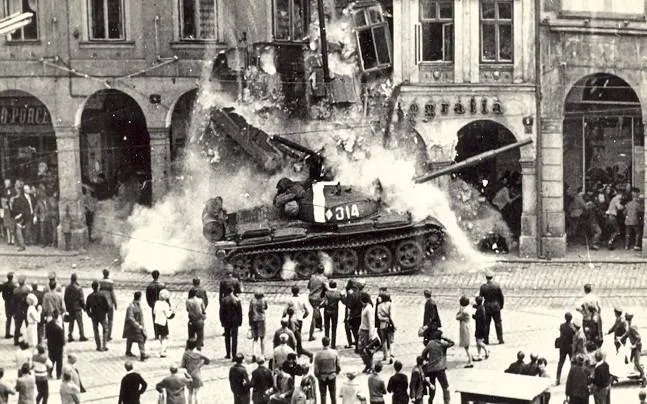
After World War II ended in 1945, the alliance between the USA and the Soviet Union quickly broke down. During the war, both had fought together against Nazi Germany, but their relationship was based on necessity, not trust.
Once the war ended, their differences became clear:
- The USA supported capitalism and democracy
- The Soviet Union supported communism and one-party rule
These ideological differences created deep mistrust and led to the beginning of the Cold War.
Causes of the Cold War
1. Ideological Conflict
The main cause of the Cold War was the difference in ideology:
- Capitalism (USA): Private ownership, free market economy, democratic government
- Communism (USSR): State ownership, planned economy, single-party rule
Both sides believed their system was superior and wanted to spread it globally.
2. Post-War Tensions
After World War II, both superpowers wanted to increase their influence:
- The Soviet Union aimed to control Eastern Europe
- The USA wanted to prevent the spread of communism
This competition created tension across Europe and beyond.
3. The Potsdam Conference (1945)
The Potsdam Conference was held after World War II to decide the future of Germany.
Key disagreements:
- The Soviet Union wanted a buffer zone in Eastern Europe
- The USA and its allies opposed this expansion
- The USA did not fully inform the USSR about the atomic bomb
These disagreements increased suspicion between both sides.
4. Truman Doctrine (1947)
The Truman Doctrine was announced by US President Harry Truman in 1947.
Its main aim was to:
- Stop the spread of communism
- Provide economic and military aid to countries like Greece and Turkey
This marked the official beginning of the Cold War policy of containment.
5. The Iron Curtain
The term Iron Curtain refers to the division between:
- Western Europe (capitalist countries)
- Eastern Europe (communist countries under Soviet control)
It symbolized the political and ideological divide in Europe.
Major Events of the Cold War
1. Berlin Blockade (1948–49)
After World War II, Germany and its capital Berlin were divided into four zones controlled by the United States, Britain, France, and the Soviet Union. However, tensions soon grew between the Soviet Union and the Western Allies.
In 1948, the Soviet Union launched the Berlin Blockade to cut off all land and water routes to West Berlin. The aim was to limit the ability of Allied countries to access their sectors and force them to leave Berlin.
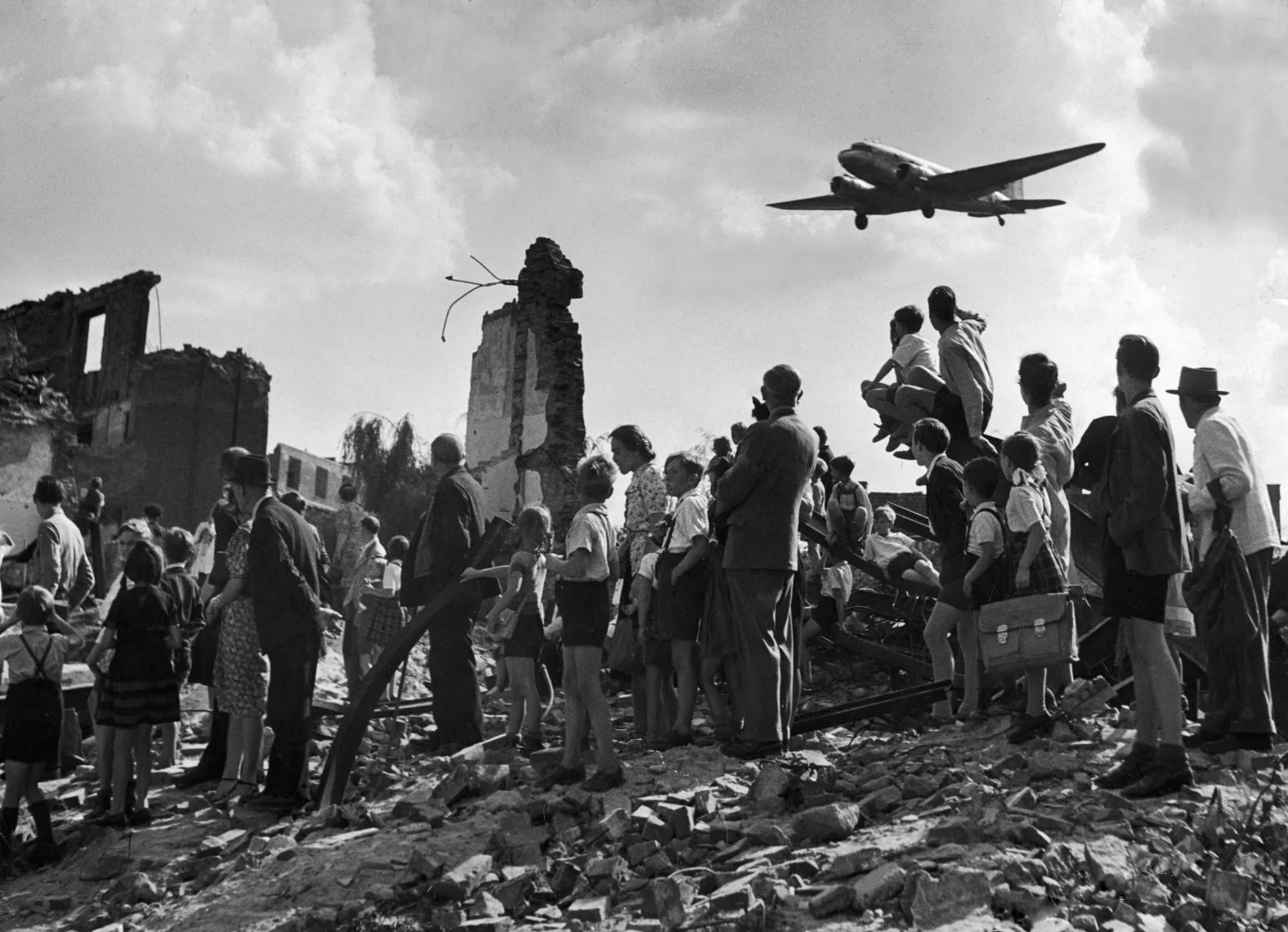
In response, the United States and its allies started the Berlin Airlift, supplying food, fuel, and essential goods to the people of West Berlin through airplanes. This continued for almost a year and became one of the first major confrontations of the Cold War.
2. Construction of the Berlin Wall (1961) and Its History
The division of Germany became the central issue of Cold War tensions. After the defeat of Nazi Germany in 1945, important meetings like the Yalta and Potsdam Conferences were held to decide the future of Germany.
At these conferences:
- Germany was divided into four zones under American, British, French, and Soviet control
- The eastern part went to the Soviet Union
- The western part went to the USA, Britain, and France
- Berlin, though located inside the Soviet zone, was also divided into four parts
Later:
- The three western zones merged to form West Germany (Federal Republic of Germany – FRG)
- The Soviet-controlled zone became East Germany (German Democratic Republic – GDR)
West Berlin became like an island of capitalism inside communist East Germany, which created major tension.
To stop people from escaping from East Berlin to West Berlin, the communist government built the Berlin Wall on August 13, 1961, using barbed wire and concrete.
Purpose of the Berlin Wall:
- Stop mass migration from East to West
- Strengthen communist control
- Prevent loss of skilled workers
Movement between the two sides was heavily restricted, and people were rarely allowed to cross.
The Berlin Wall became the most powerful symbol of the Cold War, representing the division between capitalism and communism.
Finally, the Berlin Wall fell in 1989, marking a symbolic end of the Cold War and the beginning of German reunification.
3. The Marshall Plan vs Cominform
The Cold War also involved economic competition between the USA and the Soviet Union.
The Marshall Plan (USA)
In 1947, US Secretary of State George Marshall introduced the European Recovery Programme (ERP), commonly known as the Marshall Plan.
Main features:
- Provided financial and economic aid to European countries
- Helped rebuild economies after World War II
- Aimed to prevent the spread of communism
This plan was also seen as an extension of the Truman Doctrine.
The Cominform (Soviet Response)
The Soviet Union strongly opposed the Marshall Plan, calling it “dollar imperialism.”
In response, it created the Cominform (Communist Information Bureau) in 1947.
Functions of Cominform:
- Coordinated communist parties in Eastern Europe
- Strengthened Soviet control
- Promoted communist ideology
This showed how both superpowers competed not just militarily but also economically and ideologically.
4. NATO vs Warsaw Pact
Military alliances played a major role in increasing Cold War tensions.
NATO (North Atlantic Treaty Organization) – 1949
After the Berlin Blockade, Western countries realized the need for strong military cooperation.
- In 1948, the Brussels Defence Treaty was signed
- Later, countries like the USA, Canada, Italy, and others joined
- This led to the formation of NATO in April 1949
Key feature:
- An attack on one member would be treated as an attack on all
- Military forces were placed under a joint command
Warsaw Pact – 1955
In response to NATO and the inclusion of West Germany, the Soviet Union formed the Warsaw Pact in 1955.
- It included the Soviet Union and its Eastern European allies
- It was a mutual defense agreement
This created a clear military division in Europe and increased the chances of conflict.
5. Arms Race
The Cold War saw a massive arms race between the USA and the Soviet Union.
Both countries developed:
- Nuclear weapons
- Hydrogen bombs
- Long-range missiles
The United States followed a containment strategy, aiming to stop the spread of communism, which led to rapid military expansion.
The Soviet Union responded in the same way.
This led to a dangerous situation known as Mutually Assured Destruction (MAD), where both sides had enough nuclear weapons to destroy each other completely.
6. Space Race
The Cold War competition extended into space exploration, known as the Space Race.
Key events:
- In 1957, the Soviet Union launched Sputnik I, the world’s first artificial satellite
- It was the first man-made object to orbit the Earth
- In 1958, the USA launched its own satellite, Explorer I
The biggest achievement came in 1969 when the USA successfully landed the first human, Neil Armstrong, on the Moon.
This was seen as a major victory for the USA in the space race.
7. Cuban Missile Crisis (1962)
The Cuban Missile Crisis was the most dangerous moment of the Cold War.
Background:
- In 1961, the USA broke diplomatic relations with Cuba
- The Soviet Union increased its support to Cuba
The USA attempted the Bay of Pigs invasion to overthrow Cuban leader Fidel Castro, but it failed.
After this:
- Fidel Castro requested military help from the Soviet Union
- The Soviet Union placed nuclear missiles in Cuba aimed at the USA
This brought the world to the edge of a nuclear war.
Crisis outcome:
- The USA imposed a naval blockade
- Both superpowers entered intense negotiations
- Finally, a peaceful agreement was reached
The Soviet Union removed the missiles, and the USA agreed not to invade Cuba.
Proxy Wars During the Cold War
Although the USA and Soviet Union did not fight directly, they supported different sides in wars around the world. These are known as proxy wars.
Major examples:
These conflicts increased global tension and caused massive destruction in different regions.
End of the Cold War
The Cold War ended in 1991 with the collapse of the Soviet Union. This marked a historic turning point in world history, as one of the two superpowers weakened and eventually dissolved, bringing an end to decades of global rivalry between the United States and the Soviet Union.
Reasons for the Collapse of the Soviet Union
1. Economic Weakness
The Soviet economy had been struggling for many years. There was:
- Shortage of basic goods
- Poor living standards
- Rising poverty and unemployment
People became increasingly dissatisfied with the government. Due to these economic problems, many citizens started getting attracted to the Western way of life and capitalist system.
2. Military and Arms Race Pressure
The arms race and space race placed a huge burden on the Soviet Union’s economy.
- Large amounts of money were spent on nuclear weapons and military expansion
- Continuous competition with the United States drained national resources
The Soviet Union could not sustain this high level of spending for a long time, which weakened its overall strength.
3. Reforms by Mikhail Gorbachev
To revive the failing economy, Soviet leader Mikhail Gorbachev introduced major reforms:
Glasnost (Openness)
- Allowed freedom of speech
- Increased transparency in government
- Opened the political system to public discussion
Perestroika (Restructuring)
- Introduced economic reforms
- Reduced government control over industries
- Allowed limited market-based practices
- Gave more independence to ministries and organizations
However, instead of strengthening the system, these reforms had unexpected effects:
- People began openly criticizing the government
- The state lost control over media and public opinion
- Democratic movements gained strength across the Soviet Union
Rather than saving the system, these reforms accelerated its collapse.
4. Rise of Nationalism
Different regions within the Soviet Union started demanding independence.
- Ethnic groups wanted self-rule
- Unity of the Soviet Union weakened
This rise of nationalism played a major role in breaking apart the country.
5. Afghanistan War (1979–1989)
The Soviet involvement in Afghanistan became a major burden:
- It drained both economic and military resources
- Led to heavy losses and declining public support
- Created frustration among citizens
This war significantly contributed to the weakening of the Soviet Union.
Fall of the Berlin Wall (1989)
The fall of the Berlin Wall was a major turning point in the Cold War:
- It symbolized the end of division between East and West
- Represented the collapse of communist control in Eastern Europe
- Marked the beginning of the end of the Cold War
Aftermath of the Cold War
1. End of Bipolar World
After the Cold War, the world changed from:
- Bipolar (USA vs USSR)
to - Unipolar (USA as the dominant power)
2. Rise of New Powers
Several countries began to gain importance in global politics, such as:
- India
- China
- Japan
This gradually moved the world towards a more multipolar system.
3. Spread of Globalization
The end of the Cold War led to:
- Increased international trade
- Greater cooperation among nations
- Growth of global institutions
4. New Challenges
Even after the Cold War, the world faced new problems:
- Terrorism
- Economic instability
- Regional conflicts
Conclusion
The Cold War was not just a conflict between two nations; it was a global struggle between two different ways of life. It affected millions of people and shaped modern international relations.
Although it ended in 1991, its impact is still visible today in global politics, military alliances, and international diplomacy. The Cold War teaches us the importance of dialogue, cooperation, and peaceful resolution of conflicts in a world with powerful nations.
Frequently Asked Questions (FAQs)
1. What is the Cold War?
The Cold War was a period of political and ideological tension between the United States and the Soviet Union from 1945 to 1991, without direct large-scale war.
2. Why is it called the Cold War?
It is called “Cold” because there was no direct military fighting between the two superpowers, but they competed through indirect means like proxy wars and political pressure.
3. What were the main causes of the Cold War?
The main causes were ideological differences (capitalism vs communism), post-World War II tensions, and competition for global influence.
4. What was the Truman Doctrine?
The Truman Doctrine was a policy introduced in 1947 by the USA to stop the spread of communism by providing economic and military aid to other countries.
5. What is the Iron Curtain?
The Iron Curtain was the division between Western capitalist countries and Eastern communist countries in Europe during the Cold War.
6. What was the Berlin Wall?
The Berlin Wall was a barrier built in 1961 to divide East and West Berlin, symbolizing the division between communism and capitalism.
7. What was the Cuban Missile Crisis?
It was a 1962 conflict where the Soviet Union placed nuclear missiles in Cuba, bringing the world close to nuclear war before a peaceful resolution.