


Indian Diaspora: History, Importance, Government Initiatives, Challenges and Future Prospects

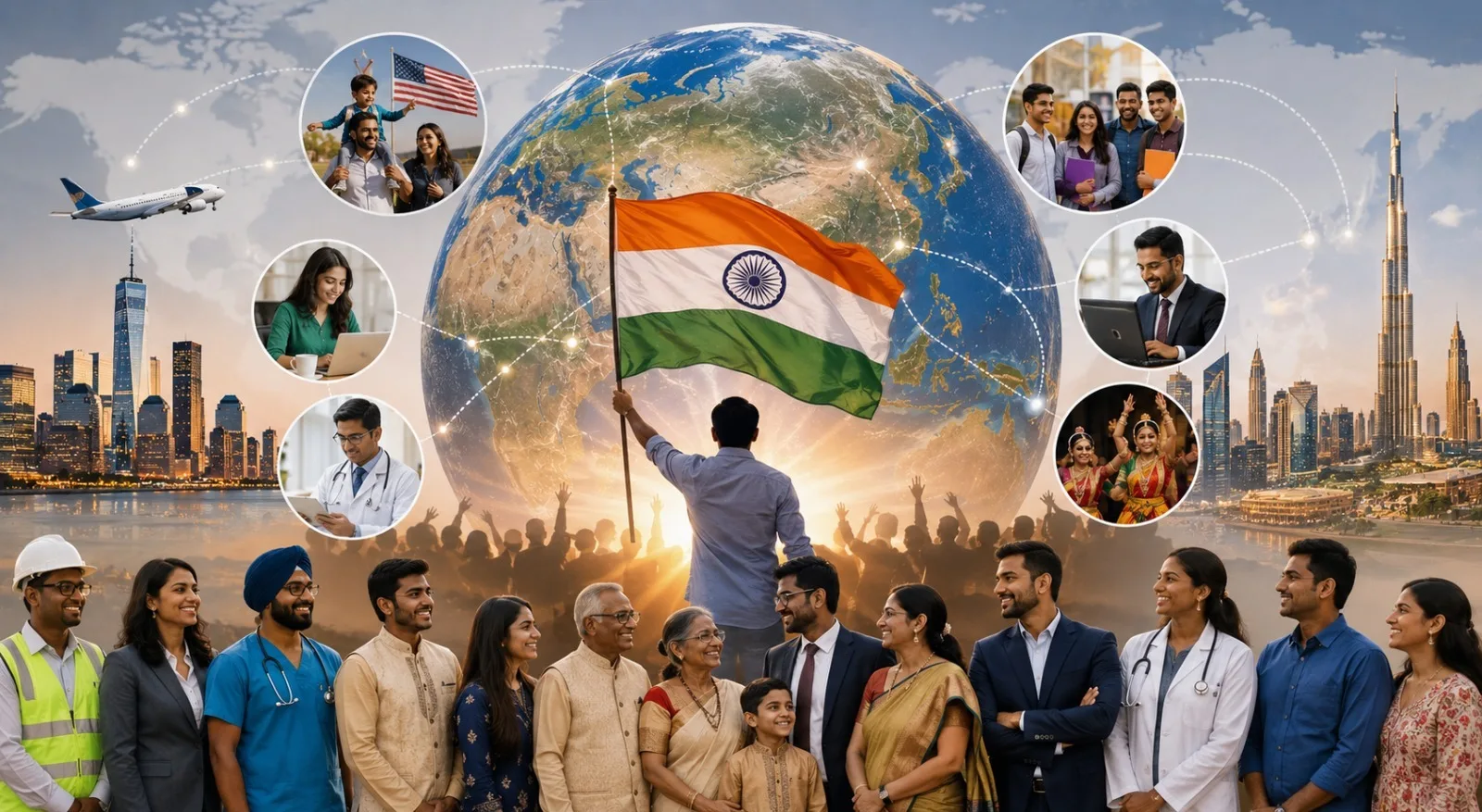
Indian Diaspora refers to people of Indian origin who live outside India, either permanently or temporarily. They include Indian citizens working abroad, people whose ancestors migrated from India, and those who maintain cultural, social, or economic links with India. The Indian diaspora is one of the largest and most influential diaspora communities in the world.
India has a rich history of migration. Indians have traveled to different parts of the world for trade, education, employment, and business for centuries. Today, millions of people of Indian origin live in countries across Asia, Africa, Europe, North America, South America, and Oceania.

The Indian diaspora plays a major role in strengthening India’s economy, culture, international relations, and global reputation. Through remittances, investments, knowledge sharing, and cultural connections, overseas Indians contribute significantly to India’s development.
The Government of India has also launched several programs and policies to maintain strong ties with overseas Indians and encourage them to participate in India’s growth story.
What is Indian Diaspora?
The term “diaspora” refers to people who live outside their homeland but maintain connections with their country of origin.
The Indian diaspora includes:
1. Non-Resident Indians (NRIs)
NRIs are Indian citizens who live outside India for employment, business, education, or other purposes while holding an Indian passport.
2. Overseas Citizens of India (OCI)
OCI cardholders are foreign citizens of Indian origin who have been granted special privileges by the Government of India.
3. Persons of Indian Origin (PIO)
Previously, people with Indian ancestry living abroad were classified as PIOs. In 2015, the PIO and OCI categories were merged under the OCI scheme.
Together, these groups form the Indian diaspora community spread across the world.
Historical Background of Indian Diaspora
The history of Indian migration is very old.
Ancient Trade Connections
Indian merchants and traders traveled to Africa, Southeast Asia, and the Middle East thousands of years ago. Historical records show Indian communities living along trade routes connecting India with foreign lands.
Migration During Colonial Rule
Large-scale migration began during British rule. Indians were taken to various colonies as indentured laborers after the abolition of slavery.
These workers were sent to countries such as:
- Fiji
- Mauritius
- South Africa
- Kenya
- Uganda
- Malaysia
- Trinidad and Tobago
- Guyana
- Suriname
These migrants became known as Girmitiya workers because they worked under labor agreements called “girmit” (derived from the word agreement).
Post-Independence Migration
After India’s independence, migration patterns changed.
Highly skilled Indians moved to countries like:
- United States
- Canada
- United Kingdom
- Australia
- Germany
At the same time, millions of workers migrated to Gulf countries such as:
- Saudi Arabia
- United Arab Emirates
- Qatar
- Oman
- Kuwait
- Bahrain
Today, Indian communities can be found in almost every country of the world.
Overseas Citizen of India (OCI)
The OCI scheme provides special facilities to foreign citizens of Indian origin.
However, an OCI cardholder is not considered an Indian citizen.
Benefits of OCI
OCI cardholders enjoy several benefits:
- Lifelong multiple-entry visa to India
- No requirement for separate registration during visits
- Easier travel to India
- Similar rights as NRIs in many fields
- Permission to pursue education and business opportunities in India
Restrictions on OCI
OCI holders cannot:
- Vote in Indian elections
- Contest elections
- Hold constitutional posts
- Purchase agricultural land in India
Thus, OCI status provides many benefits without granting full citizenship rights.
Non-Resident Indians (NRIs)
An NRI is an Indian citizen residing outside India.
A person is generally considered an NRI if:
- They stay outside India for a significant part of the financial year.
- They live abroad for employment, business, education, or other purposes.
NRIs maintain strong emotional, cultural, and economic ties with India.
Many NRIs regularly visit India, invest in Indian businesses, support families, and participate in social activities.
Size of Indian Diaspora
India has one of the largest diaspora populations in the world.
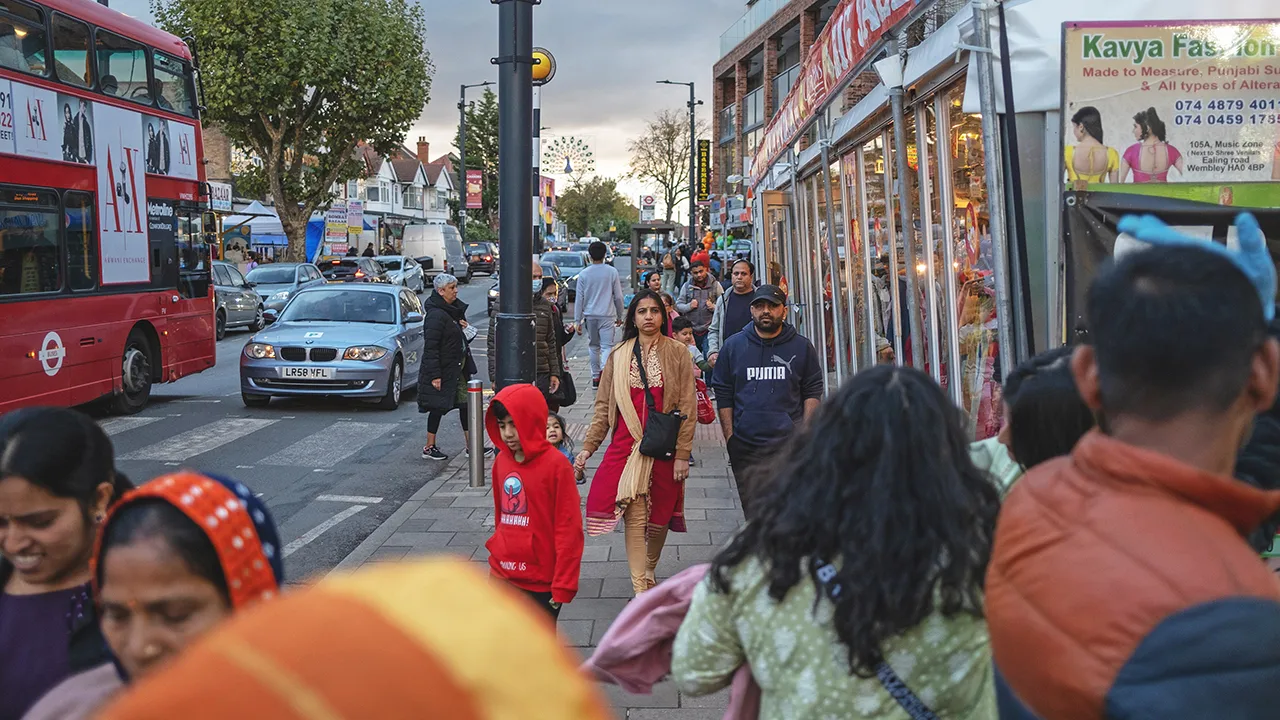
Today, more than 30 million people of Indian origin live across different countries.
Major destinations include:
- United States
- Canada
- United Kingdom
- Australia
- South Africa
- Malaysia
- Singapore
- United Arab Emirates
- Saudi Arabia
- Qatar
This large global presence gives India significant international influence.
Importance of Indian Diaspora
The Indian diaspora contributes to India’s development in many ways.
Remittances
One of the most important contributions is remittances.
Remittances are funds sent by overseas Indians to their families in India.
India consistently ranks among the top countries receiving remittances globally.
These funds help:
- Reduce poverty
- Improve living standards
- Support education
- Improve healthcare
- Increase household income
For many families, remittances are a major source of financial security.
Investment in India
Many overseas Indians invest in India.
They invest in:
- Real estate
- Businesses
- Startups
- Manufacturing
- Technology companies
Unlike short-term investors, many diaspora members invest with a long-term vision because of their emotional connection with India.
Promotion of Trade
The diaspora helps connect Indian businesses with international markets.
They:
- Promote exports
- Build trade partnerships
- Create business networks
- Introduce Indian products abroad
This contributes to India’s economic growth.
Transfer of Knowledge and Skills
Many Indians working abroad become experts in fields such as:
- Science
- Technology
- Medicine
- Engineering
- Finance
- Research
They transfer knowledge back to India through:
- Training programs
- Collaborations
- Research projects
- Educational exchanges
This helps improve India’s human resource capabilities.
Technological Development
Indian professionals have achieved remarkable success in global technology industries.
Many occupy leadership positions in major multinational companies.
Their expertise supports:
- Innovation
- Research
- Artificial Intelligence
- Information Technology
- Biotechnology
Their success enhances India’s reputation as a knowledge-based economy.
Cultural Influence
Indian diaspora communities spread Indian culture worldwide.
They promote:
- Yoga
- Indian cuisine
- Bollywood films
- Classical music
- Dance
- Festivals
Events like Diwali celebrations abroad help increase global awareness of Indian culture.
Tourism Promotion
Overseas Indians often visit India with family and friends.
Their visits boost:
- Tourism
- Hospitality industry
- Local businesses
- Transportation services
This contributes to economic development.
Diaspora Diplomacy
Indian diaspora acts as a bridge between India and foreign countries.
They influence public opinion and policy decisions in countries where they reside.
Their role is often referred to as Diaspora Diplomacy.
A notable example is the support provided by Indian-Americans during discussions surrounding the India-US Civil Nuclear Agreement.
Reduction of Unemployment
Migration of workers to foreign countries reduces pressure on India’s domestic job market.
Workers gain employment abroad and send earnings back home, benefiting both countries.
Pravasi Bharatiya Divas
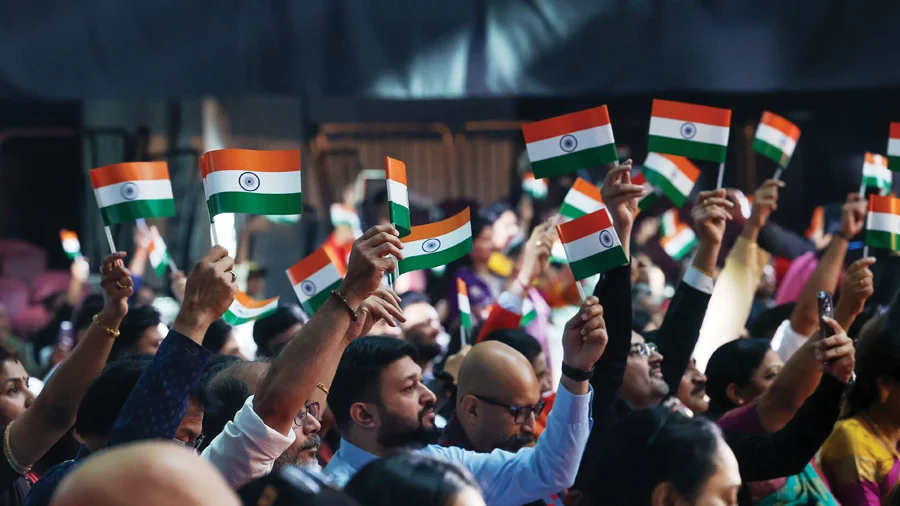
Pravasi Bharatiya Divas (PBD) is celebrated to honor the contributions of overseas Indians.
Why is it Celebrated?
It commemorates the return of Mahatma Gandhi from South Africa to India on 9 January 1915.
Objectives
- Strengthen relations with overseas Indians
- Recognize their achievements
- Encourage participation in India’s development
- Promote cultural connections
The event serves as an important platform for dialogue between India and its diaspora.
Government Initiatives for Indian Diaspora
The Government of India has launched several initiatives to support overseas Indians.
Pravasi Kaushal Vikas Yojana (PKVY)
This scheme aims to prepare Indian workers for overseas employment.
Objectives include:
- Skill development
- Language training
- Cultural awareness
- Legal awareness
It helps workers adapt to foreign work environments.
Scholarship Programme for Diaspora Children (SPDC)
The government provides scholarships to children of NRIs and OCI cardholders.
Benefits include:
- Financial support
- Access to higher education
- Stronger connection with India
Know India Programme (KIP)
This program helps young overseas Indians understand their roots.
Participants learn about:
- Indian culture
- Heritage
- Economy
- Politics
- Development initiatives
The program strengthens emotional ties with India.
E-Migrate System
The E-Migrate system protects Indian workers going abroad.
Features include:
- Registration of foreign employers
- Verification of job offers
- Prevention of exploitation
- Worker protection
The system improves transparency in overseas recruitment.
MADAD Portal
The MADAD Portal helps resolve complaints of Indians living abroad.
Services include:
- Grievance redressal
- Consular support
- Emergency assistance
It improves communication between overseas Indians and the government.
Voting Rights Initiatives
The government has explored measures to increase participation of NRIs in the democratic process.
These initiatives aim to strengthen political engagement of overseas Indians.
Challenges Faced by Indian Diaspora
Despite their achievements, overseas Indians face several challenges.
Racism and Discrimination
Many Indians encounter:
- Racial discrimination
- Hate crimes
- Social prejudice
Such incidents affect safety and well-being.
Strict Immigration Policies
Several countries have tightened immigration rules.
Challenges include:
- Visa restrictions
- Work permit limitations
- Citizenship requirements
These policies affect employment opportunities.
Employment Insecurity
Economic slowdowns can result in:
- Job losses
- Salary reductions
- Reduced migration opportunities
Migrant workers are often among the most affected groups.
Conflicts and Political Instability
Many Indians live in regions affected by conflict.
Examples include:
- Middle East crises
- Civil wars
- Terrorist attacks
Such situations can threaten the safety of Indian communities.
Local Employment Policies
Some countries prioritize employment for local citizens.
Policies encouraging local hiring can reduce opportunities for migrant workers.
Challenges for India
India also faces challenges related to migration.
Brain Drain
When highly skilled professionals move abroad permanently, India may lose valuable talent.
This can affect sectors such as:
- Healthcare
- Research
- Education
- Technology
Misuse of Remittances
Remittances may sometimes be used for non-productive purposes rather than investment or development.
Limited Entrepreneurial Participation
Many overseas Indians face regulatory difficulties while starting businesses in India.
As a result, India may not fully benefit from their entrepreneurial skills.
Policy Implementation Issues
Government schemes often face:
- Bureaucratic delays
- Lack of awareness
- Administrative inefficiencies
These factors limit their effectiveness.
Role of Indian Diaspora in India’s Global Image
Indian-origin individuals have achieved success in many fields.
These include:
- Politics
- Science
- Technology
- Business
- Education
- Healthcare
Their achievements improve India’s international standing.
Many global leaders, CEOs, scientists, and entrepreneurs of Indian origin have become symbols of India’s talent and capability.
This creates positive perceptions about India worldwide.
Future Opportunities
The future relationship between India and its diaspora offers enormous possibilities.
Technology Partnerships
India can collaborate with overseas experts in:
- Artificial Intelligence
- Space Technology
- Biotechnology
- Cyber Security
Startup Investments
Indian startups can benefit from diaspora funding and mentorship.
Educational Collaboration
Universities can create exchange programs and research partnerships.
Healthcare Development
Medical professionals abroad can support India’s healthcare system through training and collaboration.
Rural Development
Overseas Indians can contribute to:
- Schools
- Hospitals
- Infrastructure
- Skill development centers
Measures to Strengthen Diaspora Engagement
Several steps can improve relations with overseas Indians.
Encourage Investment
The government should simplify investment procedures and reduce bureaucratic hurdles.
Promote Knowledge Sharing
Short-term programs can allow overseas experts to contribute to Indian institutions.
Improve Consular Services
Faster and more efficient services can strengthen trust among overseas Indians.
Strengthen Cultural Connections
Programs promoting language, heritage, and cultural education can help younger generations remain connected to India.
Enhance Digital Platforms
Technology can make communication between India and its diaspora easier and more effective.
Conclusion
Indian Diaspora is one of India’s greatest strengths. Spread across the world, overseas Indians contribute through remittances, investments, technology, trade, diplomacy, and cultural promotion. Their achievements have enhanced India’s reputation globally and strengthened relations with many countries.
The Government of India has introduced several initiatives such as Pravasi Bharatiya Divas, Pravasi Kaushal Vikas Yojana, Know India Programme, E-Migrate System, and the MADAD Portal to maintain strong connections with overseas Indians.
Although challenges such as discrimination, immigration restrictions, brain drain, and policy implementation issues remain, the opportunities are far greater. With better engagement, stronger policies, and increased collaboration, the Indian diaspora can continue to play a vital role in India’s development and emergence as a leading global power in the 21st century.
FAQs on Indian Diaspora
1. What is the Indian Diaspora?
The Indian Diaspora refers to people of Indian origin living outside India, including NRIs and OCI cardholders.
2. Who is an NRI?
An NRI (Non-Resident Indian) is an Indian citizen who resides outside India for work, business, education, or other purposes.
3. What is an OCI cardholder?
An OCI (Overseas Citizen of India) cardholder is a foreign citizen of Indian origin who enjoys certain benefits in India but is not an Indian citizen.
4. What is Pravasi Bharatiya Divas?
It is a day celebrated on 9 January every year to honor the contributions of overseas Indians.
5. Why is the Indian Diaspora important to India?
It contributes through remittances, investments, technology transfer, trade, tourism, and cultural promotion.
6. Which countries have large Indian diaspora populations?
The United States, United Arab Emirates, Saudi Arabia, Canada, the United Kingdom, Australia, and South Africa have large Indian communities.
7. What are remittances?
Remittances are money transfers sent by overseas Indians to their families and relatives in India.
8. What is the Know India Programme (KIP)?
It is a government initiative that helps young people of Indian origin learn about India’s culture, heritage, and development.
9. What challenges does the Indian Diaspora face?
They may face racism, immigration restrictions, employment insecurity, and political instability in some countries.
10. How does the Indian Diaspora strengthen India’s global image?
Successful Indians abroad promote India’s culture, talent, innovation, and economic influence around the world.