
Medical Device Ban: India Stops Reuse

Medical Device Ban is a directive issued by India’s Directorate General of Health Services (DGHS) on 16 October 2026 to stop the reuse of single-use medical devices and disposable surgical items in public and private healthcare facilities. The directive requires hospitals and other healthcare providers to follow the instructions of the Original Equipment Manufacturer (OEM). The move aims to improve patient safety by reducing the risks of infection, equipment failure and improper handling of medical products.
What Does the Medical Device Ban Cover?
The directive applies to healthcare facilities across India and covers medical products labelled for one-time use. These devices are designed and supplied for a single use according to the manufacturer’s instructions.

The products mentioned in the directive include cardiac catheters, guidewires, dialysis equipment, surgical staplers, laparoscopic trocars, orthopaedic drill bits, syringes and needles.
These devices are used in several medical fields, including cardiology, kidney care, cancer treatment, cardiothoracic and vascular surgery, and neurosurgery. Many of these procedures require equipment that performs accurately and meets strict hygiene standards.
The DGHS has instructed healthcare providers not to reuse products marked for single use contrary to the manufacturer’s directions. The rule applies to both government and private medical facilities.
Why Has the Government Taken This Step?
Patient safety is a major reason for restricting the reuse of single-use medical devices. These products may not be designed or tested for repeated use, cleaning or sterilisation.
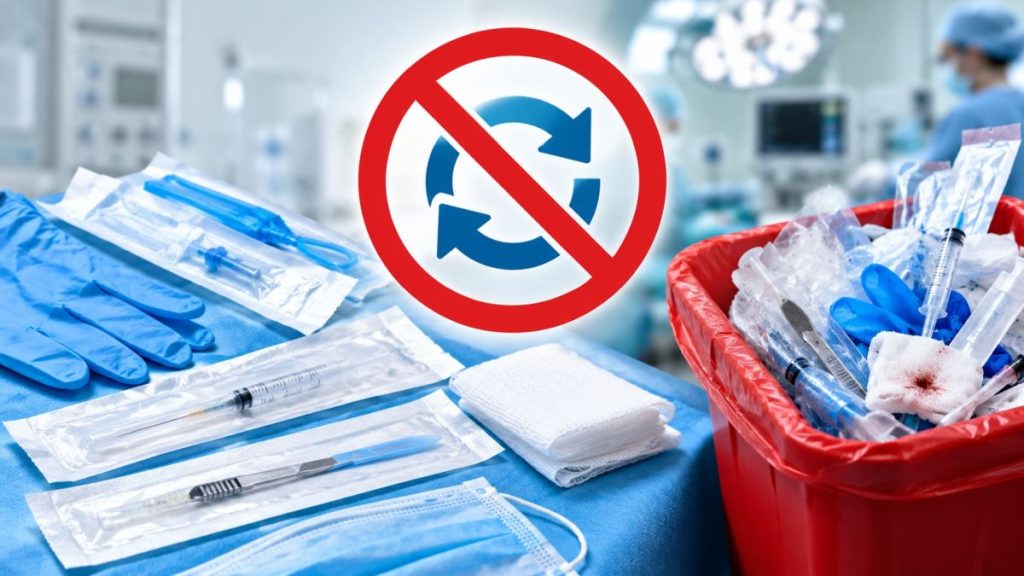
Reusing them can create several risks. If a device is not properly cleaned, harmful microorganisms may remain on its surface or inside its parts. This can increase the risk of infection.
Repeated use may also affect a device’s strength, accuracy or performance. A damaged catheter, guidewire or surgical instrument may not work as intended during a medical procedure.
Another concern raised by the DGHS involves reports of patients being charged the full price of new devices even when sterilised products had been reused. Such practices can raise questions about transparency, billing and patient rights.
Following the directive can help healthcare facilities improve infection control, maintain proper records and ensure that medical products are used according to their intended purpose.
Monitoring and Action Against Violations
The DGHS has asked states and Union Territories to monitor healthcare facilities and take action when they find non-compliance. Inspections and regular checks are expected to help authorities assess whether hospitals are following the instructions.
The directive refers to existing laws and regulations, including the Drugs and Cosmetics Act, 1940, the Medical Devices Rules, 2017, and the Clinical Establishments Act, 2010, where applicable.
The Drugs and Cosmetics Act provides a legal framework for regulating drugs and cosmetics in India. The Medical Devices Rules, 2017, set requirements relating to medical devices, including their manufacture, import, sale and distribution.
The Clinical Establishments Act provides for the registration and regulation of clinical establishments in the states and Union Territories where it applies.
Healthcare providers may need to review their purchasing systems, stock records, device labels and internal procedures to ensure that single-use products are handled correctly. Clear documentation can also help hospitals demonstrate compliance during inspections.
Concerns About Treatment Costs and Medical Waste
Although the directive focuses on patient safety, it has also raised concerns about treatment costs and the amount of medical waste generated by healthcare facilities.
Single-use devices must generally be replaced after use, which can increase the cost of procedures compared with systems that permit approved reprocessing. Hospitals may face higher purchasing expenses, and patients could experience increased out-of-pocket costs if those expenses are passed on to them.
More disposable products can also create additional medical waste. Hospitals must collect and dispose of contaminated items according to applicable biomedical waste management requirements.
Some doctors have called for standardised reprocessing procedures and affordable alternatives. However, any reuse or reprocessing system must comply with the applicable regulations and the manufacturer’s instructions. A device labelled for single use should not be reused simply because cleaning or sterilisation equipment is available.
Healthcare facilities will need to balance patient safety, proper waste disposal and the cost of medical care while following the directive.
Medical Device Industry Responds
The Association of Indian Medical Device Industry (AiMeD) welcomed the directive, according to the report. It stated that manufacturers should not be held responsible when their products are reused against the instructions supplied with them.
The issue also highlights the importance of clear communication between manufacturers, hospitals and patients. Product labels and instructions help healthcare workers understand whether a device is intended for one-time use or can be used again under specified conditions.

Manufacturers are responsible for providing appropriate instructions, while healthcare providers must ensure that their staff follow those instructions. Procurement teams also need to maintain reliable supply chains so that hospitals can obtain the required devices without unnecessary delays.
What the Directive Means for Patients and Hospitals
For patients, the Medical Device Ban brings attention to the importance of safe medical equipment, transparent billing and infection prevention. Patients can ask their healthcare providers about the devices used during a procedure and whether the products follow the manufacturer’s instructions.
Hospitals may need to strengthen staff training, monitor device use and improve inventory management. They may also need to review contracts with suppliers and ensure that replacement products are available when required.
The directive does not remove the need to manage healthcare costs. Instead, it places greater importance on using medical devices correctly while maintaining safety standards. Clear rules, regular inspections and responsible purchasing practices can help healthcare facilities protect patients and manage their resources effectively.