



GST Registration Rules: CBIC Sets New Timelines

GST Registration Rules have received fresh clarification from the Central Board of Indirect Taxes and Customs (CBIC), which has issued new guidance on registration timelines, deemed approval and document requirements for businesses in India. On 26 October 2026, CBIC issued Circular No. 257/03/2026-GST to explain how applications should be processed under the Central Goods and Services Tax (CGST) Rules, 2017.
The circular aims to make the GST registration process clearer and more consistent for applicants and tax officers. It explains the time limits for processing applications, the conditions under which registration may be treated as approved automatically, and the documents required to establish a business address. It also clarifies when applicants must provide bank account details.

The updated guidance follows decisions taken at the 57th meeting of the GST Council on 8 October 2026. These measures are important for businesses because GST registration is a key step in meeting tax requirements and carrying out taxable activities in accordance with applicable law.
What Are the New GST Registration Timelines?
The CBIC circular explains the timelines for processing GST registration applications. The time required depends on whether the applicant completes Aadhaar authentication and whether the application requires physical verification.
Applications with successful Aadhaar authentication are generally to be processed within seven working days. Aadhaar authentication helps verify the identity of the applicant through the Aadhaar system.
Applications may take up to 30 days when physical verification is required or Aadhaar authentication has not been completed. Physical verification may be used when tax officers need to check the business premises or confirm information provided in the application.
These timelines provide a clearer framework for applicants and officers. They also help businesses understand when they may expect their applications to be processed.
Applicants should ensure that the information submitted is accurate and that the required documents are available. Missing information or a request for clarification may affect the progress of an application, depending on the applicable procedure.

What Is Deemed Approval Under GST?
One of the important points in the circular is deemed approval under Rule 9 of the CGST Rules, 2017.
Deemed approval means that an application may be treated as approved when the proper officer does not take the required action within the prescribed period, subject to the conditions and procedure set out in the rules.
This provision is intended to ensure that applications are not left pending beyond the applicable time limits without the prescribed action being taken.
When registration is deemed approved under the applicable rules, the registration certificate, known as FORM GST REG-06, is made available on the GST portal.
The certificate serves as official evidence of GST registration. Businesses may need it when dealing with customers, suppliers, financial institutions and tax authorities.
Applicants should remember that deemed approval is not an unconditional automatic approval for every application. It applies according to the relevant provisions, timelines and circumstances under the CGST Rules.
Simplified GST Registration for Small Taxpayers
The circular also refers to the simplified registration route available to eligible small taxpayers under Rule 14A of the CGST Rules.
This route allows qualifying applicants to receive automatic registration within three working days, subject to the specified conditions.
One of the conditions described in the circular concerns monthly outward taxable supplies to registered persons. These supplies must not exceed ₹2.5 lakh for the applicant to meet the stated limit.
Outward supplies are goods or services supplied by a business to its customers or other recipients. Taxable outward supplies are supplies on which GST applies under the relevant provisions.
The simplified route is intended to reduce the time and effort required for eligible small taxpayers to complete registration. It can be particularly useful for qualifying businesses that need a straightforward process to meet their GST obligations.
However, applicants must satisfy all the conditions under Rule 14A. Businesses should review the applicable requirements before selecting this route to ensure that they are eligible.
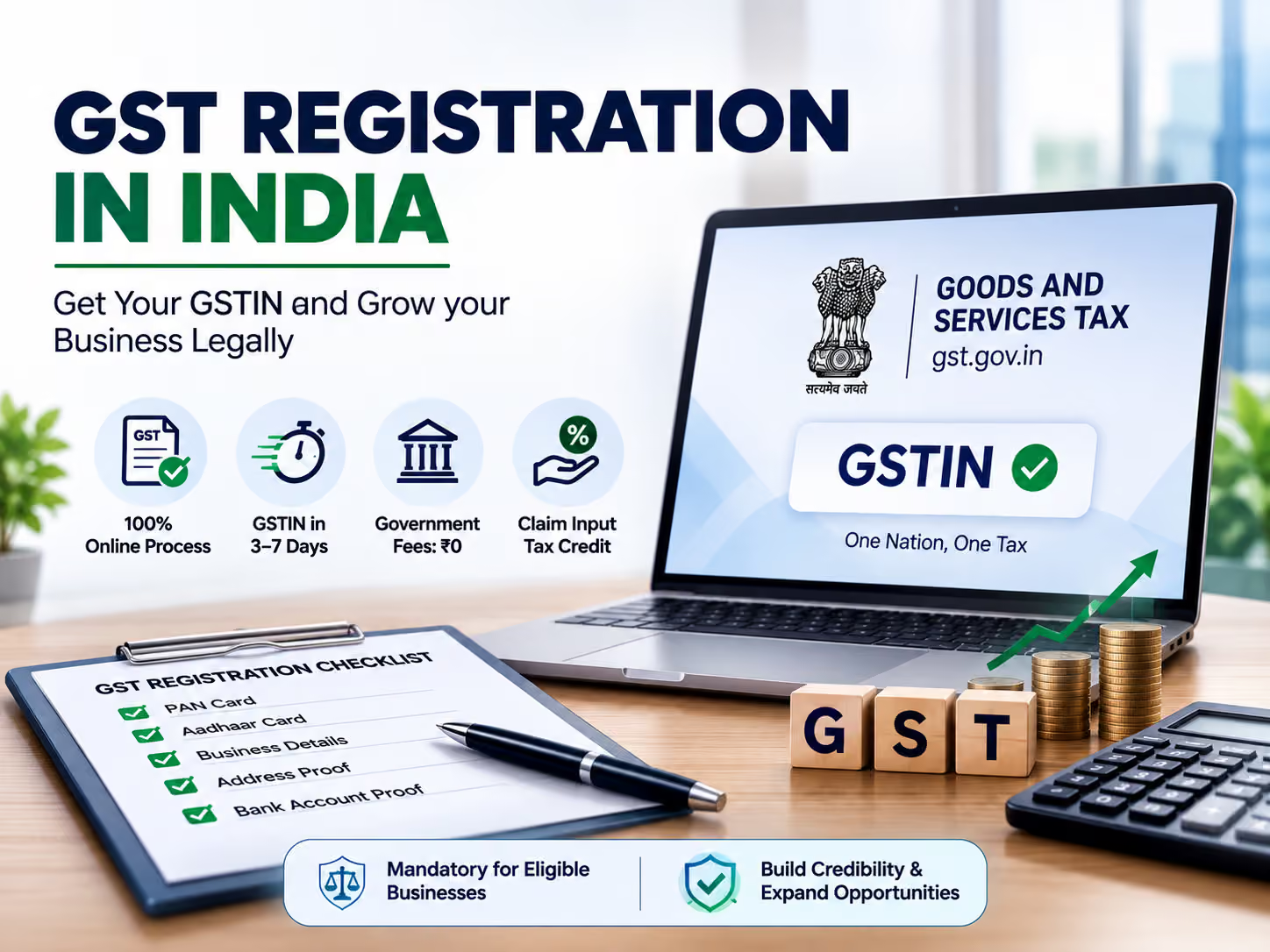
Documents Required for GST Registration
CBIC has also clarified the documentation requirements for proving the principal place of business or other relevant business premises.
The documents required can depend on whether the premises are owned, rented, used with the owner’s consent or located in a co-working space.
Owned Business Premises
Applicants using premises they own may need to provide documents that establish ownership or show their legal connection with the property. The documents should support the address and details entered in the registration application.
Rented Business Premises
Applicants operating from rented premises may need to provide the relevant rental or lease documents and other supporting evidence required under the applicable rules.
The submitted information should clearly establish the business’s right to use the premises.
Premises Used With the Owner’s Consent
Some businesses operate from premises provided by another person with permission. In such cases, the applicant may need to submit consent-related documents and supporting evidence, as applicable.
Co-Working Spaces
Businesses using co-working spaces must provide documents appropriate to their arrangement and the requirements for establishing the business address.
The circular aims to clarify documentation requirements across these different situations. This can help applicants understand which documents are relevant to their circumstances.
GST Clarifications Through FORM GST REG-03 and REG-04
During the registration process, a tax officer may need additional information or clarification about an application.
For this purpose, the officer may issue FORM GST REG-03, which is used to request clarification or additional information.
The applicant must respond through FORM GST REG-04 within seven working days, according to the procedure described in the circular.
A response should address the questions raised by the officer and include the relevant supporting documents, where required.
The circular also instructs officers not to ask for unnecessary documents or raise questions that are unrelated to the registration application.
This direction is important because applicants should be asked to provide information that is relevant to verifying their eligibility and the details supplied in the application. Unrelated or excessive requests can make the process more difficult for businesses.
Applicants should read clarification notices carefully and respond within the prescribed period to help avoid unnecessary delays.
When Must Applicants Provide Bank Account Details?
Another important clarification concerns bank account information.
Under the circular, applicants do not need to provide bank account details at the initial stage of GST registration. Instead, the details must be furnished within 30 days of registration or before furnishing details of outward supplies, whichever occurs earlier.
This gives applicants more flexibility during the initial registration process while maintaining the requirement to provide the information within the prescribed period.
Businesses should keep track of the applicable deadline after registration. They should also ensure that the bank details submitted are accurate and relate to the business as required under the GST rules.
Failure to meet applicable compliance requirements may create difficulties later, so applicants should review the relevant instructions on the GST portal and follow the rules that apply to their registration.
What Is GST and How Does the GST Council Work?
Goods and Services Tax (GST) is an indirect tax imposed on the supply of goods and services in India. It brought several earlier indirect taxes into a common tax framework.
The Central Goods and Services Tax Act, 2017 governs central GST, while the CGST Rules, 2017 prescribe procedures for registration and other compliance matters.
The GST Council is a constitutional body established under Article 279A of the Constitution of India. It brings together representatives of the Union and state governments to discuss important GST-related matters and make recommendations.
The council plays an important role in shaping GST policy, including matters relating to tax rates, exemptions, procedures and administration.
The CBIC operates under the Department of Revenue, Ministry of Finance. It administers central indirect taxes and customs-related matters and issues guidance to support the implementation of applicable tax laws.
The circular issued on 26 October 2026 follows decisions taken at the GST Council’s 57th meeting on 8 October 2026.
How the New Guidance May Help Businesses
The clarified GST registration procedures may help businesses understand the steps required to obtain registration and the time limits that apply to different applications.
Clear processing timelines can make it easier for applicants to plan their business activities. Deemed approval provisions provide a defined procedure for situations where an officer does not take the required action within the prescribed period.
The simplified registration route may reduce the waiting period for eligible small taxpayers. Clearer instructions on premises documents may also help applicants prepare their applications correctly.
In addition, the rules on clarification requests can help prevent unnecessary document demands, while the updated bank-detail timeline gives businesses a defined period to complete that requirement.
Businesses should still check their eligibility, submit correct information and follow all applicable GST requirements. The benefits of these measures depend on compliance with the CGST Act, the CGST Rules and the conditions relevant to each application.
The CBIC circular provides further clarity on GST registration procedures and the responsibilities of both applicants and tax officers. It aims to support a more predictable registration process while maintaining the checks required under India’s GST framework.