


Blue Economy: India’s Path to Sustainable Ocean Growth

Blue Economy is becoming one of the most important areas of economic development in the 21st century. As countries across the world look for new sources of growth, jobs, and sustainable development, oceans and marine resources are gaining greater attention. India, with its long coastline, vast marine resources, and strategic location in the Indian Ocean, has immense potential to benefit from the Blue Economy.
The Government of India considers the Blue Economy an important part of its vision for a developed nation by 2030. It focuses on the sustainable use of ocean resources while protecting marine ecosystems and improving the livelihoods of coastal communities.

What is Blue Economy?
The term Blue Economy was introduced by Gunter Pauli in his 2010 book The Blue Economy: 10 Years, 100 Innovations, 100 Million Jobs.
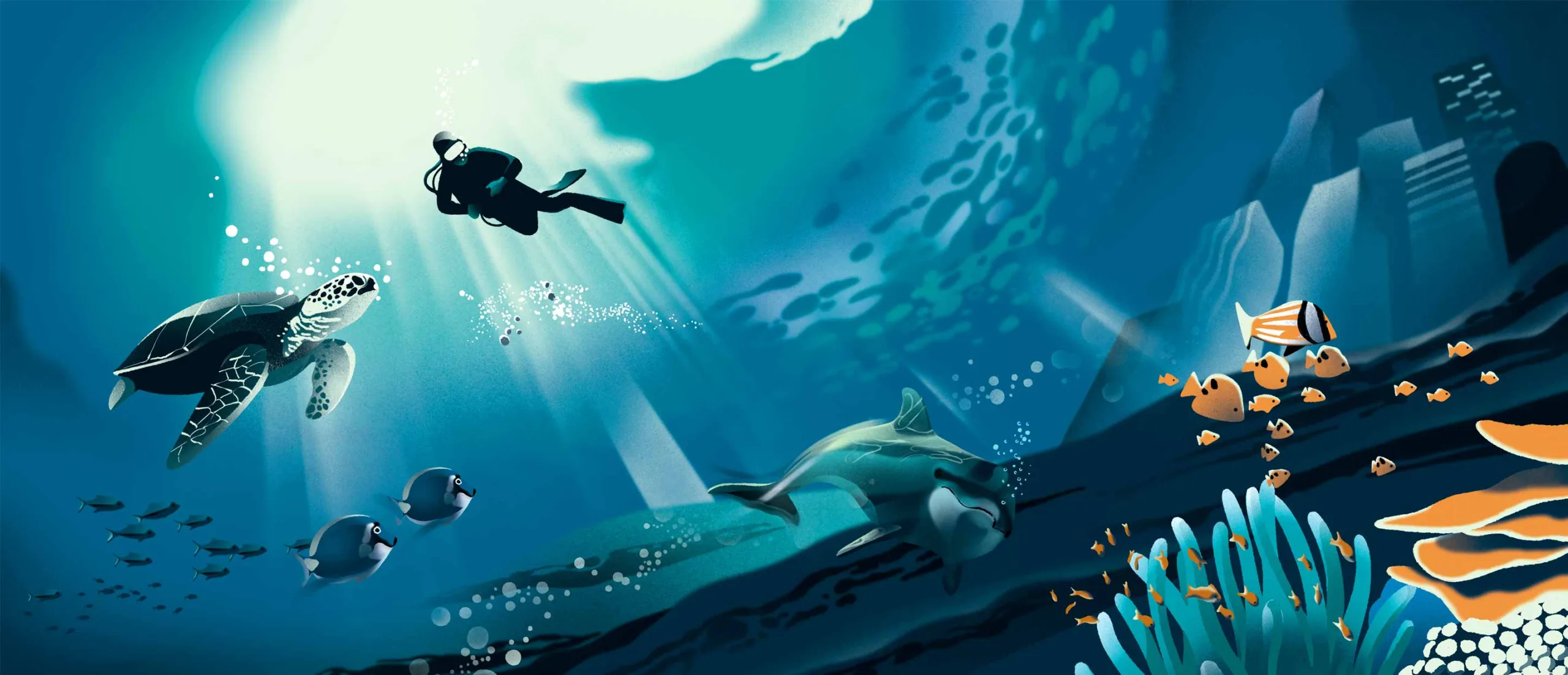
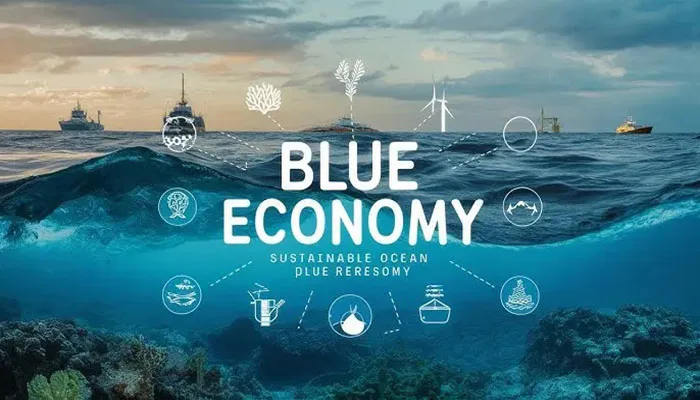
Blue Economy refers to the sustainable use of ocean and marine resources for economic growth, employment generation, and environmental protection. It aims to balance economic development with the conservation of marine ecosystems.
In simple words, Blue Economy means earning income from oceans and seas without damaging marine life and the environment.
The concept combines economic growth, social inclusion, and environmental sustainability. It encourages countries to use marine resources responsibly while creating jobs and supporting local communities.
Major Components of Blue Economy
The Blue Economy includes many sectors related to oceans, seas, rivers, and coastal regions.
| Sector | Importance |
|---|---|
| Fisheries | Provides food and employment |
| Maritime Transport | Supports global trade |
| Coastal Tourism | Generates revenue and jobs |
| Renewable Energy | Produces clean energy |
| Marine Biotechnology | Supports medicine and research |
| Deep-Sea Mining | Provides valuable minerals |
| Marine Conservation | Protects ecosystems |
| Waste Management | Reduces ocean pollution |
Why Are Oceans Important?
Oceans play a crucial role in maintaining life on Earth.
Some important facts include:
- Oceans cover nearly 75% of the Earth’s surface.
- They contain around 97% of the planet’s water.
- Oceans absorb nearly 30% of global carbon dioxide emissions.
- They regulate climate and weather patterns.
- They support millions of plant and animal species.
- More than three billion people depend on marine resources for their livelihood.
Without healthy oceans, sustainable development would become extremely difficult.
Importance of Blue Economy
1. Economic Growth
The Blue Economy offers enormous opportunities for economic development. Activities such as shipping, fishing, tourism, and offshore energy production contribute significantly to national income.
As marine industries expand, countries can generate more revenue and strengthen their economies.
2. Employment Generation
Millions of people depend on fisheries, ports, shipping, tourism, and related industries for employment.
The Blue Economy creates jobs in:
- Fishing and aquaculture
- Port operations
- Shipbuilding
- Marine research
- Coastal tourism
- Renewable energy projects
3. Food Security
Fish and seafood are important sources of protein for billions of people worldwide.
Sustainable fisheries management helps ensure a continuous supply of nutritious food while protecting marine ecosystems.
4. Energy Security
Oceans provide multiple renewable energy opportunities.
These include:
- Offshore wind energy
- Tidal energy
- Wave energy
- Ocean thermal energy
Such clean energy sources can reduce dependence on fossil fuels.
5. Climate Change Mitigation
Oceans act as natural carbon sinks by absorbing large amounts of carbon dioxide.
Mangroves, seagrass beds, and coastal wetlands store carbon and help reduce the effects of climate change.
This carbon stored in marine ecosystems is known as Blue Carbon.
Blue Bonds and Their Role
A Blue Bond is a financial instrument used to raise funds for marine and ocean-related projects.
The money collected through Blue Bonds can be used for:
- Sustainable fisheries
- Marine conservation
- Ocean clean-up projects
- Coastal protection
- Marine renewable energy
Blue Bonds are inspired by Green Bonds, which finance environmentally friendly projects.
The island nation of Seychelles became the first country in the world to issue sovereign Blue Bonds.
In India, Blue Bonds are increasingly being viewed as a useful tool for financing sustainable ocean development.
Why Does India Need Blue Economy?
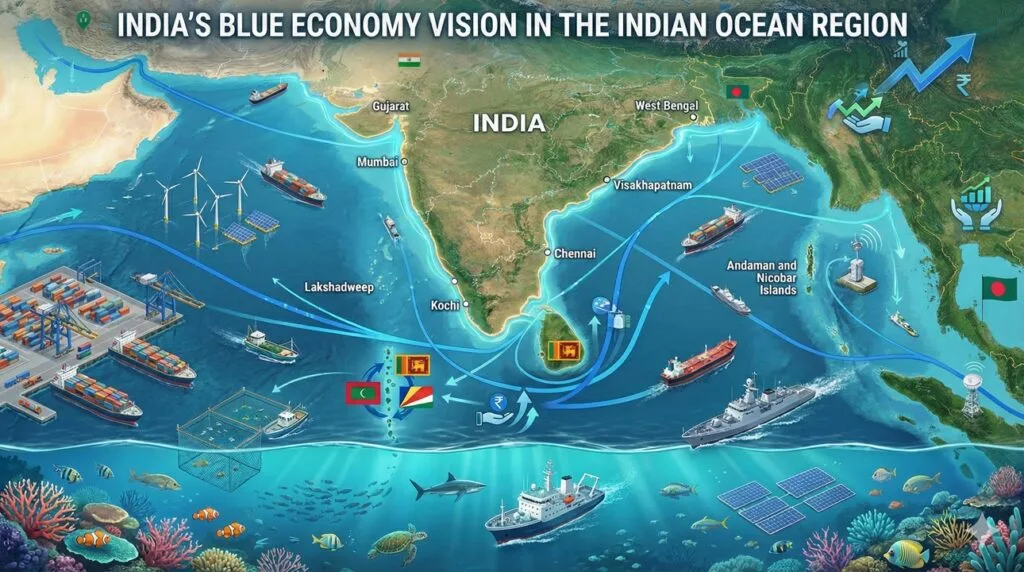
India has one of the largest coastlines in the world and a vast Exclusive Economic Zone (EEZ).
Several reasons make Blue Economy important for India.
Extensive Coastline
India has a coastline of over 7,500 kilometers spread across nine coastal states and several union territories.
This provides huge opportunities for fisheries, tourism, ports, and marine industries.
Strong Maritime Trade
About 95% of India’s trade volume is carried through sea routes.
Ports play a major role in supporting exports and imports.
Rich Marine Resources
India possesses valuable marine resources including:
- Fish stocks
- Deep-sea minerals
- Offshore energy resources
- Marine biodiversity
Proper management can significantly boost economic growth.
Coastal Livelihoods
Millions of people living in coastal areas depend on fishing, tourism, and maritime activities.
Blue Economy can improve their income and living standards.
Achieving Sustainable Development Goals
Blue Economy supports several global goals related to poverty reduction, food security, clean energy, climate action, and environmental protection.
Challenges Affecting Blue Economy
Despite its vast potential, Blue Economy faces several challenges.
Marine Pollution
Plastic waste, industrial discharge, and untreated sewage pollute oceans and coastal waters.
Marine pollution harms fish, coral reefs, and other marine organisms.
Climate Change
Rising sea temperatures and ocean acidification threaten marine ecosystems.
Climate change also increases the frequency of extreme weather events.
Natural Disasters
Coastal regions are highly vulnerable to:
- Cyclones
- Tsunamis
- Storm surges
- Floods
These disasters cause significant economic losses.
Illegal Fishing
Unregulated and illegal fishing reduces fish populations and damages marine ecosystems.
It also affects the income of legal fishermen.
Maritime Security Threats
The maritime sector faces challenges such as:
- Piracy
- Smuggling
- Drug trafficking
- Human trafficking
- Maritime terrorism
Strong security measures are essential to address these issues.
Oil Spills
Accidental oil spills can severely damage marine ecosystems and coastal livelihoods.
Cleaning affected areas often requires enormous resources and time.
Significance of Blue Economy for India
Blue Economy has the potential to become a major growth engine for India.
Strengthening Economic Development
Marine industries can contribute significantly to India’s GDP through shipping, tourism, fisheries, and energy production.
Enhancing Regional Connectivity
India’s strategic position in the Indian Ocean helps strengthen trade connections with neighboring countries and global markets.
Improving Coastal Infrastructure
Development of ports, logistics networks, and transport systems can improve trade efficiency.
Supporting Sustainable Development
Blue Economy ensures that economic activities do not come at the cost of environmental degradation.
Increasing Investment Opportunities
Marine sectors attract both domestic and international investments, creating new business opportunities.
Government Initiatives for Blue Economy
The Government of India has launched several initiatives to promote sustainable ocean development.
Deep Ocean Mission
The Deep Ocean Mission focuses on developing technologies for exploring and utilizing deep-sea resources.
Key objectives include:
- Deep-sea mining
- Ocean exploration
- Marine biodiversity studies
- Development of underwater technologies
Sagarmala Programme
The Sagarmala Programme was launched to modernize ports and improve maritime infrastructure.
Its major goals include:
| Objective | Benefit |
|---|---|
| Port Modernization | Improved efficiency |
| Connectivity Enhancement | Faster transport |
| Coastal Development | Job creation |
| Logistics Improvement | Reduced costs |
The programme aims to strengthen India’s maritime sector and boost economic growth.
O-SMART Programme
O-SMART stands for Ocean Services, Technology, Observations, Resources Modelling and Science.
It supports sustainable management of marine resources and scientific research.
Integrated Coastal Zone Management
This initiative focuses on:
- Coastal conservation
- Ecosystem protection
- Sustainable livelihood development
- Coastal disaster management
National Fisheries Policy
The policy promotes sustainable fisheries development while ensuring long-term conservation of aquatic resources.
India-Norway Blue Economy Cooperation
India and Norway have established cooperation to develop sustainable ocean-based economic activities.
The partnership supports knowledge sharing, research, and innovation.
Blue Economy and Sustainable Development Goals
Blue Economy directly contributes to several United Nations Sustainable Development Goals (SDGs).
| SDG | Contribution |
|---|---|
| SDG 1 | Poverty Reduction |
| SDG 2 | Food Security |
| SDG 7 | Clean Energy |
| SDG 8 | Decent Work and Economic Growth |
| SDG 13 | Climate Action |
| SDG 14 | Life Below Water |
Among these, SDG 14 focuses specifically on the conservation and sustainable use of oceans and marine resources.
Future Opportunities for India
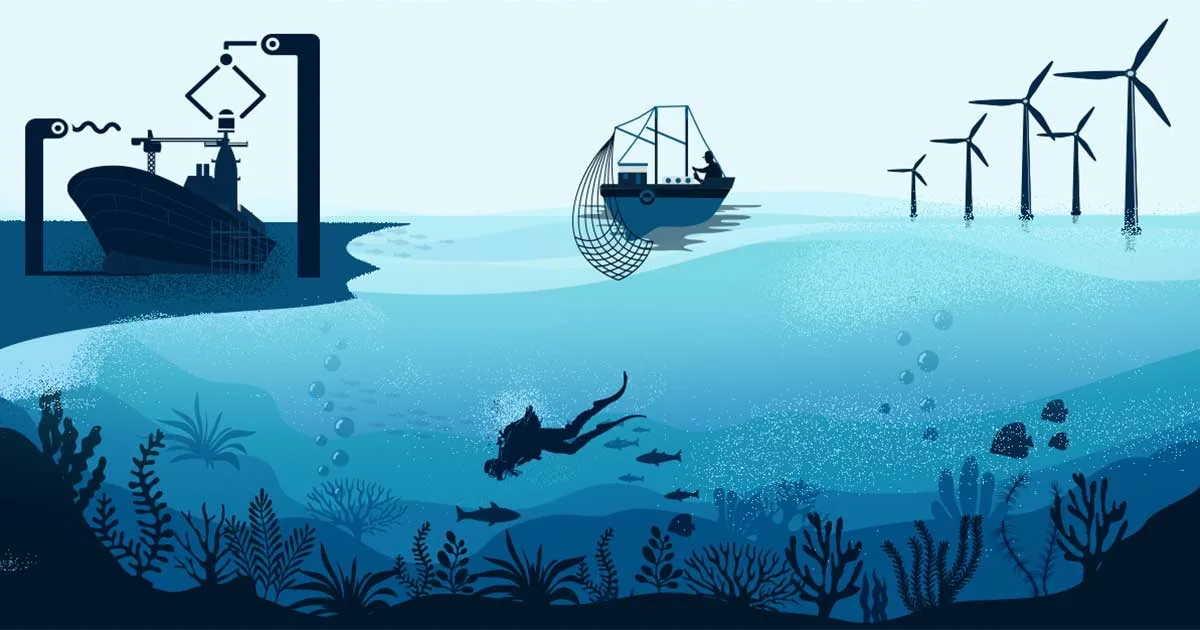
India can become a global leader in the Blue Economy by focusing on:
Marine Renewable Energy
Investing in offshore wind and tidal energy can strengthen energy security.
Deep-Sea Exploration
Exploring deep-sea minerals can support industrial growth.
Sustainable Aquaculture
Modern fish farming techniques can increase seafood production without harming ecosystems.
Marine Biotechnology
Research in marine organisms can lead to new medicines, chemicals, and industrial products.
Coastal Tourism
Eco-friendly tourism can generate employment while protecting natural resources.
Marine Research and Innovation
Establishing advanced research centers can help India become a knowledge hub for ocean sciences.
The Way Ahead
Blue Economy offers India a unique opportunity to combine economic growth with environmental protection. The country’s long coastline, rich marine resources, strong maritime trade network, and strategic location provide significant advantages.
To fully realize the benefits of Blue Economy, India must focus on sustainable resource management, marine conservation, scientific research, renewable energy development, and modern maritime infrastructure. A balanced approach that protects marine ecosystems while supporting economic development will help India achieve long-term prosperity and strengthen its position as a leading maritime nation.
FAQs on Blue Economy
What is Blue Economy?
Blue Economy refers to the sustainable use of ocean and marine resources for economic growth, employment generation, and environmental protection.
Who introduced the concept of Blue Economy?
The concept was introduced by Gunter Pauli in 2010.
Why is Blue Economy important for India?
It supports economic growth, employment, food security, energy security, maritime trade, and sustainable development.
What is a Blue Bond?
A Blue Bond is a financial instrument used to raise funds for ocean and marine-related sustainable projects.
What is the Deep Ocean Mission?
It is a Government of India initiative aimed at exploring and utilizing deep-sea resources through advanced technology.
What is Blue Carbon?
Blue Carbon refers to carbon stored in coastal and marine ecosystems such as mangroves, seagrass beds, and salt marshes.
Which SDG is most closely related to Blue Economy?
SDG 14, “Life Below Water,” is most closely linked with Blue Economy.
How does Blue Economy help in climate change mitigation?
Oceans absorb carbon dioxide and marine ecosystems store carbon, helping reduce greenhouse gas concentrations.