



COP24 Climate Summit: Key Outcomes, Challenges and India’s Role

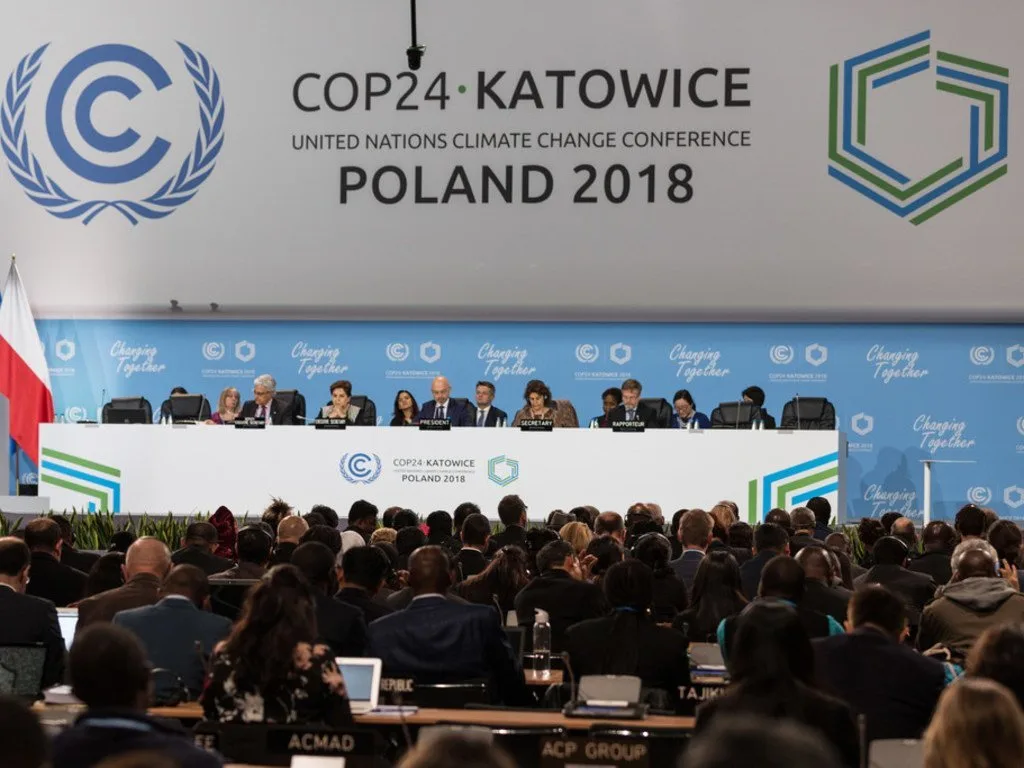
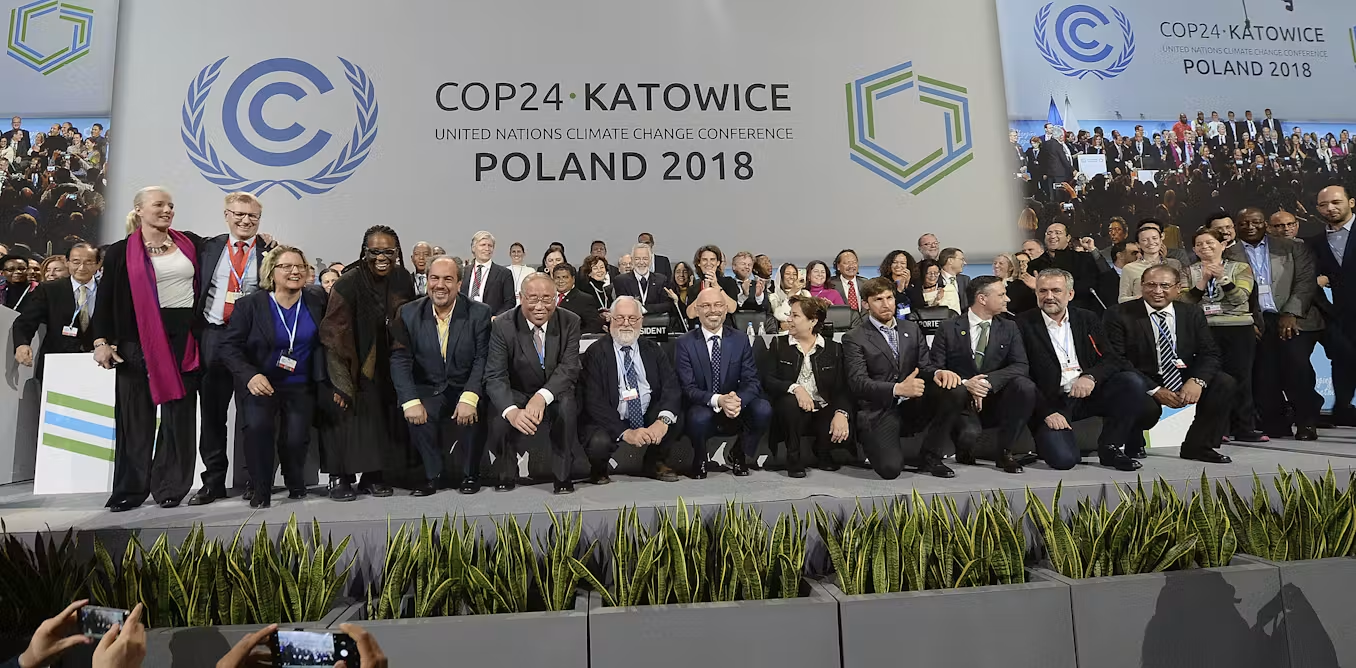
COP24 Climate Summit was one of the most important international meetings on climate change. It was held from 2 December to 14 December 2018 in Katowice, Poland. The conference brought together representatives from countries around the world to discuss ways to tackle climate change and implement the goals of the Paris Agreement.
Poland hosted the Conference of the Parties (COP) for the third time, showing its continued involvement in global climate discussions. The summit was closely watched because countries needed to finalize the rules that would help implement the Paris Agreement signed in 2015.

What is COP24?
COP24 stands for the 24th Conference of the Parties to the United Nations Framework Convention on Climate Change (UNFCCC).
The Conference of the Parties is the highest decision-making body under the UNFCCC. Representatives from member countries meet every year to review progress, discuss climate-related issues, and take decisions to reduce the impact of global warming.
The main objective of COP24 was to create a detailed rulebook that would guide countries in implementing their climate commitments under the Paris Agreement.
Understanding UNFCCC
The United Nations Framework Convention on Climate Change (UNFCCC) is an international environmental treaty adopted on 9 May 1992.
It was opened for signatures during the Earth Summit held in Rio de Janeiro, Brazil, in June 1992 and came into force on 21 March 1994.
The main goal of the UNFCCC is to stabilize greenhouse gas concentrations in the atmosphere at levels that prevent dangerous human interference with the climate system.
At present, nearly all countries of the world are members of the convention, making it one of the most widely supported international environmental agreements.
Objectives of UNFCCC
| Objective | Description |
|---|---|
| Reduce Global Warming | Limit the rise in Earth’s temperature |
| Protect Environment | Reduce damage caused by greenhouse gases |
| Promote Cooperation | Encourage countries to work together |
| Support Developing Nations | Provide financial and technical assistance |
What is the Paris Agreement?
The Paris Agreement was adopted in 2015 under the UNFCCC framework.
Its main goal is to keep the increase in global temperature well below 2°C above pre-industrial levels and try to limit it to 1.5°C.
Under the agreement, every country submits its own climate action plan known as a Nationally Determined Contribution (NDC).
These plans explain how countries will reduce greenhouse gas emissions and adapt to climate change.
The Paris Agreement replaced the earlier Kyoto Protocol as the main international framework for climate action.
Major Outcomes of COP24
One of the biggest achievements of the COP24 Climate Summit was the adoption of the Paris Rulebook.
1. Paris Rulebook Finalized
The Paris Rulebook provides detailed guidelines for implementing the Paris Agreement.
It explains how countries should:
- Measure greenhouse gas emissions.
- Report climate actions.
- Track progress toward climate goals.
- Share information about climate finance.
- Monitor adaptation and mitigation measures.
The rulebook was considered a major success because it transformed broad promises into practical rules.
2. Greater Transparency
Countries agreed on a common transparency framework.
This means nations will have to regularly provide information about:
- Their emissions levels.
- Climate actions taken.
- Progress toward NDC targets.
A transparent system helps build trust among countries and makes climate commitments easier to monitor.
3. Climate Finance Reporting
Climate finance became an important topic at COP24.
Developed countries agreed to provide clearer information regarding financial support for developing countries.
Climate finance includes money from:
- Governments
- Private companies
- International institutions
- Development agencies
These funds help developing countries reduce emissions and adapt to climate change.
4. Support for Developing Countries
The summit reaffirmed the commitment of developed countries to mobilize 100 billion US dollars annually to support climate action in developing nations.
This financial support is considered essential because many poorer countries face serious climate risks but have limited resources.
Climate Finance Explained
Climate finance refers to funds used for activities that reduce climate change impacts.
Types of Climate Finance
| Type | Purpose |
| Grants | Financial assistance that does not need repayment |
| Loans | Borrowed funds that must be repaid |
| Investments | Funding for green projects |
| Technical Support | Sharing technology and expertise |
The rulebook also clarified how countries should report climate finance and what qualifies as climate-related funding.
Challenges and Issues at COP24
Although the summit achieved important progress, several issues remained unresolved.
1. Disagreement Over the IPCC Report
In October 2018, the Intergovernmental Panel on Climate Change (IPCC) released a report warning about the dangers of global warming beyond 1.5°C.
Many countries wanted the report to be fully recognized during COP24.
However, countries such as the United States, Saudi Arabia, and Russia did not support formally welcoming the report.
This disagreement created tension during negotiations.
2. Lack of Stronger Climate Commitments
Environmental groups expected countries to announce stronger actions to reduce emissions.
However, many nations avoided making new commitments.
As a result, critics argued that the summit did not show enough urgency despite scientific warnings.
3. Equity Concerns
Developing countries emphasized the principle of Common but Differentiated Responsibilities (CBDR).
According to this principle:
- All countries must address climate change.
- Developed countries should take greater responsibility because they contributed more to historical emissions.
- Wealthier nations have more financial and technological resources.
Many developing nations felt the final agreements did not fully reflect these concerns.
4. Uncertainty About Climate Funding
Several developing countries demanded a clear roadmap showing how the promised climate finance would be delivered.
However, no detailed plan was finalized.
Questions remained regarding:
- Sources of funding.
- Future targets after 2025.
- Reporting standards.
Market Mechanisms and Carbon Trading
Another major issue was the discussion on carbon markets under Article 6 of the Paris Agreement.

Carbon markets allow countries and companies to trade emission reductions.
The goal is to reduce emissions at a lower cost.
Benefits of Carbon Markets
- Encourages investment in clean energy.
- Reduces overall costs of emission reduction.
- Promotes international cooperation.
- Supports sustainable development projects.
However, countries failed to reach agreement on several technical issues related to carbon trading.
As a result, discussions were postponed to future climate conferences.
What is a Carbon Credit?
A carbon credit is a certificate that allows the holder to emit a specific amount of greenhouse gases.
Generally, one carbon credit represents one tonne of carbon dioxide or its equivalent.
Organizations that reduce emissions can earn credits and sell them to others.
How Carbon Credits Work
| Step | Process |
| 1 | A project reduces emissions |
| 2 | Carbon credits are issued |
| 3 | Credits are sold in carbon markets |
| 4 | Buyers use credits to meet emission targets |
Dispute Over Unused Carbon Credits
Countries such as India, China, and Brazil argued that carbon credits earned under the Kyoto Protocol should remain valid in future carbon markets.
Developed countries questioned the reliability of some older credits.
Because no agreement was reached, the issue remained unresolved after COP24.
India’s Position at COP24
India played an active role during the conference.
The country reaffirmed its commitment to achieving the goals outlined in its Nationally Determined Contributions.
India emphasized several important principles:
Climate Justice
India argued that climate policies should be fair and consider the different development levels of countries.
Equity
India stressed that developing nations should not bear the same burden as developed countries.
Transparency
India supported stronger transparency measures to ensure all countries disclose their emissions accurately.
Common but Differentiated Responsibilities
India maintained that developed nations should continue leading global climate action because of their historical contribution to greenhouse gas emissions.
Why COP24 Was Important
The COP24 Climate Summit was significant because it transformed the Paris Agreement from a broad political agreement into a practical system with detailed implementation rules.

The summit helped:
- Strengthen transparency.
- Improve accountability.
- Clarify climate finance reporting.
- Advance global climate cooperation.
Although many difficult issues remained unresolved, the Paris Rulebook marked an important step forward in international climate governance.
The Way Forward
The IPCC’s 2018 report warned that global temperatures could rise beyond 1.5°C between 2030 and 2052 if emissions continue at current levels.
This warning highlighted the urgent need for stronger climate action.
Countries must:
- Increase renewable energy use.
- Reduce dependence on fossil fuels.
- Strengthen climate finance.
- Improve transparency systems.
- Resolve disagreements over carbon markets.
- Support vulnerable nations facing climate risks.
Global cooperation remains essential if the world is to achieve the goals of the Paris Agreement and protect future generations from the severe impacts of climate change.
FAQs
1. What is COP24?
COP24 was the 24th Conference of the Parties to the UNFCCC held in Katowice, Poland, in December 2018.
2. What was the main achievement of COP24?
The main achievement was the adoption of the Paris Rulebook, which provides guidelines for implementing the Paris Agreement.
3. What is the Paris Agreement?
The Paris Agreement is a global climate treaty adopted in 2015 to limit global warming and reduce greenhouse gas emissions.
4. What is climate finance?
Climate finance refers to financial support provided for projects that help reduce emissions and adapt to climate change.
5. What are carbon credits?
Carbon credits are permits that allow the emission of a certain amount of greenhouse gases and can be traded in carbon markets.
6. What was India’s stand at COP24?
India supported climate justice, equity, transparency, and the principle of Common but Differentiated Responsibilities.
7. Why is the IPCC 1.5°C report important?
The report warns that exceeding 1.5°C of global warming could lead to severe environmental and economic consequences.