

Baichung Bhutia: The Legendary Torchbearer of Indian Football

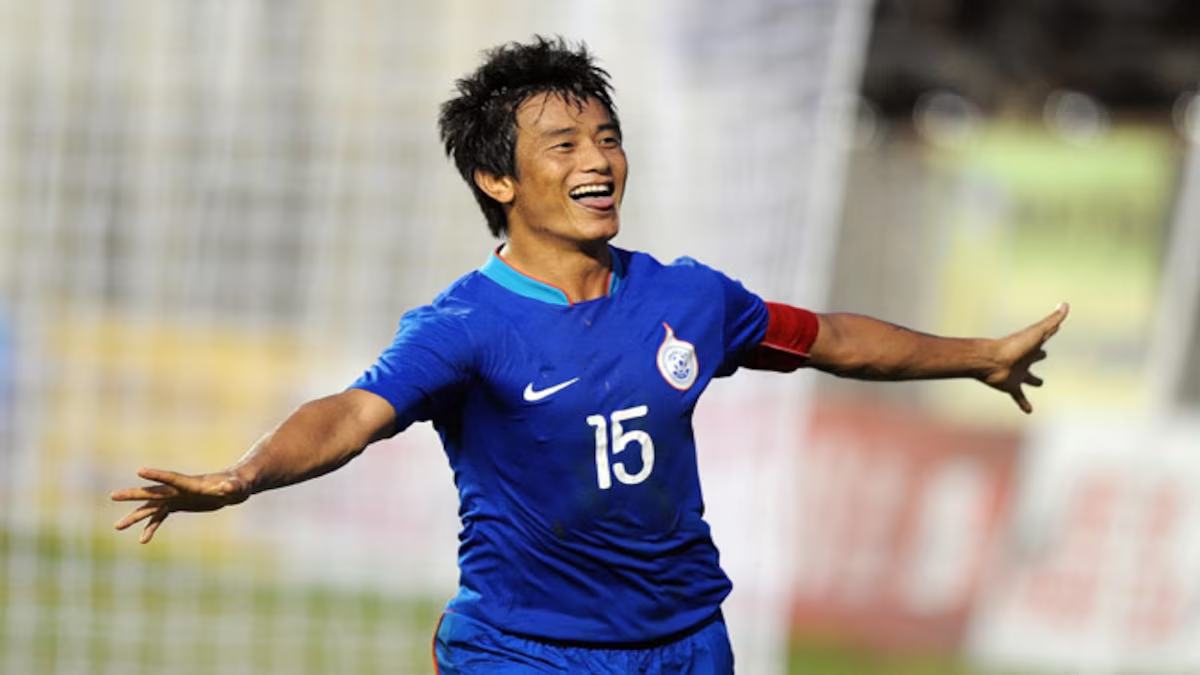
Baichung Bhutia is one of the greatest footballers India has ever produced. Known as the “Sikkimese Sniper” for his sharp goal-scoring skills, he played a major role in taking Indian football to the international stage. His journey from a small village in Sikkim to becoming a global football icon is truly inspiring.
Early Life of Baichung Bhutia
Baichung Bhutia was born on 15 December 1976 in a small village called Tinkitam in Sikkim. He belonged to a simple farming family. His parents were farmers and did not initially support his interest in sports because they wanted him to focus on studies.

However, his uncle Karma Bhutia encouraged him to follow his passion for football. This support changed his life. He joined St. Xavier’s School in Pakyong and later got a football scholarship at Tashi Namgyal Academy in Gangtok at the age of just 9.
From a young age, Bhutia showed great talent in sports. Along with football, he also played badminton, basketball, and athletics. But football remained his true passion.
Early Football Career and Breakthrough
Baichung started playing for local clubs in Sikkim, especially the Boys Club, Gangtok. His performance in the Subroto Cup (1992) was outstanding, where he won the Best Player Award. This brought him into the spotlight.
Former Indian goalkeeper Bhaskar Ganguly noticed his talent and helped him move to Kolkata, which was a major center for football in India.
Professional Career Begins
East Bengal FC (Start of Career)
In 1993, at the age of 16, Baichung joined East Bengal FC. This marked the beginning of his professional football journey.
JCT Mills Success
After two years, he moved to JCT Mills, where he achieved great success. The team won the National Football League in the 1996–97 season, and Bhutia became the top scorer.
Because of his performance, he was named the Indian Player of the Year (1996).
Historic Move to Europe
In 1999, Baichung Bhutia made history by signing with the English club Bury FC. He became:
- The first Indian footballer to sign a professional contract with a European club
- Only the second Indian to play in Europe after Mohammed Salim
This was a proud moment for Indian football.
He made his debut against Cardiff City and scored his first goal against Chesterfield. Though injuries limited his performance, his move opened doors for future Indian players.
Return to India and Club Success
After returning to India, Bhutia played for several clubs:
Mohun Bagan
He joined Mohun Bagan, one of India’s oldest clubs. Though injuries affected his performance, he remained a key player.
East Bengal (Return and Glory)
He returned to East Bengal and achieved great success, including:
- Winning the ASEAN Club Championship
- Scoring 9 goals in the tournament
- Becoming the top scorer
Malaysia Experience
He also played for Malaysian clubs like:
- Perak FA
- Selangor MK Land
International Career with India
Baichung Bhutia made his debut for the India national football team in 1995 at the age of 19.
Major Achievements
- Scored 40 international goals
- Played over 100 matches (caps)
- One of India’s highest goal scorers
Important Tournaments Won
- Nehru Cup
- SAFF Championship (3 times)
- LG Cup
- AFC Challenge Cup (2008)
In the 2008 AFC Challenge Cup, India qualified for the AFC Asian Cup, which was a big achievement.
Captaincy and Leadership
Baichung Bhutia was not only a great player but also a strong leader. As captain, he inspired the team and helped India win many important matches.
His leadership was especially important in tournaments like the SAFF Championship and Nehru Cup.
Retirement from Football
Baichung Bhutia retired from international football in 2011. His farewell match was played in 2012 against Bayern Munich in New Delhi.
Even after retirement, his contribution to Indian football continues.
Life Beyond Football
Reality TV Winner
Bhutia won the popular dance reality show Jhalak Dikhhla Jaa in 2009.
Football Schools
In 2010, he started the Bhaichung Bhutia Football Schools (BBFS) to train young players across India.
Politics
He joined politics and contested elections, though he did not win. He also founded the Hamro Sikkim Party.
Social Work and Contributions
Baichung Bhutia has always supported social causes:
- Helped earthquake victims in Sikkim
- Supported Tibetan independence peacefully
- Started the Indian Sports Foundation to help injured players
Personal Life
- Married Madhuri Tipnis in 2004 (later divorced in 2015)
- Has three children
- Comes from a humble background
- Known for his simple and disciplined life
Awards and Honours
Baichung Bhutia has received many awards for his contribution to football:
Major Awards
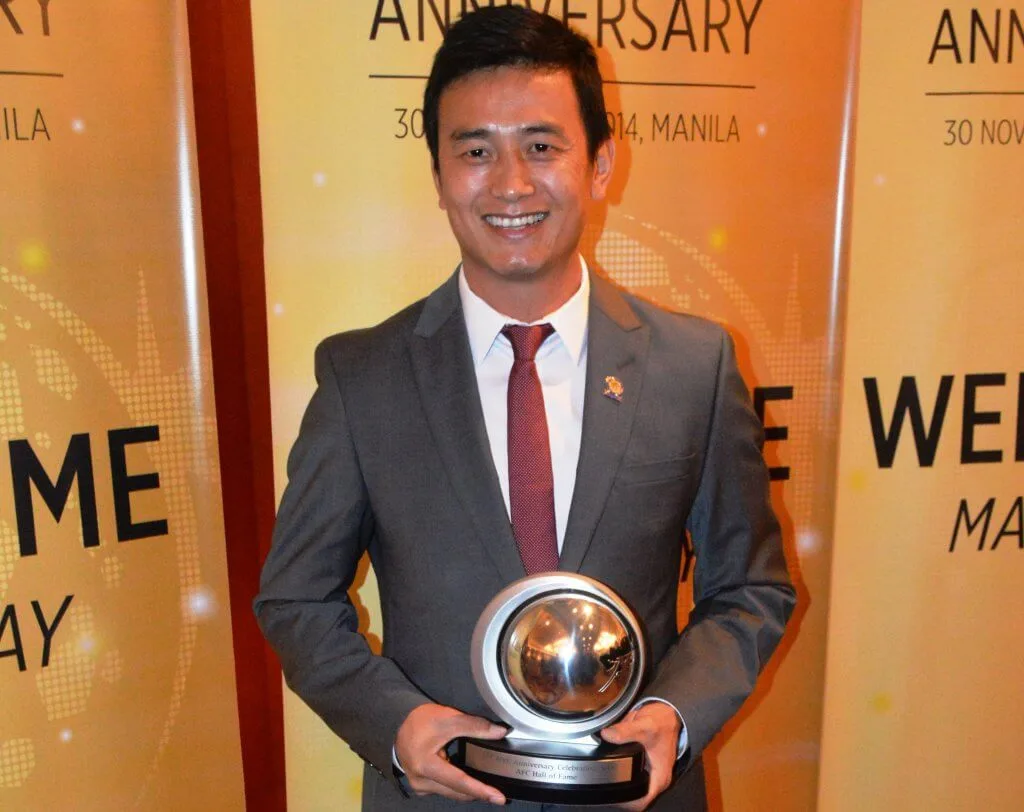
- Arjuna Award (1999)
- Padma Shri (2008) – India’s fourth highest civilian award
Other Honours
- Indian Player of the Year (multiple times)
- Most Valuable Player in several tournaments
- A football stadium in Sikkim named after him
Why Baichung Bhutia is Important
Baichung Bhutia is called the “Torchbearer of Indian Football” because:
- He took Indian football to international level
- Inspired young players across the country
- Opened doors for Indian players in Europe
- Promoted football through academies
Conclusion
Baichung Bhutia’s journey is a story of hard work, passion, and determination. From a small village in Sikkim to becoming an international football icon, he proved that dreams can come true with dedication.
He is not just a footballer but a true inspiration for millions of young Indians who want to achieve something big in life.
FAQs
1. Who is Baichung Bhutia?
Baichung Bhutia is a former Indian footballer and one of the greatest strikers in Indian football history.
2. Why is he called the Sikkimese Sniper?
Because of his excellent shooting and goal-scoring ability.
3. Which European club did he play for?
He played for Bury FC in England.
4. How many goals did he score for India?
He scored around 40 international goals.
5. What awards has he received?
He received the Arjuna Award and Padma Shri.