


India Border Management: Challenges and Security System

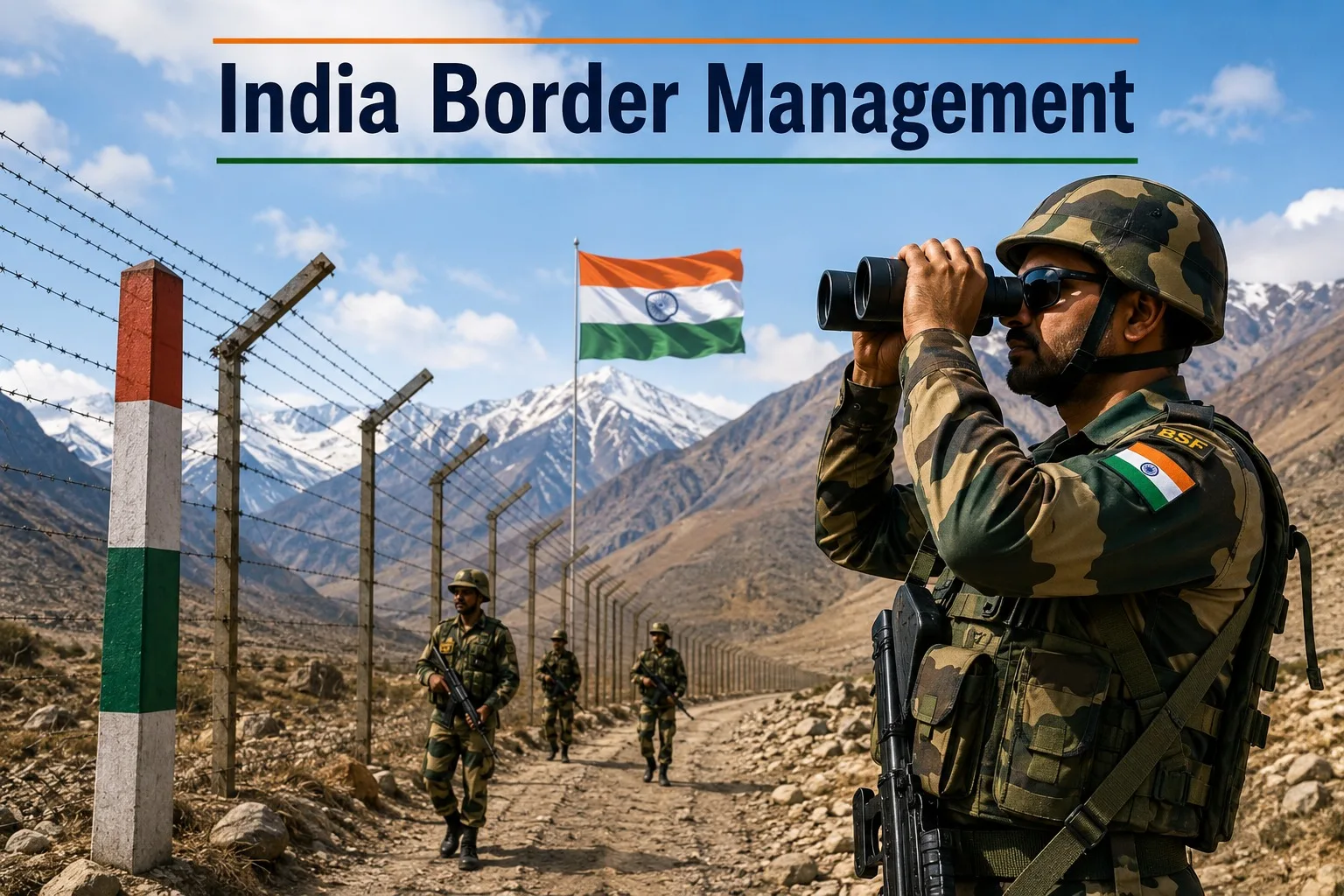
India Border Management is one of the most important parts of national security. Borders are the outer lines that separate one country from another. India shares land and sea borders with several countries, so managing these borders properly is necessary for the safety of the nation.
Thank you for reading this post, don't forget to subscribe!Border management means protecting India’s borders from illegal activities while allowing safe movement of legal people and goods. It helps stop illegal immigration, smuggling, human trafficking, terrorism, and infiltration. Good border management also supports trade, travel, and peaceful relations with neighboring countries.
India has a very large and diverse border. Some parts pass through deserts, some through mountains, some through forests, and some through coastal areas. Because of this, managing every border requires different strategies and security systems.
What is Border Management?
Border management is the process of protecting the country’s frontiers and controlling the movement of people and goods across borders.
Its main goals are:
- Prevent illegal entry into the country
- Stop smuggling of weapons, drugs, and other illegal goods
- Prevent human trafficking
- Protect against terrorism and infiltration
- Ensure safe movement of legal travelers and goods
The Government of India follows the policy of “One Border, One Border Guarding Force.” This means each border is mainly protected by a specific force.
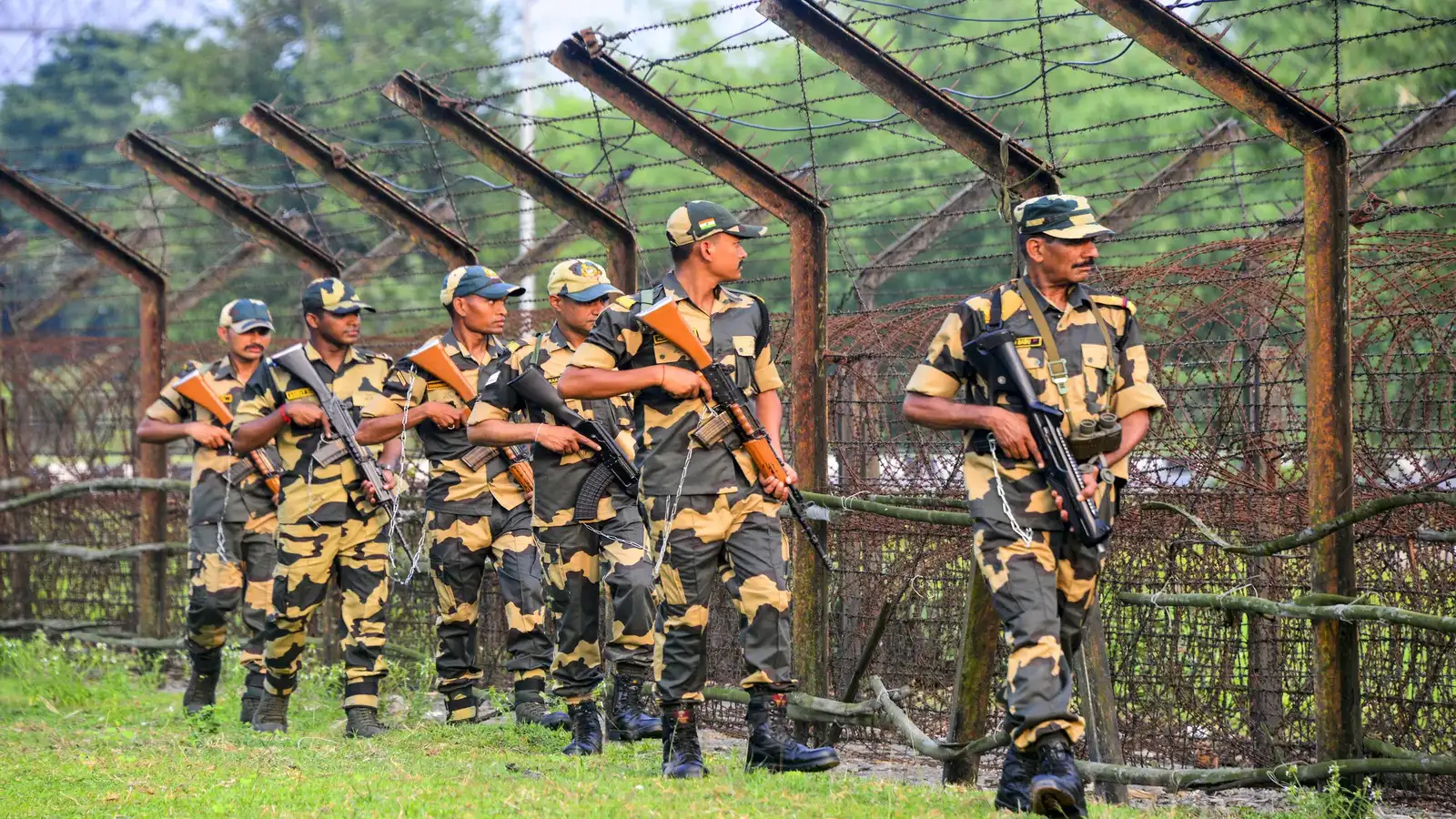
Border Guarding Forces in India
| Border | Security Force |
|---|---|
| India-Bangladesh | Border Security Force (BSF) |
| India-Pakistan | Border Security Force (BSF) |
| India-China | Indo-Tibetan Border Police (ITBP) |
| India-Nepal | Sashastra Seema Bal (SSB) |
| India-Bhutan | Sashastra Seema Bal (SSB) |
| India-Myanmar | Assam Rifles |
| LoC and LAC | Indian Army |
The coastal borders are protected by the Indian Navy, Indian Coast Guard, and State Marine Police.
Countries Sharing Borders with India
India shares its border with seven countries:
- Bangladesh
- China
- Pakistan
- Nepal
- Myanmar
- Bhutan
- Afghanistan
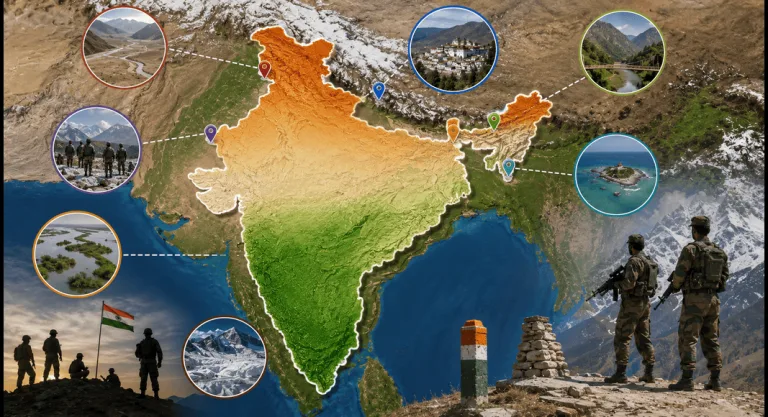
These borders pass through different geographical regions such as:
- Snow-covered Himalayan mountains
- Dense forests
- Fertile plains
- Marshy wetlands
- Coastal areas
- The Thar Desert
Because of these difficult terrains, border management becomes more challenging.
India’s Maritime Boundaries
India also has a large sea boundary. Maritime boundaries are divided into different zones.
1. Territorial Waters
Territorial waters extend up to 12 nautical miles from the coast.
This area is fully under India’s control. Foreign ships usually need permission to enter this zone.
2. Contiguous Zone
The contiguous zone extends up to 24 nautical miles.
In this area, India can take action against ships involved in illegal activities such as:
- Smuggling
- Tax violations
- Immigration violations
- Health regulation violations
This helps security agencies stop crimes before they reach Indian territory.
3. Exclusive Economic Zone (EEZ)
The Exclusive Economic Zone (EEZ) extends up to 200 nautical miles.
Exclusive Economic Zone
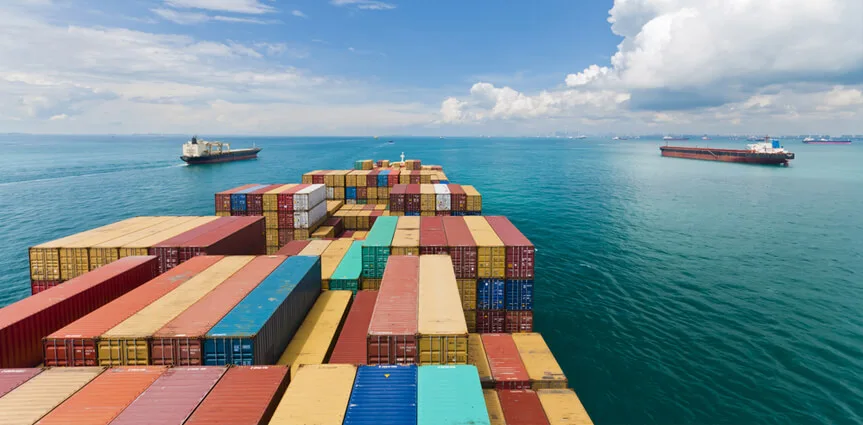
In this zone, India has rights over natural resources such as:
- Oil
- Gas
- Minerals
- Fishing resources
Other countries may pass through this zone if they do not threaten India’s security.
Department of Border Management
The Department of Border Management was created in January 2004 under the Ministry of Home Affairs.
Ministry of Home Affairs
This department was formed after recommendations from the Group of Ministers (GoM) on border security.
Its main responsibilities include:
- Border fencing
- Floodlighting
- Surveillance systems
- Patrolling support
- Security infrastructure development
- Intelligence analysis
- Development of Integrated Check Posts (ICPs)
Integrated Check Posts help manage trade and travel across borders efficiently.
Major Challenges in India Border Management
India faces many challenges because every border has different security issues.
Challenges on India-Pakistan Border
The India-Pakistan border stretches from hot desert areas to freezing mountains.
Major challenges include:
Difficult Climate
The border passes through the Thar Desert and the Himalayas. Security forces face extreme heat and extreme cold.
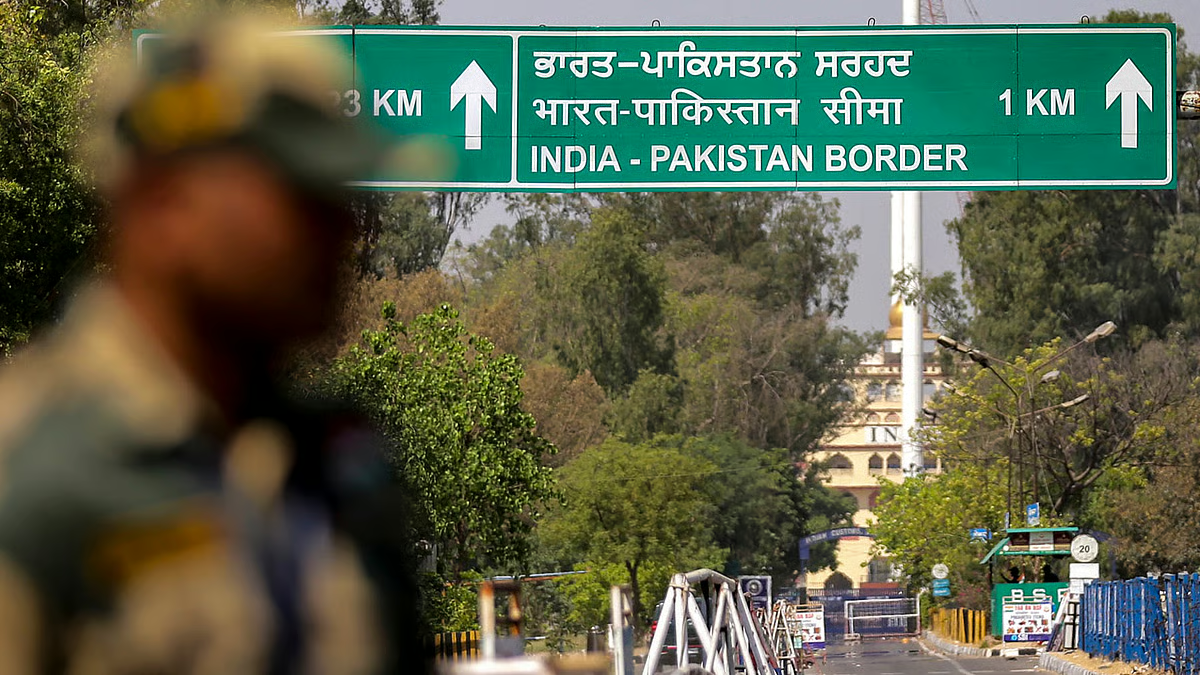
Infiltration
Cross-border infiltration remains a serious issue.
Terrorism
Cross-border terrorism is one of the biggest security threats for India.
Line of Control
The Line of Control (LoC) is especially sensitive.
Challenges on India-China Border
Line of Actual Control
The India-China border remains disputed in many areas.
Main challenges include:
- Border disputes
- Military face-offs
- Difficult mountain terrain
- Harsh weather conditions
Chinese incursions and standoffs increase tensions between the two countries.
Challenges on India-Bangladesh Border
The India-Bangladesh border is long and highly porous.
Major challenges include:
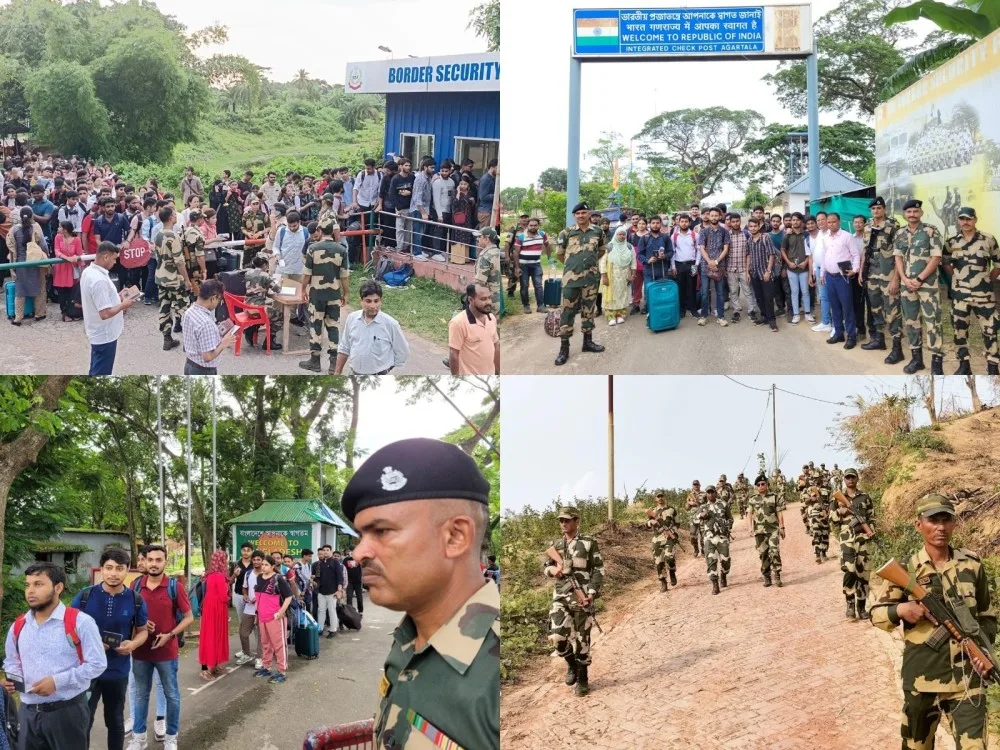
Illegal Immigration
Unauthorized movement across the border creates social and economic pressure.
Smuggling
Common smuggled items include:
- Arms
- Ammunition
- Drugs
- Cattle
- Fake currency
These activities affect law and order.
Challenges on India-Nepal Border
India and Nepal share an open border.
Nepal
This helps people travel easily, but it also creates security risks.
Major challenges:
- Drug smuggling
- Illegal arms movement
- Vehicle theft
- Entry of anti-social groups
Terrorist groups may misuse open borders.
Challenges on India-Myanmar Border
The India-Myanmar border has forests and hilly areas.
Major problems include:
Drug Trafficking
Drug smuggling is a major issue.
Golden Triangle
The Golden Triangle region is known for drug production and trafficking.
Insurgency
Some insurgent groups use forest routes to move across the border.
Cross-ethnic tribal connections also make tracking difficult.
Challenges on India-Bhutan Border
The India-Bhutan border is mostly peaceful, but some problems remain.
Main challenge:
- Smuggling of illegal goods
Security agencies continue regular monitoring.
Why Border Security is Important
Strong border security helps India in many ways:
- Protects national sovereignty
- Prevents terrorist attacks
- Stops illegal trade
- Reduces crime
- Protects citizens
- Supports economic stability
A secure border also improves peace and trust within the country.
Steps to Improve India Border Management
India is adopting modern technologies and new policies to improve border security.
Smart Identity Management
Biometric systems help identify people accurately.
Examples:
- Fingerprint scanning
- Face recognition
- Iris scanning
- Digital identity verification
This reduces fake identity usage.
Smart Inspection Systems
Modern inspection tools help detect hidden threats.
Examples include:
- Full-body scanners
- Metal detectors
- Explosive detectors
- Handheld scanners
These systems help detect:
- Weapons
- Drugs
- Explosives
- Dangerous materials
Better Surveillance
Technology improves border monitoring.
Important tools include:
- Surveillance cameras
- Watchtowers
- Radars
- Drones
- Laser barriers
- Night vision devices
These tools help security forces monitor borders 24/7.
Cross-Border Cooperation
Neighboring countries should work together.
Cooperation can include:
- Intelligence sharing
- Joint patrols
- Anti-smuggling operations
- Anti-trafficking efforts
This helps reduce cross-border crimes.
Development of Border Areas
Border villages need better infrastructure.
The government launched the Border Area Development Programme (BADP) in 1987.
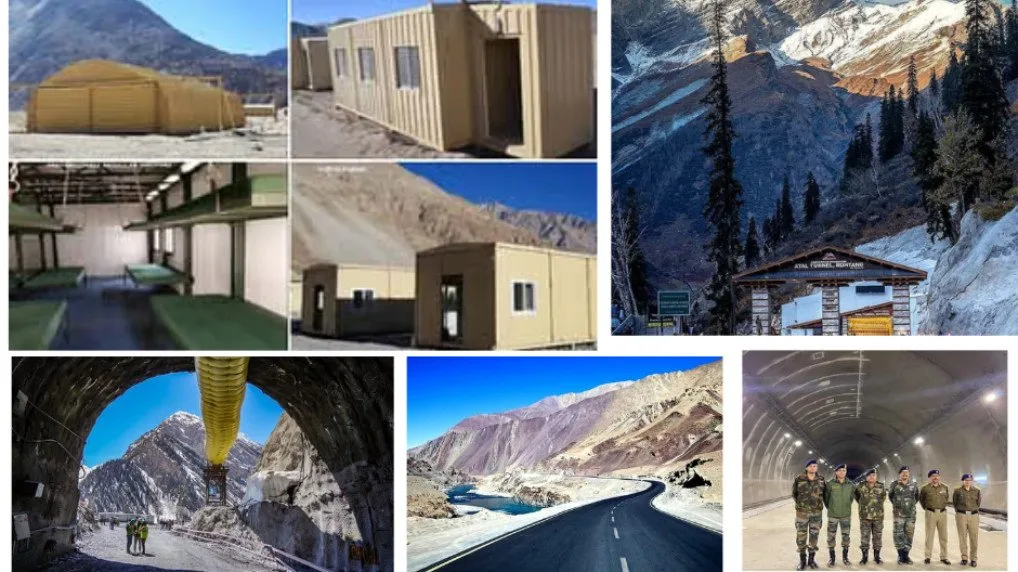
Border Area Development Programme
Its goals include improving:
- Roads
- Schools
- Hospitals
- Electricity
- Communication networks
The Vibrant Villages Programme (VVP) was also launched for northern border villages.
Vibrant Villages Programme
This program supports villages in:
The goal is to improve living conditions and strengthen border presence.
Final Thoughts
India’s borders are vast and complex. From deserts to mountains and coastlines, each border brings unique challenges. Strong coordination between security forces, modern technology, smart surveillance, and border area development are essential for effective border management.
As security threats continue to evolve, India must keep strengthening its border systems to protect national sovereignty and ensure long-term peace and safety.
FAQs
Q1. What is India Border Management?
India Border Management is the system of protecting India’s land and sea borders from illegal activities like smuggling, terrorism, infiltration, and illegal immigration while ensuring safe movement of legal people and goods.
Q2. How many countries share a border with India?
India shares borders with seven countries: Bangladesh, China, Pakistan, Nepal, Myanmar, Bhutan, and Afghanistan.
Q3. Which forces protect India’s borders?
India’s borders are protected by the Border Security Force (BSF), Indo-Tibetan Border Police (ITBP), Sashastra Seema Bal (SSB), Assam Rifles, Indian Army, Indian Navy, and Indian Coast Guard.
Q4. What is the Exclusive Economic Zone (EEZ)?
The Exclusive Economic Zone (EEZ) is the sea area extending up to 200 nautical miles from India’s coast, where India has rights over resources like oil, gas, minerals, and fisheries.
Exclusive Economic Zone
Q5. What are the main challenges in India Border Management?
Major challenges include terrorism, infiltration, illegal immigration, drug trafficking, arms smuggling, and difficult geographical terrain such as mountains, forests, deserts, and coastal areas.
Q6. What is the Border Area Development Programme (BADP)?
The Border Area Development Programme (BADP) is a government initiative started in 1987 to improve infrastructure and living conditions in border villages.
Border Area Development Programme
Q7. Why is border security important for India?
Border security protects national sovereignty, prevents crime and terrorism, ensures peace, and supports economic stability.