


Semiconductor Revolution in India

Semiconductor Revolution is changing the world very fast. Today, semiconductors are one of the most important parts of modern technology. They are used in smartphones, laptops, televisions, electric vehicles, satellites, medical devices, and even defense systems. Almost every smart electronic device depends on semiconductor chips to work properly.
Thank you for reading this post, don't forget to subscribe!Because of increasing demand and recent global chip shortages, countries around the world are now focusing heavily on semiconductor production. India is also taking major steps to become self-reliant in this important industry. This growing change is known as the Semiconductor Revolution.
What is a Semiconductor?
A semiconductor is a material that can conduct electricity, but not as much as metals like copper and not as little as insulators like rubber or glass. This special property makes semiconductors extremely useful in electronic devices.
The conductivity of semiconductors can change when affected by:
- Temperature
- Light
- Voltage
- Added impurities (called doping)
Because of this controllable behavior, semiconductors are used to make:
- Transistors
- Diodes
- Microchips
- Solar cells
- Integrated Circuits (ICs)
These components are the building blocks of modern electronics.
Common Semiconductor Materials
The most commonly used semiconductor materials are:
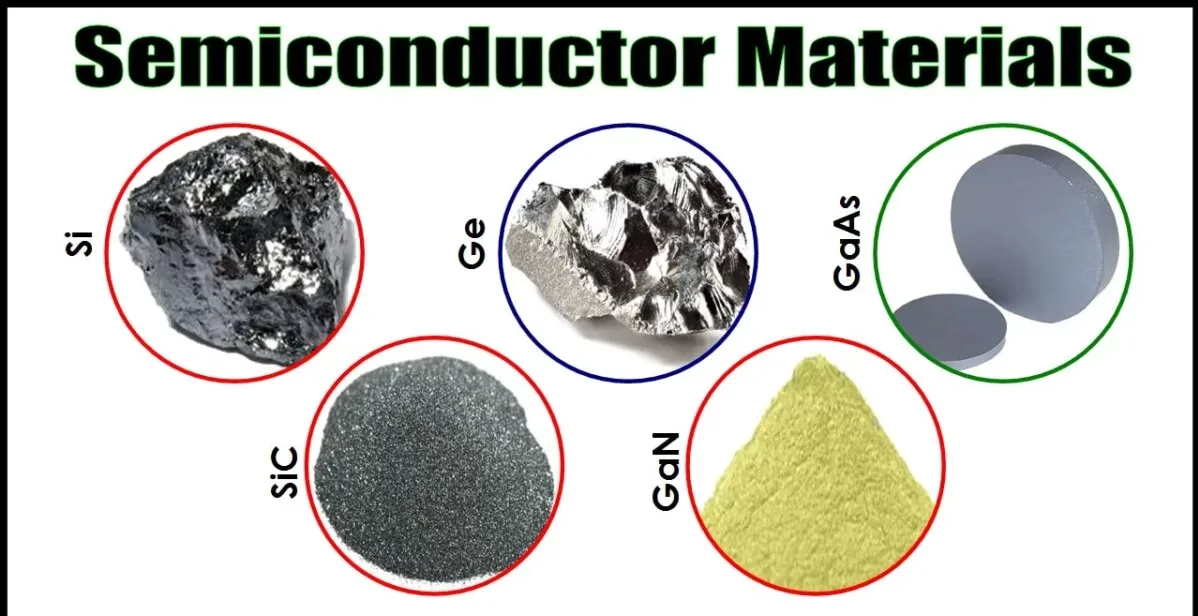
- Silicon – Most widely used in chip manufacturing
- Germanium – Used in specialized electronics
- Gallium Arsenide – Used in high-speed communication and advanced devices
Silicon is especially important because it is affordable, efficient, and widely available.
Types of Semiconductors
1. Intrinsic Semiconductor
This is a pure semiconductor without any added impurities. Its conductivity depends only on its natural properties.
2. Extrinsic Semiconductor
This semiconductor contains added impurities through doping. Doping improves conductivity and makes the material suitable for advanced electronic applications.
Important Properties of Semiconductors
Semiconductors have several unique properties that make them valuable.
Conductivity Increases with Temperature
Unlike metals, semiconductors conduct more electricity when temperature rises.
Acts Like Insulator at Very Low Temperature
At absolute zero (0 Kelvin), semiconductors behave like insulators.
Light Sensitivity
When light falls on certain semiconductors, conductivity increases. This is useful in:
- Solar panels
- Light sensors
- Photodetectors
Heat Management
Semiconductors can handle heat better than many materials, which helps in microchips and processors.
Electroluminescence
Some semiconductors emit light when electricity passes through them. This property is used in:
- LEDs
- Display screens
- Digital signboards
Uses of Semiconductors in Daily Life
Semiconductors are everywhere in modern life.
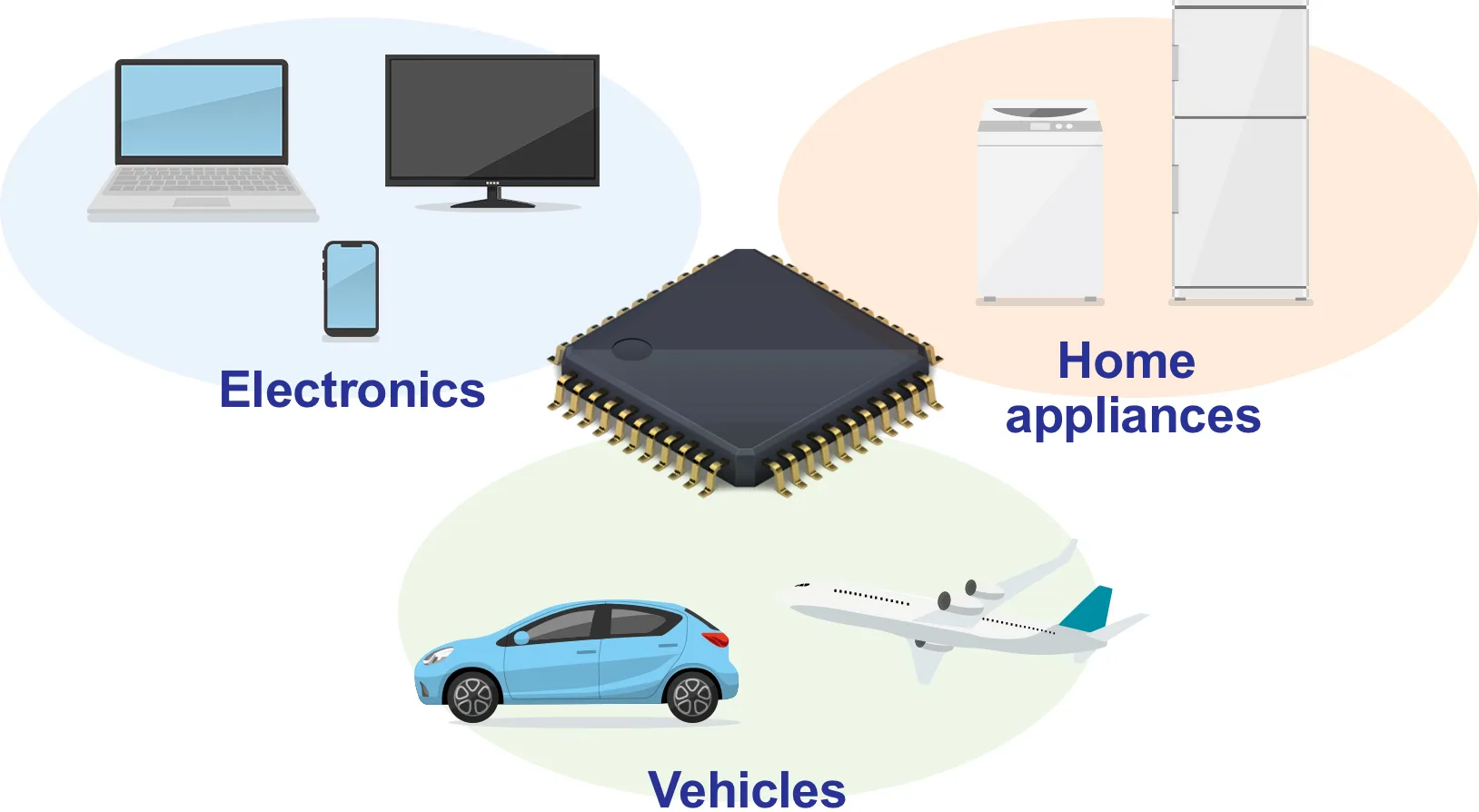
Smartphones and Computers
Processors and memory chips inside phones and computers are made using semiconductors.
Electric Vehicles
Electric cars need chips for:
- Battery management
- Navigation
- Sensors
- Safety systems
Communication Technology
Semiconductors power:
- 4G and 5G networks
- Wi-Fi routers
- Satellite communication
Medical Equipment
Important healthcare devices use semiconductors, such as:
- MRI scanners
- Heart monitors
- Diagnostic machines
- Medical implants
Artificial Intelligence
AI systems need powerful chips to process huge amounts of data quickly.
Space and Defense
Advanced missiles, radars, satellites, and space vehicles depend heavily on semiconductor technology.
Advantages of Semiconductors
Semiconductor devices offer many benefits.
- Small and lightweight
- Low power consumption
- Long life
- Fast processing
- Reliable performance
- Less electrical noise
- Durable and shock resistant
These advantages have made semiconductors essential in the digital era.
Current Semiconductor Market in India
India’s semiconductor market is growing rapidly.
The increasing use of:
- Smartphones
- Computers
- Smart TVs
- Digital payments
- Cloud services
- AI systems
has sharply increased chip demand.
India’s digital transformation is also boosting semiconductor use in education, banking, healthcare, and governance.
In 2022, India’s semiconductor market was valued at around USD 26.3 billion. Experts expect strong growth in the coming years as digital technology expands.
India still imports a large number of chips from other countries, which creates dependency on global supply chains.
Why Semiconductor Supply Chains Matter
The COVID-19 pandemic exposed how fragile global supply chains can be.
When factories closed and transportation slowed, chip shortages affected industries worldwide. Production of cars, phones, and electronics was delayed.
This taught countries an important lesson: depending too much on foreign chip supply is risky.
Semiconductors are now considered important for:
- Economic growth
- National security
- Defense
- Technological leadership
Because of this, many nations are investing heavily in domestic chip production.
India’s Semiconductor Initiatives
The Indian government has launched several programs to build a strong semiconductor ecosystem.
India Semiconductor Mission (ISM)
India Semiconductor Mission is India’s flagship semiconductor program.
It was launched in 2021 under Digital India Corporation to promote semiconductor and display manufacturing in India.
Its main goals include:
- Building semiconductor fabs
- Supporting chip design
- Creating packaging and testing units
- Developing skilled manpower
The government announced major financial support to attract investors and strengthen India’s semiconductor ecosystem.
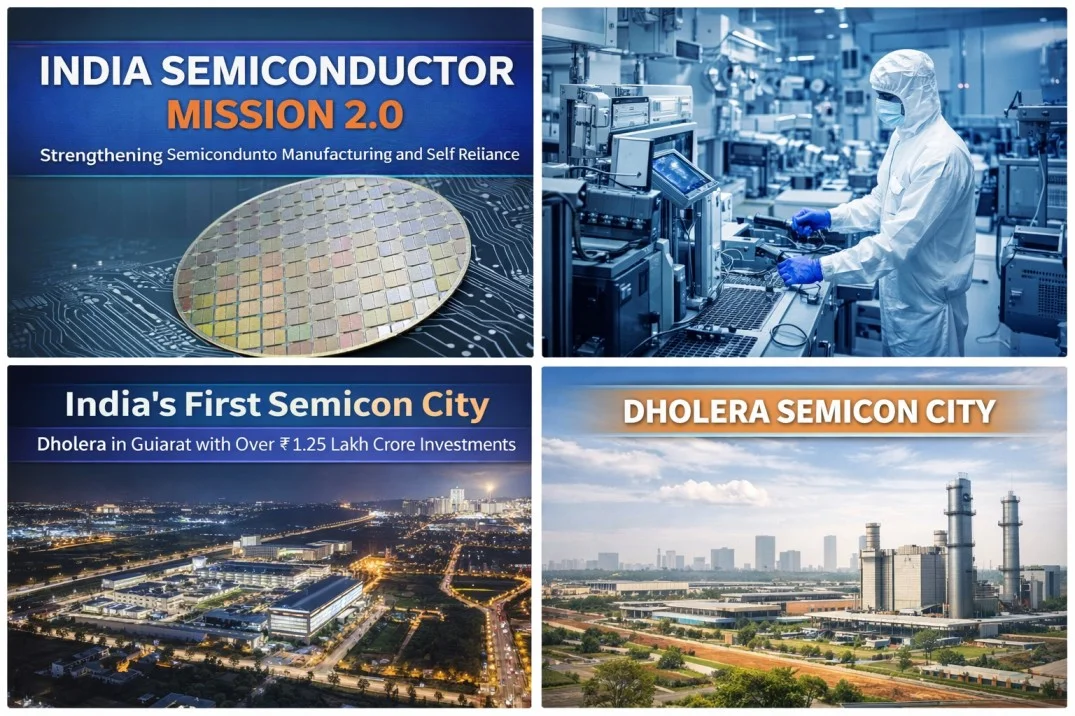
In recent years, the mission has gained strong momentum with major investments from global and Indian companies. Micron Technology has started building its semiconductor assembly and testing facility in Gujarat, which is one of India’s biggest chip-related projects. Tata Electronics, in partnership with Powerchip Semiconductor Manufacturing Corporation, is also setting up a semiconductor fabrication plant in Dholera, Gujarat. Additionally, India has approved new semiconductor projects involving companies like CG Power and Industrial Solutions and Renesas Electronics. These developments show that India is rapidly moving toward becoming a major global semiconductor hub and reducing dependence on imported chips.
Semiconductor Fab Scheme
This scheme offers financial support for companies setting up chip fabrication plants in India.
Government support can cover a major part of project costs, reducing investment risk.
Design Linked Incentive (DLI) Scheme
Design Linked Incentive Scheme supports semiconductor design companies and startups.
It helps in designing:
- Integrated circuits
- Chipsets
- System-on-chip (SoC) products
This encourages innovation and local design talent.
Semicon India Programme
Semicon India focuses on attracting global investments into India’s chip sector.
Its purpose is to create a complete semiconductor ecosystem.
Production Linked Incentive (PLI)
Production Linked Incentive Scheme encourages electronics manufacturing in India through incentives.
This helps attract global semiconductor companies.
SPECS Scheme
The Scheme for Promotion of Manufacturing of Electronic Components and Semiconductors supports local production by providing financial benefits on capital expenditure.
This encourages domestic manufacturing of critical electronic parts.
Challenges in Semiconductor Manufacturing
Building a semiconductor industry is difficult.
High Cost
Chip manufacturing plants are extremely expensive. Building a fab can cost billions of dollars.
Technology Gap
Advanced semiconductor technology is controlled by a few countries such as:
- Taiwan
- South Korea
- Japan
- United States
This makes technology access difficult.
Skilled Workforce Shortage
India has strong chip designers but needs more factory-level experts for manufacturing.
Environmental Concerns
Chip manufacturing requires:
- Huge electricity
- Large water usage
- Hazardous chemicals
This raises sustainability concerns.
Weak Research Ecosystem
India still needs stronger research and development in advanced chip technology.
How India is Solving These Problems
India is taking practical steps.
Government Incentives
Subsidies reduce setup costs and attract investors.
Skill Development
Programs like Skill India and technical training institutes are preparing skilled workers.
All India Council for Technical Education is also supporting semiconductor education.
Global Partnerships
India has signed semiconductor cooperation agreements with:
- United States
- Japan
- European Union
These partnerships help India gain access to advanced technology and stronger supply chains.
Semiconductor and Global Politics
Semiconductors are no longer just about technology. They are also about global power.
US-China Rivalry
United States and China are competing for semiconductor dominance.
The US has placed restrictions on China’s access to advanced chip technology.
This has increased global tensions.
Taiwan’s Importance
Taiwan plays a major role in semiconductor production.
Taiwan Semiconductor Manufacturing Company, also known as TSMC, produces many of the world’s advanced chips.
Any disruption in Taiwan can affect the global technology market.
Europe’s Strategy
European Union wants to reduce dependence on Asian semiconductor suppliers.
Europe is increasing local chip production for long-term security.
India’s Strategic Opportunity
The Semiconductor Revolution gives India a big opportunity.
India can become a trusted alternative in global supply chains.
Major companies are already investing in India.
Examples include:
- Micron Technology
- Tata Electronics
This strengthens India’s global position.
India also benefits from its balanced geopolitical relations. It can attract investments from multiple countries.
Future of Semiconductor Revolution in India
The future looks promising.
India’s semiconductor sector could create over 1 million jobs in coming years.
Important future trends include:
- Smaller chips
- Faster processors
- AI-focused chips
- 3D chip architecture
- Energy-efficient semiconductors
- Sustainable manufacturing
New technologies like:
- Quantum computing
- Robotics
- Artificial Intelligence
- Smart vehicles
- Internet of Things (IoT)
will increase semiconductor demand even more.
The Semiconductor Revolution is not just about chips. It is about economic growth, innovation, security, and technological independence.
For India, this revolution can become a turning point. With strong policies, global partnerships, and innovation, India has the potential to become one of the world’s major semiconductor hubs.
FAQs
1. What is the Semiconductor Revolution?
The Semiconductor Revolution refers to the rapid growth and importance of semiconductor technology in modern industries and global economies.
2. Why are semiconductors important?
Semiconductors power smartphones, computers, electric vehicles, AI systems, and many other electronic devices.
3. What is India Semiconductor Mission?
It is a government initiative to develop semiconductor manufacturing and design in India.
4. Which material is mostly used in semiconductors?
Silicon is the most widely used semiconductor material.
5. Why is India investing in semiconductors?
India wants to reduce import dependence, create jobs, and become a major technology hub.