



Indo-Islamic Architecture: History, Features, and Famous Monuments in India

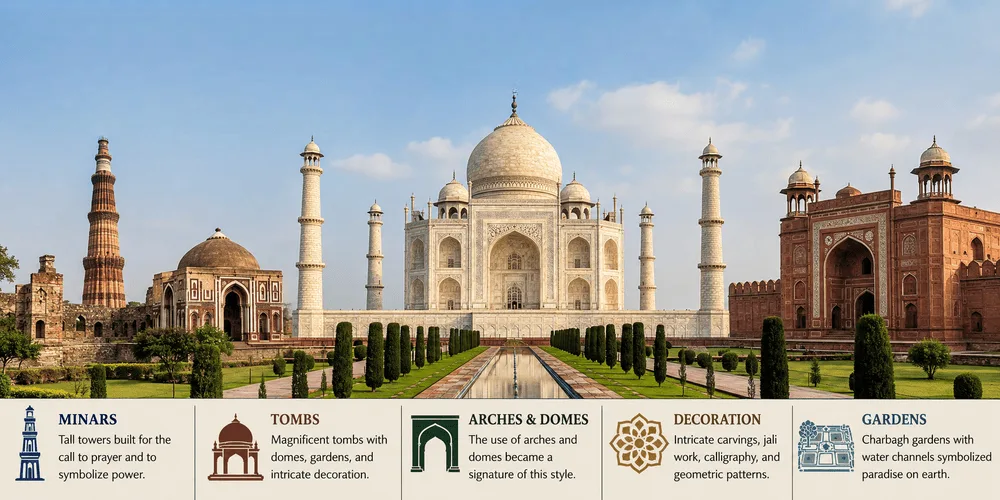
Indo-Islamic Architecture is one of the most beautiful and important architectural styles in Indian history. It developed when Islamic rulers came to India and combined their building styles with traditional Indian art and architecture. This style became popular during the medieval period and created many famous monuments that still attract people from all over the world.
Thank you for reading this post, don't forget to subscribe!Indo-Islamic architecture is not just about buildings. It reflects the cultural exchange between Hindu and Muslim traditions. Indian craftsmen and Islamic architects worked together and created a new style that included domes, arches, minars, gardens, carvings, calligraphy, and decorative designs. This architecture can be seen in mosques, tombs, forts, palaces, gardens, and public buildings across India.
Many famous monuments such as the Taj Mahal, Qutub Minar, Humayun’s Tomb, Red Fort, Jama Masjid, and Fatehpur Sikri are examples of Indo-Islamic architecture. These monuments show the artistic excellence, engineering skills, and cultural harmony of medieval India.
History of Indo-Islamic Architecture
The history of Indo-Islamic architecture began when Islam reached India through traders, merchants, travelers, saints, and conquerors. Islam spread to India during the seventh and eighth centuries CE. Muslim traders first came to the western coast of India for trade and gradually established cultural relations with local people.
Later, Turkish and Afghan rulers conquered northern India and established the Delhi Sultanate in the early thirteenth century. During this period, large-scale construction activities started. Muslim rulers built mosques, tombs, forts, madrasas, gardens, and public buildings.
When Islamic architecture entered India, it mixed with local Indian traditions. Indian craftsmen used their own decorative methods, carving styles, and building techniques. As a result, a new combined architectural style emerged, known as Indo-Islamic architecture.
The Mughal rulers further developed this architecture. Under emperors like Akbar, Jahangir, Shah Jahan, and Aurangzeb, Indo-Islamic architecture reached its peak. Mughal buildings became famous for their beauty, symmetry, gardens, marble work, and detailed decoration.
This architectural style is also called Indo-Saracenic architecture because it combines Indian and Islamic elements.
Main Features of Indo-Islamic Architecture
Indo-Islamic architecture has several unique features that make it different from earlier Indian architecture.
1. Use of Arches
One of the most important features of Indo-Islamic architecture is the use of arches. Arches were used in doors, windows, gateways, and halls. They provided strength and beauty to buildings.
Some arches were pointed while others were rounded. These arches became a major symbol of Islamic architecture in India.
2. Domes
Domes are another important feature of Indo-Islamic architecture. Large domes were built over mosques and tombs. Domes gave buildings a grand and royal appearance.
The Taj Mahal and Gol Gumbad are famous examples of large domes.
3. Minars
Minars are tall towers attached to mosques. They were mainly used for the azaan or call to prayer. Minars also showed the power and greatness of rulers.
The Qutub Minar in Delhi is one of the most famous minars in the world.
4. Calligraphy
Islamic tradition discouraged the use of human and animal figures in religious places. Therefore, architects used beautiful Arabic calligraphy for decoration.
Verses from the Quran were written on walls, gateways, and domes using artistic styles.
5. Geometrical and Floral Designs
Indo-Islamic buildings are decorated with geometrical patterns and floral designs. Walls, ceilings, pillars, and domes were covered with artistic carvings.
Lotus flowers, vines, leaves, and other floral patterns became common decorative elements.
6. Use of Jali Work
Jali work refers to decorative stone screens with beautiful patterns. These screens allowed air and light to enter buildings while maintaining privacy.
The Taj Mahal is famous for its fine marble jali work.
7. Gardens
Gardens were an important part of Indo-Islamic architecture. Mughal rulers especially loved gardens.
The Charbagh style garden divided the garden into four sections with water channels in between. This design represented the paradise described in Islamic traditions.
8. Use of Red Sandstone and Marble
Many Indo-Islamic buildings were built using red sandstone and white marble. Red sandstone was mostly used during Akbar’s rule, while white marble became popular during Shah Jahan’s period.
The Taj Mahal is made mainly of white marble.
Types of Indo-Islamic Architecture
Indo-Islamic architecture developed into different regional styles.
1. Imperial Style
This style developed during the Delhi Sultanate period. Buildings in Delhi showed strong Turkish and Persian influences.
Examples include:
- Qutub Minar
- Alai Darwaza
- Tughlaqabad Fort
2. Provincial Style
Different regions developed their own architectural styles by mixing local traditions with Islamic features.
Important provincial styles include:
- Gujarat Style
- Bengal Style
- Mandu Style
- Jaunpur Style
3. Mughal Style
The Mughal style became the most famous form of Indo-Islamic architecture. Mughal buildings were known for symmetry, gardens, marble decoration, and large domes.
Examples include:
- Taj Mahal
- Red Fort
- Humayun’s Tomb
- Jama Masjid
4. Deccani Style
This style developed in southern India under Deccan Sultanates like Bijapur and Golconda.
Buildings in this style had massive domes and strong decorative features.
Example:
- Gol Gumbad
Important Components of Indo-Islamic Architecture
Minars
Minars were tall towers built near mosques. Besides religious purposes, they symbolized royal authority.
Qutub Minar
The Qutub Minar in Delhi was built in the 13th century. It is about 234 feet high and has five storeys. The tower is decorated with Quranic inscriptions and floral designs.
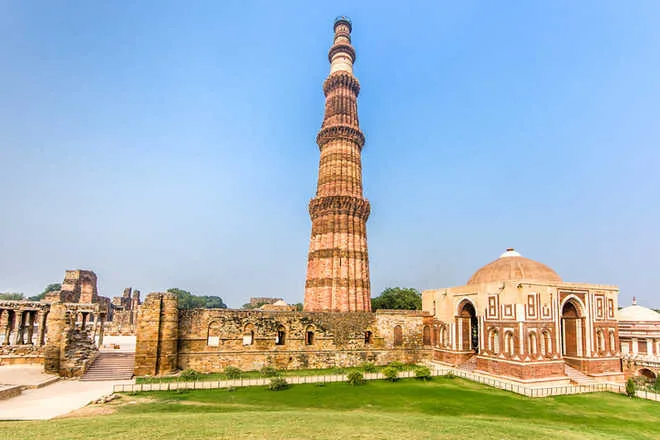
It is made mainly of red sandstone and remains one of India’s most famous monuments.
Tombs
Tombs became very important during medieval India. Rulers built grand tombs for themselves and their family members.
Features of Tombs
- Large domes
- Gardens
- Decorative walls
- Quranic inscriptions
- Marble and sandstone work
Humayun’s Tomb
Humayun’s Tomb in Delhi was built in 1570. It was the first garden tomb in India and inspired the design of the Taj Mahal.
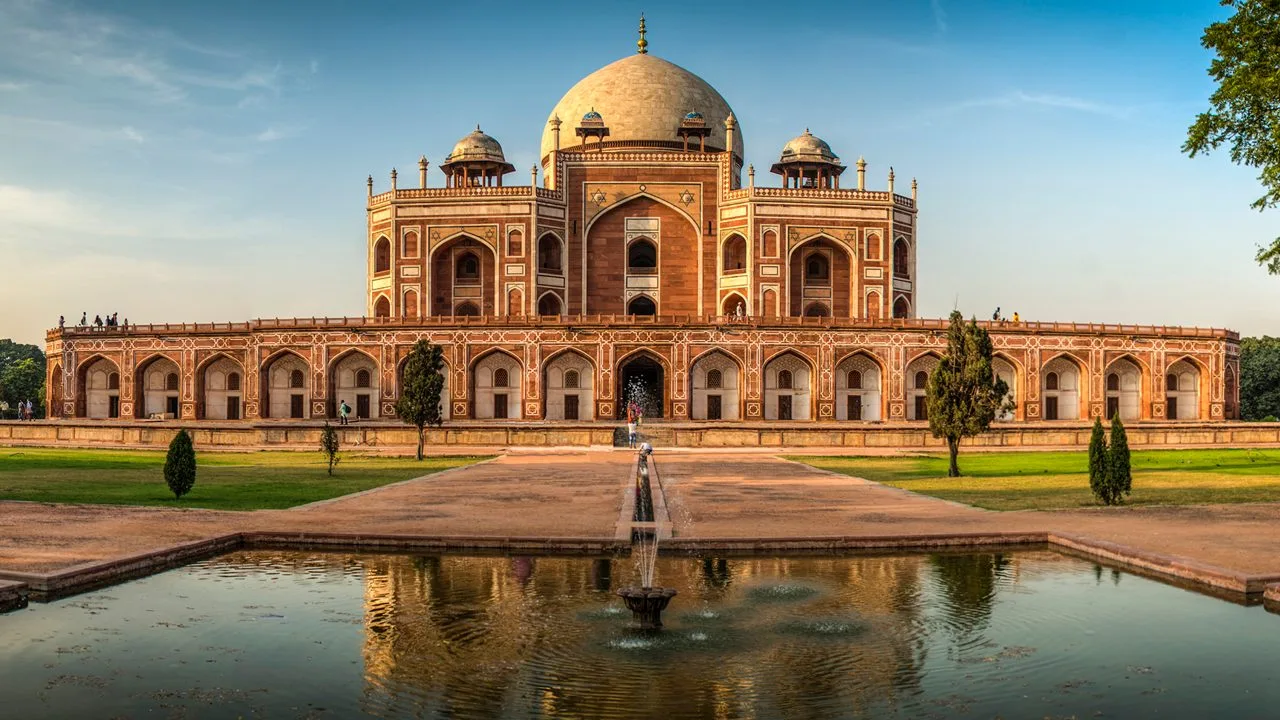
It was built by Emperor Akbar in memory of his father Humayun. The monument follows the Charbagh garden style.
The monument is also recognized as a UNESCO World Heritage Site.
Sarais
Sarais were rest houses for travelers, traders, pilgrims, and merchants. These buildings provided temporary accommodation during long journeys.
Sarais played an important role in trade and cultural exchange during medieval India.
Mosques
Mosques were important religious buildings in Indo-Islamic architecture.
Main Features of Mosques
- Large open courtyard
- Prayer hall
- Mihrab showing direction of Mecca
- Minbar for sermons
- Domes and minars
Famous Examples of Indo-Islamic Architecture
Taj Mahal
The Taj Mahal in Agra is the finest example of Mughal architecture. Emperor Shah Jahan built it in memory of his wife Mumtaz Mahal.
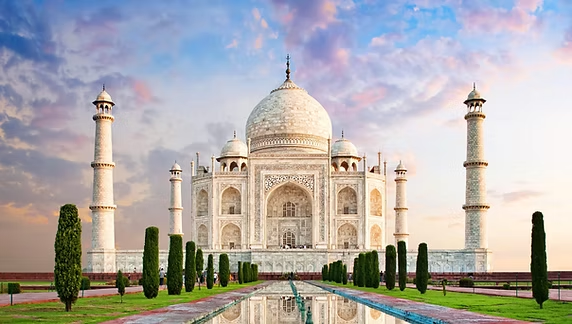
The monument is famous for:
- White marble
- Beautiful dome
- Fine jali work
- Pietra dura decoration
- Symmetrical design
- Charbagh garden
The Taj Mahal is considered one of the Seven Wonders of the World.
Pietra Dura Technique
Pietra dura is a decorative art where colored stones are inlaid into marble surfaces to create beautiful patterns.
The Taj Mahal contains excellent examples of this technique.
Gol Gumbad
Gol Gumbad is located in Bijapur, Karnataka. It is the tomb of Muhammad Adil Shah.
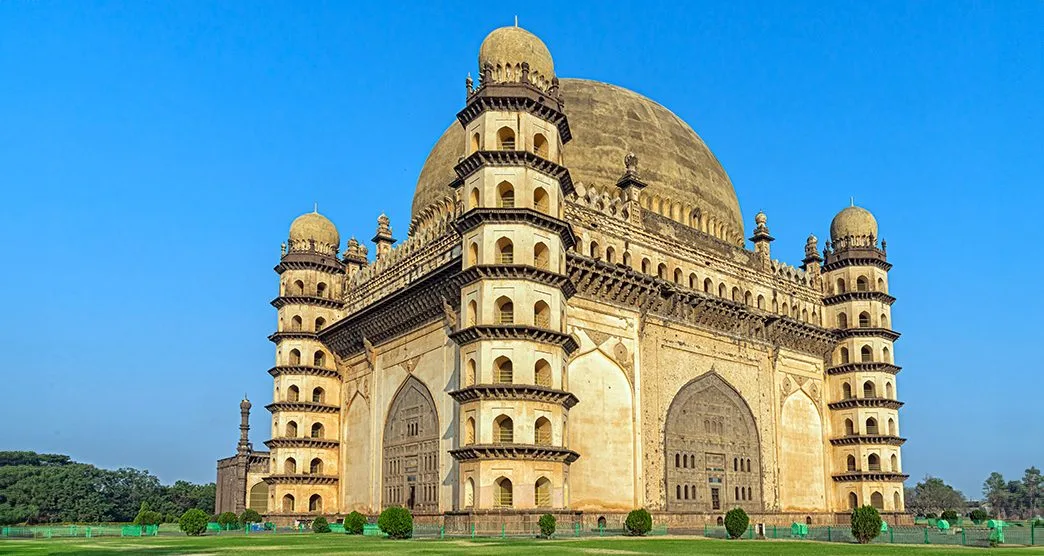
The monument is famous for:
- Massive dome
- Whispering gallery
- Large garden complex
- Impressive architecture
The dome of Gol Gumbad is one of the largest domes in the world.
The whispering gallery is very special because even a small sound echoes many times.
Jama Masjid
Jama Masjid refers to the main congregational mosque of a city.
Large Friday prayers were held here every week. These mosques became centers of social and cultural life.
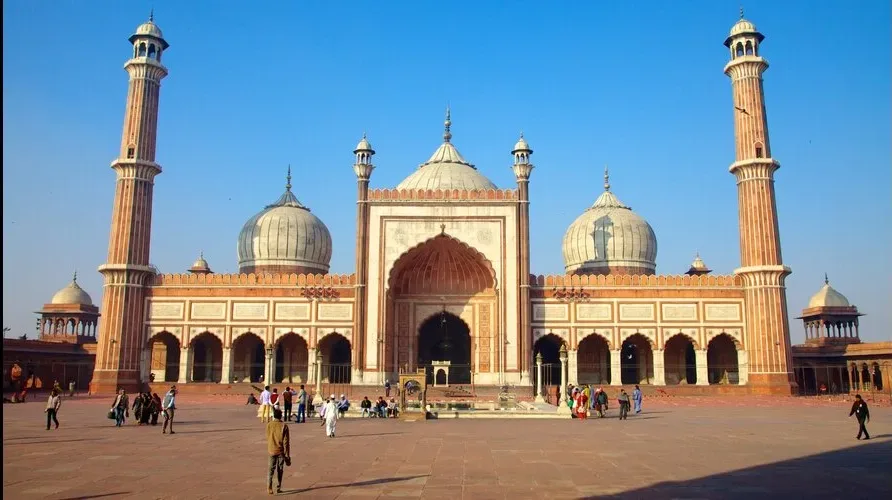
Features of Jama Masjid
- Large courtyard
- Prayer hall
- Minars
- Domes
- Decorative arches
The Jama Masjid in Delhi is one of the largest mosques in India.
Chand Minar
Chand Minar was built in the 14th century at Daulatabad Fort in Maharashtra.
The tower has four storeys and once had beautiful tile decoration. It combines Iranian and Indian architectural styles.
Mandu
Mandu is located in Madhya Pradesh and is famous for its medieval architecture.
The city contains:
- Palaces
- Mosques
- Reservoirs
- Baolis
- Pavilions
- Fortifications
Mandu architecture shows a beautiful mixture of official buildings and pleasure palaces.
Other Important Indo-Islamic Monuments
Red Fort
The Red Fort in Delhi was built by Shah Jahan when he shifted the Mughal capital from Agra to Delhi.
The fort served as the residence of Mughal emperors.
Main features include:
- Red sandstone walls
- Beautiful halls
- Gardens
- Decorative carvings
The Red Fort is also a UNESCO World Heritage Site.
Agra Fort
Agra Fort was mainly developed during Akbar’s reign.
The fort includes:
- Palaces
- Mosques
- Audience halls
- Residential buildings
It served as an important political and military center of the Mughal Empire.
Fatehpur Sikri
Fatehpur Sikri was built by Emperor Akbar as a new capital city.
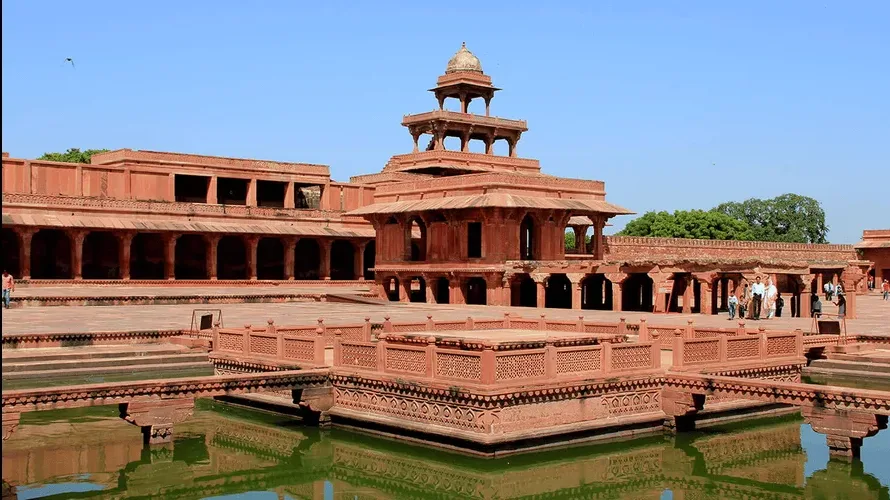
The city is famous for blending Hindu and Persian architectural styles.
Important Buildings in Fatehpur Sikri
- Buland Darwaza
- Panch Mahal
- Salim Chishti’s Tomb
- Jodha Bai’s Palace
The city is often called a “frozen moment in history” because its buildings remain well preserved.
Badshahi Mosque
The Badshahi Mosque in Lahore was built during Aurangzeb’s rule.
At the time of its completion, it was one of the largest mosques in the world.
The mosque is known for:
- Huge courtyard
- Massive prayer hall
- Marble decoration
- Grand architecture
Decorative Techniques in Indo-Islamic Architecture
1. Relief Carving
Walls and pillars were decorated using high and low relief carvings.
2. Tile Work
Colorful glazed tiles were used to decorate walls and domes, especially during the 14th to 16th centuries.
3. Mosaic Designs
Small colored pieces of stone and tiles were arranged to create artistic patterns.
4. Floral Decoration
Flowers and plant motifs were carved on walls, ceilings, and pillars.
5. Arabic Inscriptions
Quranic verses were beautifully written on buildings using calligraphy.
Importance of Indo-Islamic Architecture
Indo-Islamic architecture is important for many reasons.
1. Cultural Unity
It represents the blending of Indian and Islamic cultures. Different traditions worked together to create a new artistic identity.
2. Artistic Excellence
The monuments show the high level of skill of Indian craftsmen and architects.
3. Historical Value
These buildings help us understand medieval Indian history, society, religion, and politics.
4. Tourism
Many Indo-Islamic monuments attract millions of tourists every year and contribute to India’s tourism industry.
5. UNESCO Heritage Sites
Several Indo-Islamic monuments such as the Taj Mahal, Humayun’s Tomb, Red Fort, and Fatehpur Sikri are recognized as UNESCO World Heritage Sites.
Conclusion
Indo-Islamic Architecture is one of the greatest achievements of medieval India. It beautifully combines Indian traditions with Islamic architectural styles. The use of domes, arches, minars, gardens, marble work, calligraphy, and decorative patterns created monuments of extraordinary beauty.
From the Qutub Minar to the Taj Mahal, these monuments continue to inspire people with their artistic brilliance and historical importance. Indo-Islamic architecture not only represents the power of rulers but also reflects India’s rich cultural diversity and creativity.
Even today, these buildings stand as symbols of India’s glorious heritage and attract visitors from around the world. Understanding Indo-Islamic architecture helps students learn about India’s cultural harmony, artistic traditions, and historical development.
FAQs on Indo-Islamic Architecture
1. What is Indo-Islamic Architecture?
Indo-Islamic architecture is a style of architecture that combines Indian and Islamic building traditions. It developed during the medieval period in India.
2. When did Indo-Islamic architecture begin in India?
It began during the 12th and 13th centuries after the establishment of the Delhi Sultanate.
3. What are the main features of Indo-Islamic architecture?
Its main features include domes, arches, minars, calligraphy, jali work, gardens, and geometric designs.
4. Which material was commonly used in Indo-Islamic buildings?
Red sandstone and white marble were commonly used in Indo-Islamic monuments.
5. What is the best example of Indo-Islamic architecture?
The Taj Mahal is considered the finest example of Indo-Islamic and Mughal architecture.
6. What is a Charbagh garden?
A Charbagh garden is a four-part garden design used in Mughal architecture that represents paradise.
7. Why is Qutub Minar important?
Qutub Minar is important because it is one of the tallest and oldest minars built during the Delhi Sultanate period.
8. What is pietra dura work?
Pietra dura is a decorative technique where colored stones are inlaid into marble surfaces.
9. Which Mughal emperor built the Red Fort?
The Red Fort was built by Mughal emperor Shah Jahan.
10. Why is Indo-Islamic architecture important?
It reflects cultural unity, artistic excellence, and the blending of Indian and Islamic traditions.