Judicial Reforms: Need, Challenges, Government Initiatives and Way Forward

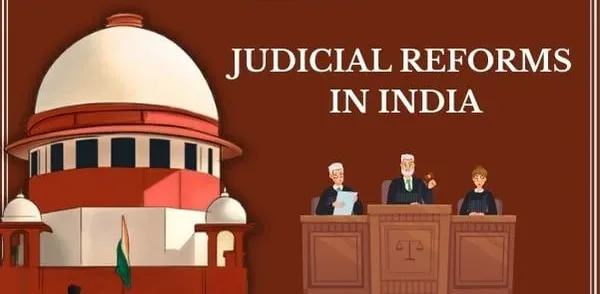
Judicial Reforms are necessary to make India’s justice system faster, fairer, and more transparent. A strong judiciary protects the rights of citizens and ensures that everyone receives justice without unnecessary delays. However, India’s judicial system faces many problems such as a huge number of pending cases, shortage of judges, poor infrastructure, and slow legal processes. Judicial reforms aim to solve these problems and improve the overall justice delivery system.
What are Judicial Reforms?
Judicial Reforms are changes made to the judicial system, court procedures, and legal laws to improve the efficiency of courts. These reforms help make the justice system more transparent, accountable, and accessible to every citizen.

The main objectives of judicial reforms are:
- Deliver justice quickly.
- Improve transparency in courts.
- Strengthen the independence of the judiciary.
- Reduce corruption and delays.
- Make justice affordable and accessible for all.
A well-functioning judiciary is important because it protects the Constitution, upholds the rule of law, and maintains public trust in democracy.
Why are Judicial Reforms Needed in India?
India has one of the largest judicial systems in the world. Despite its strength, several problems make judicial reforms necessary.
Huge Number of Pending Cases
The biggest challenge is the large number of pending court cases.
According to recent data, more than 5.1 crore cases are pending in different courts across India. Around 87% of these cases are pending in district courts, which are the first point of contact for most citizens.
Some cases have remained unresolved for more than 30 years. In many situations, people spend years waiting for justice. This creates frustration and reduces confidence in the legal system.
Legal experts estimate that delays in justice also affect India’s economy by reducing business confidence and increasing financial losses.
Shortage of Judges
Another major issue is the shortage of judges.
Many High Courts and district courts have thousands of vacant positions. As a result, existing judges have to handle a large number of cases every day.
When there are fewer judges, hearings take longer, judgments are delayed, and the backlog continues to increase.
Filling these vacancies quickly is one of the most important judicial reforms required today.
Poor Court Infrastructure
Many courts in India still lack proper infrastructure.
Some common problems include:
| Infrastructure Problem | Impact |
|---|---|
| Lack of modern courtrooms | Slower proceedings |
| Poor internet connectivity | Difficulty in online hearings |
| Limited video conferencing | Delays in virtual trials |
| Shortage of computers | Slow documentation |
| Inadequate waiting areas | Poor experience for litigants |
| Lack of safety facilities | Unsafe working environment |
Many district courts also face shortages of furniture, digital equipment, and proper office spaces.
Improving infrastructure is essential for faster justice delivery.
Slow Adoption of Technology
Technology has improved many government services, but many courts still depend on paper files.
Although the e-Courts Project has introduced online case tracking, digital records, and virtual hearings, its implementation is still uneven, especially in rural areas.
Using technology can reduce paperwork, improve transparency, and speed up court proceedings.
Lack of Judicial Accountability
Public confidence in the judiciary depends on transparency and accountability.
Many people believe there should be stronger systems to monitor judicial performance and handle complaints against judges.
The process for removing judges is very difficult and is rarely used. This has led to discussions about improving accountability while protecting judicial independence.
Difficulty in Accessing Justice
Many citizens, especially poor and rural families, face difficulties in accessing justice.
Some common barriers include:
- High legal expenses
- Complex legal procedures
- Language barriers
- Lack of legal awareness
- Long travel distances to courts
Although free legal aid is available through government agencies, many eligible people are unaware of these services.
Making legal services easier to access is an important part of judicial reforms.
Lack of Diversity in the Judiciary
India’s judiciary does not fully represent the country’s social diversity.
Women, Scheduled Castes (SC), Scheduled Tribes (ST), Other Backward Classes (OBC), and minority communities have relatively low representation in higher courts.
Increasing diversity can improve public confidence and ensure broader perspectives in judicial decision-making.
Judicial Activism and Judicial Overreach
The judiciary sometimes takes an active role in matters involving public interest and governance. This is known as judicial activism.
While judicial activism has helped protect citizens’ rights in many cases, critics argue that courts should avoid interfering in areas that belong to the executive or legislature.
Maintaining a proper balance between the three branches of government is essential for a healthy democracy.
Problems in Enforcing Court Orders
Even after courts deliver judgments, implementation is sometimes delayed.
Government departments and other authorities may fail to follow court orders promptly.
Delayed enforcement reduces the effectiveness of judicial decisions and weakens public trust.
Major Government Initiatives for Judicial Reforms
The Government of India has introduced several reforms to improve the judicial system.
National Mission for Justice Delivery and Legal Reforms
This mission focuses on reducing delays, improving court performance, strengthening infrastructure, and making the justice system more efficient.
Its objectives include:
- Faster disposal of cases
- Better court management
- Improved judicial infrastructure
- Increased use of technology
e-Courts Mission Mode Project
The e-Courts Project is one of India’s biggest digital judicial reforms.
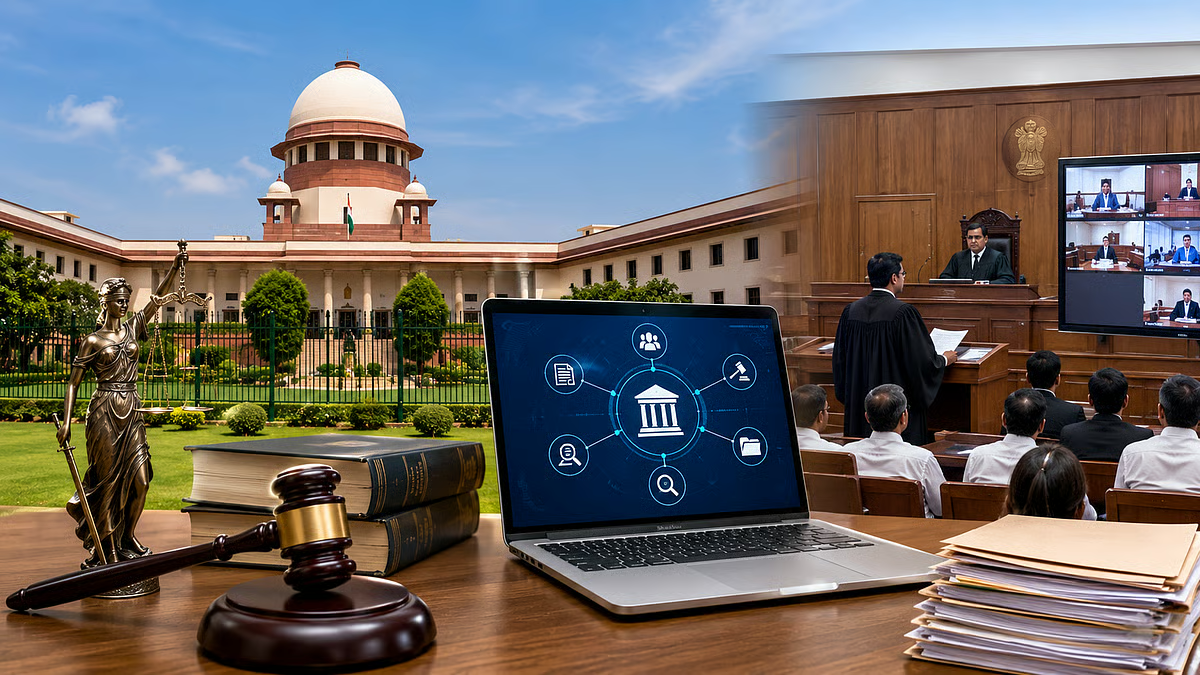
Its major features include:
- Computerization of district and subordinate courts
- Online case status tracking
- E-filing of cases
- Digital court records
- Video conferencing facilities
- Virtual courts for traffic challans and other minor cases
The latest phase aims to create a completely paperless judicial system.
Improvement of Judicial Infrastructure
The government has invested heavily in constructing new court buildings and residential quarters for judges.
Thousands of new court halls have been built over the past decade, improving working conditions and increasing court capacity.
Filling Judicial Vacancies
Several steps have been taken to appoint more judges in the Supreme Court, High Courts, and subordinate courts.
Increasing the number of judges helps reduce workload and speeds up case disposal.
Fast Track Courts
Fast Track Courts are special courts that hear important cases quickly.
These courts mainly deal with:
- Crimes against women
- Crimes against children
- Serious criminal offences
- Cases involving public representatives
Fast disposal helps victims receive timely justice.
Alternative Dispute Resolution (ADR)
Alternative Dispute Resolution helps settle disputes outside traditional courts.
Popular ADR methods include:
- Mediation
- Arbitration
- Conciliation
- Lok Adalats
ADR reduces the burden on regular courts and saves both time and money.
Lok Adalats have successfully resolved millions of cases across India.
Tele Law Programme
The Tele Law Programme allows people, especially in rural areas, to receive legal advice through:
- Mobile phones
- Video conferencing
- Digital service centres
This programme has helped millions of citizens obtain legal guidance without visiting courts.
Nyaya Bandhu Pro Bono Programme
Nyaya Bandhu connects people who need free legal assistance with volunteer lawyers.
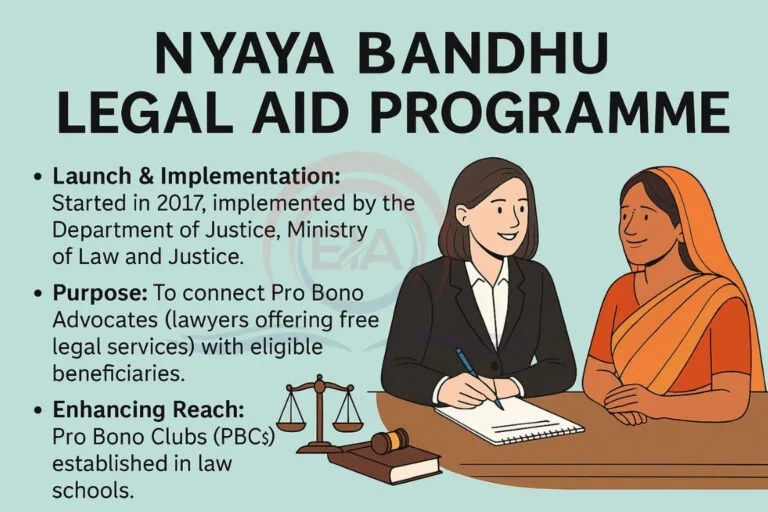
Many advocates across India provide free legal services to economically weaker sections under this programme.
Law schools have also established Pro Bono Clubs to encourage students to serve society.
Challenges in Judicial Reforms
Although many reforms have been introduced, several challenges remain.
Resistance to Change
Some officials and court staff are slow to adopt new technologies and digital systems.
Limited Funding
Modernizing courts requires significant financial investment.
Insufficient funding delays infrastructure development and technology upgrades.
Coordination Between Institutions
Successful judicial reforms require cooperation between the judiciary, executive, and legislature.
Delays in decision-making often slow down reform efforts.
Public Trust
Transparency in judicial appointments and better accountability can improve public confidence in the legal system.
Way Forward for Judicial Reforms
India can strengthen its judicial system by taking several important steps.
Expand Digital Courts
More courts should adopt online filing, digital records, artificial intelligence, and electronic communication systems to improve efficiency.
Strengthen Alternative Dispute Resolution
More mediation centres and Lok Adalats should be established to reduce the burden on courts.
Fill Vacant Judge Positions Quickly
The appointment process should become faster so that vacant positions are filled without unnecessary delay.
Establish More Specialized Courts
Special courts for commercial disputes, environmental issues, cybercrime, intellectual property rights, and financial crimes can ensure faster and expert decisions.
Improve Legal Aid
Free legal services should reach more people through awareness campaigns, mobile legal clinics, and digital platforms.

Increase Public Awareness
Citizens should be educated about their legal rights through schools, colleges, media campaigns, and regional language resources.
FAQs
What are Judicial Reforms?
Judicial Reforms are improvements made to the legal and court system to provide faster, fairer, and more transparent justice.
Why are Judicial Reforms important?
They help reduce delays, improve court efficiency, strengthen public trust, and ensure equal access to justice.
What is the biggest challenge faced by the Indian judiciary?
The biggest challenge is the huge number of pending court cases and the shortage of judges.
What is the e-Courts Project?
The e-Courts Project is a government initiative that uses digital technology to improve court functioning through online filing, virtual hearings, and electronic records.
What are Fast Track Courts?
Fast Track Courts are special courts established to quickly hear serious cases such as crimes against women, children, and other important matters.
What is Alternative Dispute Resolution (ADR)?
ADR includes methods like mediation, arbitration, conciliation, and Lok Adalats that help settle disputes outside regular courts.
How can Judicial Reforms improve India?
Judicial reforms can reduce case backlogs, improve transparency, strengthen democracy, increase investor confidence, and ensure timely justice for every citizen.